 Bellingham Siding
 Roof Repair Built for What Sehome Actually Deals With
Sehome sits in the central rise of Bellingham, close to Sehome Hill, with a mix of older homes and mid-century construction that has been through plenty of Whatcom County winters already. Most of the roof repair calls we get from this neighborhood aren't dramatic — they're small, unresolved problems that have had time to work their way deeper into a roof because of exactly what this climate does: salt-laden air off the Salish Sea corroding metal, wind-driven rain finding the one lapped seam that isn't quite tight, and a moss season that can run most of the year on shaded slopes. Roof repair here isn't the same job as roof repair in a drier, calmer region. This page covers what repair actually involves, when it's the right call instead of a full replacement, and how we approach it on Sehome homes specifically.
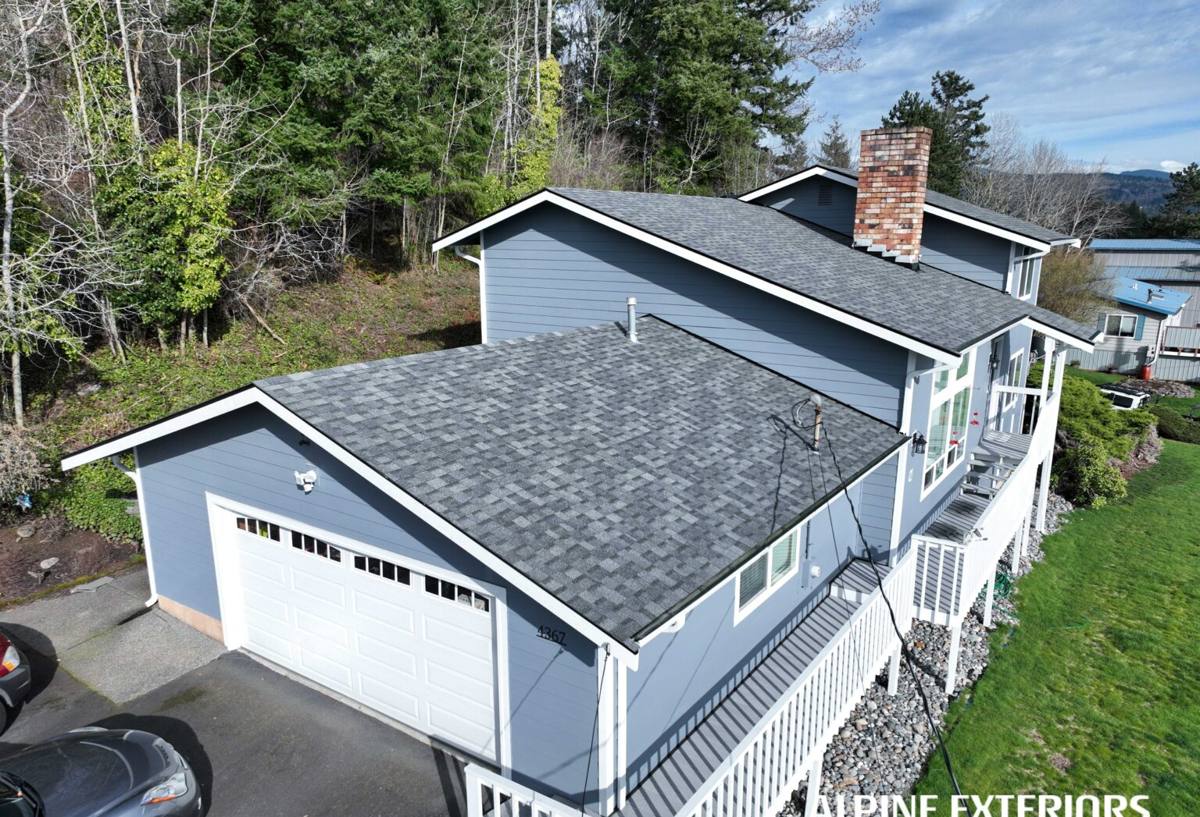
Why Repairs in This Climate Need More Than a Patch
Salt Air and Corrosion
Airborne salt moves through Bellingham off the Salish Sea and accelerates corrosion on fasteners, flashing, and any exposed metal on a roof. A repair that just replaces a shingle or dabs sealant over a rusted nail head without addressing the corroded fastener underneath tends to fail again within a season or two. Any proper repair in this area has to account for what salt air does to hardware over time, not just what's visibly wrong today.
Wind-Driven Rain
Rain here rarely falls straight down. Wind pushes it sideways, and that changes where leaks actually originate — often at flashing laps, valleys, and roof-to-wall transitions rather than in the middle of an open shingle field. A repair that only addresses the spot where water is showing up inside the house, without tracing it back to where wind-driven rain is actually getting in, usually leaves the real problem in place.
A Long Moss Season
Mature tree cover and mild, moist conditions give Bellingham a moss season that can run for much of the year, especially on shaded, north-facing roof slopes common in Sehome's tree-lined lots. Moss holds moisture against roofing material, lifts shingle edges, and can work its way under laps that would otherwise stay sealed. A repair that removes visible moss but doesn't address the underlying moisture and airflow conditions tends to see regrowth within a year.
Signs Your Sehome Roof Needs Repair
Not every issue means a new roof. These are the signals that usually point toward a targeted repair being the right move:
- A leak that shows up in one or two specific spots, especially after wind-driven rain, rather than across the whole roof
- Missing or damaged shingles in a limited area, such as after a windstorm
- Rust staining or a visibly failing flashing detail at a chimney, dormer, or vent stack
- Moss buildup concentrated on one shaded slope rather than covering the entire roof
- Soft spots or staining on an interior ceiling that trace back to a single roof penetration
- Granule loss or minor wear that's isolated rather than spread evenly across every slope
- A roof that's otherwise within its expected service life but has one or two problem areas
Repair or Replacement: How We Make That Call
We don't default to recommending a full re-roof just because a homeowner called about a leak, and we don't stretch a repair past the point where it's actually the honest answer either. The decision usually comes down to how widespread the damage is and how much useful life the rest of the roof has left.
| Situation | Repair Usually Makes Sense | Replacement Usually Makes Sense |
|---|---|---|
| Age of roofing material | Roof is well within its expected service life | Roof is at or past the manufacturer's rated life for the material |
| Extent of damage | Damage is limited to one slope, valley, or penetration | Damage or wear is spread across most or all of the roof |
| Deck condition | Roof deck underneath is sound where inspected | Rot or soft sheathing is found in multiple areas |
| Moss and organic growth | Growth is isolated and hasn't compromised the material underneath | Growth has been present long enough to lift or degrade shingles broadly |
| Repair history | This is a first or second repair on an otherwise healthy roof | The roof has needed repeated repairs in different spots over recent years |
We inspect before we quote either way. If a repair is the honest fix, that's what we recommend, even though a full replacement is a bigger job. If the deck or underlayment is compromised in ways a patch won't solve, we'll say so and explain why, rather than selling a repair we don't expect to hold.
Common Roof Repairs We Handle in Sehome
Flashing Repair and Replacement
Flashing at chimneys, dormers, skylights, and roof-to-wall transitions is where most leaks in this climate actually start, especially on older Sehome homes where original flashing details may predate current standards. We remove the failed flashing, check the underlying deck and underlayment for hidden moisture damage, and install corrosion-resistant flashing properly integrated with the surrounding roofing material rather than relying on sealant to bridge a gap.
Storm and Wind Damage Repair
Wind events can lift, crack, or strip shingles in a localized area while leaving the rest of the roof intact. We match the repair to the existing roofing material as closely as possible, check the surrounding area and underlayment for damage that isn't visible from the ground, and confirm fastening meets a standard suited to this area's wind and rain exposure.
Moss and Organic Growth Remediation
Removing moss safely, without damaging the shingles underneath, is different from pressure-washing a roof and calling it done. We clear growth using methods that don't strip granules or force water under laps, and we look at whether shade, ventilation, or drainage are contributing to the regrowth so the fix has some staying power.
Leak Tracing and Localized Underlayment Repair
Interior water stains often show up well away from where water is actually entering the roof, since it can travel along rafters or sheathing before dripping down. We trace leaks back to their actual entry point, which sometimes means opening up a small section of roofing to inspect underlayment and deck condition, rather than guessing based on where the stain appears inside.
Ventilation and Airflow Corrections
Poor attic ventilation traps moisture against the underside of the roof deck, which speeds up rot and gives moss a better environment to establish on the outside. Where a repair is being done anyway, we'll check whether intake and exhaust ventilation are working correctly and flag any corrections that would help the rest of the roof dry out properly between storms.
What a Correct Repair Actually Involves
A repair that holds up in this climate takes more than swapping out the obviously damaged material. On every repair we do, we check the roof deck underneath the affected area for hidden rot, use fasteners and flashing rated for salt air exposure rather than standard hardware, and integrate any new material with the existing underlayment so water is directed out rather than trapped behind the repair. We also check the surrounding shingles and flashing for early signs of the same failure, since a repair that ignores a related problem two feet away just delays the next call.
Our Repair Process
- On-site inspection. We walk the roof, trace any leak back to its actual source, and check the deck and flashing condition in the affected area.
- Honest assessment. We explain what we found, whether a repair is the right call, and what it would involve, before any work starts.
- Material matching. Where possible, we match repair materials to the existing roof so the fix blends in rather than standing out as an obvious patch.
- Deck and underlayment check. Any hidden moisture damage or soft sheathing found during the repair gets addressed, not covered over.
- Flashing and fastening. We use corrosion-resistant hardware and properly integrated flashing suited to this area's salt air and rain exposure.
- Final check and walk-through. We confirm the repair is sound, review what was done, and flag anything else worth watching on the rest of the roof.
Cost Factors for Roof Repair in Sehome
| Factor | Why It Affects Cost |
|---|---|
| Size and location of the damage | A single flashing repair costs far less than damage spread across multiple areas or slopes |
| Roof access and pitch | Steep or hard-to-reach sections take longer and need more safety setup |
| Hidden deck or underlayment damage | Rot found once the area is opened up adds material and labor beyond the original estimate |
| Material matching | Older or discontinued shingle styles and colors can be harder to match closely |
| Moss and growth remediation | Established moss on a shaded slope takes more time to remove safely than a light coating |
Exact pricing depends on what we find once we're actually on the roof, which is why we inspect before quoting rather than estimating a repair over the phone.
Why Hire a Crew That Already Works in Sehome
A roofer who mostly works drier, inland jobs isn't wrong about roofing in general, but they're working from a different set of defaults. Fastener specs and flashing choices that hold up fine in a calmer climate are often undersized for what Bellingham's salt air and wind-driven rain do to a roof year after year. A crew that already works in Sehome has seen how the neighborhood's mix of older homes and tree-shaded, sloped lots near Sehome Hill actually behave through a full wet season, which shapes practical decisions on a repair: where to look for a hidden leak source, which flashing details are worth extra time, and how drainage on a sloped lot changes what a "quick patch" actually needs to hold up.
Keeping a Repaired Roof in Good Shape
- Keep gutters clear so water isn't backing up under roof edges during heavy rain
- Have moss addressed while it's still isolated rather than letting it spread across a full slope
- Trim back tree limbs that keep a section of roof shaded and slow to dry out
- Watch for new staining or soft spots after major windstorms, since that's when new damage usually shows up
- Get a repaired area checked periodically rather than assuming one fix means the roof is done needing attention
If your Sehome roof has a leak, storm damage, or a moss problem that keeps coming back, we're glad to take a look and give you a straightforward read on whether repair or replacement is the right call. Reach out using the form below for a free, no-pressure estimate.