 Bellingham Siding
 Roof Repair in Ferndale: Getting It Right the First Time
Most roof repairs don't start with a homeowner planning ahead — they start with a stain on a ceiling, a shingle in the yard after a windstorm, or a contractor pointing out a soft spot during a routine inspection. Whatever brings you to this page, the same question follows: is this actually fixable, and if so, what does a repair that holds up actually take? In Ferndale, that question has a specific answer, because the roof isn't just fighting normal wear — it's fighting salt-tinged marine air, wind-driven rain that gets pushed sideways and up under roofing edges, and a moss season that runs long on shaded, north-facing slopes. A repair that ignores those conditions tends to fail again within a year or two. One that accounts for them can add real years to a roof's life for a fraction of a full replacement's cost.
This page focuses specifically on roof repair for Ferndale homes — not a general roofing overview, and not a pitch toward full replacement. Plenty of roofs here need a repair, not a teardown, and a straight answer about which one you actually need is worth more than an upsell.
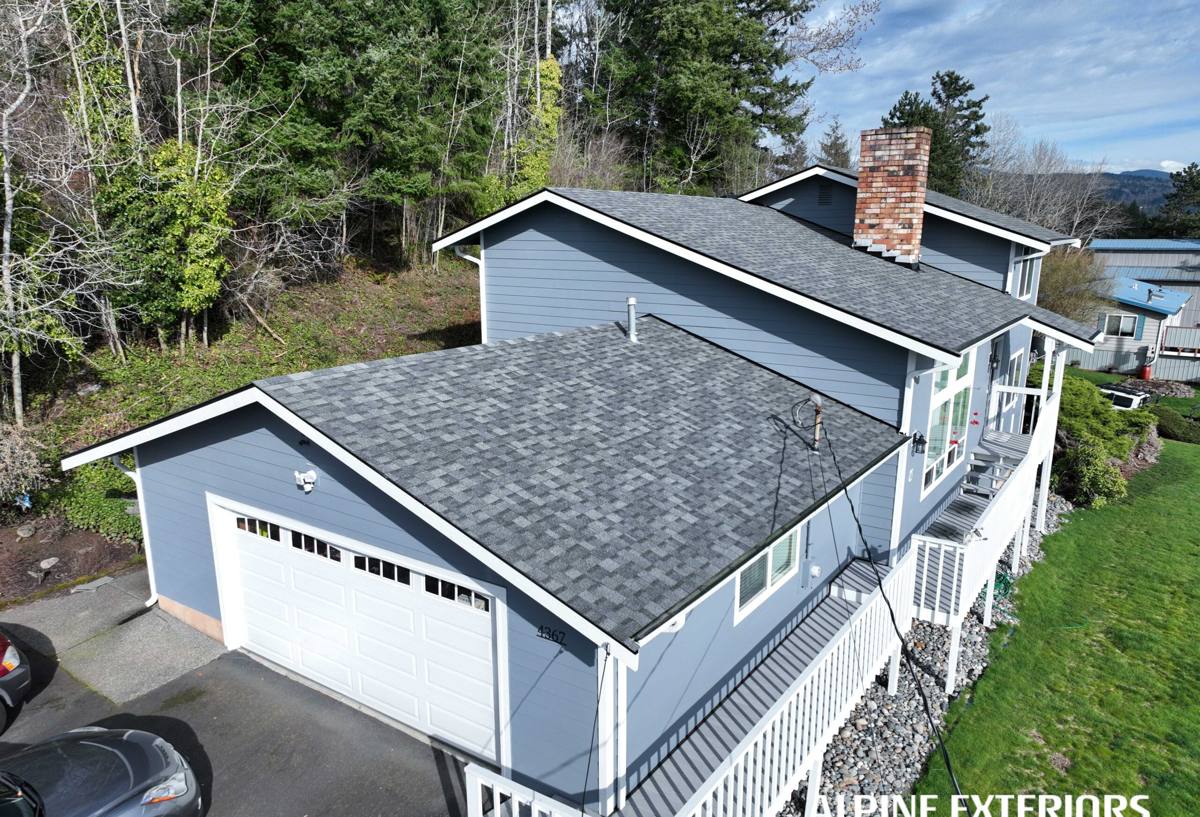
What Ferndale's Climate Actually Does to a Roof
Whatcom County sits close enough to the water that homes deal with a specific combination of stress most inland roofing crews rarely see day to day. Understanding it is the difference between a repair that lasts and one that doesn't.
Salt Air and Corrosion
Fasteners, flashing, and any exposed metal on a roof are exposed to a low but steady level of salt in the air. Over years, that accelerates corrosion in lower-grade metal, which is why the flashing and fastener material used in a repair matters as much as the shingles themselves.
Wind-Driven Rain
Rain here doesn't just fall straight down — storms off the water push it sideways and even upward under roof edges, shingle laps, and flashing seams. A repair that only addresses the visible damage without checking how water is actually moving during a storm often misses the real entry point.
A Long Moss Season
Shaded, north-facing roof slopes in this climate stay damp long enough for moss and organic growth to take hold for a large part of the year. Moss isn't just cosmetic — it lifts shingle edges, holds moisture against the roof surface, and accelerates the exact kind of granule loss and decking rot that eventually turns a repair into a replacement.
Signs You Likely Need a Repair, Not a Full Replacement
A roof doesn't need to come off just because something is wrong with it. Most of the issues below are legitimately repairable if caught before they spread to the decking underneath.
- A small number of cracked, curled, or missing shingles in an otherwise sound roof
- A single active leak traced to one flashing point — a chimney, skylight, vent boot, or valley
- Moss buildup on an otherwise structurally sound roof, caught before it's caused deck damage
- Storm damage limited to one section or slope rather than the whole roof
- A roof under roughly ten to fifteen years old with isolated, addressable problems
The signs that usually point toward replacement instead — widespread granule loss across the whole roof, soft or spongy decking in multiple areas, or a roof already past its expected service life — are worth a straight answer too. A contractor who only ever recommends full replacement, regardless of what they find, isn't giving you that straight answer.
What a Correct Repair Actually Involves
Finding the Real Source, Not Just the Symptom
Water rarely shows up on a ceiling directly below where it entered the roof — it travels along decking and framing before it appears. A repair that patches the spot nearest the ceiling stain without tracing the actual entry point usually looks fine for a while and then leaks again in the next storm. Correct diagnosis means getting on the roof, checking flashing, underlayment condition, and fastener patterns at the suspected area, and confirming the source before any material comes off.
Matching Materials, Not Just Covering the Spot
A repair patched with mismatched shingles, the wrong underlayment, or generic sealant instead of proper flashing work might look acceptable from the ground but behaves differently than the surrounding roof in wind and rain. Matching shingle type, exposure, and fastening pattern to the existing roof — and using proper step or valley flashing rather than sealant as a substitute — is what makes a repair blend structurally, not just visually.
Addressing What Let the Damage Happen
If moss caused the failure, a repair that replaces the damaged shingles without addressing drainage, shade, or ventilation in that area is treating the symptom. If wind-driven rain got under a valley, a repair that doesn't correct the underlayment lap direction will fail again in the next storm from the same direction. A repair worth paying for corrects the underlying cause, not just the visible damage.
Repair vs. Replacement: How We Make the Call
| Factor | Favors Repair | Favors Replacement |
|---|---|---|
| Extent of damage | Isolated to one section or flashing point | Spread across multiple slopes or the whole roof |
| Decking condition | Solid, no soft spots found | Soft, rotted, or damaged decking in multiple areas |
| Roof age | Well within expected service life | At or past expected lifespan for the material |
| Moss history | Recent growth, no underlying rot yet | Long-term moss that's already compromised the deck |
| Underlayment condition | Still intact and functional overall | Widely degraded or original felt from an older install |
| Cost over time | Repair cost is a small fraction of replacement | Repeated repairs are approaching replacement cost |
None of these factors decide anything on their own — a roof can be young but still need replacement if the decking underneath is compromised, and an older roof can still be a good repair candidate if it's been maintained. An honest assessment weighs all of them together and tells you where your roof actually falls, not where it's easiest to sell you.
Our Process for a Ferndale Roof Repair
- Inspection and diagnosis: We get on the roof, trace the actual source of the problem, and check the surrounding area — not just the spot you noticed.
- Written estimate: You get a clear explanation of what we found, what we recommend, and why — including if we think replacement makes more sense than repair.
- The repair itself: Matching materials, proper flashing technique, and attention to the underlying cause, not just the visible damage.
- Cleanup and walkthrough: Debris and old material removed, the work explained, and any other issues we noticed flagged honestly for your future planning.
Most isolated repairs are a same-day or next-day job once scheduled, weather permitting. Larger repairs involving multiple flashing points or moss remediation across a full slope may take longer, and we'll walk you through the timeline before starting.
Repair Mistakes We See and Fix
A fair number of the repair calls we get in Ferndale aren't first repairs — they're fixing a previous repair that didn't hold. A few patterns come up often enough to be worth naming honestly.
- Sealant used in place of flashing: Caulk and roofing cement can buy time, but they degrade faster than proper metal flashing and aren't a substitute for it at valleys, chimneys, or wall intersections.
- Moss pressure-washed off without addressing the cause: This can strip granules and damage shingles, and the moss usually returns quickly if drainage and shade conditions aren't also addressed.
- Mismatched shingles installed for a quick patch: Different shingle profiles or exposures can create small gaps and uneven water shedding at the repair boundary.
- Underlayment not extended far enough during a partial repair: If new underlayment doesn't properly lap under the surrounding intact material, wind-driven rain can still find a way in at the seam.
Why a Local Ferndale Crew Matters for a Repair
Roof repair is judgment-heavy work. Deciding how far to open up a roof to trace a leak, which flashing detail actually needs redoing versus which is still sound, and how a specific slope's moss exposure should shape the repair are all calls that come from having actually worked on roofs in this specific climate, not a generalized playbook. A crew that works Whatcom County regularly has already seen how salt air affects lower-grade fasteners over time, how far wind-driven rain travels under a valley in a real storm, and which slopes in this area hold moss long enough to matter. That's the kind of knowledge that shows up in the quality of a repair, not in a sales pitch.
It also matters for accountability. A repair is only as good as the guarantee behind it, and that guarantee only means something if the company doing the work is still local and reachable if something needs a second look.
A Practical Checklist Before You Approve a Repair
- Has the contractor actually gotten on the roof and traced the source, not just quoted from a description over the phone?
- Does the estimate specify materials and method, not just a flat "patch and seal" line item?
- Is flashing being properly replaced where needed, rather than sealed over?
- If moss is involved, does the plan address drainage and future growth, not just removal?
- Does the company carry a workmanship warranty on the repair, and for how long?
- Are they willing to tell you honestly if repair isn't the right call anymore?
Maintaining a Roof After Repair
A correct repair extends a roof's life, but a little ongoing attention keeps it that way — especially in a climate where moss and moisture don't take a season off.
- Keep gutters and downspouts clear so water isn't backing up under roof edges during heavy rain
- Have shaded, moss-prone slopes checked periodically, especially heading into the wetter months
- Trim back overhanging branches that keep a section of roof shaded and damp longer than the rest
- Address small issues — a lifted shingle, a small soft spot — while they're still small
None of this requires a contractor visit every season, but a periodic look, particularly after a hard windstorm, catches problems while they're still a repair instead of a replacement.
Get a Straight Answer on Your Roof
If you're dealing with a leak, storm damage, or a roof that just doesn't look right anymore, we're happy to come take a look and give you an honest answer — repair or replacement, whichever your roof actually needs — along with a written estimate and no pressure to act on it immediately.