 Bellingham Siding
 Roof Repair in Barkley: Built for Bellingham's Coastal Weather
Barkley homes sit close enough to the Salish Sea to catch salt-laden air, and close enough to the Cascade foothills to get pounded by driving rain off and on for most of the year. That combination is hard on a roof. Salt air accelerates corrosion on fasteners, flashing, and any exposed metal. Wind-driven rain finds the smallest gap in a roof system and pushes water sideways, uphill, and under laps that were never designed to handle water moving in that direction. And Whatcom County's long, damp shoulder seasons give moss and algae months at a time to take hold on shaded, north-facing slopes.
None of that means a Barkley roof is doomed — it means a roof repair here has to account for conditions that a drier, calmer climate would never test. A patch that would hold for years in Eastern Washington can fail in a single Bellingham winter if it isn't detailed for wind-driven rain and sustained moisture. This page covers what actually goes wrong with roofs in this part of Bellingham, what a correct repair looks like, and how we approach the work.
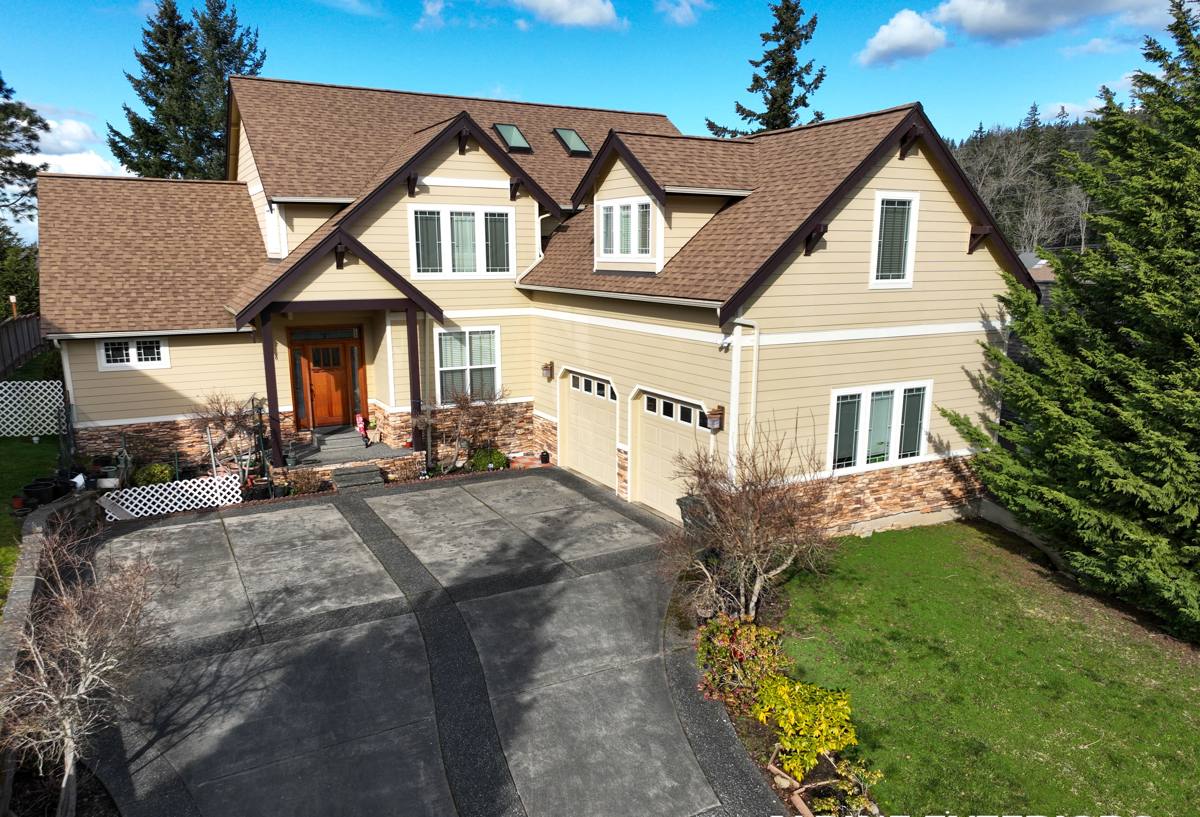
Common Roof Problems We See in Barkley Homes
Wind-Driven Rain and Flashing Failures
Most roof leaks aren't caused by the shingles or panels themselves — they're caused by the transitions: where a roof meets a chimney, a skylight, a wall, or a vent pipe. Flashing at these points is the first thing to fail, especially when storms push rain sideways instead of letting it run straight down. Once a flashing seal opens up, water can travel well past the visible gap before it shows up as a stain on a ceiling, which is why so many leaks look worse — or appear in a stranger spot — than the actual source suggests.
Moss and Organic Growth
Shaded roof sections and north-facing slopes in Barkley hold moisture longer than sections that get direct sun, and that moisture is exactly what moss needs to establish itself. Once moss takes hold, it works its way under shingle tabs and lifts them slightly, which is enough to let wind-driven rain get underneath. Left long enough, moss also holds standing moisture against the roofing material itself, which shortens its life regardless of how good the material was to begin with.
Salt Air and Metal Corrosion
Bellingham's coastal position means homes here deal with more airborne salt than roofs further inland. Salt exposure speeds up corrosion on exposed fasteners, metal flashing, and any galvanized or unprotected steel components on the roof. A fastener that rusts through doesn't announce itself — it just quietly stops holding, which is why older repairs done with the wrong hardware tend to fail before the surrounding roofing does.
Is It Repair or Replacement?
Not every roof problem needs a full replacement, and not every leak can be permanently solved with a patch. The honest answer depends on the roof's age, how widespread the damage is, and whether the underlying deck and underlayment are still sound.
| Situation | Repair usually makes sense | Replacement usually makes sense |
|---|---|---|
| Roof age | Well within its expected service life | At or past the material's typical lifespan |
| Damage extent | Isolated to one section or penetration | Spread across multiple slopes |
| Decking condition | Solid, no soft spots | Soft, rotted, or spongy underfoot |
| Leak history | First occurrence or single known cause | Recurring leaks in different spots |
| Moss/algae staining | Surface growth, shingles still intact | Granule loss and shingle curling underneath |
We'll tell you plainly which category your roof falls into. If a repair will genuinely hold, we won't push a replacement — and if a repair would just be a temporary patch on a roof that's already failing, we'll tell you that too, along with why.
What a Correct Roof Repair Involves
Diagnosing the Actual Cause
Because water travels before it shows itself, a repair that only addresses the visible stain often misses the real entry point. A correct repair starts with tracing the path — checking flashing, valleys, penetrations, and the roofing material itself uphill of where the damage appears — rather than sealing the first thing that looks suspicious.
Matching Materials and Techniques
Repairs need to match the existing roofing system, both in material and in how it's installed. Mismatched shingle types, incompatible sealants, or flashing that isn't detailed for wind-driven rain can create a new weak point even when the original problem is fixed. On older roofs, this sometimes means sourcing a close match rather than an exact one, and being upfront about the difference in appearance.
Our Roof Repair Process in Barkley
Inspection and Estimate
We start by getting on the roof (or using a camera where access is limited) to find the actual source of the problem, not just the symptom. You get a clear explanation of what's wrong, what's causing it, and a written estimate before any work starts — no pressure, no upsell to a full replacement unless that's genuinely what the roof needs.
The Repair Itself
Depending on the issue, this might mean replacing damaged shingles or panels, re-flashing a penetration or wall transition, correcting a valley that's channeling water the wrong way, or removing moss and treating the affected area. We use fasteners and flashing appropriate for coastal exposure, not whatever happens to be cheapest, since the wrong hardware is a common reason repairs fail early in this climate.
Cleanup and Follow-Up
We clear debris and old material from gutters and the ground, and we'll walk you through what we did and why. If a repair is meant to buy time before an eventual replacement, we'll say so clearly rather than leaving you to guess.
Roofing Materials and Repair Cost Factors
What a repair costs depends less on the brand name and more on a handful of practical factors. This is a general guide, not a quote — every roof is different.
| Factor | Why it matters |
|---|---|
| Roofing material | Composition shingles, architectural shingles, metal, and cedar all repair differently and take different labor |
| Roof pitch and access | Steep or hard-to-reach sections take longer and require more safety setup |
| Cause of the damage | A single failed flashing seal costs far less to fix than storm damage spread across a slope |
| Underlying deck condition | Soft or rotted decking found during the repair adds scope beyond the original estimate |
| Material matching | Older or discontinued roofing may require sourcing a close match, which affects both cost and appearance |
We don't install every roofing option on the market, and that's intentional. Some products carry maintenance demands, moisture-management requirements, or installation tolerances that make them a poor fit for a marine climate like Bellingham's unless installed and maintained exactly to spec. When we recommend against a product for your situation, it's because of how it performs here — not a knock on the manufacturer.
Why Hire a Crew That Already Works in Barkley
A roof repair that's correct in Spokane can be the wrong repair in Whatcom County. Detailing flashing for wind-driven rain, choosing corrosion-resistant fasteners for salt air, and knowing which slopes in this neighborhood tend to hold moisture and grow moss are things a crew learns from working local roofs repeatedly, not from a general contracting background. A crew already familiar with Bellingham's weather patterns and Barkley's mix of home ages and roof types can diagnose problems faster and avoid repairs that look right on install day but fail by the next wet season.
There's also a practical side to hiring local: response time matters when a leak is active, and a contractor who's already in the area can typically get eyes on a problem sooner than one traveling in from further out.
Roof Maintenance Checklist for Barkley Homeowners
Between full inspections, a few simple habits go a long way toward catching problems early in this climate:
- Clear gutters and downspouts at least twice a year, more often under overhanging trees
- Look for moss or dark streaking on shaded, north-facing slopes each spring
- Check attic spaces after heavy storms for damp insulation or new stains
- Trim back branches that overhang the roof to reduce debris and shade
- Have flashing around chimneys, skylights, and vents checked every couple of years
- Address small leaks promptly — delayed repairs are what turn into deck damage
If you're seeing moss buildup, a stain on a ceiling, or you just haven't had your roof looked at in a while, we're happy to take a look. Reach out for a free, no-pressure estimate using the form below, and we'll give you a straight answer about what your Barkley roof actually needs.