 Bellingham Siding
 Windows Built for Puget's Exposure, Not a Generic Climate
Puget homes sit close enough to the water that they take a different kind of weather than a house ten miles inland in Whatcom County. Salt-laden air works on metal hardware and finishes year-round. Wind-driven rain doesn't just fall straight down here — it gets pushed sideways into every joint, corner, and sill. And the long gray stretch of fall through spring keeps north- and shade-facing walls damp enough that moss and algae get a real foothold. Windows are one of the first places all three of those show up, because a window is really a hole in the wall with dozens of seams, fasteners, and transitions that all have to be sealed correctly and stay that way.
A window that was installed correctly for a drier climate, or installed quickly without attention to flashing and drainage, tends to fail here faster than it would somewhere with less rain and salt exposure. That's the honest starting point for any custom window project in this area: the product matters, but the install matters more.
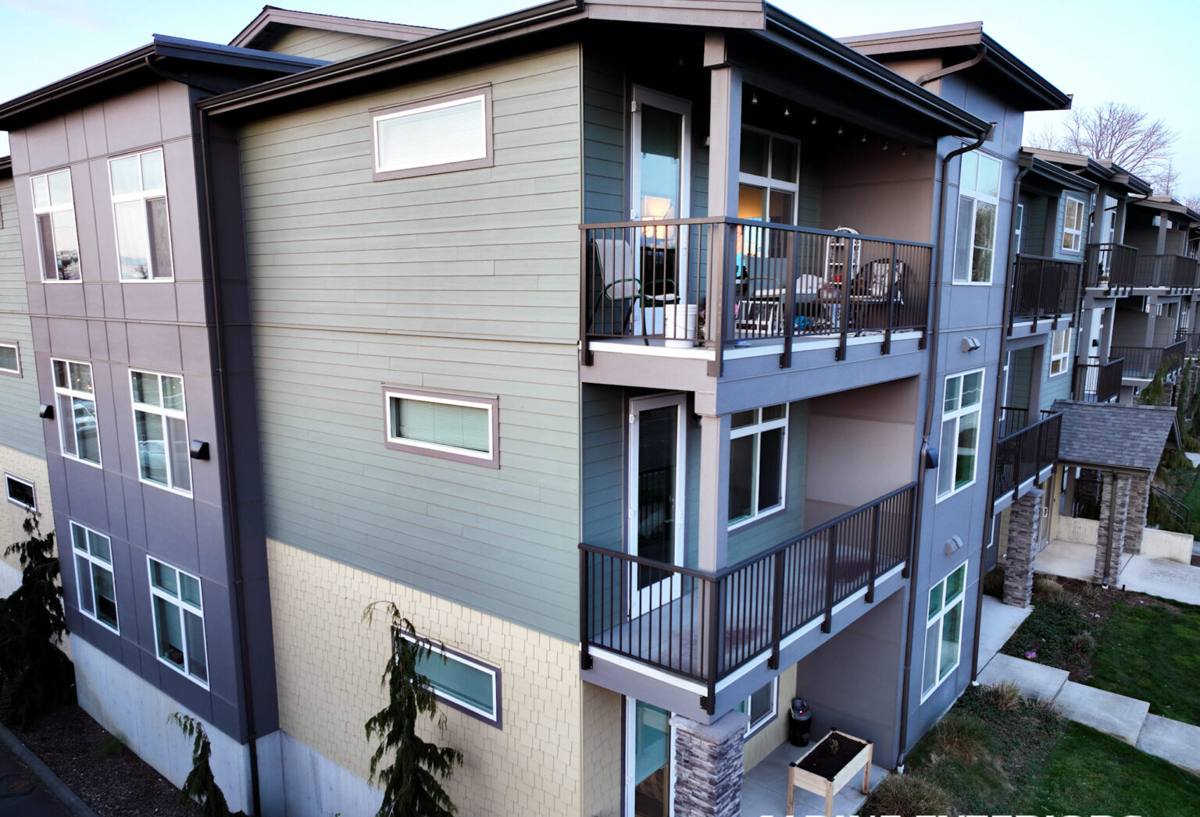
What "Custom" Actually Means for a Puget Window Job
"Custom" doesn't just mean a non-standard shape or an oversized picture window, though we do plenty of that. In practice, most custom window work in this neighborhood falls into a few categories:
- Replacing older aluminum or original single-pane windows with modern insulated units sized to fit existing rough openings
- Full-frame replacements where the old frame, flashing, and sometimes surrounding trim or siding are removed and rebuilt correctly
- Non-standard openings — bay windows, arched tops, oversized living-room glass, or oddly-spaced openings on older homes that don't match today's stock sizes
- Matching window style and grid pattern across additions or partial remodels so the house doesn't end up with three different window languages on one elevation
Custom simply means the job is built around your specific opening, your home's exposure, and how that wall actually behaves in weather — not pulled off a shelf and forced to fit.
Insert vs. Full-Frame Replacement
An insert replacement keeps your existing frame and brick mold in place and fits a new window inside it. It's faster and less disruptive, and it's a reasonable option when the existing frame is solid, square, and dry. A full-frame replacement removes everything down to the rough opening, which costs more and takes longer but is the only way to actually inspect and fix what's behind the old frame. On a coastal-exposed wall in this area, we lean toward recommending a look behind the trim before committing to an insert — if there's hidden water damage, an insert just seals it back in.
Frame Materials That Hold Up in Salt Air and Driving Rain
Every frame material has trade-offs. None of them are wrong for this climate, but each one asks something different of the install and the maintenance schedule.
| Material | How it handles this climate | Maintenance reality |
|---|---|---|
| Vinyl | Won't corrode from salt air; handles moisture well; can expand/contract with temperature swings | Low — occasional cleaning, check weep holes for debris |
| Fiberglass | Very stable in wet, salt-exposed conditions; dimensionally stronger than vinyl | Low — durable finish, less prone to warping |
| Wood (clad or unclad) | Excellent look, but exposed wood needs protection from driving rain and moss growth on shaded elevations | Higher — periodic refinishing or repainting, especially on weather-facing sides |
| Aluminum | Strong and slim sightlines, but bare aluminum is more prone to corrosion near salt air unless properly finished | Moderate — thermal performance and finish quality matter more here than inland |
We don't push one material on every homeowner. We do steer people away from unclad wood on a fully weather-exposed wall in Puget unless they're genuinely willing to keep up with the finish — not because wood is a bad product, but because the maintenance burden on an exposed elevation here is real, and we'd rather tell you that upfront than sell you a callback.
Glass and Glazing Choices for a Marine-Influenced Climate
Glass selection affects comfort and condensation more than most homeowners expect. A few things worth understanding before you choose:
- Double-pane vs. triple-pane: Triple-pane adds cost and weight but meaningfully cuts heat loss and interior condensation on cold, damp nights — a real consideration given how much of the year is cool and humid here.
- Low-E coatings: Help control heat transfer in both directions, which matters through Bellingham's mix of chilly, wet winters and increasingly warm summer stretches.
- Gas fill (argon or krypton): Improves the insulating value of the sealed unit; argon is standard and cost-effective for most homes here.
- Condensation resistance: On a home with steady humidity from nearby water and frequent rain, a window's condensation resistance rating is often more relevant day-to-day than its raw energy rating.
We talk through these trade-offs in plain terms during the estimate rather than defaulting to whatever the manufacturer's premium package happens to be.
Where Window Failures Actually Start: Flashing and Drainage
Most window problems we get called out to inspect in this area aren't glass failures — they're water intrusion around the frame, caused by flashing that was skipped, installed out of sequence, or never properly integrated with the house wrap and siding. In a climate with sustained driving rain, this is the single most important part of the job, and it's the part that's invisible once the trim goes back on.
What a correct install actually involves
- Inspecting the rough opening for existing rot, soft framing, or prior water damage before anything new goes in
- Installing sill pan flashing so any water that gets past the window has a way out, not a place to pool
- Integrating window flashing with the house wrap in the correct shingle-lap order — top piece over the one below it, always working water downward and outward
- Sealing and insulating the gap between frame and rough opening without over-packing it, which can bow the frame
- Confirming weep holes and drainage paths are clear and functional before final trim and caulking
- Finishing exterior sealant joints with a product rated for continuous wet exposure, not a general-purpose caulk
Skip any one of these steps and the window can look fine for a year or two before hidden rot shows up in the framing — which is a far more expensive repair than the window itself.
Moss, Algae, and Shaded Elevations
Whatcom County's long wet season means north-facing and tree-shaded walls stay damp longer than sun-exposed ones, and that's exactly where moss and algae take hold on sills, trim, and frame surfaces. This is mostly a maintenance and material-finish issue rather than a structural one, but it affects two things worth planning for: sill design (a sloped, well-sealed sill sheds water instead of holding it) and frame finish (some clad and vinyl finishes resist algae growth better than bare or painted wood). If your home has shaded walls, we factor that into which products we recommend for those specific openings — it's not unusual for one house to get a different recommendation on its shaded side than its sun-facing side.
Our Process
The process is the same whether it's one window or a whole-house replacement — we just scale the timeline:
- On-site assessment: We look at each opening, check for existing moisture or rot, measure accurately, and talk through material and glazing options based on that specific wall's exposure.
- Written estimate: Clear pricing by opening, with material and labor broken out so you know what you're paying for and why.
- Ordering and scheduling: Custom sizes and special orders take longer to arrive than stock sizes — we'll give you a realistic timeline up front rather than a guess.
- Removal and inspection: Old windows come out carefully, and we inspect the opening before anything new goes in. If we find rot or damage, we stop and talk to you before proceeding, not after.
- Installation: Proper flashing sequence, insulation, and air sealing — the steps described above, done in order, every time.
- Final check and cleanup: Operation, seal, and trim are checked on every unit before we consider the job done, and the site is cleaned up daily.
What Affects the Cost
| Factor | Why it moves the price |
|---|---|
| Insert vs. full-frame replacement | Full-frame involves more labor and often trim or siding repair around the opening |
| Frame material | Vinyl is typically the most budget-friendly; fiberglass and wood clad run higher |
| Glass package | Triple-pane, upgraded Low-E, and gas fill all add cost over a standard double-pane unit |
| Opening size and shape | Custom or oversized openings, bays, and non-rectangular shapes require special-order units |
| Condition behind the old window | Hidden rot or water damage found during removal adds repair scope before the new window goes in |
| Number of openings | Per-window cost usually drops on larger multi-window projects due to shared setup and scheduling |
We'd rather walk you through these variables in person than throw out a number that doesn't hold up once we actually see the opening.
Why It Matters That We Already Work in Puget
A crew that's worked this specific area knows which elevations tend to catch the worst of the wind-driven rain, which wall orientations grow moss fastest, and how the local moisture pattern behaves differently than it would twenty minutes inland. That's not a sales pitch — it's the difference between a generic install and one that accounts for the actual conditions your home sits in. It also means we're not learning on your house; we've already seen how these materials and installation details hold up on similar homes in similar exposure a few miles away.
Simple Maintenance Checklist for Homeowners
- Clear debris from weep holes and sill tracks each fall before the rainy season sets in
- Rinse salt residue and grime off frames and glass periodically, especially on wind-exposed sides
- Check exterior caulk and sealant joints yearly for cracking or separation
- Watch shaded sills and trim for early moss or algae growth and clean it before it spreads
- Test that weep holes drain freely during a heavy rain rather than assuming they're clear
- Note any new interior condensation or musty smell near a window — it's often the earliest sign of a seal or flashing issue
If you're weighing a window project for a home in Puget, we're happy to come take a look, walk the openings with you, and put together a straightforward estimate — no pressure, no obligation, just an honest read on what your windows actually need.