 Bellingham Siding
 Board & Batten Siding, Built for the Puget Area of Bellingham
Board and batten is one of the most requested siding profiles we install around Bellingham, and the Puget area is a good example of why. The vertical lines read as clean and modern on newer builds, but the same profile also sits comfortably on older farmhouse-style homes and cabins scattered through this part of Whatcom County. It's a look, not just a material — which means the quality of the job depends entirely on what's underneath the boards and how they're fastened, flashed, and finished. That's where a lot of board and batten installations go wrong, and it's worth understanding before you hire anyone for the work.
We install this profile exclusively in James Hardie fiber cement. We'll explain why later in this page, but the short version is that vertical siding creates specific water-management challenges, and fiber cement handles them in a way that other board and batten materials — cedar, engineered wood, vinyl — don't handle nearly as well over the long run.
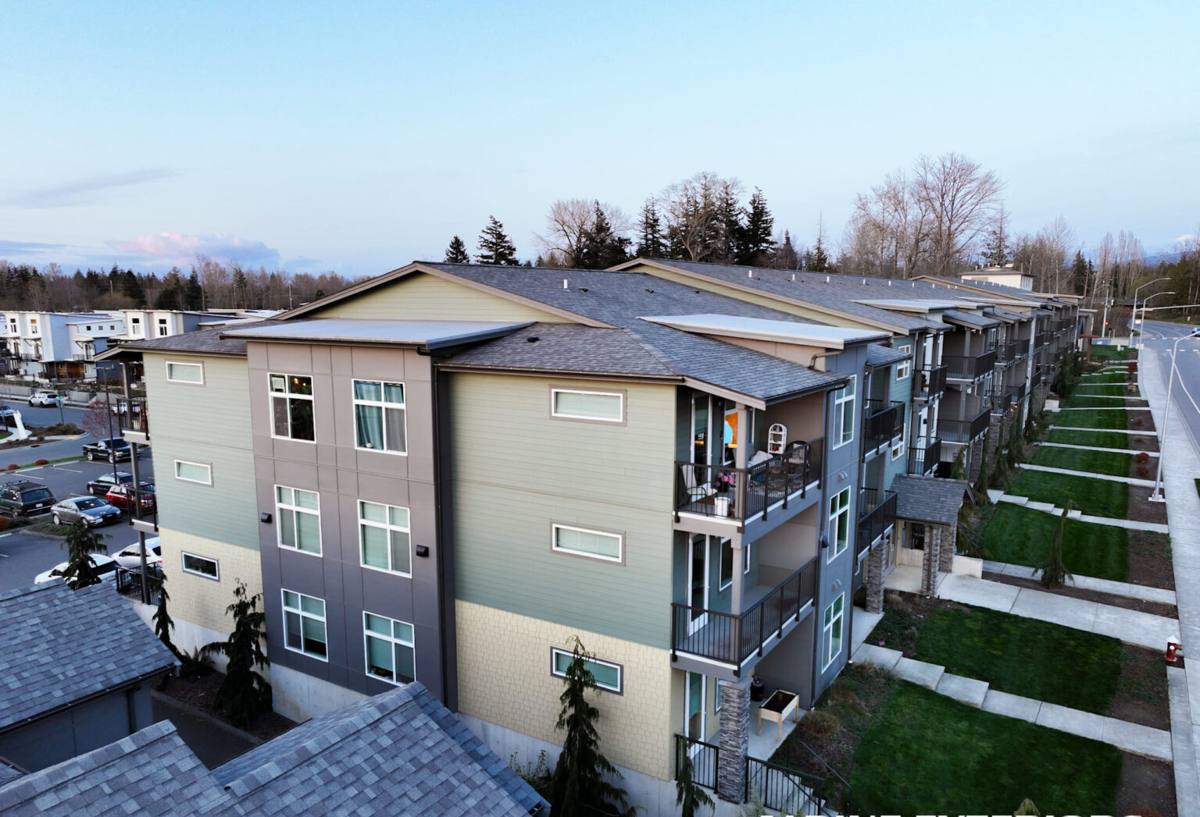
Why Puget's Climate Is Tougher on Vertical Siding Than People Expect
Puget sits close enough to the water that salt-laden air is a real factor in how exterior materials age, not just a talking point. Add Bellingham's long, wet winters — driving rain that comes in sideways off Puget Sound and the Strait more often than most homeowners realize — and you've got a combination that stresses siding in three specific ways:
- Moisture intrusion at horizontal joints. Board and batten has a lot of vertical seams and batten-to-board overlaps. Every one of those is a potential entry point if it's not detailed correctly.
- Moss and algae growth. Whatcom County's moss season runs long — often eight months or more of conditions damp enough to support growth on north-facing walls, shaded elevations, and anywhere airflow is poor. Moss holds moisture against the siding surface, which accelerates rot in wood-based products and can dull or stain factory finishes that aren't formulated to resist it.
- Salt air corrosion. Homes closer to the water see faster degradation of fasteners, trim, and unprotected wood fiber. It's not dramatic — it's a slow, steady erosion of whatever protective layer the material started with.
None of this means board and batten is a bad choice for a Puget-area home. It means the material and the installation both have to be matched to what this climate actually does to a house over 10, 20, 30 years — not just how it looks the day it goes up.
Why the Vertical Profile Specifically Needs More Attention
Horizontal lap siding sheds water downward by design — each course overlaps the one below it. Board and batten runs vertically, so the water management job shifts to the seams between boards, the battens covering those seams, and the flashing at every horizontal transition (window heads, belly bands, roof-to-wall intersections). A crew that treats board and batten like "vinyl siding but vertical" is setting a house up for moisture problems in a climate that doesn't forgive shortcuts. This is a profile where installation experience matters more than it does with simpler siding styles.
What a Correct Board & Batten Job Involves
There's a right way to build this system, and it's more involved than nailing boards to the wall with battens over the gaps. Here's what we consider non-negotiable on a Puget-area home:
- Weather-resistant barrier (WRB) installed first, lapped correctly top-to-bottom and sealed at every penetration — this is the house's actual waterproofing layer, not the siding.
- Rainscreen gap between the WRB and the siding panels, so any moisture that does get past the boards has somewhere to drain and dry instead of sitting against the wall sheathing. This matters more in a high-moss, high-rainfall climate than almost anywhere else in the country.
- Correct fastener pattern and spacing specific to the board width and exposure — fewer fasteners driven wrong is a common shortcut that shows up as cupping or fastener pop within a few years.
- Proper flashing at every window, door, and horizontal trim transition, integrated with the WRB rather than just caulked over the top.
- Batten placement over factory or field-cut seams with enough reveal and fastening to stay tight through wind exposure, which this area gets plenty of in fall and winter storms.
- Factory-finished panels wherever possible, so the color and moisture seal are baked in rather than depending on a field-applied coat holding up through a wet install season.
Skip any one of these steps and the siding can still look right for a year or two. The problems that show up later — rot at the bottom plate, staining at seams, boards that have started to cup or bow — almost always trace back to one of these details being rushed or skipped.
Our Process for a Puget Board & Batten Project
1. On-Site Assessment
We look at the home's exposure — which walls take the worst of the wind-driven rain, which elevations stay shaded and damp longest, whether there's existing moss or moisture damage on the current siding — before we talk product or price. Puget homes vary enough in setting (tree cover, proximity to water, elevation) that a cookie-cutter spec doesn't serve anyone well.
2. Tear-Off and Sheathing Check
We remove the existing siding and inspect the sheathing underneath. This is often the first real look anyone's had at the wall in years, and it's where we catch water damage from a previous installation that skipped a rainscreen or used inadequate flashing. Any rot gets addressed before new siding goes up — covering damaged sheathing with new siding just hides the problem for the next owner to find.
3. WRB and Rainscreen Installation
New weather-resistant barrier, properly lapped and taped, followed by a drainable rainscreen system. This step doesn't add visible curb appeal, but it's the single biggest factor in how the house performs against Puget's rain and moss exposure over time.
4. Hardie Board & Batten Installation
Panels and battens go up to spec — correct fastener spacing, correct flashing integration, correct reveal. We follow James Hardie's published installation instructions exactly, because that's what keeps the manufacturer's warranty intact and what makes the difference between siding that lasts and siding that just looks good in photos.
5. Trim, Caulking, and Final Detail
Corner boards, trim, and any field touch-up paint at cut edges (using Hardie's matched touch-up product) get finished last, along with a final check of every seam and penetration.
Why We Install Only James Hardie for This Profile
We get asked why we don't offer cedar board and batten or an engineered wood option — both are common in this region and both can look excellent when new. Here's the honest trade-off assessment:
| Material | What it gets right | Why it's a harder fit for Puget's climate |
|---|---|---|
| Cedar | Natural look many homeowners want; renewable material | Needs ongoing refinishing to resist moisture and moss; end grain at cuts is a rot-prone weak point in a wet climate |
| Engineered wood (LP-type) | Lower upfront cost than fiber cement in some markets; lighter to install | Wood-strand core is more moisture-sensitive than fiber cement; edge sealing and caulking maintenance is critical and easy to fall behind on |
| Vinyl board & batten | Low maintenance, budget-friendly | Can warp or become brittle with UV and temperature swings; appearance reads as less substantial up close |
| James Hardie fiber cement | Non-combustible, dimensionally stable, factory-finished (ColorPlus), engineered HZ formulations for wet climates, strong transferable warranty | Higher material cost; heavier, so installation skill matters |
Fiber cement doesn't have wood's end-grain vulnerability, doesn't rely on a field-applied finish to keep water out, and holds its shape and color through the freeze-thaw and constant damp cycles that define a Whatcom County winter. That reliability is why we standardized on it and stopped installing the alternatives, even though it means turning down some jobs where a homeowner specifically wants cedar. We'd rather be straight about that trade-off than install something we don't think will hold up here.
Maintenance: What Board & Batten Actually Needs After Install
Even with the right material and a correct install, board and batten siding isn't zero-maintenance. Here's a realistic checklist for keeping it performing well in this climate:
- Rinse siding annually (garden hose pressure is enough) to remove pollen, salt residue, and early moss growth before it takes hold.
- Trim back tree branches and shrubs that keep any wall shaded and damp — airflow is one of the best defenses against moss.
- Inspect caulking at trim joints and penetrations every couple of years; recaulk as needed rather than waiting for a visible gap.
- Watch for any staining or discoloration at the base of the wall, which can signal a drainage or flashing issue worth having checked.
- Repaint or touch up field-cut edges promptly if the factory finish gets scuffed during any other exterior work (gutter repair, deck construction, etc.).
What This Typically Involves Cost-Wise
Board and batten costs more than standard lap siding on a like-for-like basis — there's more cutting, more seams to detail, and generally more labor per square foot. Exact numbers depend on the home's size, current condition, tear-off scope, and trim complexity, so we don't publish a blanket number here. What we can tell you is that the cost difference between doing the water-management details right and skipping them is small relative to the cost of the siding job itself — and the consequences of skipping them show up as a much larger repair bill five or ten years down the road.
Why Local Installation Experience Matters for This Job
A crew that's worked on homes around Puget and greater Bellingham has already seen how the local moss cycle, rainfall pattern, and salt exposure play out on real walls — not in a manual. That translates into practical decisions on your project: where to add extra flashing attention, which elevations need the most rainscreen ventilation, and how to sequence the work around this area's wet season so the sheathing doesn't sit exposed longer than it should. It's the difference between a spec sheet and a house that's still performing well a decade from now.
If you're considering board and batten siding for a home in the Puget area, we're glad to take a look and give you an honest, no-pressure estimate — including a straight answer on whether board and batten is even the right profile for your home's exposure. There's a form below to get started.