 Bellingham Siding
 What Sunnyland's Climate Actually Does to Siding
Sunnyland sits inland from Bellingham Bay, but it doesn't escape what that bay sends inland. Salt-tinged air moves through Whatcom County on the prevailing winds, and combined with driving rain off the Strait of Georgia and a moss season that runs most of the year, siding here takes a steady, low-grade beating that homeowners in drier climates never have to think about. It's rarely one dramatic storm that ruins a wall of siding in this part of Washington — it's years of moisture finding the same seam, the same nail hole, the same shaded corner, over and over, until something gives.
A lot of Sunnyland's housing stock includes older homes with mature trees and shaded, tree-canopied lots, which is a pleasant place to live and a rough environment for exterior materials. Shade keeps walls damp longer after every rain. Moss and algae get a foothold on north-facing walls and anywhere airflow is blocked by landscaping. Add Whatcom County's genuinely long wet season — not just the volume of rain but the number of days siding stays wet — and you've got conditions that punish anything with a weak moisture-management system or a finish that wasn't built for this kind of exposure.
This is exactly the environment James Hardie fiber cement was engineered to handle, and it's why we install it exclusively rather than offering a menu of siding materials and letting the climate sort out the winners later.
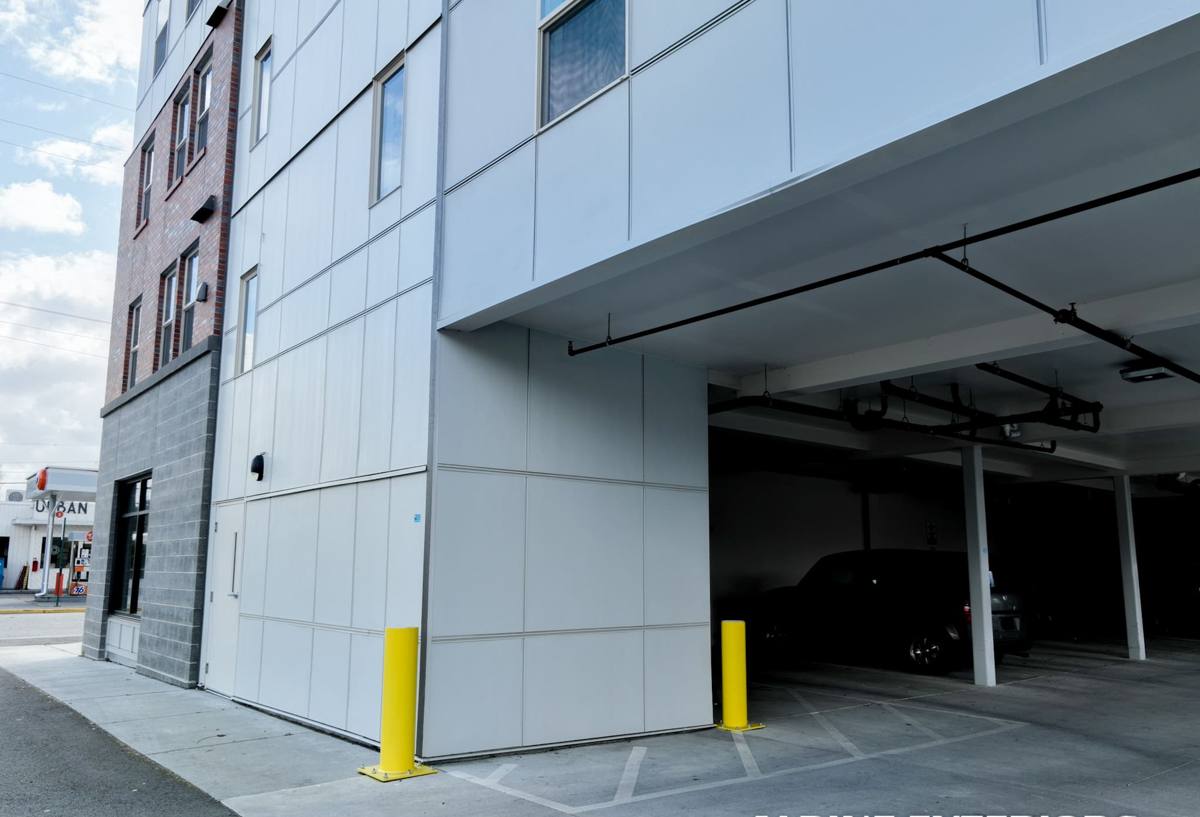
Why James Hardie Fits a Sunnyland Home
James Hardie's fiber cement is a cement, sand, and cellulose fiber composite — it doesn't rot, it doesn't feed moss the way organic materials do, and it's non-combustible, which matters more every wildfire season even on the wet side of the state. But the bigger reason it holds up here specifically comes down to two things: the product formulation and the factory finish.
The HZ5 Formulation for the Pacific Northwest
Hardie doesn't sell one board for the whole country. For this climate zone we install the HZ5 product line, engineered for regions that see sustained moisture, freeze-thaw cycling, and high humidity — which describes western Washington accurately. The formulation is built to resist moisture absorption and the swelling, cracking, and warping that come with it, which is the failure mode that shows up fastest on materials not designed for a climate like ours.
ColorPlus Factory Finish
Most of the color on a Hardie home comes from ColorPlus Technology, a finish baked on at the factory under controlled conditions rather than rolled and brushed on-site after installation. That matters in a place where a painter is fighting rain interruptions, humidity, and short drying windows for a good chunk of the year. A factory-cured finish sidesteps all of that, and it comes with its own finish warranty separate from the substrate warranty on the board itself — two layers of coverage instead of one.
We install James Hardie exclusively. We don't offer LP SmartSide, vinyl, Cemplank, Allura, primed spruce, or cedar, because after years of installing and repairing siding in this climate, the combination of non-combustible fiber cement, a climate-specific formulation, and a factory finish system is what we've found actually holds up on Whatcom County homes without turning into a maintenance project every few years.
What a Correct Installation Actually Involves
James Hardie siding performs the way it's supposed to only when it goes on correctly. The board itself is only part of the system — the flashing, the fastening, the gaps, and the water-resistive barrier underneath it do as much work as the siding you can see, and in a wet climate like this one, getting those details wrong is what causes problems years down the road, not a defect in the material.
Moisture Management Details That Matter Here
Every horizontal seam, every window and door opening, and every point where siding meets a roofline, deck ledger, or foundation needs flashing that directs water out and away from the wall assembly, not just caulk covering a gap. Behind the siding, a properly lapped water-resistive barrier gives the wall a second line of defense if any moisture does get past the cladding — which, in a climate with this much sustained rain, it eventually will, at least in small amounts. The whole point of a correctly built wall assembly is giving that moisture somewhere to go instead of somewhere to sit.
Fastening, Clearances, and Cuts
Hardie specifies exact fastener types, spacing, and placement, along with minimum clearances between the bottom edge of the siding and grade, roofing, decks, and patios. Those clearances aren't arbitrary — they keep the board out of standing water and constant splash-back, which is one of the fastest ways to shorten the life of any siding material. Field cuts also need to be sealed and primed on exposed edges, since a factory finish only protects the surfaces it was applied to at the factory.
| Install Element | What Correct Looks Like | Where Shortcuts Show Up Later |
|---|---|---|
| Flashing at windows/doors | Integrated flashing that sheds water past the opening, not caulk alone | Staining or soft trim below openings within a few wet seasons |
| Water-resistive barrier | Continuous, properly lapped house wrap behind all siding | Hidden moisture damage that isn't visible until siding is removed |
| Bottom clearance | Minimum gap maintained above grade, roofing, and decks per Hardie spec | Wicking and softening along the lowest courses of siding |
| Fastener placement | Correct type, length, and spacing per Hardie's published instructions | Nail pops, cracked boards, or reduced wind/impact resistance |
| Cut-edge sealing | Every field cut primed or sealed before installation | Moisture entry and premature fading at cut edges |
None of these items are visible once the project is finished and the house looks good from the curb — which is exactly why they matter. A siding job can look right on installation day and still fail early if these details were skipped.
Our Process for a Sunnyland James Hardie Project
We walk every Sunnyland project through the same sequence, because skipping steps is how climate-specific problems get built into a wall for the next twenty years.
- Walk-through and assessment: we look at the existing siding, sheathing condition where accessible, drainage around the foundation, and any shaded or moss-prone areas that need extra attention in the plan.
- Tear-off and sheathing check: old siding comes off and the sheathing underneath gets inspected before anything new goes on — this is the point where hidden moisture damage, if any exists, gets caught and addressed instead of covered up.
- Water-resistive barrier and flashing: a new, continuous barrier goes on with proper flashing at every penetration, window, door, and transition point.
- HZ5 Hardie installation: boards are installed to Hardie's published specifications for fastening, clearance, and lap, with all field cuts sealed as they're made.
- Trim, caulking, and finish detail: corners, trim boards, and joints are finished so the wall sheds water the way it's designed to, not just so it looks finished.
- Final walk-through: we review the completed work with you before calling the job done.
Why a Crew That Already Works in Sunnyland Matters
Siding installation isn't identical from one Bellingham neighborhood to the next. A crew that already works in and around Sunnyland has a feel for how shaded, tree-lined lots hold moisture longer, which walls tend to need extra attention to moss and algae exposure, and what the typical age and construction of homes in this part of the city means for what's likely waiting behind the old siding once it comes off. That's not something you get from a crew that installs siding in a completely different climate zone or building era and treats every job the same.
There's also a practical side to local familiarity: knowing the permitting process for Bellingham and Whatcom County, understanding typical lot setbacks and drainage patterns in established neighborhoods, and being available if a warranty question or a follow-up comes up after the job is done rather than being a crew that was in town for one project and gone.
Signs Your Sunnyland Home's Siding May Already Be Failing
Because siding problems in this climate build slowly, a lot of homeowners don't notice until damage has spread further than they'd expect. Worth checking for:
- Soft or spongy spots when you press on the siding, especially near the bottom courses or below windows
- Persistent moss or dark streaking that comes back quickly after cleaning
- Paint that's bubbling, peeling, or chalking heavily, especially on shaded or north-facing walls
- Visible gaps, warping, or boards that have pulled away from the wall
- Rising energy bills without another clear explanation, which can point to a compromised wall assembly
- Interior signs like musty smells or staining on walls that back up to exterior siding
Any one of these on its own isn't necessarily an emergency, but a few together are worth having looked at before the next wet season adds to the damage.
Caring for Hardie Siding After It's Installed
One advantage of a correctly installed Hardie system is that it doesn't ask for much upkeep — but "not much" isn't "none," especially in a climate that grows moss on almost anything left alone long enough.
- Rinse siding gently once or twice a year to keep moss, pollen, and grime from building up, especially on shaded walls
- Trim back landscaping and tree branches that keep siding shaded and damp longer than necessary
- Check caulking at trim, windows, and joints periodically and have any cracked or missing sections resealed
- Keep gutters clear so overflow isn't running down the face of the siding during heavy rain
- Have any impact damage or cracked boards addressed promptly rather than left to let moisture in
What Drives the Cost of a Sunnyland Hardie Project
Every home is different, but a few factors tend to move the price on a James Hardie project in this neighborhood more than others: how much of the existing sheathing needs repair once old siding comes off, how much trim and detail work the home's architecture calls for, the total square footage and number of stories, and whether the project is a full re-side or a partial replacement tied to a repair or addition. We walk through all of that during the on-site assessment so there aren't surprises once the tear-off starts — a big part of why that step is first in our process rather than an afterthought.
If your Sunnyland home's siding is showing its age, or you're planning ahead rather than waiting for a problem, we're happy to take a look and put together a free, no-pressure estimate — no obligation, just an honest read on what your home needs.