 Bellingham Siding
 Cordata's Climate Is Harder on Siding Than It Looks
Cordata sits in north Bellingham, close enough to the water and the weather patterns rolling off the Salish Sea that homes here take on a specific combination of punishment: salt-tinged air, sideways-driving rain off the water and the passes, and long stretches of gray, damp months where surfaces rarely get a chance to fully dry out. None of that is dramatic on any given day. It's the accumulation — season after season — that separates siding that holds up for decades from siding that starts failing at the seams within ten years.
A lot of siding problems in this part of Whatcom County aren't caused by one big storm. They're caused by moisture that never fully leaves. Wood-based and composite products swell, delaminate, or rot from the inside when they stay damp too long. Add the moss and mildew growth that thrives in our shaded, moderate-temperature winters, and you've got a climate that actively works against anything not built and installed specifically for it.
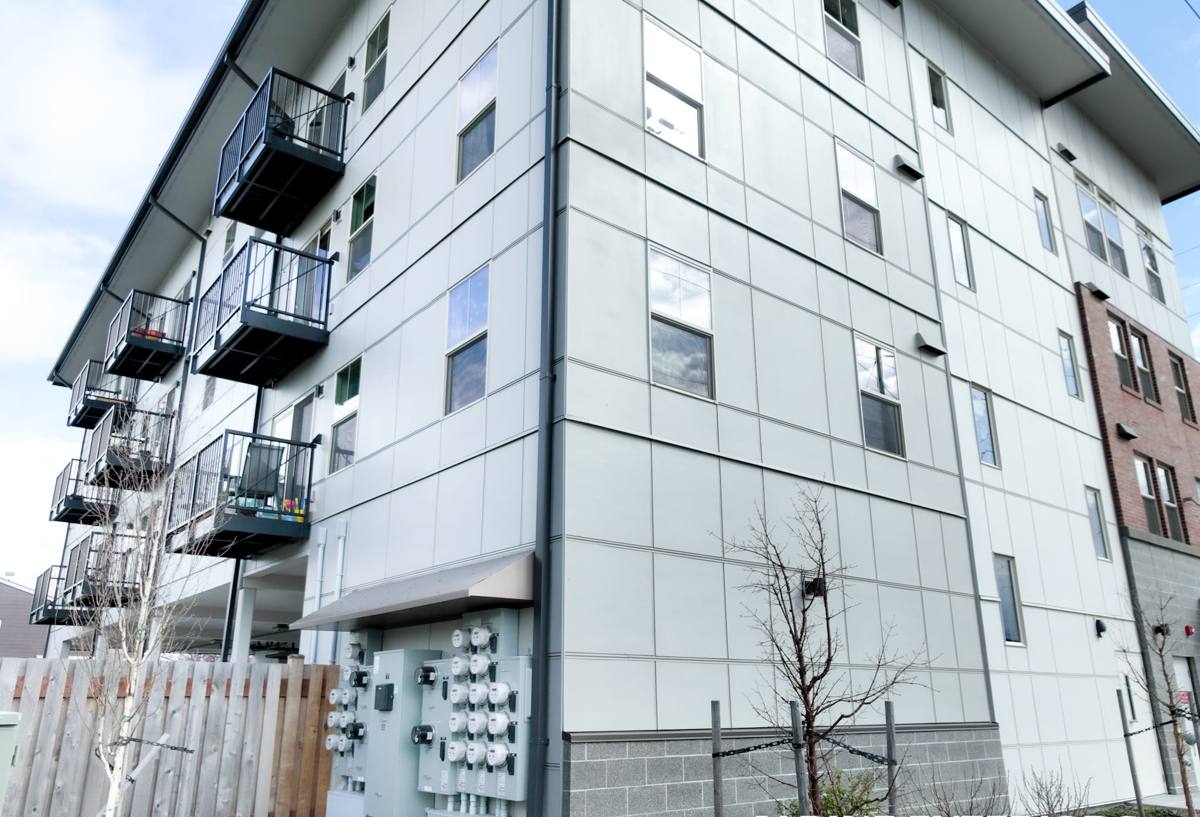
Why We Only Install James Hardie in This Area
We don't install vinyl, LP SmartSide, Cemplank, Allura, primed spruce, or cedar. That's not a marketing line — it's a standard we hold because of what we've seen these products do in exactly this kind of climate over time. Wood and wood-composite sidings need paint film integrity and dry conditions to perform; when those conditions aren't reliably available, maintenance requirements go up and the margin for error goes down. Vinyl handles moisture fine on its own but has real limits in appearance, impact resistance, and how it ages against UV and temperature swings.
James Hardie fiber cement is engineered from cement, sand, and cellulose fiber. It doesn't rot, it isn't a food source for moss or fungus the way wood is, and it holds paint and factory finish far longer than wood-based siding because it doesn't expand and contract with moisture the same way. For a neighborhood like Cordata, where siding sits through months of damp weather every year, that's the difference between a system that needs attention every few years and one that mostly just needs to be left alone.
What a Correct Hardie Installation Actually Involves
James Hardie siding is only as good as the installation behind it. The product itself is engineered for wet climates, but if the water-management details underneath are wrong, moisture still finds its way behind the siding — and fiber cement won't save a house from bad flashing or a missing weather-resistive barrier.
Water management comes first
Every correct installation starts with a continuous weather-resistive barrier, properly lapped and taped, with flashing integrated at every window, door, and horizontal trim transition — not caulked over as an afterthought. Housewrap seams, kick-out flashing at roof-to-wall intersections, and proper drainage planes behind the siding matter more in a climate like ours than in drier parts of the state, because there's simply more water trying to get in over the course of a year.
Fastening and clearance
Hardie's own installation specs call for minimum clearances from grade, roofing, decks, and hardscape — typically several inches — to keep the bottom edge of the siding from sitting in standing water or splashback. Fasteners need to be the correct type and spacing, driven correctly (not overdriven, which cracks the board's edge and creates a moisture entry point). These are the details that separate a siding job that looks right on day one from one that still performs correctly after the tenth wet Bellingham winter.
Joints, caulking, and painted edges
Factory-primed cut edges need to be sealed in the field. Butt joints need to be treated correctly — either flashed or filled with a high-quality, flexible sealant rated for the exposure. Skipping this step is one of the most common shortcuts in the industry, and it's exactly the kind of shortcut that shows up as staining or soft spots a few years later.
Matching the Product Line to the Home
James Hardie makes several distinct product lines, and choosing the right one is about more than looks — it affects how the siding performs against wind-driven rain and how it reads visually against a home's style and lot.
| Product | Best Fit | Notes for Cordata |
|---|---|---|
| HardiePlank Lap Siding | Most single-family homes, traditional and modern styles | Widest color and texture range; handles horizontal rain exposure well when lapped correctly |
| HardiePanel Vertical Siding | Modern designs, accent walls, gable ends | Fewer horizontal joints means fewer potential water-entry points on tall wall sections |
| HardieShingle Siding | Craftsman and cottage-style homes | Adds texture and shadow lines; works well paired with lap siding as an accent |
| HardieTrim | Corners, fascia, window and door surrounds | Non-combustible, paintable trim that won't rot the way wood trim does in constant damp |
Most Hardie products used in this region are the HZ10 formulation, engineered specifically for climates with freeze-thaw cycles and sustained moisture — which describes a typical Whatcom County winter well. Getting this specification right at the ordering stage matters as much as the installation itself.
Dealing With Moss and Shade in North Bellingham
A lot of Cordata's housing stock — like much of north Bellingham — sits among mature trees and landscaping that shade parts of the home for much of the day, especially on north- and east-facing walls. Shade keeps siding wet longer after rain, and that extended dampness is exactly what moss, algae, and mildew need to establish themselves. On wood-based siding, that growth can actually degrade the material over time. On James Hardie's fiber cement, it's a surface issue rather than a structural one — the siding itself doesn't feed the growth or absorb moisture into its core — but it's still worth designing around.
Correct gutter and downspout placement, trim details that shed water away from the wall rather than trapping it, and reasonable clearance from overgrown shrubs and trees all reduce how much moss and algae take hold in the first place. We factor these things into the installation plan rather than treating them as a maintenance problem to deal with later.
Our Process, From Estimate to Finished Siding
- On-site assessment: we walk the exterior, check the condition of the existing sheathing and water-resistive barrier where accessible, and note problem areas — bad flashing, rot, drainage issues — before ever pricing the job.
- Product and color selection: we walk you through the Hardie lines and ColorPlus finish options that fit the home's style and the site's sun/shade exposure.
- Written estimate: a clear scope covering removal, any sheathing repair, water-resistive barrier and flashing work, siding and trim installation, and cleanup — no vague allowances.
- Tear-off and inspection: once old siding comes off, we inspect the sheathing underneath and flag any rot or damage before closing it back up.
- Water management installation: housewrap, flashing, and drainage details go in first and get inspected before any siding goes up.
- Siding and trim installation: installed to Hardie's published specifications for fastening, clearance, and joint treatment.
- Final walkthrough: we go over the finished work with you directly, not just hand you an invoice.
Cost Factors for a Cordata Siding Project
Every home is different, but the factors that move the price on a James Hardie project are consistent. This isn't a quote — it's a guide to what actually drives the number up or down.
| Factor | Why It Matters |
|---|---|
| Home size and wall complexity | More corners, gables, and dormers mean more cutting, trim, and labor time |
| Condition of existing sheathing | Rot or damage found during tear-off adds repair scope before new siding can go up |
| Product line and profile | Lap, panel, and shingle products have different material and labor costs |
| ColorPlus vs. field-painted | Factory-finished ColorPlus reduces long-term maintenance but is priced differently than primed board painted on-site |
| Site access | Tight lots, fencing, or limited driveway access can affect staging and labor time |
| Trim and accent scope | Vertical accent panels, shingle gables, or custom trim details add to material and install time |
Why It Matters to Hire a Crew That Already Works in Cordata
Bellingham and Whatcom County have their own permitting requirements, inspection processes, and, in some newer developments, HOA or covenant guidelines around exterior materials and colors. A crew that's already worked in this specific area knows how to navigate that without it turning into a delay for the homeowner. Just as important, a crew familiar with north Bellingham's microclimate knows which sides of a house typically take the worst wind-driven rain, where moss tends to establish first, and how local drainage patterns affect siding at the foundation line. That's knowledge you don't get from a general specification sheet — it comes from having done the work here before.
Keeping Your Siding Looking Right for the Long Haul
James Hardie siding is low-maintenance compared to wood or vinyl, but "low-maintenance" doesn't mean "no maintenance." A little attention once or twice a year keeps it performing the way it's supposed to.
- Rinse the siding with a garden hose once or twice a year to clear pollen, dust, and early moss or algae growth before it takes hold
- Keep gutters and downspouts clear so water isn't overflowing directly onto siding or pooling at the base of walls
- Trim back shrubs and trees so foliage isn't holding moisture against the siding surface
- Inspect caulking at joints, trim, and penetrations every year or two and re-seal if it's cracking or pulling away
- Touch up any chips or scratches promptly, especially on field-painted trim, to keep bare edges from absorbing moisture
- Watch for any soft spots, staining, or bubbling paint, which can signal a flashing or moisture issue worth checking sooner rather than later
If you're weighing a siding replacement in Cordata and want a straight answer about what your home actually needs, we're happy to take a look. The estimate is free, there's no pressure, and you'll get a clear explanation of the work and the reasoning behind it — use the form below to get started.