 Bellingham Siding
 James Hardie Siding for Birchwood's Coastal Climate
Birchwood is a residential stretch of Bellingham that, like most of Whatcom County, sits close enough to the water and the mountains to catch a specific combination of weather that's harder on an exterior wall than it looks from the street. Salt-tinged air drifts inland off the Sound, rain arrives sideways more often than straight down, and a long, mild, wet stretch of the calendar keeps moss and mildew active for most of the year. None of that makes siding replacement complicated — it makes it a job where the material choice and the installation details matter more than they would in a drier, milder market.
This page is specifically about James Hardie fiber cement siding on Birchwood homes: what the local climate actually demands from a siding system, what a correct install looks like from the framing out, and how we run the job from first walkthrough to final cleanup. We install James Hardie exclusively, so everything below reflects what we've learned putting this specific product on homes in this specific part of Whatcom County, not a generic siding overview.
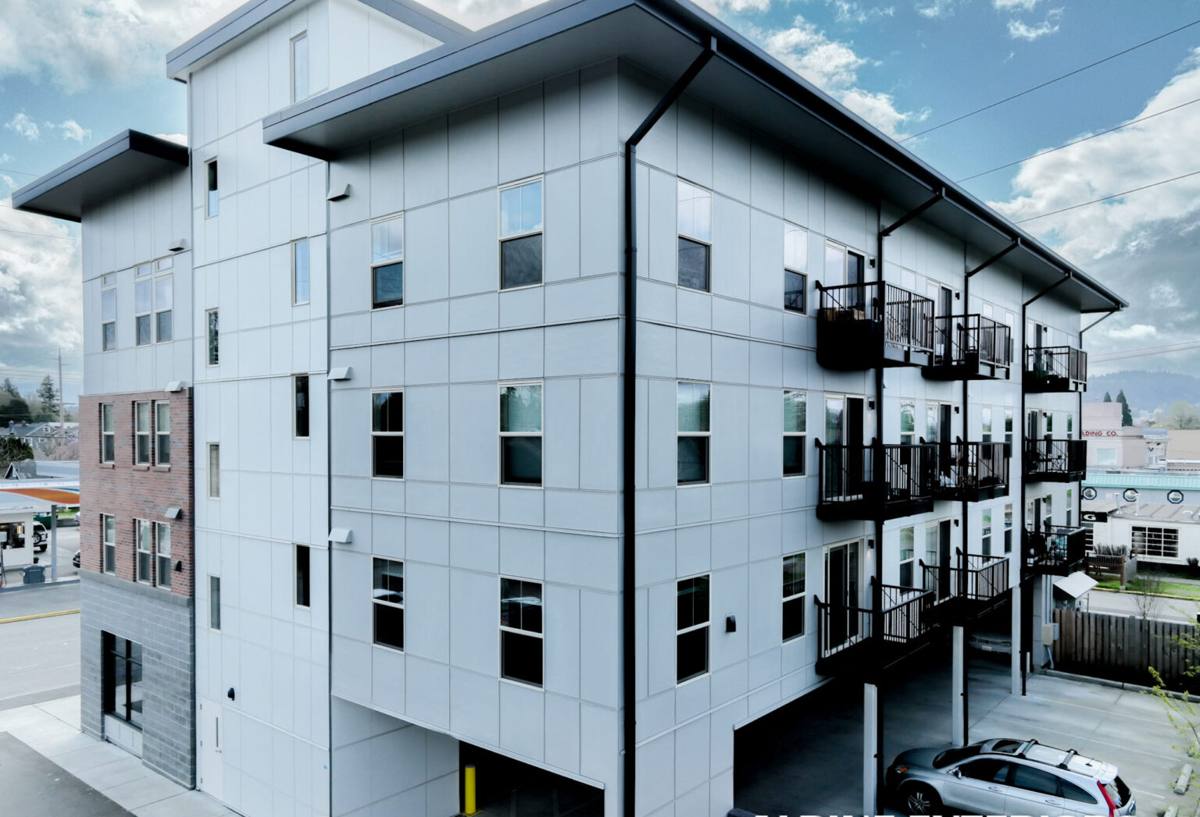
What Birchwood's Weather Actually Does to Siding
Three conditions do most of the damage to siding in this part of Bellingham, and they compound each other rather than acting alone.
Salt Air
Even a few miles inland from the water, salt-laden marine air is a routine part of the exposure on most Birchwood properties. Over years, that air accelerates corrosion on undersized fasteners and lower-grade trim hardware, and it works against factory finishes that weren't engineered with coastal exposure in mind. The effect is slow and cumulative — it rarely causes an obvious early failure, which is exactly why it gets overlooked when a siding product or a fastener spec is chosen for cost instead of climate fit.
Driving Rain
Rain in this area frequently gets pushed by wind rather than falling straight down, which means it reaches lap joints, trim seams, and window and door penetrations that a purely vertical rainfall would never touch. That's a much tougher test for caulked joints, cut edges, and any siding material that depends on an unbroken surface coating to stay watertight.
A Long Moss Season
Mild temperatures and steady moisture keep moss and mildew active across most of the year on shaded lots and north-facing walls, which describes a meaningful share of Birchwood's tree-lined streets. Organic growth on a siding surface holds moisture against the wall behind it, and that trapped moisture is where a lot of long-term siding problems actually start, whether or not the surface growth itself ever looks dramatic.
Why James Hardie Fits This Climate
James Hardie siding is fiber cement — a cured blend of Portland cement, sand, and cellulose fiber, not a wood-based or vinyl product. Because it's inorganic, it doesn't absorb water and swell, rot, or feed insects the way wood-based siding can, and it's non-combustible, which is a real consideration even in a wet coastal county during dry summer stretches. Those properties matter everywhere Hardie is installed, but they matter more here, where moisture exposure is closer to constant than seasonal.
The HZ5 Product Line
James Hardie engineers separate product lines for different climate zones, and the HZ5 line is built specifically for regions with freeze-thaw cycles and sustained moisture exposure — a closer match to Whatcom County's winters than a product engineered primarily for hot, dry climates further south. We install HZ5 on Birchwood homes for that reason, not as a generic default.
ColorPlus Factory Finish
Most Hardie siding we install carries the ColorPlus finish, which is baked onto the board in multiple coats under controlled factory conditions before it ever reaches the property. That's a meaningfully more consistent process than a coating applied on-site in variable weather, and it carries its own finish warranty separate from the substrate warranty on the board itself — a distinction worth understanding since color and material performance are really two different things bundled into one product.
What a Correct Installation Involves
Fiber cement's real-world performance depends heavily on installation quality. A material engineered to resist moisture and combustion can still underperform if the details around it are wrong, which is why we treat installation as a system, not a swap-in replacement for whatever siding was on the wall before.
| Installation Detail | Why It Matters in Birchwood |
|---|---|
| Manufacturer-specified clearances at grade, roofline, and decks | Keeps splash-back and standing moisture away from board edges during our wetter months |
| Correct fastener type, placement, and depth | Resists corrosion from salt-laden air and keeps the water-resistive barrier intact |
| Rain screen or drainage plane behind the siding | Lets any moisture that gets past the surface drain and dry instead of sitting against the wall sheathing |
| Flashing at windows, doors, and penetrations | Directs wind-driven rain away from seams rather than letting it collect at joints |
| Factory-cut edges used wherever possible; field cuts sealed per spec | Preserves the factory finish's protection everywhere the board is actually cut |
| Proper lap and joint spacing | Allows for material movement without opening gaps that wind-driven rain can exploit |
We send certified installers to every Birchwood job rather than treating fiber cement as interchangeable with whatever a crew is used to hanging. Getting the board on the wall is the easy part; getting the water management right underneath it is where a re-side actually earns its price.
Choosing the Right Hardie Product for Your Home
James Hardie makes several distinct siding profiles, and the right one for a given Birchwood home usually comes down to architectural style, wall exposure, and how much detail you want the siding itself to carry versus leaving that to trim.
- HardiePlank lap siding: the most common choice on Birchwood homes, with a horizontal reveal that fits traditional and craftsman-style exteriors and reads cleanly from the street.
- HardiePanel vertical siding: often used as an accent on gables or a more modern-styled home, or in combination with lap siding to break up a larger wall plane.
- HardieShingle: a shingle profile for homes going for a more textured, traditional look without the maintenance burden of real wood shingles.
- HardieTrim: matching trim boards that complete the system around windows, corners, and fascia so the whole exterior is working off the same engineered material, not a mismatched combination of fiber cement field and wood trim.
Texture matters too. A smooth finish shows more sheen in direct light, while a cedarmill texture reads more traditional and diffuses light differently under our frequently overcast skies. We walk through these options against your specific home and wall orientation rather than defaulting to whatever's fastest to order.
How Our Process Works
A re-side is a significant project on your home, and we keep the process structured so you know what's happening at each stage rather than waiting for surprises.
- In-person inspection: We walk the property ourselves, check the existing siding and sheathing condition, and note wall orientation and exposure rather than estimating from a photo.
- Written estimate: You get an itemized bid covering removal, sheathing repair if needed, water-resistive barrier, flashing, Hardie product selection, and cleanup — not a single vague number.
- Product and color selection: We go through HZ5 product lines, profiles, and ColorPlus color options together, factoring in your home's exposure and the surrounding streetscape.
- Scheduling around weather: We build reasonable flexibility into the timeline, since wet-season delays are a normal part of working in this region rather than an excuse we reach for later.
- Tear-off and sheathing inspection: Old siding comes off completely so we can see and address any hidden moisture damage before anything new goes on the wall.
- Installation to manufacturer spec: Water-resistive barrier, flashing, and Hardie siding go on in that order, with particular attention to clearances, fastening, and joint detailing.
- Final walkthrough and cleanup: We review the finished exterior with you in person and do a full site cleanup before considering the job done.
Cost Factors Worth Understanding
Two bids for the same Birchwood home can land thousands of dollars apart, and the gap is almost always real scope, not one contractor simply padding a number. Understanding what drives the cost makes it much easier to compare estimates that look nothing alike on paper.
| Factor | What It Affects |
|---|---|
| Full tear-off vs. installing over existing siding | Whether hidden sheathing damage gets found and repaired before new siding goes on |
| Product line and profile (HZ5 Plank, Panel, Shingle) | Material cost and how the finished exterior reads architecturally |
| ColorPlus finish vs. primed-for-field-paint boards | Long-term color retention and whether a separate finish warranty applies |
| Trim scope (windows, corners, fascia) | How much of the exterior is unified under the Hardie system versus mismatched materials |
| Wall exposure and access | Labor time, staging needs, and how much weather protection the job requires mid-install |
| Sheathing or framing repair | Whether hidden moisture damage from the old siding needs to be addressed before re-siding |
A written estimate that itemizes these components separately tells you far more than a single lump-sum figure, and it's worth asking any contractor to walk you through exactly what's included before comparing two bids side by side.
Why Hiring a Crew That Already Works in Birchwood Matters
A crew that regularly works Birchwood siding jobs has already seen how salt air corrodes underspecified fasteners over time, how wind-driven rain finds its way through improperly lapped joints, and which wall orientations stay damp longest through the wet months. That's practical, earned knowledge that shows up in dozens of small decisions on a job — decisions a crew unfamiliar with this specific stretch of Whatcom County might not think to make at all.
It also matters after the job wraps. A workmanship warranty is only as good as the company standing behind it years later, and a contractor with an established, ongoing presence in the Bellingham area is one you can actually reach if a question comes up down the road, rather than a name that's moved on to a different region.
A Practical Checklist Before You Choose an Installer
- Are they a certified James Hardie installer, not just generally experienced with siding?
- Does the estimate specify product line, profile, and finish, not just "new siding"?
- Is flashing work at windows, doors, and penetrations explicitly written into the bid?
- Do they carry current WA contractor licensing, liability insurance, and workers' compensation?
- Can they point to recent, real work in or near Birchwood or Bellingham?
- Does the bid clearly separate the manufacturer's material warranty from the contractor's own workmanship warranty?
Signs Your Birchwood Home May Need New Siding
Siding rarely fails all at once. It tends to give warning signs first, and catching those early is often the difference between a targeted repair and a full re-side.
- Visible moss or dark streaking on shaded or north-facing walls that doesn't wash off easily
- Soft spots, bubbling, or warping in the existing siding, especially near grade or roofline transitions
- Cracking or gaps opening up at lap joints and trim seams
- Peeling or chalking paint on wood-based siding that's outpacing your repainting schedule
- Rising heating or cooling costs that could point to moisture-compromised insulation behind the siding
- Visible rust streaking from fasteners or trim hardware
If any of this sounds familiar, it's worth having the exterior looked at before the next stretch of wet weather rather than waiting for a problem to force the decision.
If you'd like an honest, no-pressure look at your Birchwood home and a written estimate you can compare against anything else you've received, we're glad to come take a look. Use the form below to request a free estimate.