 Bellingham Siding
 Why Happy Valley Siding Wears Differently Than It Should
Happy Valley sits close enough to Bellingham Bay to catch salt-laden air off the water, and like most of the neighborhoods ringing the bay, it gets the full brunt of Whatcom County's wet season. That combination is harder on exterior siding than most homeowners realize. Salt air accelerates corrosion on fasteners and metal trim, driving rain forces water sideways into every gap and seam a wall assembly has, and the mature tree canopy that gives Happy Valley its character also means long stretches of shade where siding never fully dries out between storms. Add a moss season that can run from October through May in a wet year, and you have a climate that punishes any siding material with a weak spot.
This isn't a reason to panic about your home's exterior — it's a reason to be deliberate about what goes back up when the old siding comes off. A siding replacement done right for Happy Valley's specific conditions should last decades. One done generically, without accounting for shade, moisture load, and salt exposure, can start showing problems in five to ten years.
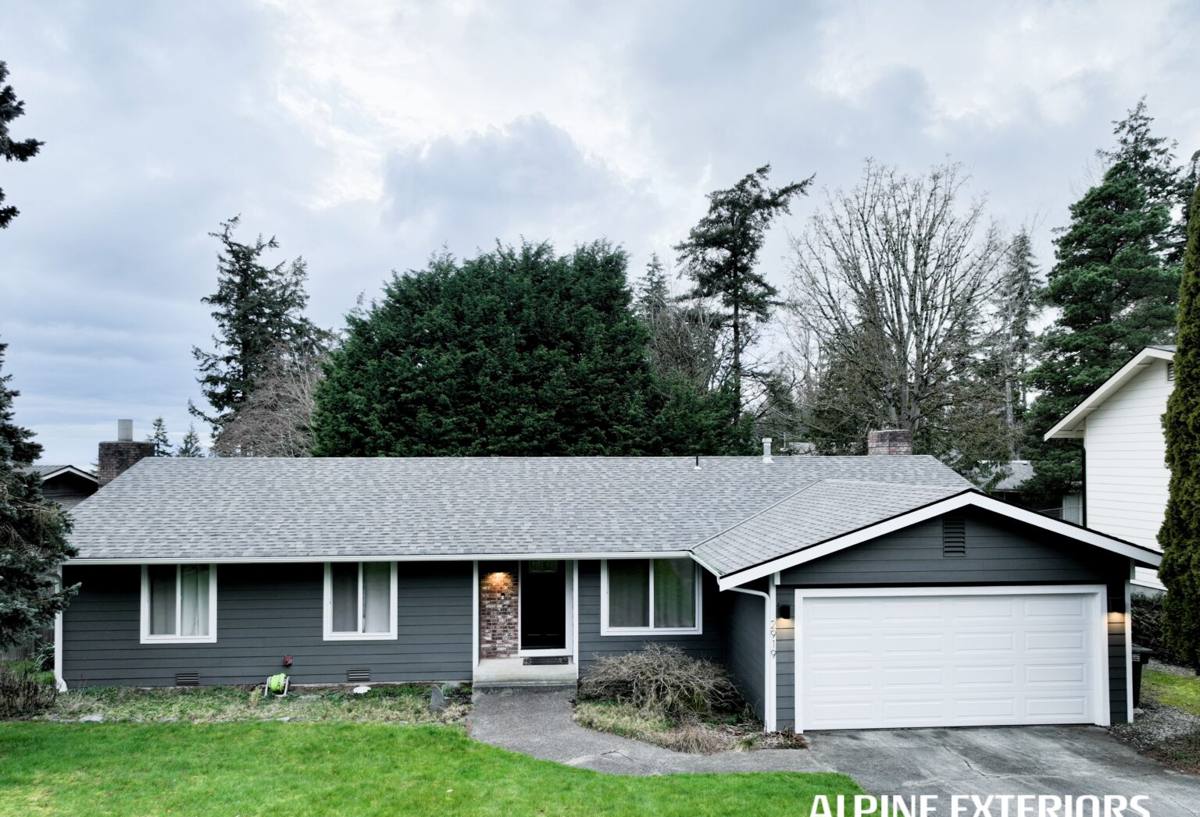
Signs a Happy Valley Home Needs Siding Replacement, Not Just Repair
Siding failure in this climate is usually gradual, and homeowners often patch symptoms for years before addressing the underlying material. Here's what typically signals that repair has reached its limit:
- Soft, spongy, or crumbling siding when pressed, especially near the bottom courses and around window and door trim
- Paint that won't hold — blistering, peeling, or needing a fresh coat every two to three years instead of every seven to ten
- Persistent moss, algae, or black streaking that comes back within weeks of cleaning, particularly on north- and east-facing walls under tree cover
- Visible gaps, warping, or cupping in individual boards or panels
- Rot at butt joints, corners, or anywhere siding meets a roofline, deck ledger, or window flashing
- Rising energy bills with no other explanation, which can point to a failing weather barrier behind the siding
- Interior signs — musty smell, staining on interior walls near exterior corners, or soft drywall — that suggest moisture has already gotten past the siding
If you're seeing two or more of these, especially the rot and moisture signs, it's worth having the wall assembly evaluated rather than just the visible siding. In a climate this wet, what's happening behind the boards matters as much as what you can see.
What a Correct Siding Replacement Actually Involves
It starts with what's underneath
Swapping old siding for new is the easy part. The work that actually determines how long a replacement lasts happens underneath: inspecting and replacing damaged sheathing, correcting any prior flashing mistakes around windows and doors, and installing a weather-resistant barrier that's detailed properly at every penetration. In a high-moisture climate like Bellingham's, a rushed or skipped step here is the single biggest reason siding jobs fail early — not the siding material itself.
Flashing and drainage are non-negotiable
Water is going to hit the wall. The question is whether it's directed back out or trapped inside. Correct installation means head flashing above every window and door, proper kick-out flashing where roof lines meet walls, and a drainage plane that lets any moisture that does get behind the siding find its way back out instead of sitting against the sheathing. This is especially important on the shaded, tree-covered lots common in Happy Valley, where walls stay damp longer after every rain.
Fastening and joints
Fasteners need to be corrosion-resistant given the salt exposure this close to the bay, driven correctly (not overdriven, not underdriven), and spaced to manufacturer specification. Joints and seams should be tight, properly caulked where appropriate, and never relying on caulk alone to do a flashing detail's job.
Material Matters More Here Than in Drier Climates
We install James Hardie fiber cement siding exclusively, and Happy Valley's climate is a good example of why. Fiber cement doesn't feed mold or moss the way wood-based products can, it doesn't absorb and swell with moisture the way engineered wood does, and it holds up to direct salt-air exposure far better than most alternatives without special coatings or constant upkeep. The factory-applied ColorPlus finish also matters in a shaded, damp neighborhood — a finish that's baked on and warrantied against fading holds its look through a long moss season in a way that field-applied paint struggles to match.
| Factor | Why it matters in Happy Valley |
|---|---|
| Moss and algae resistance | Shaded lots and tree cover keep siding damp longer, favoring growth on porous or wood-based surfaces |
| Moisture absorption | Long wet seasons punish materials that swell, cup, or soften when they can't fully dry out |
| Salt air exposure | Proximity to Bellingham Bay accelerates corrosion of fasteners and degradation of untreated finishes |
| Finish durability | A factory-cured finish holds color and seal integrity longer than field-applied paint in a wet climate |
| Fire resistance | Non-combustible fiber cement adds a layer of protection increasingly valued in Western Washington |
We're not going to pretend every siding product on the market is equally suited to this environment — it isn't. That's the reason we standardized on one system instead of offering several.
Our Siding Replacement Process
- On-site evaluation. We walk the exterior, check for soft spots and moisture damage, and look at drainage, tree cover, and sun exposure specific to your lot.
- Written estimate. A clear scope of work and cost — no vague allowances, no pressure to sign on the spot.
- Tear-off and inspection. Old siding comes off and we inspect the sheathing and framing underneath before anything new goes up. Any rot or damage gets addressed, not covered.
- Weather barrier and flashing. A properly detailed drainage plane and flashing at every window, door, and penetration.
- Siding installation. James Hardie panels or lap siding installed to manufacturer specification, with corrosion-resistant fasteners appropriate for a coastal climate.
- Trim, caulking, and final detailing. The details that determine how the job ages, not just how it looks on install day.
- Final walkthrough. We go over the finished work with you before calling the job done.
Working Around Mature Trees and Shade
A lot of Happy Valley's charm comes from its tree cover, but that same tree cover changes how a siding job should be approached. Shaded walls dry more slowly after rain, which means moss and algae get a head start unless the siding and finish resist it well. Falling debris — needles, seed pods, small branches — also collects in ground-level areas and against foundation walls, so proper clearance and drainage detailing at the base of the siding matter more here than on an open, sunny lot. We factor tree cover and sun exposure into how we detail flashing and drainage on every Happy Valley project, not as an afterthought but as part of the initial evaluation.
What Siding Replacement Typically Costs
Every home is different, and the only way to get an accurate number is a walk-through — but these are the main factors that move the price on a Happy Valley project:
| Cost factor | Why it moves the price |
|---|---|
| Extent of hidden damage | Rot or soft sheathing found during tear-off adds repair scope beyond the original estimate |
| Home size and wall complexity | More corners, dormers, and trim detail mean more labor and material per square foot |
| Siding profile chosen | Lap siding, panel systems, and accent details carry different material and labor costs |
| Access and site conditions | Steep or wooded lots, common on Happy Valley's hillside terrain, can affect staging and equipment access |
| Trim and flashing scope | Full trim replacement versus reusing sound existing trim changes both cost and long-term performance |
Be cautious of any bid that's dramatically lower than the others without explanation — it's usually a sign that flashing, tear-off inspection, or material quality is being cut somewhere you won't see until years later.
Why Local Experience in Happy Valley Matters
A crew that's worked this specific neighborhood knows things a generic estimate won't capture: which wall orientations hold moss the longest, how the hillside terrain and tree cover on a given block affect drainage and staging, and what Bellingham's permitting and inspection process expects for a residential re-side. That familiarity shows up in fewer surprises mid-project and a finished job that's actually built for the conditions it has to survive, not just for how it looks the day it's installed. It also means we're not learning Whatcom County's climate on your house — we already know what driving rain and a long moss season do to a wall assembly that isn't detailed correctly.
If your Happy Valley home's siding is showing its age, we're happy to take a look and give you a straight assessment — no pressure, no inflated estimate to scare you into a decision. Reach out for a free, no-obligation estimate using the form below.