 Bellingham Siding
 Deck Repair Built for Happy Valley's Conditions
Happy Valley sits close enough to the water and the tree cover that decks here take a specific kind of beating. It's not one big storm that wrecks a deck in this part of Bellingham — it's the slow, steady combination of salt-tinged air, long stretches of driving rain, and a moss season that can run from October well into spring. A deck that would hold up fine in a drier inland climate can develop real structural problems here within a handful of years if it wasn't built or maintained with this environment in mind.
We work on decks throughout Whatcom County, and Happy Valley shows up on our schedule often enough that we know the pattern: homeowners usually call us about a soft spot, a wobbly rail, or a stair that's started to give — not because they're chasing a cosmetic upgrade, but because something finally felt unsafe underfoot. Our job is to figure out how far that problem actually goes, then fix the right amount of deck — no more, no less.
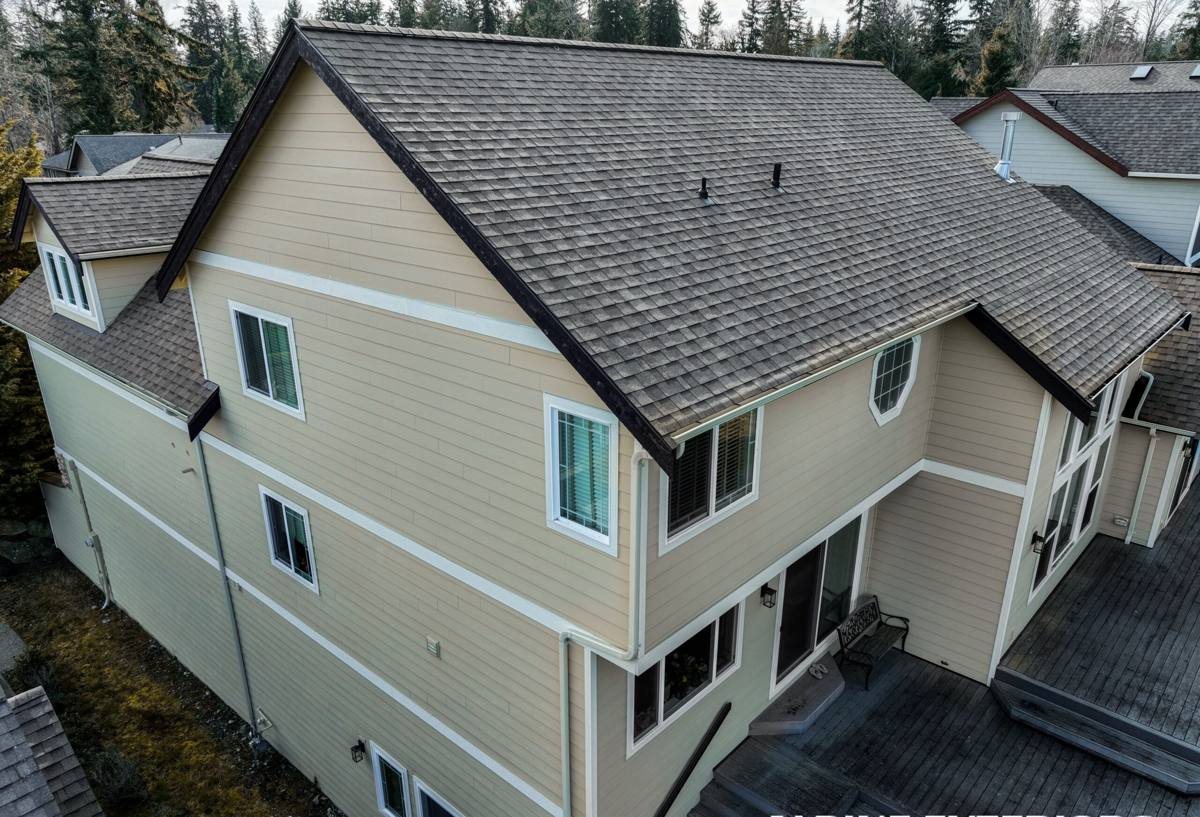
Why This Climate Is Hard on Decks
Salt Air and Metal Fasteners
Proximity to Bellingham Bay means the air carries a low level of salt, even well inland from the immediate shoreline. Over years, that salt content accelerates corrosion on lower-grade fasteners, joist hangers, and structural screws. Corroding hardware doesn't always show on the surface — the deck boards can look fine while the connections underneath are quietly losing strength.
Driving Rain and Trapped Moisture
Whatcom County doesn't get punishing downpours as often as it gets long, wind-driven rain that finds its way into every gap, seam, and end-grain cut. Decks with poor drainage details, tight board spacing, or ledger connections that weren't flashed correctly end up holding water against wood and framing far longer than the wood was designed to tolerate.
Moss, Shade, and Slow Drying
Mature tree cover is common around Happy Valley, and it's a mixed blessing for decks. Shade keeps a deck cooler in summer, but it also means surfaces stay damp longer after every rain. Moss and algae take hold on boards and stair treads that don't get much direct sun, and beyond being a slip hazard, that persistent moisture accelerates rot in untreated or under-maintained wood.
What "Deck Repair" Actually Covers
Deck repair is a broad term, and part of doing this job right is being specific about what's actually wrong before quoting a fix. We break it down into a few categories:
- Surface repair — replacing individual boards, stair treads, or rail caps that have cracked, cupped, or rotted, while the frame underneath is still sound.
- Structural repair — sistering or replacing joists, beams, or posts that have softened, addressing undersized or corroded framing connectors, and correcting ledger board attachment where it's failed or was never flashed properly.
- Railing and stair repair — tightening or rebuilding guardrails and stair stringers to meet a safe, stable standard, since these take direct impact and weight loads that flat decking doesn't.
- Drainage and flashing correction — fixing the details that let water sit against wood in the first place, since replacing boards without fixing drainage just buys a few more years before the same failure repeats.
How We Assess a Deck Before Quoting Anything
We don't quote deck repair from a driveway look or a couple of photos. A proper assessment includes:
- Checking the ledger board connection to the house — this is the single most common source of hidden failure and the most serious to get wrong.
- Probing joists, beams, and posts with a screwdriver or awl at ground contact points and anywhere staining or softness is visible, to find rot before it's visible from the top.
- Inspecting fasteners and hardware for corrosion, especially where dissimilar metals were mixed or where lower-grade hardware was used originally.
- Testing the railing system for lateral movement — a rail that flexes under hand pressure is a repair priority regardless of how the rest of the deck looks.
- Looking at grading and drainage under and around the deck, since standing water at the base of posts is a slow but serious threat.
That inspection tells us whether we're looking at a straightforward board-and-rail refresh or a repair that needs to start with the frame. We'd rather tell a homeowner the harder truth up front than replace decking over a compromised structure.
Repair vs. Replacement: How We Help You Decide
Not every deck with problems needs to be torn out. But there's a point where patching individual symptoms costs more over time than addressing the deck as a whole. Here's how we think through that decision with homeowners:
| Factor | Leans Toward Repair | Leans Toward Replacement |
|---|---|---|
| Framing condition | Joists and beams are sound; damage is isolated | Multiple joists or the ledger connection show rot |
| Age of deck | Under 15-20 years, built to a reasonable standard | Older deck nearing the end of its practical service life |
| Extent of moss/moisture damage | Limited to a few boards or a shaded corner | Widespread staining, softness, or moss across most surfaces |
| Code and safety details | Railings and stairs meet a safe standard already | Rail height, spacing, or stair rise/run don't meet a safe standard |
| Budget goal | Extend usable life for the next several years | Long-term investment, want it built right for decades |
We'll give you our honest read on which side of that table your deck falls on, and we won't push a full rebuild when a targeted repair genuinely solves the problem.
Material Choices for a Wet, Shaded Climate
When we replace boards, framing, or rail components on a Happy Valley deck, material choice matters more here than it would in a drier climate. Pressure-treated framing lumber is standard for structural work, but we're careful about fastener compatibility — some treated lumber chemistries accelerate corrosion in certain metals, and using the wrong hardware combination undoes the benefit of treating the wood in the first place.
For decking surfaces, homeowners in this area are choosing between traditional wood and composite boards, and both have real trade-offs worth understanding rather than a one-size-fits-all answer:
- Cedar or treated wood — a familiar look and lower upfront cost, but it needs regular cleaning and refinishing to resist moss and moisture staining in a shaded, damp yard.
- Composite decking — more resistant to moisture absorption and moss staining over time, with a higher upfront material cost and less flexibility if a board is damaged and needs an exact match years later.
We'll walk through what makes sense for your specific deck's sun exposure, budget, and how much upkeep you want to take on yourself.
Our Repair Process
Once we've agreed on scope, the work generally follows this order:
- Remove and dispose of damaged boards, framing, or hardware identified in the assessment.
- Address the root cause first — correcting flashing, drainage, or ledger attachment before any new decking goes down over it.
- Rebuild or sister structural members to current framing standards, with corrosion-appropriate fasteners throughout.
- Install new decking, stair, or rail components, matching existing material where reasonable or advising on an upgrade where it makes sense.
- Final walk-through with the homeowner, checking rail stability, stair safety, and overall finish before we consider the job done.
Maintenance That Actually Extends Deck Life Here
A repaired deck still needs some seasonal attention in this climate to get its full lifespan. A short, realistic checklist:
- Clear leaves and debris from between boards each fall before the wet season sets in — trapped organic matter holds moisture against wood.
- Treat moss and algae growth on shaded boards and stairs before it builds up, both for slip safety and to limit surface staining.
- Check railings for looseness once a year — a joint that's just started to loosen is a five-minute fix; one left alone becomes a structural repair.
- Keep gutters and downspouts near the deck clear so runoff isn't being directed onto or under the structure.
- Reseal or refinish wood decking on the manufacturer's recommended schedule rather than waiting until graying or cupping is already visible.
Why Hire a Crew That Already Works This Neighborhood
There's a real advantage to hiring a contractor who already understands what Happy Valley's mix of shade, moisture, and salt air does to a deck over time, rather than one applying a generic regional approach. We know which framing details tend to fail first in this kind of exposure, which fastener choices hold up, and where drainage problems typically originate on homes built to this area's older and newer construction standards alike. That local pattern recognition shortens the assessment, sharpens the diagnosis, and helps make sure the repair addresses the actual cause rather than just the visible symptom.
If you've got a deck in Happy Valley that's showing soft spots, a shaky rail, or moss that keeps coming back no matter how often you clean it, we're glad to take a look. We offer free, no-pressure estimates — use the form below to get one scheduled.