 Bellingham Siding
 Windows Built for Happy Valley's Weather, Not Just the Opening
Happy Valley sits close enough to Bellingham Bay that salt-laden air is a real factor in how fast window frames and hardware age, and Whatcom County's wet season doesn't just mean rain — it means weeks at a time of driving, wind-blown rain hitting the same wall assemblies over and over. Add in a moss season that runs long here compared to drier parts of the state, and you have three separate stresses working on a window opening year-round: salt corrosion on metal components, water intrusion at the frame and sill, and constant surface moisture that never fully dries between storms. A window that was built for a subdivision in a dry inland climate is not automatically the right window for this neighborhood, even if it carries the same energy rating on the label.
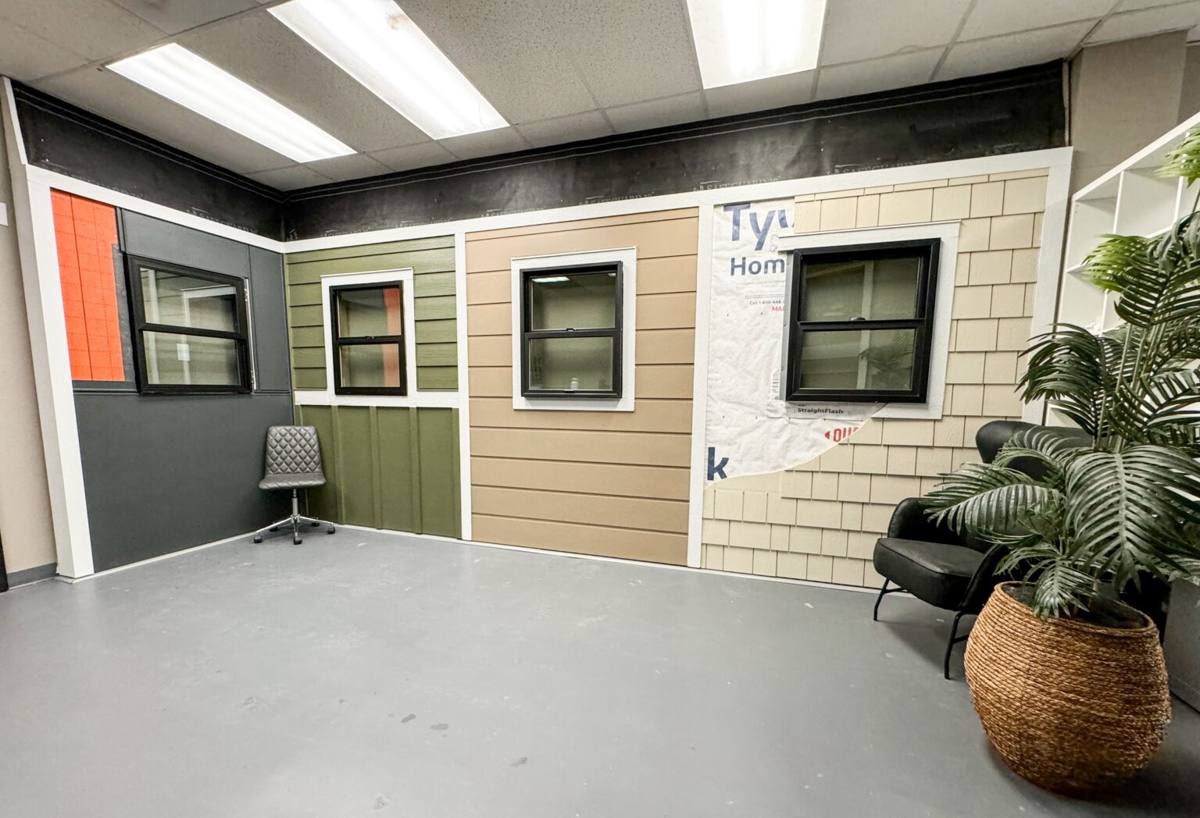
"Custom" in this context doesn't mean upgraded trim or fancy grille patterns. It means the window unit, the flashing detail, and the installation method are all matched to the specific opening, the specific wall assembly, and the specific exposure that house has in Happy Valley. That's a different job than swapping a stock size into a stock opening, and it's why we treat every quote here as a site-specific assessment rather than a catalog order.
What "Custom" Actually Means on a Happy Valley Job
Non-Standard Openings Are the Norm, Not the Exception
Homes in this part of Bellingham span a wide range of ages and building styles, and older openings rarely match today's standard window sizes. Settling, prior remodels, and hand-framed construction all mean actual rough openings can be an inch or more off from nominal. A true custom order is measured to the existing opening — not adjusted to fit a stock size — which avoids the shimming and gap-filling that leads to leaks down the road.
Full-Frame Replacement vs. Insert Replacement
There are two honest approaches to replacing a window, and the right one depends on the condition of what's already there:
- Insert (pocket) replacement: the new window fits inside the existing frame, which stays in the wall. Faster and less invasive, but only appropriate when that existing frame is dry, square, and structurally sound.
- Full-frame replacement: the old frame comes out entirely, exposing the rough opening, sheathing, and weather barrier underneath. Necessary whenever there's evidence of past water intrusion, rot, or a frame that's out of square.
Given how much moisture this area sees, we check for hidden water damage before recommending either method — an insert replacement over a compromised frame just seals a problem behind a new window instead of fixing it.
Signs a Happy Valley Home's Windows Are Losing the Fight
Because moisture damage builds slowly, homeowners often notice cosmetic symptoms years after the real problem started. Walk your exterior and interior sills and look for these:
- Soft or spongy wood at the sill or lower frame corners when pressed
- Paint that's bubbling, peeling, or chronically re-failing on the same window
- Visible moss, algae, or green staining building up on the frame or sill exterior
- Condensation forming between panes (a sign the seal has failed on a double- or triple-pane unit)
- A draft or cold spot felt near the frame edge even with the window fully latched
- Difficulty opening, closing, or latching a window that used to operate smoothly
- Visible daylight or gaps around the frame from outside
Any one of these on its own isn't necessarily an emergency, but two or more on the same window usually means the seal or flashing has already let water in behind the finish surface.
Frame Material Comparison for This Climate
There's no single "best" window material — each has real trade-offs, and the right call depends on the home, the budget, and how exposed that particular wall is to wind-driven rain and salt air.
| Frame Material | Moisture / Salt Air Behavior | Maintenance | Typical Cost Range* |
|---|---|---|---|
| Vinyl | Won't rot or corrode; performs well against salt air; can flex slightly in temperature swings | Low — occasional cleaning | Lower end |
| Fiberglass | Very stable dimensionally, strong resistance to moisture and corrosion, holds paint well | Low | Mid to upper |
| Wood-clad (exterior clad, wood interior) | Good performance if cladding and flashing details are correct; interior wood needs a dry, well-sealed exterior shell | Moderate — depends on cladding condition over time | Upper end |
| Aluminum | Can corrode faster in salt-air exposure unless properly finished; conducts cold, more condensation risk | Low to moderate | Varies |
*Cost ranges vary by unit size, glazing package, and install complexity — we give homeowners a real number after seeing the specific opening, not a quote off a price sheet.
Our standard is that whatever material a homeowner chooses, the installation detail matters more than the brand name on the frame. A mid-range window installed with correct flashing will outperform a premium window installed poorly, every time.
Why We're Selective About Certain Products
We don't install every product on the market, and it's not because a given product is inherently bad — it's because some assemblies require installation tolerances or maintenance schedules that don't hold up well against sustained wind-driven rain and long wet seasons unless the homeowner commits to ongoing upkeep. We'd rather steer a homeowner toward a product that matches their maintenance expectations than sell something that looks good on day one and becomes a callback in year three.
How We Approach a Happy Valley Window Job
- On-site assessment: we check the existing frames, sills, and surrounding wall for hidden moisture damage before quoting anything.
- Precise measurement: each opening is measured individually — we don't assume uniform sizes across a house.
- Method decision: insert or full-frame, based on what we find, explained in plain terms with the reasoning behind it.
- Removal and prep: old units come out carefully, and we inspect the rough opening and weather barrier as soon as it's exposed.
- Flashing and sealing: sill pan flashing, integration with the existing weather-resistive barrier, and proper sealant placement — this step is where most long-term failures are prevented or created.
- Install and shim: unit is set plumb, level, and square, then shimmed and fastened per manufacturer spec.
- Interior and exterior finish: trim, caulking, and touch-up work to match the existing finish.
- Final check: operation, latch function, and a visual seal inspection before we call the job done.
Flashing and Moisture Management: The Part No One Sees
In a climate with this much sustained rain, the flashing detail is more important than the window itself. A correctly installed sill pan directs any water that gets past the sash out and away from the wall framing instead of letting it pool at the sill. The new window's flashing also has to integrate properly with the existing weather-resistive barrier on the wall — lapped correctly, top over bottom, so water sheds outward rather than working its way behind the siding. Skipping or rushing this step is the single most common cause of the frame rot and interior water stains we get called out to fix on other contractors' work. It's invisible once the trim goes back on, which is exactly why it has to be done right the first time.
Energy Performance in a Marine Climate
Whatcom County's climate is milder than the interior Northwest, but the sustained cloud cover, humidity, and cool temperatures mean condensation resistance matters as much as raw insulation value. When we talk through glazing options with a homeowner, we're weighing:
- U-factor: how well the window resists heat transfer — lower is better for winter comfort and heating costs.
- Condensation resistance: a rating that matters more here than in drier climates, since interior condensation on cold glass is a common complaint in coastal Washington homes.
- Solar heat gain: less critical on north- and east-facing walls, more relevant on sun-exposed elevations.
We size the glazing package to the wall's actual exposure rather than defaulting to one spec for the whole house.
Why a Crew That Already Works Happy Valley Matters
Window replacement done wrong doesn't usually fail on day one — it fails two or three winters later, when the flashing detail was never right and rain finally finds its way in. A crew that regularly works this specific neighborhood has already seen how its housing stock ages, what its typical rough openings look like, and how the local wet-season and salt-air exposure actually plays out over time — not in a manual, but in callbacks and repairs. That local pattern recognition shows up in smaller things too: knowing what City of Bellingham permitting a given scope of work requires, and being close enough to respond quickly if a homeowner has a warranty question after a bad storm.
Get a Straight Answer on Your Windows
If you're seeing early signs of trouble — drafts, fogging glass, soft sills, or a window that's just harder to operate than it used to be — it's worth having someone look before those symptoms turn into a bigger repair. We offer free, no-pressure estimates for Happy Valley homeowners, and we'll tell you honestly whether you need full replacement, a targeted repair, or nothing at all yet. Use the form below to get a time on the calendar.