 Bellingham Siding
 Why Silver Beach Homes Take a Beating From Bellingham Weather
Silver Beach sits close enough to open water that homes here deal with a steady diet of moisture-laden marine air, wind-driven rain, and long stretches of gray, damp weather that never really dries out. That's true across most of Bellingham and Whatcom County, but homes with more direct exposure to wind off the water tend to show wear on their siding faster than homes tucked further inland. Salt-tinged air accelerates corrosion on fasteners and trim, driving rain finds every gap in a poorly detailed installation, and shade from mature trees keeps north- and east-facing walls damp for days after a storm passes.
None of that is unusual for the Pacific Northwest. What matters is whether the siding on your house was actually built and installed to handle it, or whether it's just surviving on borrowed time. We've replaced enough failing siding on Whatcom County homes to know the difference between a product that's engineered for this climate and one that's merely tolerating it.
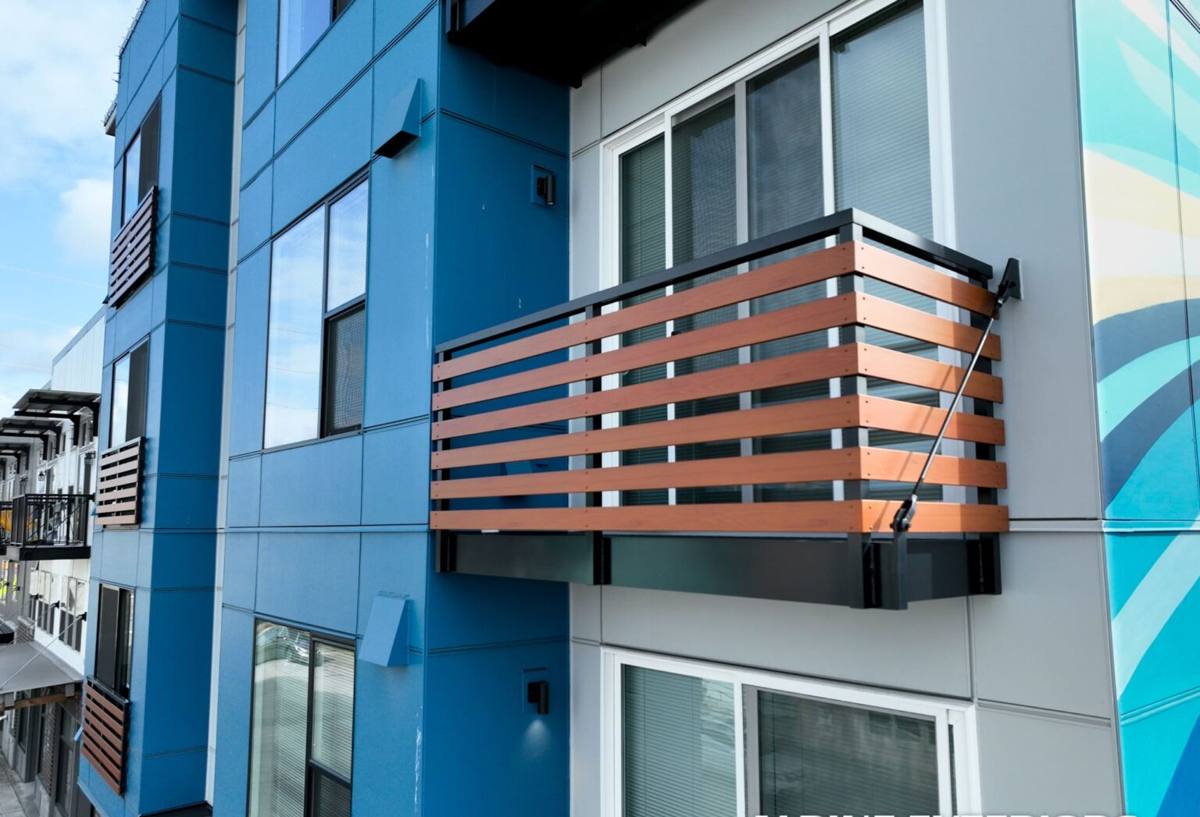
What Happens When Siding Isn't Built for This Kind of Exposure
Wood-based siding products — cedar, primed spruce, and engineered wood panels — depend on paint film and caulk to keep water out. In a climate where it can rain steadily for days and humidity rarely drops enough to let wall assemblies fully dry, that paint film is under constant stress. Once it cracks or the caulk lines fail, moisture gets behind the siding and stays there. That's when you start seeing soft spots, swelling at panel edges, and eventually rot that isn't visible until it's already spread.
Vinyl siding avoids the paint problem but brings its own issues in this climate: it can't be caulked tight at seams without trapping moisture behind it, it becomes brittle and prone to cracking in cold snaps, and it does nothing to stop moss and algae from taking hold in shaded, damp areas. A long moss season means anything with texture or seams that hold moisture becomes a growth surface, and that growth traps even more water against the wall.
Why We Install Only James Hardie Fiber Cement Siding
We made the decision years ago to install James Hardie fiber cement exclusively — no LP SmartSide, no vinyl, no Cemplank, no Allura, no primed spruce or cedar. That's not a marketing position; it's a standard we hold because of what we've seen happen to the alternatives in exactly this kind of climate.
A Factory Finish That Doesn't Depend on the Weather Cooperating
Hardie's ColorPlus finish is baked on in a factory under controlled conditions, not brushed on outdoors between rain showers. That matters here more than almost anywhere, because field-painting siding in a climate with this much moisture and this few reliably dry stretches is a recipe for uneven coverage and early failure. A factory finish gives you consistent color, better adhesion, and a warranty that covers the finish itself — not just the substrate underneath it.
Built for This Specific Climate, Not a Generic One
James Hardie engineers its HZ5 product line specifically for the wetter, colder regions of the country, including the Pacific Northwest. Fiber cement itself is non-combustible and dimensionally stable — it doesn't swell, warp, or rot the way wood-based products can, and it isn't vulnerable to insect damage. When it's installed correctly, with the right clearances and flashing details for this climate, it's one of the few siding products actually engineered to hold up to what Whatcom County weather does to a house year after year.
What a Correct Fiber Cement Installation Actually Involves
Fiber cement's long-term performance depends almost entirely on installation quality. A rushed or corner-cutting install can undermine even the best material, and in a climate this wet, mistakes show up faster than they would in a drier region.
Prep Work Most Crews Rush
Before any siding goes up, the wall needs a proper weather-resistive barrier, correctly lapped and sealed, with attention paid to every penetration — hose bibs, light fixtures, vents. On a home with real exposure to wind-driven rain, skipping or rushing this step is the single most common reason siding fails early, regardless of what material is on the outside.
Fastening, Clearances, and Flashing
Hardie siding has specific fastening patterns and clearance requirements — from the ground, from roof lines, from decks and patios — that exist to keep water from wicking up into the bottom edge of the panels. Butt joints need to be flashed, not just caulked. Trim needs to be back-primed and properly gapped. These details are easy to skip and hard to spot once the paint is on, which is exactly why so many installation problems don't show up until years later, when repair means tearing into wall assemblies instead of just replacing a panel.
Choosing the Right Hardie Product for a Silver Beach Home
James Hardie makes several product lines, and the right choice depends on your home's style, exposure, and how much of the existing wall assembly needs attention during the tear-off.
| Product | Look | Best Suited For |
|---|---|---|
| HardiePlank Lap Siding | Traditional horizontal lap, smooth or cedar-textured | Most single-family homes; the most common choice in this area |
| HardiePanel Vertical Siding | Clean vertical lines, often paired with trim battens | Modern or mixed-material facades, accent walls, gable ends |
| HardieShingle | Staggered or straight-edge shingle profile | Craftsman or cottage-style homes wanting a shingle look without wood's maintenance burden |
| HardieSoffit & Trim | Smooth panel and dimensional trim boards | Eaves, fascia, and trim details that need to match the siding's durability |
Most Silver Beach projects center on HardiePlank for the main field of the house, with trim and soffit products used to finish out eaves and corners so the whole exterior is performing to the same standard, not just the visible wall surfaces.
What Drives Cost on a Siding Project in This Area
Every siding project is different, and we don't quote a job until we've actually looked at the house. But a few factors consistently move the price up or down more than homeowners expect.
| Factor | Why It Matters | Typical Cost Impact |
|---|---|---|
| Condition of the existing wall sheathing | Hidden rot or moisture damage found during tear-off has to be repaired before new siding goes on | Medium to High |
| Home's height and roofline complexity | Steep pitches, multiple stories, and tall gable ends require more staging and labor | Medium |
| Amount of trim and detail work | Corner boards, window trim, and soffit work add labor beyond the flat wall area | Medium |
| Product line and profile chosen | Shingle and vertical panel profiles generally take more labor time than standard lap siding | Low to Medium |
| Accessibility of the site | Tight lots, limited staging area, or difficult equipment access can add time | Low |
Our Process, Start to Finish
We keep the process straightforward and communicate at every stage, since a siding replacement is disruptive enough without surprises.
- On-site inspection and honest assessment of your current siding and wall condition
- Written estimate detailing product, scope, and what's included — no vague allowances
- Tear-off and inspection of sheathing, with any moisture damage addressed before new siding goes up
- Weather-resistive barrier installed and properly detailed around every penetration
- Hardie siding installed to manufacturer fastening, clearance, and flashing specifications
- Trim, soffit, and detail work completed to match the same standard as the field siding
- Final walkthrough so you know exactly what was done and how to maintain it
Why Hiring a Crew That Already Works in Silver Beach Matters
A crew that's worked this specific area knows how the local exposure plays out house by house — which walls tend to hold moisture longest, how much clearance to build in around grade and landscaping, and what flashing details actually hold up through a Whatcom County winter versus what just looks fine on installation day. That experience shows up in the small decisions that don't get written into a spec sheet but determine whether siding is still performing well fifteen years from now.
It also means we're not learning on your house. We install Hardie siding exclusively and see the same climate conditions, the same failure patterns in replaced siding, and the same installation challenges repeatedly in this part of Bellingham, which is exactly the kind of specialization that produces a tight, correct install.
Keeping Your New Siding Looking Right Through the Wet Season
Fiber cement is low-maintenance compared to wood, but "low-maintenance" doesn't mean "no maintenance," especially with a long moss season working against you. A rinse-down once or twice a year on shaded or north-facing walls keeps organic growth from getting a foothold, and keeping gutters clear prevents water from sheeting down the siding face where it doesn't belong. Trimming back vegetation that keeps a wall shaded and damp goes further than most homeowners expect toward keeping ColorPlus finish looking new for years longer.
If you notice caulk lines cracking at trim joints or a section of siding that seems to be holding water longer than the rest of the house, it's worth having it looked at before the next wet season sets in rather than after a problem has already worked its way behind the wall.
If your siding is showing its age or you're planning ahead of a Whatcom County winter, we're happy to take a look and give you a straightforward, no-pressure estimate — just fill out the form below.