 Bellingham Siding
 Happy Valley's Setting Puts Real Demands on Siding
Happy Valley is one of Bellingham's older residential neighborhoods, close enough to Bellingham Bay that homes here deal with a genuine marine climate: salty, moisture-laden air off the water, wind-driven rain that comes sideways more often than straight down, and long stretches of gray, damp weather that give moss and algae months to take hold. Add mature tree cover on many lots — common throughout this part of Whatcom County — and you get siding that stays shaded and slow to dry for large parts of the year.
None of that is unusual for Bellingham. But it does mean siding choices that work fine in a drier inland climate can underperform here, and it means installation details that seem minor elsewhere — flashing laps, fastener spacing, ground clearance — matter more on a Happy Valley home than on a house fifty miles inland.
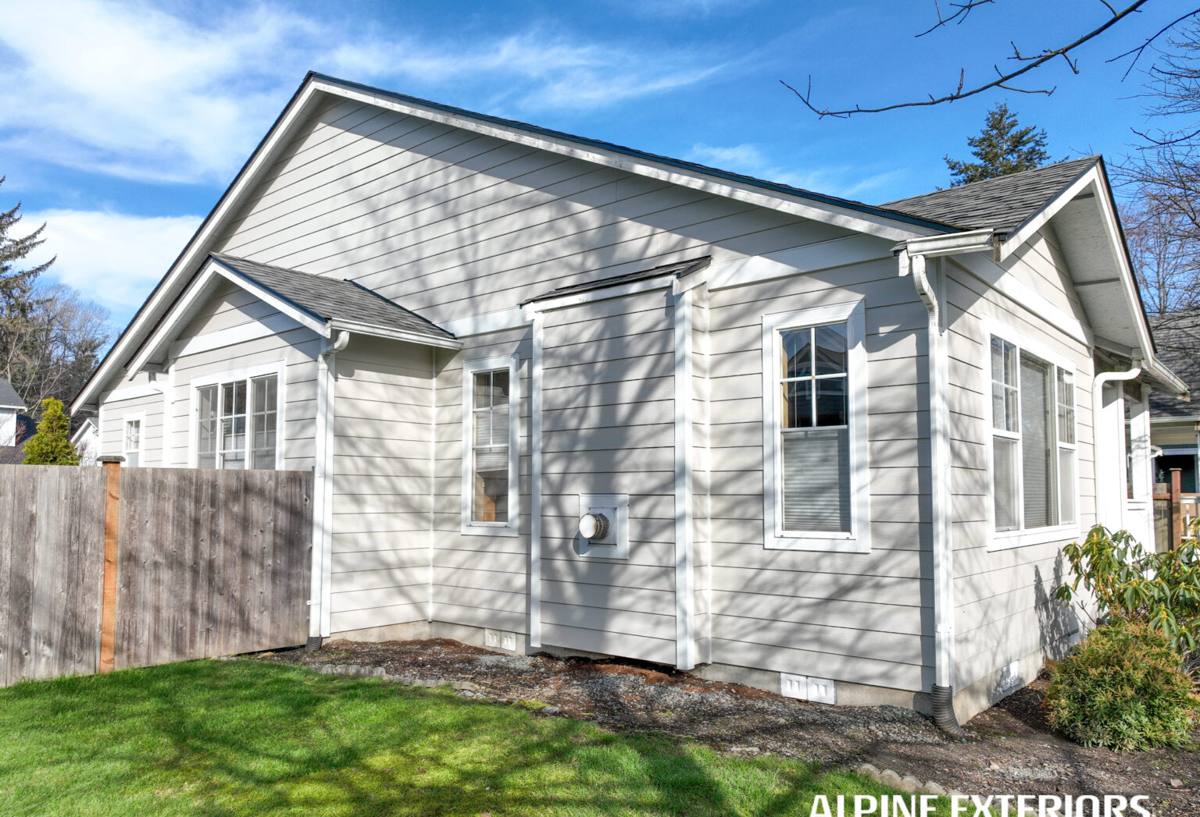
What Salt Air, Driving Rain, and Moss Actually Do to Siding
Salt Air and Metal Fatigue
Airborne salt from the bay accelerates corrosion on anything metal: nail heads, trim flashing, hose bibs, light fixtures mounted to the wall. On siding systems that depend on exposed metal fasteners or thin trim coil, that corrosion shows up as rust streaking and failed fasteners years before it would inland. Fiber cement doesn't corrode, but the fasteners and flashing details around it still need to be chosen and installed with that salt exposure in mind.
Wind-Driven Rain and Water Intrusion
Bellingham's rain rarely just falls straight down — storms off the Sound push it sideways into wall assemblies. Siding that relies on face-sealed joints or minimal overlap can let water track behind the cladding during these events. Once moisture gets behind siding and can't dry out, it doesn't stay contained; it works into sheathing, framing, and insulation, and by the time it shows up as a soft spot or a stain indoors, the damage is usually well underway.
Moss, Algae, and Shaded North Walls
Bellingham's moss season runs long — realistically most of the fall through spring — and shaded or north-facing walls barely get a chance to dry between rain events. Moss and algae growth on siding isn't just cosmetic. Sustained moisture against a wall surface softens paint film, degrades caulking, and on wood-based products can lead to rot at the surface. Siding material and finish quality both affect how well a wall resists this kind of buildup.
Why We Only Install James Hardie Fiber Cement
We made a deliberate call as a company: we install James Hardie fiber cement siding, full stop. We don't install vinyl, LP SmartSide, primed spruce, cedar, Cemplank, or Allura. That's not a marketing line — it's a standard we hold because of what we've seen these products do, and not do, in exactly this kind of climate.
Built for This Climate Zone
James Hardie engineers its siding in regional formulations (its HZ5 and HZ10 product lines) specifically to account for local climate exposure, including moisture cycling in wetter regions like the Pacific Northwest. Fiber cement itself is a cement, sand, and cellulose composite — it doesn't absorb and swell with moisture the way wood-based siding can, and it holds its shape and paint adhesion through repeated wet-dry cycles far better than engineered wood products.
ColorPlus Factory Finish
Most Hardie siding we install carries the ColorPlus factory-applied finish rather than field-applied paint. It's baked on in a controlled environment with multiple coats and a stronger bond than a painter can achieve on-site in Bellingham's damp, hard-to-schedule-around weather. That matters directly for moss and algae resistance — a finish that holds up well resists staining and biological growth longer than a field-painted surface, and it means you're not repainting every few years to keep ahead of a marine climate.
Non-Combustible, Long-Term Performance
Fiber cement is non-combustible, which matters for insurance and safety regardless of climate. Combined with a strong transferable warranty and a track record of decades-long performance when installed correctly, it's the product we're comfortable standing behind on every home we side — including the ones a few blocks from the water.
What a Correct Fiber Cement Installation Actually Involves
Fiber cement siding is only as good as the assembly behind it. A rushed or corner-cut install can still fail in a wet climate, even with a premium material. On a Happy Valley home, we pay particular attention to a handful of details that generic siding crews often skip:
- A continuous weather-resistive barrier installed with correctly lapped and taped seams — no gaps where wind-driven rain can find a path in
- A drainage gap (rainscreen or furring strip) behind the siding so any moisture that does get behind the cladding has somewhere to drain and dry, instead of sitting against the sheathing
- Properly lapped flashing at every window, door, and roofline transition, installed in the correct sequence with the weather barrier
- Fastener spacing and placement that follows Hardie's published installation specs, not a generalized "close enough" pattern
- Factory-cut and field-cut edges sealed per manufacturer instructions, since an unsealed cut edge is a weak point for moisture absorption
- Minimum clearance maintained between the bottom of the siding and grade, decks, patios, and roof lines, so splash-back and ponding water don't sit against the material
- Caulking only where Hardie's install guide calls for it — over-caulking traps moisture just as surely as skipping it lets moisture in
Skip any one of these and you can still end up with moisture problems behind a product that, installed correctly, is one of the more moisture-tolerant sidings available. The material doesn't compensate for a bad installation.
Cost Factors on a Happy Valley Fiber Cement Project
Every home is different, so we don't quote broad numbers until we've walked a property, but the factors below are what typically move a fiber cement estimate up or down. We'll walk through these with you directly during a free assessment.
| Factor | Why It Affects Your Estimate |
|---|---|
| Condition of existing sheathing | Rot or moisture damage found during tear-off (more likely on older Happy Valley homes with years of moss exposure) needs repair before new siding goes on |
| Home size and wall complexity | More corners, gables, and trim details mean more cutting, flashing, and labor time |
| Siding profile and finish choice | Lap width, shingle-style panels, and specific ColorPlus color options carry different material costs |
| Access and site conditions | Mature trees, sloped lots, and tight setbacks common in this neighborhood can affect scaffolding, staging, and cleanup time |
| Trim and accessory scope | Fascia, soffit, and trim work bundled into the same project changes both material and labor totals |
| Rainscreen/drainage system | A proper drainage gap adds a modest material cost but is a detail we won't skip in this climate |
Our Process for Happy Valley Homes
- On-site assessment. We look at your current siding, trim, flashing, and any visible moisture or moss issues, and take measurements for an accurate estimate.
- Tear-off and sheathing check. Once old siding comes off, we inspect the sheathing underneath. Any moisture damage gets addressed before anything new goes on — building over a wet wall never ends well.
- Weather barrier and drainage plane. We install the water-resistive barrier and drainage system correctly the first time, since this is the layer that does the real work once the siding is up.
- Flashing and Hardie installation. Windows, doors, and rooflines get flashed per spec, then Hardie panels or lap siding go up following the manufacturer's fastening and clearance requirements.
- Final walkthrough. We review the finished job with you, including caulking, trim, and touch-up paint where needed on cut edges.
Why Hiring a Crew That Already Works This Neighborhood Matters
A crew that's done siding work in and around Happy Valley already knows what this climate does to a wall assembly over time — they're not guessing at drainage details or treating a marine environment like an afterthought. That local pattern recognition shows up in small decisions throughout a project: how much drainage gap to build in, where moss tends to establish first, which trim details need extra attention on a shaded lot.
Before hiring anyone for a siding project in this area, it's worth asking:
- Are you a certified or preferred installer for the specific siding brand you're quoting?
- Will you show me the drainage/rainscreen detail you plan to use behind the siding?
- What happens if you find rot or moisture damage in the sheathing once tear-off starts?
- Can I see your general liability and workers' comp coverage?
- Do you install anything other than fiber cement, and if so, why would you recommend it over Hardie for a home in this climate?
A contractor who can answer those clearly, without hedging, is one worth trusting with a job that's meant to protect your home for decades.
Living With Fiber Cement Siding in a Marine Climate
Fiber cement asks very little of homeowners compared to wood-based sidings, but a little seasonal attention goes a long way in a moss-prone climate like Bellingham's. A soft wash (never high-pressure) to clear moss and organic buildup from shaded walls once a year keeps growth from taking hold. Keeping gutters clear and downspouts directing water away from the foundation reduces splash-back onto lower courses of siding. And keeping an eye on caulking around windows and trim for cracking or gaps lets you catch small maintenance items before they become bigger ones.
None of this is heavy lifting — it's the same kind of basic upkeep any exterior surface needs in a wet climate, just with a material that's built to handle far more of that exposure on its own.
Get a Straight Answer for Your Happy Valley Home
If your current siding is showing moss buildup, staining, soft spots, or just age, we're happy to take a look and give you an honest read on what's going on and what it would take to fix it right. Reach out for a free, no-pressure estimate — we'll walk your property, answer your questions, and give you a clear picture before you decide anything.