 Bellingham Siding
 Why Composite Decking Makes Sense for Ferndale Homes
Ferndale sits close enough to the water that salt-laden air, driving rain, and a moss season that stretches through most of the fall, winter, and spring all take a toll on anything built outdoors. A deck isn't just outdoor furniture — it's an exterior structure exposed to the same weather that wears down siding, roofing, and fencing across Whatcom County. Wood decking looks good the day it's finished, but in this climate it typically needs re-staining or sealing on a recurring basis, and the moisture that works its way into end grain and around fasteners is usually what rots a deck from the inside out, long before it looks bad from a distance.
Composite decking was developed to get around that problem. It doesn't absorb water the way solid wood does, it doesn't need annual sealing, and it holds up better against the moss and algae growth that shaded, damp yards around Ferndale and Bellingham are known for. That said, no composite board — no matter how good — will outperform a poorly built frame underneath it. We've torn out plenty of decks, composite and wood alike, that failed not because of the surface material but because of what was hidden below it: undersized joists, missing flashing where the deck ties into the house, or fasteners that trapped water instead of letting it drain. In this climate, the installation matters as much as the product.
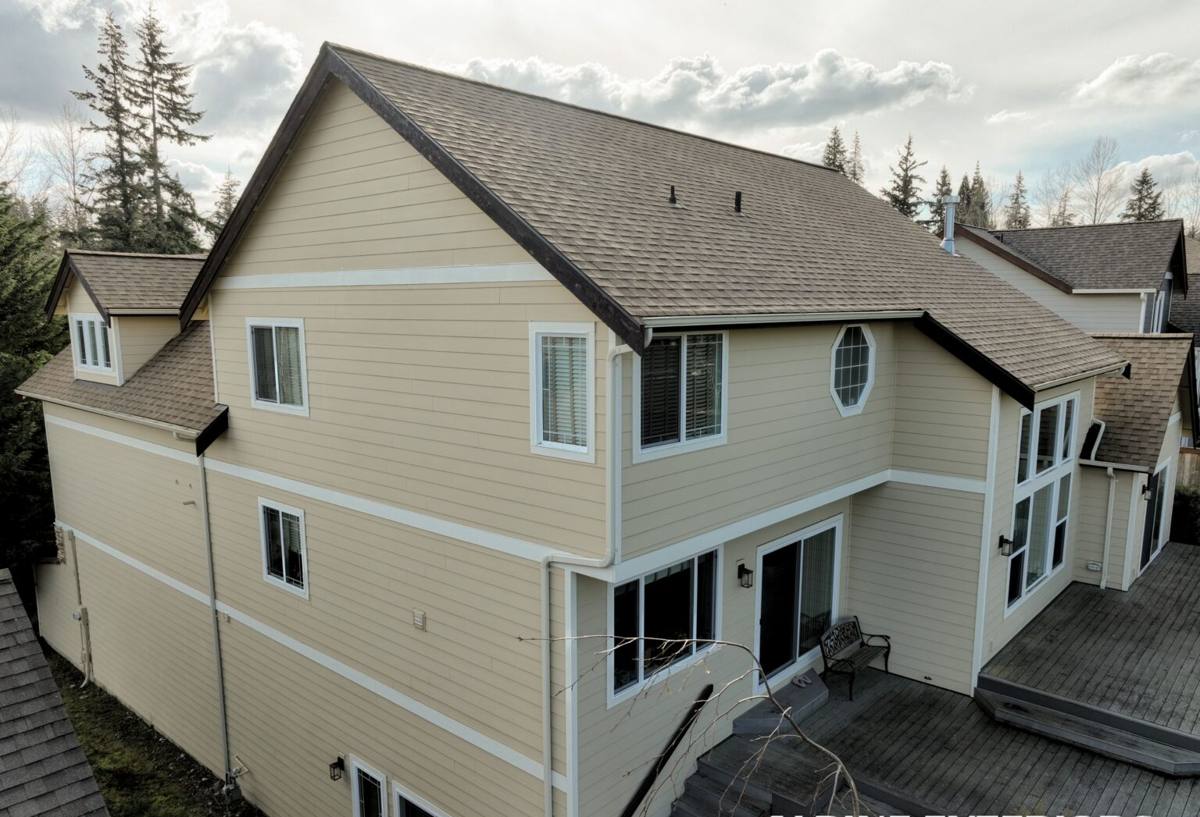
What a Correct Composite Decking Installation Requires
Composite decking is more forgiving than wood in a lot of ways, but it's also less forgiving of certain installation shortcuts, because it doesn't shrink, swell, or "tell on itself" the way wood does when something underneath is wrong. A correct job in a wet coastal climate generally includes:
- Proper joist spacing for the specific composite board being used — many composite products require tighter joist spacing than standard lumber decking, and manufacturers publish minimums for a reason
- A ledger board connection to the house that's properly flashed, so water is directed away from the rim joist and wall sheathing rather than into it
- Joist tape or an equivalent moisture barrier over the tops of joists, since covered end grain and fastener penetrations are common points where trapped moisture starts rot underneath decking that looks fine on top
- Hidden or approved fastening systems rated for composite, spaced correctly for expansion and contraction
- Adequate airflow and drainage underneath the deck, especially for low decks close to grade, which are common on older Ferndale lots
- Correct board orientation and gapping so water sheds off the surface instead of pooling
None of this is visible once the project is done, which is exactly why it's worth asking about before work starts rather than after boards are already down.
Substructure: The Part Nobody Sees But Everything Depends On
On a lot of the decks we get called out to replace, the original decking was the least of the problem. The posts, beams, joists, and ledger connection are what actually determine whether a deck is safe and how long it lasts, and in a climate with this much sustained moisture, substructure problems tend to hide well. Wood framing that's been wet more often than dry for years can look solid from above and be soft or compromised at connection points, especially near grade contact, under planters, or anywhere leaves and debris collect and hold moisture against the wood.
Before we install composite decking on any project, we evaluate the existing frame rather than assuming it's fine because the old decking looked okay. That means checking ledger board attachment and flashing, post bases for rot or ground contact, joist condition (particularly near the house and near grade), and whether the structure meets current spacing and fastening standards. If the frame needs reinforcement or partial rebuilding, we address that first — composite boards installed over a compromised frame just hide the problem for a while longer.
Comparing Decking Materials for Whatcom County Conditions
Homeowners in Ferndale usually end up choosing between a few realistic options. Here's how they generally compare for a climate with heavy rain, salt-influenced air, and long moss seasons:
| Material | Moisture Behavior | Moss/Algae Resistance | Ongoing Maintenance |
|---|---|---|---|
| Pressure-treated wood | Absorbs water, prone to swelling/checking | Low — porous surface holds moss and algae | Regular cleaning, re-staining or sealing |
| Cedar | Better natural resistance than pine, still absorbs moisture | Moderate, still needs upkeep in shade | Periodic sealing to maintain appearance and protection |
| Uncapped composite | Resists rot but surface can absorb moisture over time | Better than wood, can still stain in constant shade | Occasional cleaning, no sealing needed |
| Capped composite | Outer shell resists moisture penetration | Best of these options in damp, shaded yards | Low — periodic washing is usually enough |
We install capped composite on most projects in this area specifically because the outer polymer shell is what stands up to the combination of standing moisture, shade, and salt-influenced air that's common close to the water. It costs more upfront than wood or uncapped composite, but for homeowners who want to stop refinishing a deck every year or two, it's usually the better long-term decision.
Our Ferndale Composite Decking Process
We approach every deck project the same structured way, whether it's a full replacement or new construction:
- On-site assessment — we inspect the existing deck or the build site, check ledger and framing condition where applicable, and talk through how the space actually gets used
- Tear-out — for replacements, we remove old decking and inspect the frame underneath before anything new goes down
- Framing repair or reinforcement — any soft, rotted, or undersized structural members are addressed before decking is installed, not after
- Ledger flashing and moisture barriers — the connection to the house is properly flashed, and joist tops are protected before boards go on
- Composite installation — boards are fastened with a system rated for the product, with correct spacing for drainage and expansion
- Railings, fascia, and trim — finished to match the board system, with attention to how these components will hold up to the same weather exposure
- Final walkthrough — we go over the finished deck, drainage, and any maintenance notes specific to the product installed
We don't skip steps to save time on the visible parts of the job, because in this climate the parts you can't see are usually what determine whether you're back to replacing a deck in five years or not thinking about it for a couple of decades.
Moss, Algae, and Realistic Maintenance Expectations
Composite decking cuts down maintenance significantly compared to wood, but "low-maintenance" isn't the same as "no maintenance" — especially in a yard that gets shade for a large part of the day, which describes a lot of properties around Ferndale and the surrounding Whatcom County area. Moss spores and algae are airborne and will land on any exterior surface; what changes with composite is how easily they're removed and how much damage they can do while they're there.
A reasonable maintenance routine for composite decking here includes periodic sweeping to clear leaves and debris before they trap moisture against the surface, an occasional wash with a soft-bristle brush and mild soap-and-water solution (avoiding pressure washer settings strong enough to damage the board's surface texture), and keeping gutters and downspouts near the deck clear so runoff isn't concentrating extra water onto one section of boards. Composite doesn't need re-staining or sealing, which is the biggest maintenance difference homeowners notice after switching from wood.
Permits and Local Considerations
Deck projects in and around Ferndale may require a building permit depending on the deck's height, size, and whether it's attached to the house — this varies by jurisdiction and specific project, so it's worth confirming requirements for your address rather than assuming based on a neighbor's project. Attached decks generally get more scrutiny than freestanding ones because of the structural connection to the house, which is one more reason ledger flashing and attachment details matter as much as they do.
Beyond permitting, siting matters. Decks close to the water table or with limited sun exposure hold moisture longer after rain, which affects both how the substructure is built and how quickly moss and algae can establish themselves on any decking surface, composite included. We factor this into how we frame and detail a deck rather than treating every project the same regardless of where it sits on the lot.
Cost Factors to Expect
Composite decking costs more upfront than pressure-treated wood, and the total for any project depends on several factors more than on the brand name of the board itself:
| Factor | Why It Affects Cost |
|---|---|
| Square footage | Larger decks require more board, more fasteners, and more labor hours |
| Substructure condition | Rotted or undersized framing needs repair or replacement before decking goes on |
| Height above grade | Taller decks need more substantial framing, stairs, and railing work |
| Board tier (capped vs. uncapped) | Capped composite carries a higher material cost than uncapped composite or wood |
| Railing system | Composite, aluminum, and cable railing systems vary widely in material cost |
| Site access | Difficult access for material delivery or tear-out debris removal adds labor time |
As a broad, honest range, homeowners in this area commonly see composite deck projects land somewhere in the neighborhood of $30–$75 per square foot installed, with the wide spread reflecting substructure work, railing choice, and board tier more than anything else. We give a firm number after seeing the site and the existing structure, not before.
What to Ask Before Hiring a Deck Contractor Here
Because so much of what makes a deck last is invisible once it's finished, it's worth asking a few pointed questions before signing a contract:
- Will you inspect the existing framing, or are you just installing new boards over what's already there?
- What fastening system do you use for composite, and is it rated for the specific product being installed?
- How is the ledger board flashed where the deck meets the house?
- Do you pull permits, and who is responsible for scheduling inspections?
- What's included in the warranty — the manufacturer's product warranty, your labor, or both?
A contractor who's used to working in Ferndale and the rest of Whatcom County should be able to answer these without hesitation, because moisture management isn't an afterthought here — it's the baseline standard for any deck meant to last.
Why It Matters to Hire a Crew That Already Works This Area
A composite deck installed the same way in Ferndale as it would be in a dry inland climate is a deck that's set up to underperform. The combination of persistent rain, shaded yards, and salt-influenced coastal air changes how framing should be protected, how drainage should be planned, and how much attention flashing details deserve. A crew that already works this region has seen what actually fails here — not in a generic sense, but in the specific ways that this climate finds weaknesses in a deck over time.
We build decks the way we'd want one built on our own property in this weather: proper substructure inspection or construction first, correct moisture barriers and flashing second, and a composite decking surface that's installed to actually take advantage of what the material is good at. If you're planning a new deck or replacing one that's showing its age, we're happy to come take a look and give you a straightforward, no-pressure assessment of what your project actually needs. Fill out the form below to schedule a free estimate.