 Bellingham Siding
 Siding Repair in Cordata: A Different Climate Problem Than Most of the Country
Cordata sits in north Bellingham, close enough to the Puget Sound and Bellingham Bay that homes here deal with a specific combination of weather stress: salt-tinged marine air, long stretches of driving rain off the water, and a moss season that can run most of the year in shaded, north-facing exposures. None of that is dramatic on any single day. It's the accumulation — months of damp siding, fasteners exposed to salt-laced moisture, and organic growth holding water against the wall — that eventually shows up as cupped boards, soft spots, or paint that won't hold. Siding repair in this part of Whatcom County isn't about fixing storm damage after a single bad event nearly as often as it's about catching slow, moisture-driven wear before it becomes a bigger problem.
That's the lens we bring to every Cordata repair call: what is the water and moss actually doing to this wall, and is a targeted repair the right fix, or is the homeowner about to spend money patching a system that's already past its useful life?
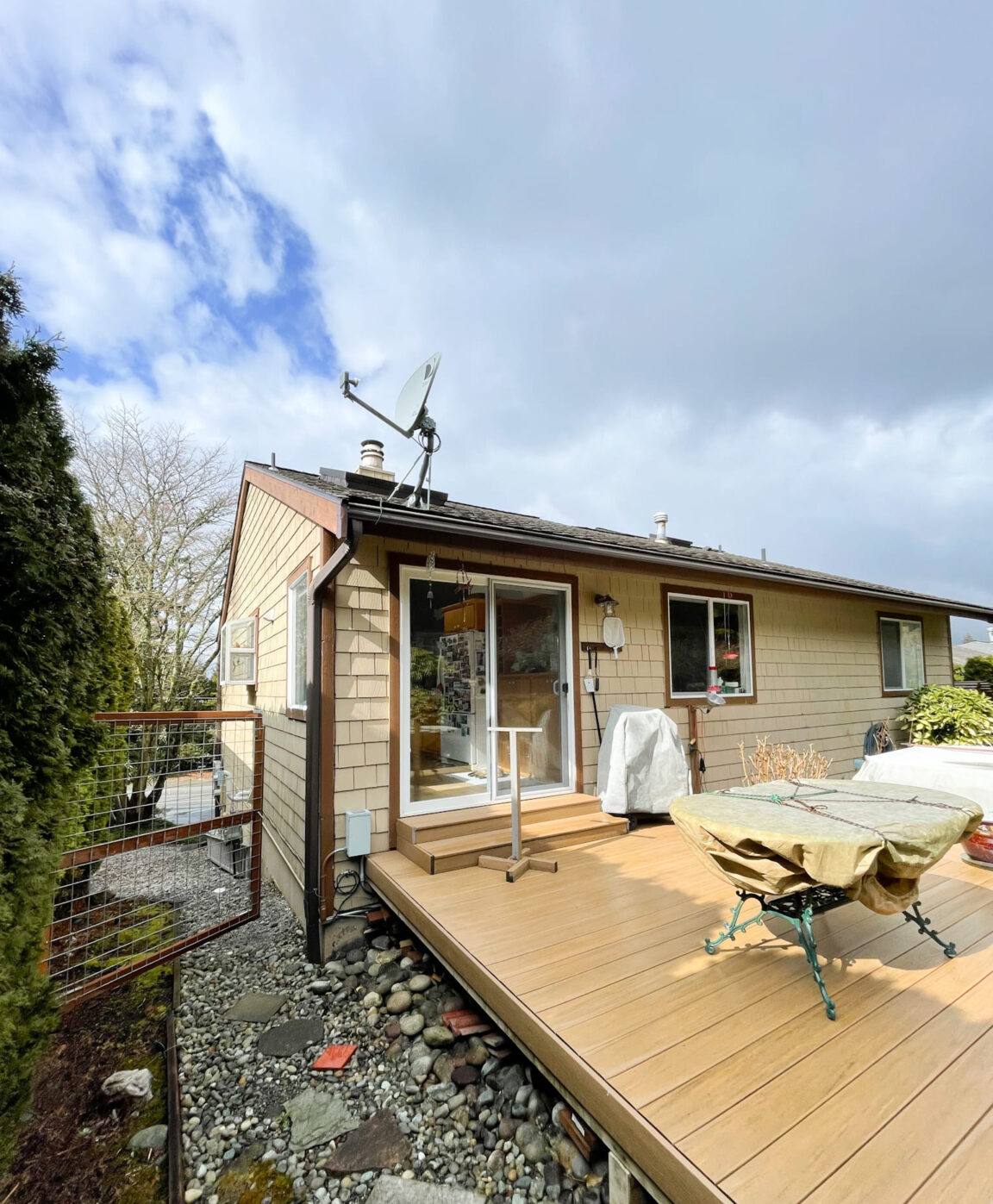
Signs a Cordata Home Needs Siding Repair
Most homeowners call us for one of a handful of recurring issues. If you're seeing any of the following, it's worth having someone look before the damage spreads to framing or sheathing underneath:
- Boards or panels that look wavy, cupped, or slightly bowed, especially on north- or west-facing walls
- Soft, spongy siding when you press on it near the bottom edge of a wall or below windows
- Persistent moss or algae staining that keeps coming back within weeks of cleaning
- Paint that's peeling, bubbling, or flaking in patches rather than wearing evenly
- Visible gaps at seams, corners, or trim where caulking has shrunk or pulled away
- Rust streaking below nail heads or fasteners
- A musty smell near an exterior wall, or interior drywall that feels cool or damp to the touch
Any one of these on its own might be minor. Several showing up on the same wall usually means moisture has been getting behind the siding for a while, which changes the scope of the repair.
What's Actually Driving Repair Needs in This Neighborhood
Moisture That Doesn't Fully Dry Out
Bellingham gets a lot of rain, but the bigger issue for siding longevity is drying time. Homes with heavy tree cover or tight side-yard clearances — common in established Cordata lots — don't get the sun and airflow that let a wall dry out between storms. Wood-based products and older fiber cement that wasn't sealed correctly on cut edges are especially vulnerable to this slow soak-and-swell cycle.
Moss and Organic Growth
Moss doesn't just look bad — it holds moisture directly against the siding surface for extended periods, which accelerates rot in wood substrates and can degrade paint film on any material. A long moss season means more months where a wall is staying damp instead of drying.
Salt Air and Fastener Corrosion
Proximity to the Sound means airborne salt is a real factor for exterior metal. Uncoated or under-spec fasteners, flashing, and trim hardware corrode faster here than they would further inland, and a rusting fastener eventually loosens or stains the siding around it.
Wind-Driven Rain at Seams and Penetrations
Storms off the water often come with sustained wind, which pushes rain sideways into seams, window trim, and utility penetrations that would stay dry in a gentler rain. Repair calls frequently trace back to a failed seal at one of these points rather than a flaw in the siding material itself.
Repair vs. Replace: How We Help You Decide
Not every damaged wall needs full replacement, and we're not going to tell you it does. But repair only makes sense when the underlying material and structure are still sound. Here's the general framework we use when we're standing in front of a wall in Cordata:
| Situation | Usually Repair | Usually Replace |
|---|---|---|
| Damage location | Isolated to one or two boards/panels or a single wall section | Spread across multiple walls or recurring in the same spots |
| Underlying material condition | Sound, dry framing and sheathing behind the damaged area | Soft sheathing, visible rot, or signs of long-term water intrusion |
| Siding material | Newer fiber cement or well-maintained material with a matching replacement available | Aging hardboard, untreated wood, or a discontinued product with no reliable match |
| Repair history | First repair need in this area of the home | Third or fourth repair in the same general location over a few years |
| Age of the siding system | Within its expected service life | At or past the age where the material is known to degrade |
When repair is the right call, we do it properly — matched material, correct fastening, and attention to the moisture barrier behind the siding, not just a patch that looks fine from the curb. When a wall is telling us it's past that point, we'll say so plainly, and that's usually the conversation where James Hardie fiber cement comes up as the long-term fix.
What a Correct Siding Repair Actually Involves
A repair that's done right addresses more than the visible damage. Our approach on a Cordata job typically includes:
1. Diagnosing the Cause, Not Just the Symptom
We remove enough siding to see what's happening behind it — whether that's a failed house wrap, a missing kick-out flashing, or a seam that was never sealed correctly. Replacing a board without fixing the reason it failed just guarantees a repeat call.
2. Checking the Water-Resistive Barrier and Flashing
Siding is the visible layer, but the house wrap, flashing, and trim details behind it do most of the real work of keeping water out. If those are compromised, we address them as part of the repair.
3. Matching Material and Fastening Correctly
For fiber cement repairs, that means matching profile, exposure, and finish as closely as possible, and using corrosion-resistant fasteners suited to a marine-air environment — not whatever was in the truck.
4. Sealing and Finishing to Spec
Caulking, painting, or factory-finish touch-up (where the product supports it) at the end of the job, not left for the homeowner to handle later.
Our Process for a Cordata Repair Call
- Assessment. We look at the damaged area and enough of the surrounding wall to understand scope — including a check behind the siding where warranted.
- Honest scope and estimate. You get a clear picture of what's isolated damage versus what points to a bigger issue, with pricing before any work starts.
- Repair. We fix the root cause first — flashing, barrier, or seam — then the visible siding.
- Finish and cleanup. Matched material, proper fastening, sealed and finished, site cleaned up when we're done.
- Follow-up. If we see anything else developing nearby that isn't urgent yet, we'll flag it so you can plan for it instead of getting surprised.
Why Local Experience in This Part of Whatcom County Matters
A repair crew that mostly works drier, inland climates will diagnose Cordata siding differently than one that's used to what marine air, extended rain, and heavy moss actually do to a wall over time. We know which exposures in this neighborhood tend to hold moisture longest, which fastener specs hold up against salt air, and which "repair" shortcuts don't last a full Bellingham winter. That local pattern recognition is a big part of why the fix holds — and why we're not guessing at what's behind your siding before we open the wall.
What We Use for Replacement Work
We repair the siding that's on your home today, whatever the material, when repair is the sound choice. But when a wall has reached the point where replacement makes more sense than another patch, we install James Hardie fiber cement exclusively — not vinyl, not LP SmartSide, not primed wood. It's non-combustible, holds up to sustained moisture exposure far better than wood-based sidings, and Hardie's ColorPlus factory finish resists the fading and peeling that's common on painted siding in this climate. For a neighborhood dealing with salt air and a long wet season, that combination matters more than it does in a drier part of the state.
Quick Homeowner Checklist Before You Call
- Note where the damage is and whether it's spreading or isolated
- Check for soft spots by gently pressing on the siding near the ground and below windows
- Look for moss or staining patterns and how quickly they return after cleaning
- Note any musty smell or damp feeling on interior walls near the exterior
- Have a rough sense of the siding's age or when it was last replaced, if known
If you're seeing damage on a Cordata home, we're glad to take a look and give you a straight answer on whether it's a repair or something bigger — no pressure either way. Request a free estimate through the form below and we'll get you scheduled.