 Bellingham Siding
 Roofing in Cordata: A Different Set of Demands
Cordata sits in north Bellingham, close enough to the water and the marine air pattern that a roof here works harder than one might a hundred miles inland. Salt-laden air off the Sound accelerates corrosion on exposed metal fasteners and flashing. Driving rain, pushed sideways by wind off open ground, finds every weak seam a lesser installation leaves behind. And the long, wet moss season that defines a Pacific Northwest winter doesn't just make a roof look neglected — it holds moisture against the shingle surface for months at a time, which shortens the life of the roofing material underneath it.
None of this means Cordata is a hard place to roof. It means a new roof here has to be built with those specific stresses in mind from the first course of underlayment to the last ridge cap, not treated as a generic install that happens to be located in Whatcom County.
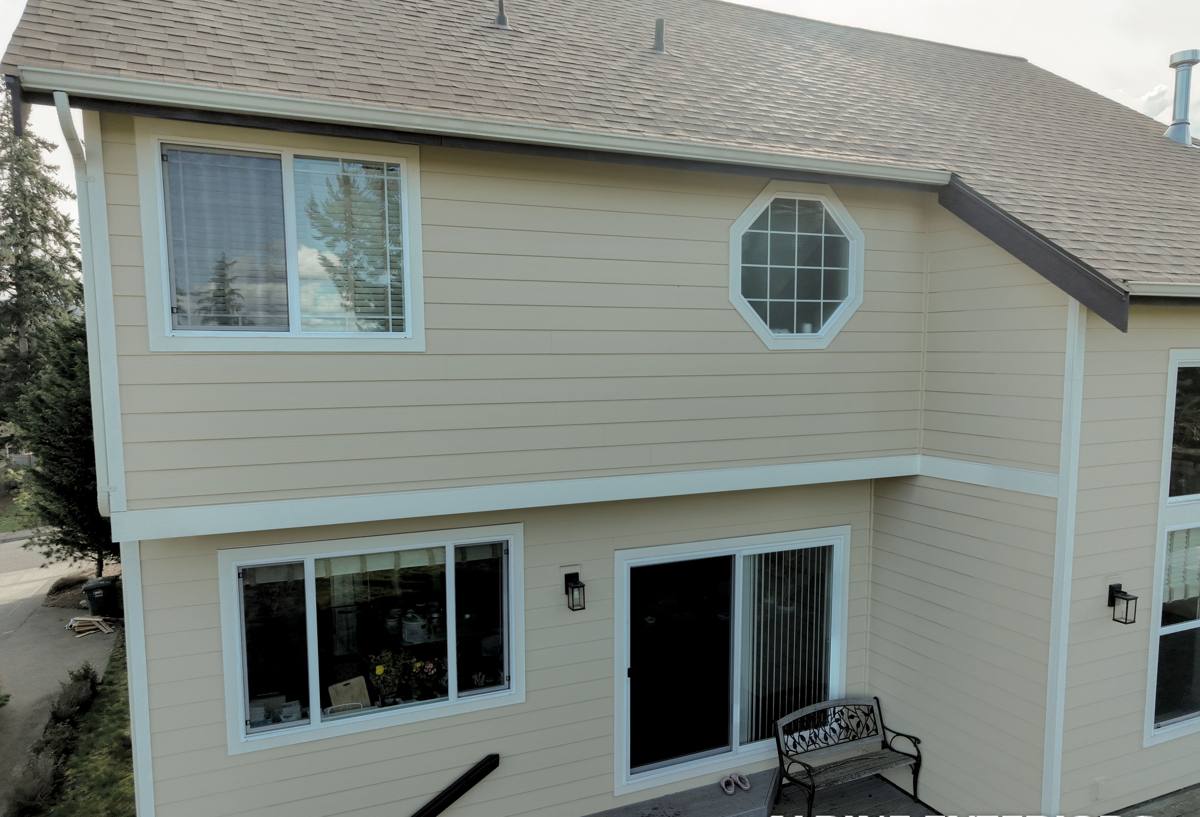
What "Correctly Installed" Actually Means Here
A roof can look finished and still be built wrong. The parts that matter most in this climate are the ones you can't see once the job is done.
Underlayment and Water Barrier
In a region that gets sustained, wind-driven rain rather than short heavy downpours, the underlayment layer is doing real work for a large share of the year. Synthetic underlayment holds up better than old-style felt under repeated wet-dry cycles, and self-adhered ice-and-water membrane belongs in valleys, around penetrations, and along eaves — the spots where water backs up or pools rather than sheeting straight off.
Flashing
Flashing failure is one of the most common causes of roof leaks we see on homes that are otherwise in decent shape. Every chimney, skylight, vent pipe, and wall-to-roof transition needs flashing that's sized, layered, and fastened correctly — not caulked over as a shortcut. Caulk is a maintenance item, not a waterproofing strategy.
Ventilation
A roof deck that can't breathe traps moisture from inside the home against the underside of the sheathing. Over a wet Whatcom County winter, that trapped moisture leads to rot, mold, and premature failure of the decking — problems that show up as soft spots and sagging long before the shingles themselves look worn out. Balanced intake and exhaust ventilation is not optional in this climate.
Choosing a Roofing Material for a Cordata Home
There's no single "best" roofing material — there's the material that fits your home's roof pitch, your budget, and how much long-term maintenance you're willing to take on. Here's how the common options compare for a coastal Whatcom County home.
| Material | Typical Lifespan | Moss & Moisture Resistance | Maintenance |
|---|---|---|---|
| Architectural asphalt shingle | 25–30 years | Good with proper ventilation; benefits from periodic cleaning | Low — occasional moss treatment and debris removal |
| Standing seam metal | 40–50+ years | Excellent — moss struggles to hold on smooth metal | Very low; check fastener sealant over time near salt air |
| Cedar shake (natural) | 20–30 years with upkeep | Poor without diligent maintenance — organic material feeds moss | High — regular treatment, cleaning, and inspection required |
| Synthetic composite shake | 40–50 years | Good — non-organic surface resists moss growth | Low to moderate |
We install architectural asphalt shingle roofs as our standard recommendation for most Cordata homes — the balance of cost, durability, and manufacturer warranty support tends to fit what most homeowners actually want. Metal is worth a serious look on lower-slope sections or for homeowners planning to stay long-term and wanting to minimize moss upkeep altogether. Natural cedar shake, while attractive, carries a maintenance burden in this climate that we're upfront about before anyone commits to it — it's a product that rewards ongoing care and punishes neglect faster than the alternatives.
Moss, Shade, and Roof Orientation
Cordata's mix of mature trees and shaded lots means some roofs — particularly north-facing slopes and sections that sit under tree canopy — stay damp far longer after a rain than a roof out in the open. That extended dampness is exactly what moss and moss-related algae need to establish. A new roof installation is the right time to address this directly rather than treat it later as an afterthought.
- Zinc or copper strips installed near the ridge release trace metal ions with rain runoff that inhibit moss growth on the courses below
- Proper ventilation keeps the deck and shingle underside from staying damp longer than necessary
- Trimming back overhanging branches reduces both shade and the organic debris that collects moss spores
- Choosing a moss-resistant material where shade is unavoidable saves money on treatment over the roof's life
None of these steps eliminate moss entirely in a climate this wet — but combined, they meaningfully extend the time between cleanings and slow the damage moss causes to the shingle surface underneath.
Our New Roof Installation Process
A new roof is a significant investment, and we walk every Cordata homeowner through the same process so there are no surprises partway through the job.
- On-site inspection and estimate. We assess the existing roof, deck condition, ventilation, and any problem areas, and provide a written estimate with material options.
- Material selection. We go over the trade-offs for your specific roof — pitch, shade exposure, budget — so you're choosing based on how the roof will actually perform, not just how it looks in a sample.
- Tear-off and deck inspection. Old roofing comes off down to the deck, which is inspected for rot or soft spots before anything new goes down. Damaged decking is replaced, not covered over.
- Underlayment and flashing. Synthetic underlayment and ice-and-water membrane go down first, followed by new flashing at every penetration, valley, and wall transition.
- Ventilation check. Intake and exhaust ventilation is confirmed or upgraded to match the new roofing system's requirements.
- Shingle or material installation. Installed to manufacturer specifications so the warranty stays intact — nailing pattern, exposure, and fastening all matter here.
- Cleanup and final walkthrough. Site is cleared of debris and nails, and we walk the finished roof with you before calling the job done.
Signs Your Cordata Home May Need a New Roof
Not every roof problem means a full replacement — but these are the signs worth having a professional look at sooner rather than later, especially heading into another wet winter.
- Shingles that are curling, cracking, or losing granules in visible patches
- Moss or dark streaking that keeps returning within months of cleaning
- Soft or spongy spots on the roof surface, or sagging along the ridge or eaves
- Daylight visible through the roof deck from inside the attic
- Water stains on interior ceilings, especially near chimneys, skylights, or vent penetrations
- A roof that's 20+ years old and has never had a full tear-off replacement
- Rising energy bills that may point to failing attic ventilation or insulation tied to the roof system
Permits, Code, and Whatcom County Requirements
Roof replacement in Bellingham typically requires a building permit, and the work needs to meet current building code for ventilation, ice barrier placement in applicable zones, and fastening standards. We handle the permitting process as part of the job rather than leaving it to the homeowner to sort out — it's one less thing to manage during a project that already involves a crew on your roof for several days.
It's also worth checking your homeowner's insurance policy before a replacement. Some carriers offer better terms for roofs installed to current code with documented permits and inspections, which is one more reason to avoid shortcuts on the paperwork side of the job.
Why Hire a Crew That Already Works Cordata
A roofing crew that's worked other homes in this neighborhood already knows the practical realities that don't show up in a spec sheet: which streets have mature tree canopy that keeps certain roofs shaded most of the day, how the drainage on a given lot behaves during a heavy Whatcom County rain event, and what the wind exposure looks like on homes closer to open ground. That kind of familiarity shows up in small decisions — where extra flashing attention pays off, which roofs benefit most from upgraded ventilation — that a crew unfamiliar with the area might miss on a first pass.
It also matters for accountability. A contractor working in your neighborhood on an ongoing basis has a reputation to maintain with your neighbors, not just with you. That's a different incentive than a crew passing through for a single job.
Get a Free, No-Pressure Estimate
If your Cordata home's roof is showing its age, growing moss faster than it used to, or simply due for an honest inspection, we're happy to take a look and walk you through what we find — no obligation, no pressure. Use the form below to request a free estimate.