 Bellingham Siding
 Cordata is one of north Bellingham's established residential neighborhoods, and like the rest of Whatcom County it sits close enough to Bellingham Bay and the Salish Sea to feel coastal weather year-round. A deck built here has to handle more than rain — it has to shrug off salt-laden air, stay ahead of a moss season that can stretch across most of the year, and hold up under fastener corrosion that standard hardware-store lumber and screws simply aren't built for. We build custom decks for that specific reality, not for a generic climate zone on a spec sheet.
Bellingham's Coastal Climate and What It Does to a Deck
Bellingham's weather pattern comes off the Salish Sea, and Cordata gets the same conditions as the rest of the city: long stretches of steady, low-intensity rain punctuated by wind-driven storms that push moisture sideways into anything that isn't properly flashed. Add the salt content carried inland off Bellingham Bay, and you get an environment that's genuinely harder on exterior wood and metal than most inland parts of the country ever have to deal with.
Three things drive nearly every deck problem we get called out to fix in this area: fasteners and connectors that weren't rated for salt exposure and corrode from the inside out, framing and ledger connections that were never properly flashed and let water track into the structure, and horizontal surfaces that stay damp for months at a stretch because the deck wasn't designed with airflow or drainage in mind. Building around all three from day one is cheaper than fixing any of them later.
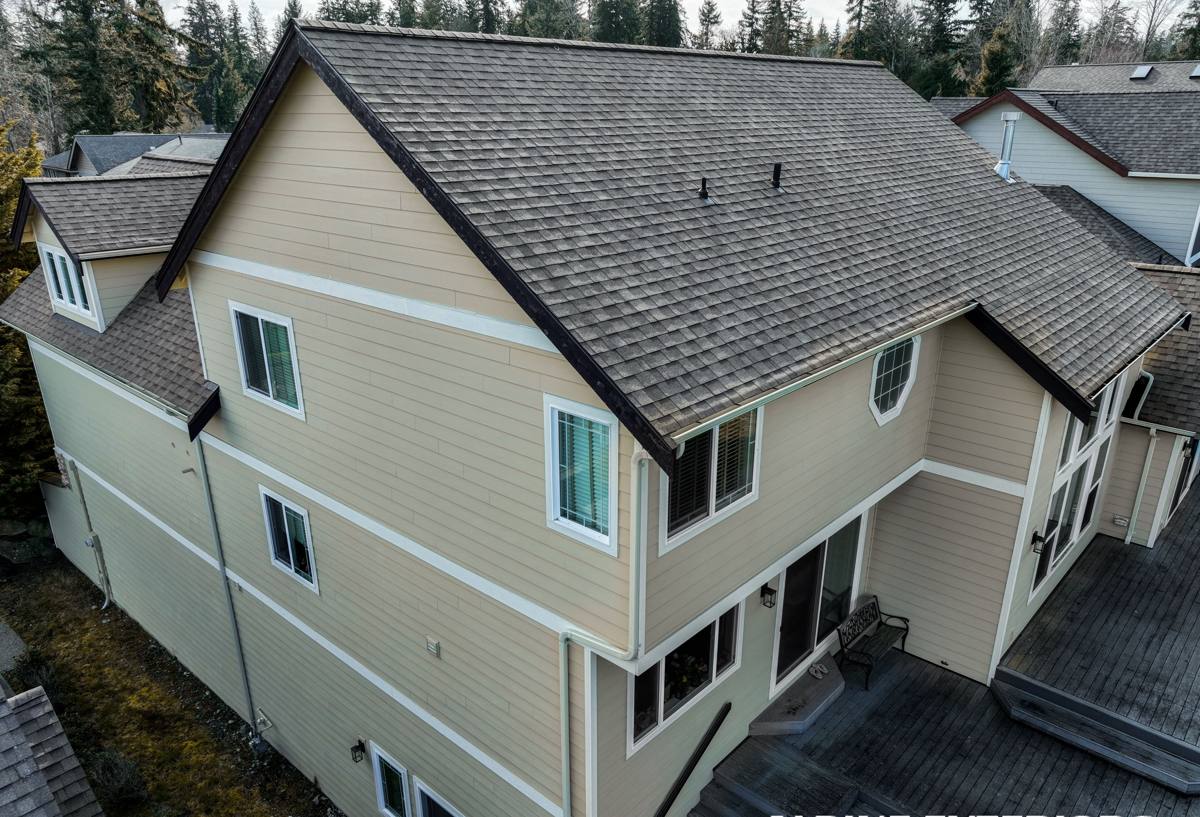
What Cordata Homes Typically Need From a Deck
Cordata is a mix of newer subdivisions and established single-family homes, many built on lots with some grade change and limited roof overhang protecting the back of the house. That combination means decks here tend to do double duty — they're the main outdoor living space for a good chunk of the year, and they're also the first line of defense against water reaching the siding and foundation behind them.
Because the dry, usable outdoor season in Whatcom County is relatively short, the decks that get the most use are the ones designed for how people actually live: enough square footage for a table and seating, a layout that accounts for afternoon sun exposure, and stairs or grade transitions that don't turn into a maintenance headache once the rain returns. A deck that only performs well in July isn't doing its job the other nine months of the year.
Picking a Decking Material That Actually Holds Up Here
Material choice matters more in a coastal, high-moisture climate than almost anywhere else. We walk every Cordata homeowner through the real trade-offs rather than steering them toward whatever is easiest to install.
Wood Decking: Cedar and Pressure-Treated
Cedar is a strong regional choice — it has natural oils that resist decay and it looks the part of a Pacific Northwest deck. It does require regular sealing or staining to keep those properties working, and if that maintenance schedule slips, moss and mildew move in fast in our climate. Pressure-treated fir or hem-fir is a more budget-friendly structural option and holds up well when properly sealed, but it moves more as it dries and needs closer attention to fastener corrosion over time.
Composite and Capped Composite Decking
Capped composite boards (brands like Trex and TimberTech are common examples) resist moisture absorption and won't rot, which takes one major failure point off the table in a wet climate. The trade-off is upfront cost and the fact that lower-quality or uncapped composite can still grow surface mildew if it's not cleaned periodically — it just won't structurally decay the way wood can.
| Material | Moisture Resistance | Moss/Algae Resistance | Maintenance | Typical Lifespan |
|---|---|---|---|---|
| Cedar | Good, if sealed regularly | Fair — needs cleaning | Annual seal/stain | 15–20 years |
| Pressure-Treated | Good structurally | Fair — needs cleaning | Seal every 1–2 years | 15–25 years |
| Capped Composite | Excellent | Good | Periodic wash | 25–30+ years |
Framing and Flashing: Where Most Deck Failures Start
The decking surface is what homeowners see, but the framing underneath is what determines whether the deck is still sound in ten years. This is also where we see the most corner-cutting on decks that weren't built by people who work regularly in this climate.
Ledger Board Attachment and Flashing
The ledger board — the piece that attaches the deck to the house — is the single most common source of moisture damage on attached decks anywhere in the Pacific Northwest. It has to be properly flashed with the flashing lapped correctly behind the house's water-resistive barrier, not just caulked and bolted on. Skip this step and water tracks straight into the rim joist and wall framing, often for years before it's visible from outside.
Footings, Posts, and Frost Depth
Footings need to be sized and set to the appropriate depth for our soil and frost conditions, with posts anchored so they don't sit in standing water after a heavy rain event. Undersized or shallow footings are one of the most common reasons a deck develops bounce, sag, or rail movement within a few years.
Joist Spacing and Drainage Gaps
Board spacing and joist layout affect how fast a deck sheds water and dries out between storms. Gaps that are too tight trap moisture and debris, which is exactly what accelerates rot and gives moss a foothold; gaps that are inconsistent create an uneven, unattractive surface. We set spacing based on the specific decking material, since wood and composite behave differently as they expand, contract, and age.
Fasteners and Hardware Built for Salt Air
This is the detail that's easiest to skip and the most expensive to fix later. Standard zinc-coated screws and connectors corrode noticeably faster in coastal air than they do even a short distance inland, and once a fastener starts rusting, it weakens the connection it's supposed to be holding together — often invisibly, since the head can look fine while the shank corrodes inside the wood.
We use hot-dip galvanized or stainless steel structural hardware and coated, corrosion-resistant deck screws throughout, not just at the visible surface. It costs more than generic hardware, but it's the difference between a railing post that's still solid in fifteen years and one that needs to be rebuilt in five.
Our Process, From First Look to Finished Deck
Every custom deck project follows the same basic sequence, adjusted for the specific site and design:
- An on-site visit to assess grade, drainage, sun exposure, and how the deck will attach to the existing structure.
- A design and material conversation where we lay out realistic options and trade-offs for your budget and how you'll use the space.
- Permit preparation and submission to the appropriate local jurisdiction before any work begins.
- Demolition of any existing structure, followed by footings, framing, ledger flashing, and decking installation in that order.
- Railing, stair, and hardware installation, with every connection checked before final walkthrough.
- A final walkthrough where we go over maintenance expectations specific to the material you chose.
We don't skip steps to hit a faster timeline, and we don't ask for full payment before the work is inspected and signed off.
Permits and Code Considerations in Bellingham and Whatcom County
In Bellingham, as in most of Whatcom County, an attached deck almost always requires a building permit, and elevated decks typically need permitted guardrails and stair construction that meets current code for rise, run, and railing height. We handle that paperwork as part of the job rather than leaving it for the homeowner to sort out, and we build to pass inspection the first time.
Several factors influence how a given project scopes out, and it's worth understanding them before you start comparing quotes:
| Cost Factor | Why It Matters |
|---|---|
| Deck size and shape | Square footage and complexity of the footprint drive material and labor directly. |
| Height off grade | Taller decks need deeper footings, more framing, and code-compliant stairs and railings. |
| Decking material | Wood species and composite tier are the widest cost swing in most projects. |
| Railing style | Cable, glass, and custom rail designs cost more than standard baluster railing. |
| Site access and grading | Difficult access or significant regrading adds labor time before framing even starts. |
Keeping Your New Deck Ahead of Moss and Weather
A well-built deck still needs some seasonal attention in this climate — the goal of good construction is to make that maintenance minimal, not eliminate it entirely. A few habits go a long way:
- Sweep leaves, needles, and debris off the surface regularly, especially before fall rains set in — trapped organic material is what feeds moss and mildew.
- Keep gutters and downspouts near the deck clear so roof runoff isn't dumping directly onto or under the structure.
- Check wood decking for soft spots or discoloration each spring, particularly near the ledger board and stair stringers.
- Reseal or restain wood decking on the schedule appropriate to the product — skipping a cycle in this climate shows up fast.
- Avoid high-pressure washing on wood or composite surfaces; it can drive water into joints and damage the surface fibers or cap layer.
- Address moss growth as soon as you see it with an appropriate cleaner rather than letting it establish through a full wet season.
Why Hire a Crew That Already Works in Cordata
A deck contractor who mostly works drier inland climates will design and build to specs that make sense somewhere else — and those shortcuts show up here within a few wet seasons, not decades. Knowing how Bellingham's coastal weather actually behaves, which fasteners hold up, how local permitting works, and how the moss season stresses a structure isn't optional knowledge for a deck that's going to last in Cordata. It's the whole job.
If you're planning a new deck or replacing one that's showing its age, we're happy to take a look and talk through what makes sense for your home and budget. Reach out for a free, no-pressure estimate using the form below.