 Bellingham Siding
 Board & Batten in a Bellingham Neighborhood Like Sunnyland
Sunnyland is one of Bellingham's older, tree-shaded residential pockets, and it shows in the housing stock: bungalows, mid-century ramblers, and a mix of remodels and additions sitting under mature canopy just a short distance from Bellingham Bay. Board and batten siding shows up a lot in this kind of neighborhood because the vertical lines suit smaller lots and simpler rooflines, and it reads as a step up from flat lap siding without looking out of place next to the craftsman and cottage-style homes nearby.
But board and batten is also one of the siding styles most likely to be installed wrong, because it depends entirely on what's happening behind the battens, not just how it looks from the sidewalk. On a shaded, damp lot in Whatcom County, a poorly detailed board and batten job doesn't just look tired in a few years — it traps water exactly where you can't see it.
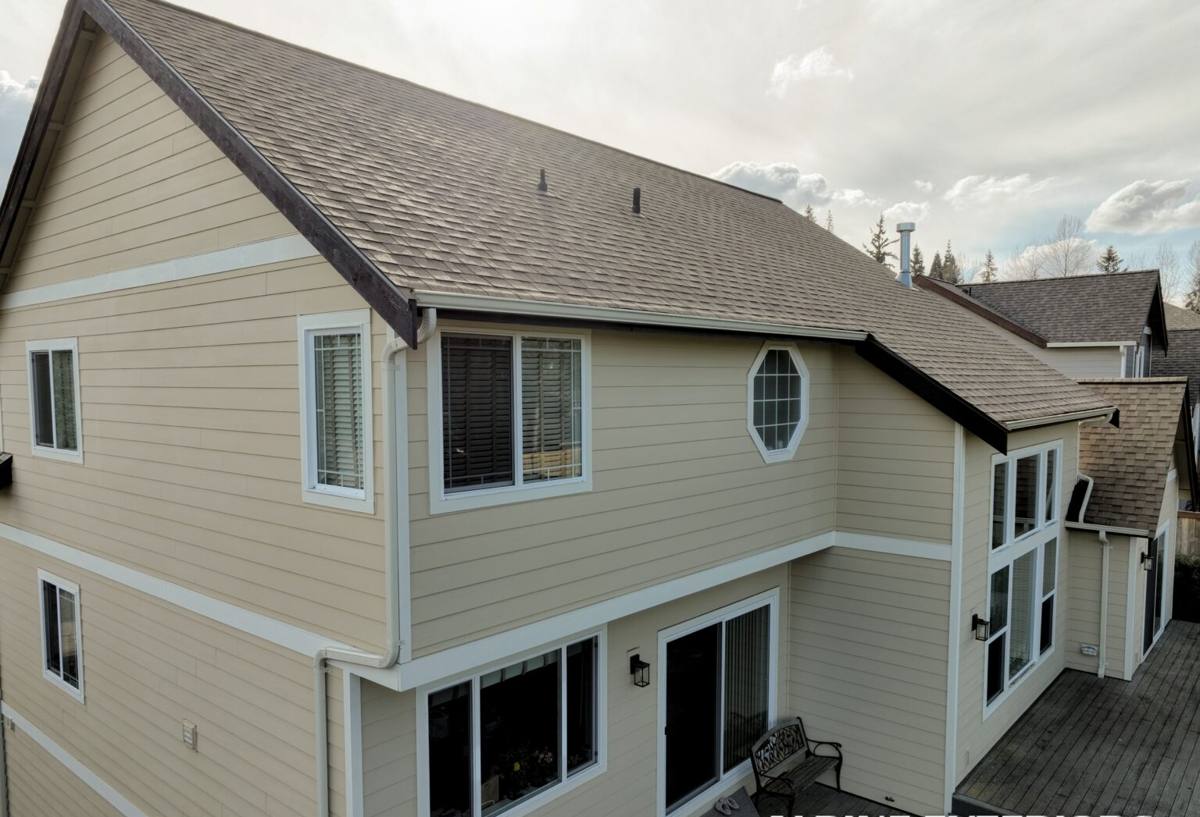
What Bellingham's Climate Actually Does to Board & Batten Siding
Sunnyland sits close enough to Bellingham Bay that salt-laden air is a real factor on fasteners, trim, and any exposed metal — not just on waterfront lots. Combine that with Whatcom County's long wet season, near-constant driving rain off the Strait, and the deep shade that comes with mature trees, and you get a siding environment that punishes anything that traps moisture or invites organic growth.
Moisture Behind the Battens
Board and batten has more vertical seams than horizontal lap siding, and every one of those seams is a place water can travel if it's not detailed correctly. In a normal Bellingham winter, siding gets saturated repeatedly over months, not just after the occasional storm. If the panel behind the battens can't dry out between rain events, you get swelling, soft spots, and eventually rot at the bottom edges and around window and door trim.
Moss, Algae, and the Shade Problem
Sunnyland's tree cover is part of its character, but shade plus moisture plus mild winters is exactly the recipe for sustained moss and algae growth. On siding materials that absorb moisture, that growth gets a foothold and keeps the surface damp even longer, which accelerates whatever damage is already starting underneath. The siding you choose here needs to shed water fast and resist holding onto growth on the surface — not just look good on a dry day.
Why We Only Install James Hardie for Board & Batten
We don't install vinyl board and batten, LP SmartSide, Cemplank, Allura, or primed wood products like cedar or spruce board and batten — and on a project like this, the reasoning is straightforward. Board and batten depends on dimensional stability and moisture resistance more than almost any other siding style, because the panel behind the batten is doing the real work of keeping water out.
Where Wood-Based and Engineered-Wood Products Fall Short Here
Cedar and primed wood board and batten look great when new, but they need consistent refinishing, and in a shaded, damp neighborhood like Sunnyland, that maintenance window shrinks fast — moss gets a head start on any wood-based surface that stays damp. Engineered wood products carry similar exposure risk at cut edges and fastener points, where moisture intrusion is hardest to catch early. Vinyl board and batten avoids rot but expands and contracts more with temperature swings, which telegraphs through the reveal lines over time and isn't rated to hold up structurally the way a fiber cement panel is.
Why Fiber Cement Solves the Specific Problem
James Hardie's fiber cement panel system is non-combustible, doesn't swell or delaminate from repeated wetting, and is engineered specifically for wetter climate zones rather than a one-size-fits-all national spec. The factory-applied ColorPlus finish resists fading and holds up to the kind of sustained moisture exposure Sunnyland gets every winter, without needing the repainting cycle that wood-based board and batten demands.
The Board & Batten System We Install
"Board and batten" describes the look, not the product — the actual system is HardiePanel vertical siding with batten strips over the seams, and the details matter as much as the panel itself.
Panel Selection
We install HardiePanel in a smooth or stucco-textured finish depending on the home's style, sized and engineered for our climate zone rather than a generic national product. The panel itself is what keeps water out — the battens are a design and seam-cover element, not the primary weather barrier, and treating them that way is where a lot of installations go wrong.
Battens and Fasteners
Battens get fastened independently of the panel seams, not directly through them, so the panel can move slightly with temperature and moisture changes without stressing the fastener points. We use corrosion-resistant fasteners rated for coastal exposure, which matters more in a bay-adjacent neighborhood like Sunnyland than it does further inland.
What a Correct Installation Involves
The single biggest factor in whether board and batten siding lasts in this climate is what's installed behind it, not the panel itself. A rainscreen gap, correct flashing, and proper fastening pattern are what actually keep a Sunnyland home dry through a wet Bellingham winter.
- A drainage gap (rainscreen) behind the panel so any moisture that gets past the surface can drain and the wall can dry
- Correct window, door, and roofline flashing integrated with the weather-resistive barrier before any siding goes up
- Manufacturer-specified fastener spacing and clearance at the bottom edge, so panels aren't sitting in standing water or ground contact
- Proper gapping and sealant at butt joints, sized for the material's expansion tolerance
- Batten fastening that doesn't compromise the panel's own moisture barrier underneath
- Ground clearance and gutter/downspout coordination so bulk water is directed away from the base of the wall
Skipping any one of these doesn't show up on day one — it shows up two or three wet seasons later, usually at the bottom courses or around trim, which is exactly where board and batten problems are hardest to spot early.
Our Process for a Sunnyland Project
We start with a walk of the home to look at existing siding condition, trim and window flashing, roofline transitions, and how much shade and moisture exposure the specific elevations get — a north-facing wall under trees needs different attention than a sun-exposed south wall on the same house. From there we scope tear-off (if replacing existing siding), sheathing repair where needed, rainscreen and flashing detailing, and the HardiePanel and batten installation itself, followed by a final walkthrough before we consider the job done. We work in Sunnyland regularly enough to know how the neighborhood's tree cover and lot orientation typically affect a home, which shapes how we sequence and detail the job rather than applying a generic install.
Cost Factors for Board & Batten Siding in Sunnyland
Board and batten typically costs somewhat more than standard lap siding on a comparable home, mainly due to the added batten material and labor. The table below outlines what actually moves the price on a project like this.
| Factor | Why It Affects Cost |
|---|---|
| Existing siding removal | Tear-off, disposal, and sheathing inspection add labor before new siding starts |
| Sheathing or framing repair | Rot found behind old siding must be repaired before new panel can go on correctly |
| Batten spacing and material | Tighter batten spacing uses more material and labor per square foot |
| Trim complexity | Multiple gables, dormers, or window details increase cutting and flashing time |
| Color and finish | Factory ColorPlus finishes vary by line and color selection |
| Access and lot conditions | Tree cover, tight side yards, or slope can affect staging and labor time |
Maintenance and Long-Term Care
One of the practical advantages of fiber cement board and batten over wood-based alternatives is how little upkeep it needs. There's no repainting cycle tied to moisture exposure the way there is with cedar or primed wood. What we do recommend, especially given Sunnyland's tree cover, is an annual rinse of shaded elevations to keep moss and algae from taking hold on the surface, and a periodic check of caulking at trim and penetration points, which is normal for any siding system and takes only a few minutes to inspect.
Why Hiring a Crew That Already Works Sunnyland Matters
Board and batten failures in this climate are rarely about the panel itself — they're about installers who don't detail flashing, rainscreen gaps, and fastener placement correctly for a wet, shaded environment. A crew that regularly works Bellingham neighborhoods like Sunnyland has already seen how tree cover, bay-adjacent air, and this region's rain patterns affect a home over multiple seasons, not just on install day. That local experience is what shows up in the details you can't see once the siding is up — which is exactly where board and batten problems start.
If you're weighing board and batten siding for a home in Sunnyland, we're happy to walk the property, look at what's there now, and put together a straightforward, no-pressure estimate — just fill out the form below to get started.