 Bellingham Siding
 Siding Repair for Birchwood Homes in Bellingham
Birchwood sits close enough to the water and the tree canopy that its homes take a specific kind of beating year-round. Siding here doesn't usually fail all at once — it fails in patches: a section near a downspout that's stayed damp too long, a north-facing wall that never fully dries between storms, trim boards that have gone soft where two materials meet. Repairing it well means understanding why that section failed in the first place, not just covering it up.
This page is about siding repair specifically — patching, board replacement, and localized fixes on homes that don't need a full re-side yet. If the damage is widespread or the siding is past its useful life, that's a different conversation, but for isolated problems, a correct repair can add years to what's already on the house.
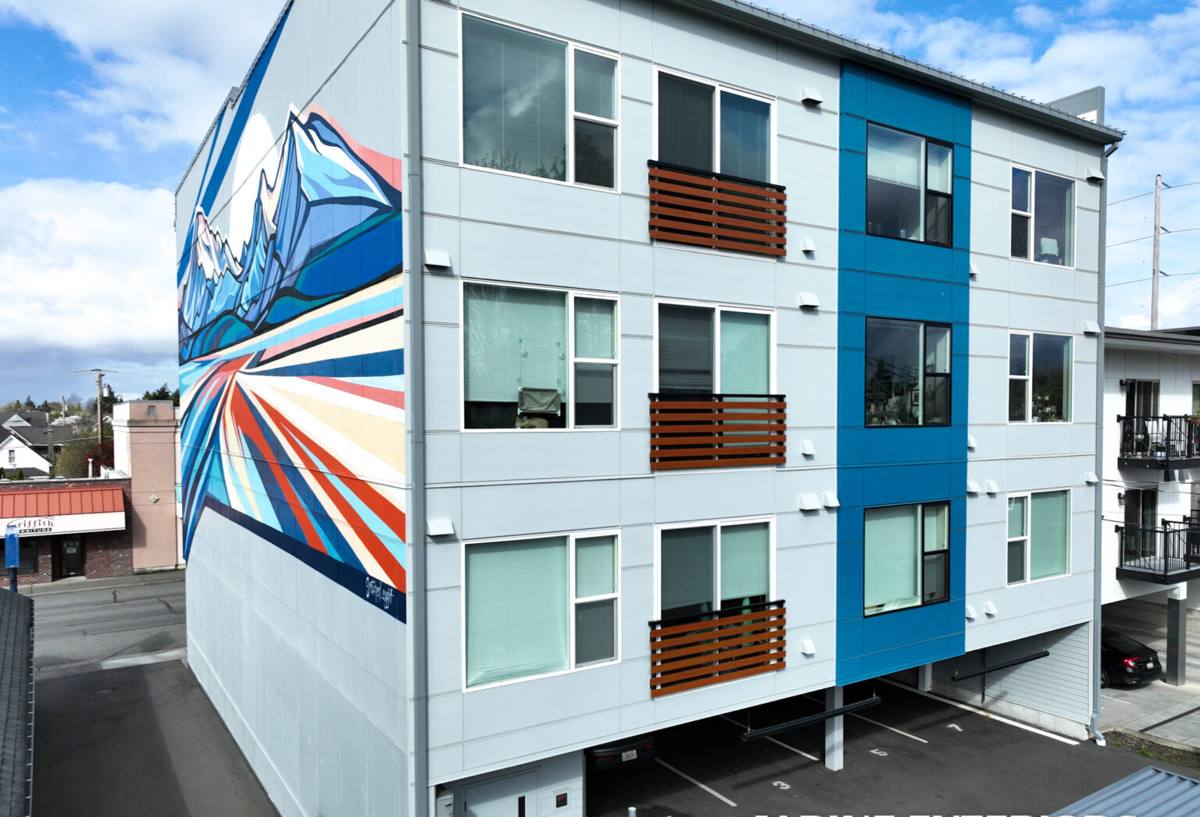
What Bellingham's Climate Does to Siding Over Time
Whatcom County weather is hard on exterior materials in a few specific ways, and Birchwood's mix of tree cover and proximity to Bellingham Bay puts local homes squarely in the path of all of them.
Salt air
Even a few miles inland, salt-laden air off the bay accelerates corrosion on fasteners, flashing, and any exposed metal trim. Once a nail head or flashing edge starts rusting, it stains the siding around it and can eventually compromise the seal at that point.
Driving rain
Bellingham's rain doesn't just fall — wind-driven storms push water sideways into wall assemblies, especially on west- and south-facing elevations. Siding that's caulked wrong, or that has lost caulk at a seam, lets that water behind the surface instead of shedding it.
Long moss season
Shaded, damp conditions for much of the year mean moss and algae get a long runway to establish themselves on siding, especially under eaves and on north-facing walls. Moss holds moisture against the material far longer than open air would, which is exactly the environment that causes rot in wood-based products and finish breakdown in others.
Signs a Birchwood Home Needs Siding Repair
Most repair calls we get start with one of these signs. None of them mean the whole house needs new siding — but all of them mean something needs attention before the next wet season.
- Soft or spongy spots when you press on a board, especially near the bottom of walls or below windows
- Visible cracking or splitting, particularly around fastener points
- Paint or finish that's bubbling, peeling, or chalking unevenly in one area
- Persistent dark streaking or moss growth that keeps coming back after cleaning
- Gaps opening up at seams, corners, or where siding meets trim, windows, or doors
- A musty smell or visible staining on an interior wall that backs up to an exterior section showing damage
- Rust streaks running down from fastener heads or flashing
Any one of these, caught early, is usually a straightforward repair. Ignored through another wet season, several of them turn into sheathing damage — which is a bigger and more expensive fix.
What a Correct Repair Actually Involves
A siding repair that's done right isn't just "cut out the bad board, nail in a new one." That approach often fails again within a year or two because it doesn't address why the original section failed. Our process on a repair call looks like this:
1. Find the actual source
Damaged siding is usually a symptom. We check flashing, caulk lines, grade slope, gutter function, and anything else that could be feeding water into that spot before we touch the siding itself.
2. Check what's behind it
Once a board or panel is removed, we look at the water-resistive barrier and sheathing underneath. If there's rot or moisture damage back there, that has to be dealt with — patching over compromised sheathing just hides a bigger problem.
3. Match or transition materials thoughtfully
If the home's existing siding isn't James Hardie, we'll tell you honestly what your options are: repair with a compatible product to keep the repair invisible, or use the repair as a starting point for a phased transition to Hardie on that elevation. We won't install a patch material we don't stand behind just to make a quick match.
4. Correct the details that caused the failure
New flashing, correct fastener placement, proper caulk joints, and adequate clearance from grade or roof lines — the boring details that determine whether the repair lasts five years or fifteen.
5. Finish to match
Color and texture matching matters on a repair. With James Hardie's ColorPlus factory finish, matching an existing Hardie wall is straightforward because the color is baked in at the factory, not field-mixed.
Repair vs. Replace: How We Help You Decide
Not every damaged section needs a full re-side, and not every repair is worth doing instead of planning a replacement. Here's how we actually weigh it on a Birchwood job:
| Factor | Leans toward repair | Leans toward full replacement |
|---|---|---|
| Extent of damage | Isolated to one or two elevations or sections | Recurring problems across most of the house |
| Sheathing condition | Sound once exposed | Rot or moisture damage found in multiple spots |
| Age of existing siding | Still well within its expected service life | Already near or past typical lifespan for its material |
| Underlying material | Wood, fiber cement, or other repairable substrate | Vinyl or other material that's brittle, faded, or discontinued |
| Cause of failure | A fixable detail (flashing, caulk, grading) | Systemic issue like inadequate original installation |
| Cost over time | Repair cost is a fraction of full re-side | Repeated repairs are starting to add up close to replacement cost |
We'll always give you our honest read on which side of that table your house falls on — we don't have an incentive to push a full re-side when a repair will genuinely hold.
Why We Repair and Rebuild With James Hardie Fiber Cement
Our company installs James Hardie exclusively — we don't install LP SmartSide, vinyl, Cemplank, Allura, primed spruce, or cedar. That standard applies to repair work too, whenever a repair involves replacing a section of siding rather than patching what's there.
The reason comes down to what Bellingham's climate does to different materials over time. Fiber cement doesn't absorb water the way wood-based products can, and it doesn't get brittle and crack in cold snaps the way vinyl can. It's non-combustible, which matters for insurance and peace of mind. And James Hardie's HZ5 product line is specifically engineered for climates like ours — freeze-thaw cycles, sustained moisture, and coastal exposure. Their ColorPlus finish is baked on at the factory rather than field-applied, which means better fade and chip resistance than repainted repairs, and a cleaner match when we're tying new sections into old.
None of this means every material we didn't choose is a bad product. It means that for the specific conditions Birchwood and greater Bellingham throw at a house — salt air, driving rain, a long damp moss season — we've decided fiber cement is what we're willing to put our name behind. When a repair calls for new material, that's what goes on.
Our Process for a Birchwood Repair Call
- Assessment: We walk the exterior, check the areas you're concerned about, and look for related issues you might not have noticed — moisture problems tend to travel.
- Diagnosis: We identify the actual cause, not just the visible damage, and explain it in plain terms.
- Written scope: You get a clear description of what needs to happen and why, before any work starts.
- Repair work: Removal of damaged material, inspection and correction of what's behind it, and proper reinstallation with correct flashing and fastening.
- Finish and cleanup: Matched finish where possible, and the site left clean.
Because we work Birchwood regularly, we're not learning the neighborhood's quirks on your job — we already know which elevations tend to take the worst of the weather and which details local builders commonly got wrong the first time around.
Living With Moss and Salt Air Between Repairs
A good repair buys you time, but a few habits stretch that time further in this climate:
- Keep gutters and downspouts clear so water isn't overflowing onto siding below
- Trim back branches and vegetation that keep a wall shaded and damp longer than necessary
- Gently rinse moss and algae growth before it gets thick enough to hold water against the surface — avoid pressure washing directly into seams
- Re-caulk seams and joints when caulk starts to crack or pull away, before water gets behind it
- Walk the exterior once or twice a year, especially after major windstorms, and catch small issues early
Why a Crew That Already Works Birchwood Matters
A repair on a coastal Whatcom County home isn't the same job as a repair somewhere dry and inland. A crew that hasn't worked this specific mix of salt exposure, rain-driving wind patterns, and moss growth can miss the actual cause and end up repeating the same fix in a couple of years. Working Birchwood regularly means we've already seen how these houses age, which elevations take the brunt of the weather, and what a lasting fix actually requires here — not in a textbook, but on homes like yours.
If you've got a section of siding that's cracking, staining, going soft, or just not looking right, we're glad to take a look. The estimate is free, there's no pressure to do more than the job needs, and you'll get a straight answer about whether it's a repair or something bigger.