 Bellingham Siding
 Why Birchwood Windows Have to Work Harder Than the Catalog Suggests
Birchwood sits close enough to the water and far enough into the Pacific Northwest's wet season that windows here take a different kind of beating than they would twenty miles inland. Salt-laden air off the Sound accelerates corrosion on hardware and fasteners that aren't rated for it. Driving rain — the sideways kind that Whatcom County gets several months a year — pushes water into gaps that would stay dry in a calmer climate. And the long stretch of grey, damp weather that lets moss creep across roofs and siding does the same thing to window sills, tracks, and any wood trim that isn't sealed and maintained. A window that's marketed as standard-duty somewhere in the Midwest is often undersized for what it needs to handle here.
None of that means Birchwood homes need exotic materials or gold-plated hardware. It means the details that are easy to skip — flashing, sill pitch, weep paths, corrosion-resistant hardware — are not optional here the way they might be elsewhere. Get those details right and a window will do its job for decades. Skip them and you'll be dealing with soft sills, fogged glass, or drafts within a handful of winters, no matter how good the glass itself is.
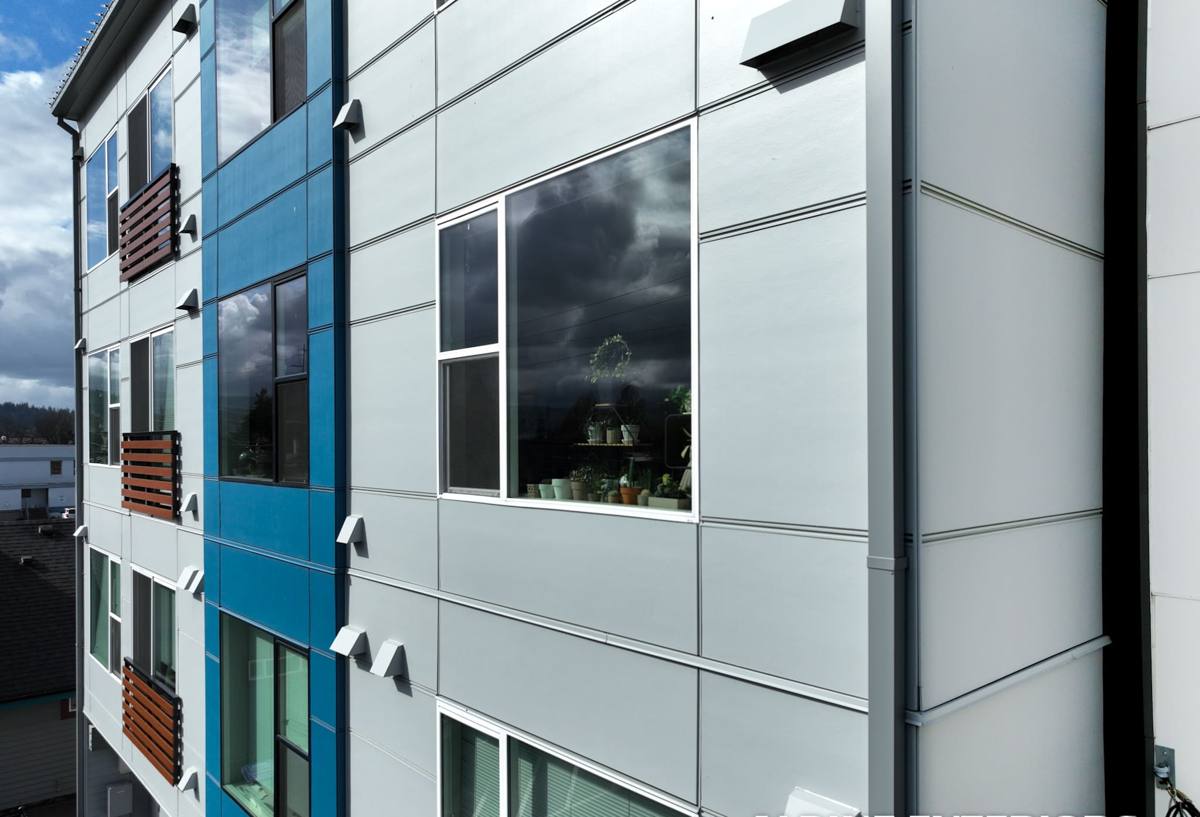
What Makes a Window Job "Custom" in This Neighborhood
Custom doesn't mean fancy. In Birchwood it usually means the window openings themselves aren't standard sizes anymore, or were never standard to begin with. Homes built in different decades used different framing conventions, and decades of settling, past remodels, or old repairs can leave an opening slightly out of square. Ordering an off-the-shelf window and forcing it into that opening is how you end up with shims covering gaps, caulk doing the job flashing should be doing, and a window that looks fine for a year or two before it starts leaking.
A correct custom job starts with measuring the actual opening, not the nominal size on an old permit or a builder's spec sheet. It accounts for the specific wall assembly behind the trim, matches the sightlines and profile to the rest of the house so a new window doesn't look bolted on next to its neighbors, and plans the flashing and water management around how that particular wall handles moisture. On some Birchwood homes that also means matching a specific look — true divided lites, a particular exterior color, a trim profile that fits an older architectural style — which is a different conversation from simply picking a window off a shelf.
Frame Materials: What Holds Up Here and What Doesn't
Every frame material has a place. What changes house to house is how much upkeep the owner wants to take on and how exposed the window is to weather. Here's how the common options actually perform in this climate:
| Material | Salt air / moisture | Maintenance | Typical fit for Birchwood |
|---|---|---|---|
| Vinyl | Won't corrode or rot; seams can loosen with age | Low | Solid, budget-friendly default for most homes |
| Fiberglass | Excellent — stable in wet/dry cycling, resists corrosion | Low | Best long-term option for exposed or coastal-facing walls |
| Wood-clad | Good if cladding stays intact; interior wood needs protection | Moderate to high | Good for matching older or high-end architecture |
| Aluminum | Prone to corrosion in salt air without proper coating | Moderate | We use it selectively, not as a default here |
We don't push any one material on every job. A vinyl window with quality hardware is the right call for a lot of Birchwood homes. Fiberglass earns its higher price on walls that catch the worst of the weather — south and west exposures, homes closer to open water, anywhere the siding shows more moss and mildew than the rest of the house. Wood-clad windows can be the right choice when matching an older home's look matters more than minimizing maintenance, but that's a decision an owner should make with full knowledge of the upkeep involved, not one we make for them by default.
Glass, Gas Fills, and the Details That Actually Stop Water
Glass packages
Double-pane, low-E glass with an argon fill is the standard starting point for this climate, and it's enough for the vast majority of Birchwood homes. Low-E coatings cut heat loss through the glass, which matters through a long, damp winter of running the heat. Where a wall faces prevailing wind and rain directly, we'll sometimes discuss a higher-performance glass package or triple-pane, but that's a conversation about the specific exposure, not a blanket recommendation.
Where the leaks actually start
Almost every window leak we get called out to inspect traces back to one of three things: a missing or improperly lapped sill pan, flashing that wasn't integrated with the house wrap correctly, or weep holes that got caulked shut during a past paint job. The glass and the frame are rarely the problem. It's the water management around the opening — the parts nobody sees once the trim goes back on — that decides whether a window stays dry through a wet Whatcom County winter.
Signs Your Current Windows Are Losing the Fight
Most window failures show themselves gradually. Worth checking for:
- Fogging or a hazy film between the panes — the seal has failed and the gas fill is gone
- Soft or spongy wood at the sill or lower corners of the frame
- Visible moss or dark streaking on the sill, especially on north- or west-facing windows
- Drafts you can feel by hand along the frame edges on a windy day
- Windows that are hard to open, close, or lock — a sign the frame has shifted or swollen
- Paint that's bubbling or peeling specifically around the window, not the rest of the wall
- Condensation on the inside of the glass in cold weather, beyond normal household humidity
Any one of these on its own isn't necessarily urgent. Several of them together, or any sign of soft wood, usually means the window is past the point where caulk and weatherstripping will fix it.
How We Approach a Birchwood Custom Window Project
- On-site assessment of every opening — actual measurements, condition of the surrounding wall, and exposure to wind and rain
- Honest recommendation on material and glass package for that specific opening, not a one-size answer for the whole house
- Careful removal that checks the condition of the framing and sheathing behind the old window before anything new goes in
- Correct flashing and sill pan installation, integrated with the existing water barrier rather than just caulked over it
- Fit, level, and seal the new window, then confirm proper drainage and operation before trim goes back on
- Final walkthrough so the homeowner knows what was done and what, if anything, needs occasional attention
We don't treat the old window as scrap the moment it's out. What we find behind it — rot, missing flashing, old water damage — tells us what actually needs to happen for the new window to last, and we'll flag it before covering it back up rather than after.
What a Window Job Costs and Why
Pricing depends on more than just the window unit itself. The factors that move the number most:
| Factor | Why it affects cost |
|---|---|
| Frame material | Vinyl, fiberglass, and wood-clad carry different unit costs and labor needs |
| Opening condition | Rot or framing damage found during removal adds repair work before the new window goes in |
| Size and configuration | Larger units, custom shapes, or non-standard configurations cost more to source and install |
| Number of openings | Whole-house replacements have better per-unit pricing than a single window |
| Exterior finish work | Matching trim, siding repair, or paint around the new window adds labor |
Because of that last factor especially, two houses with the same size window can end up with different quotes once you account for what's behind the old one. That's part of why we walk every opening in person before giving a number, rather than pricing from a phone description.
Keeping a New Window Job Looking Good for the Long Haul
A correctly installed window doesn't need much, but a little seasonal attention goes a long way in this climate. Clear debris and moss out of the tracks and weep holes at least once a year — those small openings at the bottom of the frame let water that reaches the frame drain back out, and they clog easily under the kind of organic buildup that's constant here. Rinse salt residue off exterior frames periodically if the home sits close to open water; it won't hurt vinyl or fiberglass, but it keeps hardware and any exposed fasteners from corroding early. Check exterior caulking once a year, particularly after a hard winter, and have any cracked or missing beads redone before the next wet season starts. None of this is heavy maintenance — it's the kind of five-minute check that keeps a properly installed window performing the way it's supposed to for its full lifespan.
Why a Crew That Already Works Birchwood Matters
A lot of window problems in this area aren't really window problems — they're moisture problems that show up at the window because that's the weak point in the wall. A crew that's worked houses in this neighborhood before has already seen which wall orientations take the worst of the weather, which older construction styles need extra attention at the sill, and how the local moss and mildew pattern signals a moisture issue before it becomes a rot issue. That's not something you can fully get from a spec sheet — it comes from doing the work in this specific climate, on homes built to this area's older standards, season after season.
It also means fewer surprises during the job itself. Knowing what tends to be hiding behind old trim in homes of a certain age lets us set realistic expectations up front instead of discovering problems mid-install and improvising a fix.
If your windows in Birchwood are fogging, drafting, or just due for an honest look, we're happy to come out, walk the openings, and give you a straight assessment — no pressure, no obligation. Use the form below to request a free estimate.