 Bellingham Siding
 Decking Built for Birchwood, Not Just Sold There
Birchwood homes sit close enough to Bellingham Bay and the surrounding wetlands that a deck here works harder than one in a dry inland town. Salt-laden air, long stretches of driving rain, and a moss season that can run from October through May all put steady pressure on outdoor structures. A deck that looks fine the first summer can start showing problems by year three if it wasn't built with this specific climate in mind. We install composite decking as a system designed for exactly these conditions, not a generic product dropped onto a generic frame.
This page is about one job in one neighborhood: composite deck installation for Birchwood homeowners. We're not going to give you a national overview of decking materials. We're going to explain what your deck actually needs to survive Whatcom County weather, what a correctly built one involves, and why local experience changes the outcome.
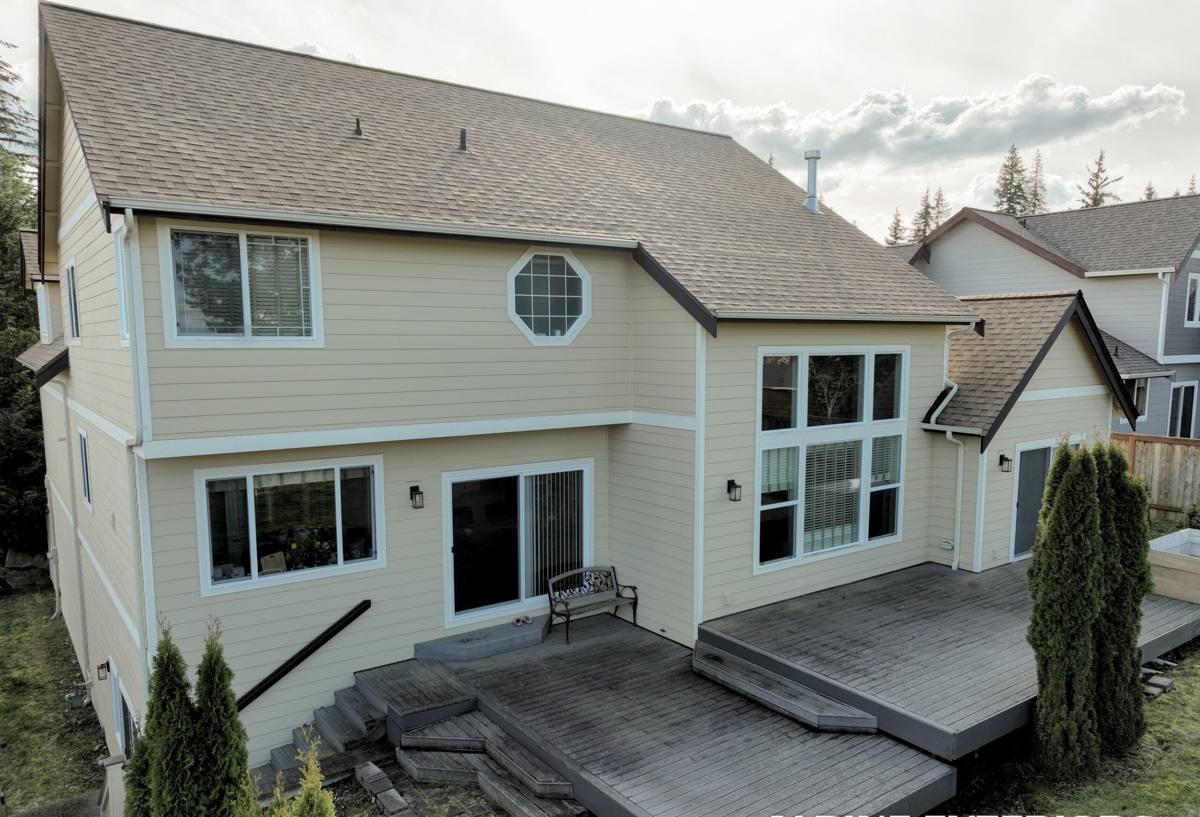
What Bellingham's Climate Actually Does to a Deck
Salt Air and Corrosion
Proximity to the bay means airborne salt settles on everything outdoors, including deck hardware. Standard fasteners and brackets corrode faster near the water than they would twenty miles inland. Over a few seasons, corroding hardware can loosen railings, stain boards, and weaken structural connections long before the decking surface itself shows its age.
Driving Rain and Standing Water
Bellingham doesn't just get rain — it gets rain pushed sideways by wind off the Sound, which finds its way into gaps, seams, and ledger connections that would stay dry in a calmer climate. Any place water can collect against wood framing, flashing, or fasteners becomes a slow-motion rot problem.
Moss, Algae, and Shade
Birchwood's tree cover and long damp season are exactly what moss and algae need to establish themselves. On a deck surface, that growth isn't just cosmetic — it holds moisture against the board, and on some surfaces it makes footing slick and unsafe well before it becomes visibly obvious.
Why Composite Decking Fits This Climate
Composite decking doesn't absorb water the way real wood does, so it doesn't swell, cup, or splinter as moisture cycles through wet and dry periods. That matters enormously in a climate where "dry" might only last a few days at a stretch. It also resists the surface graying and fiber breakdown that untreated or even well-sealed wood eventually shows under constant UV and moisture exposure.
That doesn't make composite maintenance-free — nothing outdoors in Whatcom County truly is. Moss and algae can still grow on composite surfaces, especially in shaded, damp corners of a yard. The difference is that composite doesn't rot from that growth the way wood fiber does, and a capped composite board sheds surface grime with routine cleaning instead of requiring sanding, staining, or sealing on a yearly schedule.
We'll be direct about trade-offs rather than oversell the product. Composite costs more upfront than pressure-treated wood, board selection affects how visible scratches and heat are, and installation quality matters more with composite than with wood because hidden-fastener systems and proper spacing are less forgiving of shortcuts. We think the long-term maintenance savings and consistent performance in this climate justify the upfront cost for most Birchwood homeowners, but it's a real decision with real trade-offs, not an obvious upgrade in every situation.
What a Correctly Built Composite Deck Involves
The decking boards are the visible part, but the parts you don't see determine whether the deck holds up in this climate. A correct installation for a Birchwood property includes:
- Ledger board flashing that properly directs water away from the house rim joist, not just a bead of caulk behind the ledger
- Corrosion-resistant, coated or stainless structural hardware appropriate for coastal-influenced air, not standard interior-grade fasteners
- Joist tape or equivalent protection on framing lumber to slow moisture absorption at the top of each joist
- Proper joist spacing and blocking sized to the specific composite board being installed, since composite spans differently than solid wood
- Ventilation and clearance underneath the deck so airflow can dry out the substructure between rain events
- Grading and drainage at ground level so water sheds away from posts and footings rather than pooling underneath
Skipping any one of these doesn't show up on day one. It shows up two or three winters later as a soft spot near the ledger, a rust-streaked railing bracket, or standing water under the deck that never fully dries between storms.
Board and Fastening System Comparison
| Approach | Moisture Behavior | Maintenance | Best Fit |
|---|---|---|---|
| Pressure-treated wood | Absorbs and releases water; prone to cupping and checking | Annual cleaning, periodic staining/sealing | Lower upfront budget, owners willing to maintain yearly |
| Uncapped composite | Resists rot but surface can absorb moisture and stain | Occasional cleaning; more prone to mold in shaded, damp spots | Budget-conscious composite option, sunnier lots |
| Capped composite | Shell resists moisture penetration and staining | Simple periodic washing | Shaded, damp, or salt-exposed Birchwood lots |
| Hidden fastener systems | No exposed screw heads for water to sit on | Minimal; occasional hardware check | Clean look, reduced surface corrosion points |
Our Process, Start to Finish
Site Visit and Honest Assessment
We walk the property, look at sun and shade exposure, drainage patterns, and how close the deck sits to grade or to the house's existing moisture management. We'll tell you plainly if your lot has features — heavy shade, poor grading, a low spot that collects runoff — that need addressing before or during the deck build, not glossed over.
Design and Material Selection
We help you weigh board style, color, and fastening system against your budget and how much upkeep you actually want to do. Darker boards show less staining from tannins and organic debris but can run hotter in direct sun; lighter boards show grime differently. We'll talk through what fits your specific yard rather than pushing one product line.
Permitting and Structural Planning
Deck structures in Whatcom County typically require permitting depending on size, height, and attachment to the home. We handle that process and design the substructure to code, sized correctly for composite decking's specific span and fastening requirements.
Build and Inspection
Framing, flashing, and drainage details go in first — the parts that matter most for this climate — followed by decking, fascia, and railing. We don't cover framing work until it's been checked, and we schedule any required inspections before closing anything in.
Final Walkthrough
We walk the finished deck with you, cover basic care for your specific board choice, and answer questions before calling the job done.
Living With a Composite Deck in a Moss-Prone Climate
Composite decking cuts down on maintenance dramatically compared to wood, but "low-maintenance" isn't "no-maintenance" in a climate like this one. A simple seasonal routine keeps a Birchwood deck performing the way it should:
- Sweep off leaves, needles, and organic debris regularly, especially in fall — trapped debris holds moisture against the board and feeds moss growth
- Wash the surface with a mild soap-and-water solution or a manufacturer-approved deck cleaner a couple times a year, more often in heavily shaded areas
- Use a soft-bristle brush rather than a pressure washer on high settings, which can damage the board's cap or texture
- Check railing posts and hardware annually for early signs of corrosion, particularly on decks facing the bay
- Confirm gutters and downspouts near the deck are directing water away, not dumping extra runoff onto or under the structure
- Trim back overhanging branches where practical to reduce shade and debris on chronically damp sections
What Drives the Cost of a Birchwood Composite Deck
Every deck is priced around the specifics of the property, but a few factors consistently move the number for homes in this area:
| Factor | Why It Matters Here |
|---|---|
| Deck size and shape | More linear feet of framing, flashing, and board means more material and labor |
| Height off grade | Taller decks need more substantial railing and structural support, plus more complex footing work |
| Board tier | Capped composite costs more than uncapped, but holds up better against shade and moisture |
| Ledger and flashing complexity | Homes with tricky siding transitions need more careful, more time-intensive flashing work |
| Site drainage and grading | Lots with poor natural drainage may need grading or gravel work before the deck goes in |
| Access for equipment and material | Tight side yards or sloped lots can add labor time getting materials to the build site |
Composite decking projects for a typical Birchwood home generally land in a broad mid-range for residential decks, with final numbers depending heavily on size and the factors above. We give firm, itemized quotes after seeing the site — not ballpark numbers pulled from a national average.
Why a Crew That Already Works Birchwood Matters
A contractor who builds decks all over the state knows composite decking in general. A contractor who works Birchwood regularly knows how this specific pocket of Bellingham behaves — which lots hold moisture longest, where salt-air corrosion shows up first, which yards need extra attention to shade and drainage before the framing even starts. That local pattern recognition is the difference between a deck that's built to a spec sheet and one that's built for the actual conditions it will sit in for the next fifteen-plus years.
We also know the practical side of building here: Whatcom County permitting expectations, how local drainage and grading tend to run on Birchwood lots, and what corrosion-resistant hardware actually holds up near the bay versus what's marketed as coastal-rated but underperforms. That's knowledge you only build by doing the work here, repeatedly, and standing behind it afterward.
Get a Straight Answer for Your Property
If you're considering a composite deck for your Birchwood home, we'll come take a look, walk you through what your specific lot needs, and give you a clear, no-pressure estimate — no generic pricing, no upsell pressure, just an honest read on what the job actually involves. Use the form below to request your free estimate.