 Bellingham Siding
 Why Barkley Homes Need Siding Built for This Climate
Barkley sits close enough to Bellingham Bay and the Puget Sound air system that homes here deal with a steady mix of salt-laden moisture, wind-driven rain off the water, and a moss season that can stretch from fall clear into spring. None of that is unusual for Whatcom County, but it adds up fast on a home's siding. Salt air accelerates corrosion on fasteners and trim metal. Driving rain finds its way into any gap, seam, or poorly sealed joint. And moss doesn't just grow on roofs — it takes hold on north-facing walls, under eaves, and anywhere siding stays damp longer than it should.
Siding in Barkley isn't just a cosmetic layer. It's the first line of defense against a climate that never really dries out for long stretches of the year. That's why the material choice and the installation quality matter more here than they would in a drier inland market.
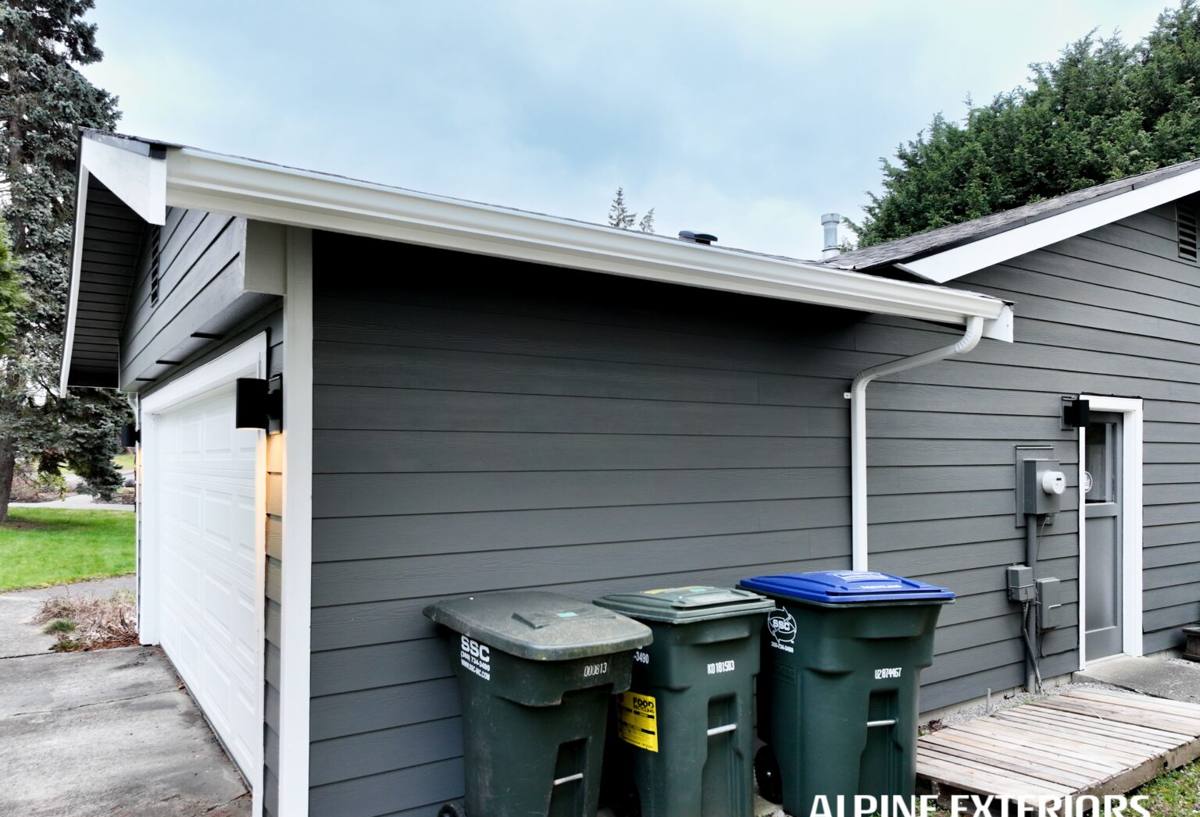
Why We Install Only James Hardie Fiber Cement
We don't offer vinyl, LP SmartSide, Cemplank, Allura, primed spruce, or cedar. That's not a marketing position — it's a standard we settled on after weighing how each product actually performs against Whatcom County's weather over the long haul. Fiber cement resists moisture absorption in a way wood-based and engineered wood products can't match, and it doesn't expand, contract, or warp the way vinyl does when temperatures swing. It's also non-combustible, which matters more every year as wildfire smoke and dry summer stretches become part of the Pacific Northwest's new normal.
James Hardie backs its products with a strong transferable warranty and a factory-applied finish system that holds up to exactly the kind of punishment Barkley homes take: salt air, UV exposure, and repeated wet-dry cycling.
The HZ5 Climate-Engineered Line
James Hardie engineers its siding by climate zone, and homes in this region qualify for the HZ5 product line — built specifically for areas with high moisture exposure and freeze-thaw cycling. HZ5 panels and lap siding are formulated to resist moisture-related damage better than a one-size-fits-all product, which matters when a home is exposed to both marine humidity and the occasional hard freeze.
ColorPlus Factory Finish
Most Barkley installations we do use ColorPlus, Hardie's factory-applied finish. It's baked on under controlled conditions rather than sprayed or rolled on-site, which gives it more consistent coverage and better fade resistance than field-applied paint. For a neighborhood with a lot of moss and mildew pressure, a finish that resists staining and holds color longer is a real, practical advantage — not just an aesthetic one.
What a Correct Installation Actually Involves
Fiber cement siding is only as good as the installation behind it. A rushed or careless install can trap moisture behind the very product that's supposed to keep it out. Here's what we consider non-negotiable on every Barkley project:
- Proper weather-resistive barrier and correct flashing at every window, door, and penetration before a single piece of siding goes up
- Minimum clearance from grade, decks, and roof lines so siding never sits in standing water or gets buried against soil
- Correct fastener type and placement — James Hardie specifies fastener spacing and depth, and getting it wrong voids warranty protection
- Proper caulking at seams and trim, using sealants rated for exterior fiber cement, not general-purpose caulk
- Rain-screen or drainage gap detailing where the wall assembly calls for it, so moisture that does get behind the cladding has somewhere to go
- Cut edges primed and sealed before installation, since raw fiber cement edges are the most vulnerable point on the board
Skipping any one of these steps might not show up as a problem in year one. It shows up in year five or six, usually as staining, soft trim, or paint failure at the seams — right when a homeowner assumes their siding should still look brand new.
Common Problems We See on Homes Around Barkley
We regularly get called out to look at siding that's failing well before it should. The patterns are consistent enough to be worth naming, not to point fingers at any one product or installer, but because they're avoidable with the right approach from the start.
Moisture Trapped Behind the Cladding
When siding is installed tight against a wall with no drainage path, water that gets behind it — through a nail hole, a seam, or wind-driven rain forced past a J-channel — has no way out. In a climate that stays damp for months at a time, that trapped moisture leads to rot in the sheathing long before the siding itself shows visible damage.
Moss and Organic Growth
North-facing walls, areas shaded by mature trees, and spots under overhangs that never get direct sun are moss magnets in this region. Moss holds moisture against the surface, and over time that constant dampness degrades caulking, finishes, and fastener integrity faster than dry exposure would.
Clearance and Grade Issues
Landscaping beds, mulch, and grade that's been built up over the years against a foundation are common in established neighborhoods. When siding ends up too close to soil or planting beds, it stays wet far longer after every rain event, which is a direct path to rot regardless of what the siding is made of.
How Barkley's Climate Compares to Drier Regions
| Factor | Barkley / Bellingham | Typical Dry Inland Climate |
|---|---|---|
| Annual moisture exposure | High — marine air, frequent rain, long wet season | Low to moderate |
| Moss and organic growth risk | Significant on shaded and north-facing walls | Minimal |
| Salt air corrosion risk | Present due to proximity to Bellingham Bay | Not a factor |
| Freeze-thaw cycling | Occasional hard freezes combined with wet conditions | Varies, often drier freezes |
| Recommended Hardie climate zone | HZ5 | Often HZ10 or regional equivalent |
Comparing Siding Materials for a Barkley Home
| Material | Moisture Performance | Maintenance | Longevity Here |
|---|---|---|---|
| James Hardie Fiber Cement | Engineered for high-moisture climates (HZ5) | Low — factory finish resists fading and staining | Strong, backed by transferable warranty |
| Vinyl | Can warp and gap with temperature swings, allowing water intrusion | Low upfront, but seams degrade over time | Moderate |
| LP SmartSide / engineered wood | Wood-based core is more moisture-sensitive if the finish is compromised | Moderate to high — finish and seams need monitoring | Variable, dependent on installation and upkeep |
| Cedar | Natural material, moisture-absorbent, needs consistent sealing | High — regular refinishing required | Shorter without diligent maintenance |
We don't say this to disparage any of these products outright — each has situations where it makes sense. But for the moisture load Barkley homes carry every year, we've made the call that fiber cement engineered for this exact climate is the product worth standing behind.
Our Process for a Barkley Siding Project
1. On-Site Evaluation
We walk the exterior, check for existing moisture damage, evaluate current clearance and drainage conditions, and look at trim, window flashing, and any areas already showing moss or staining.
2. Product and Color Selection
We help homeowners choose between lap siding profiles, panel siding, and trim options, along with ColorPlus finish colors that suit the home and hold up to this region's UV and moisture exposure.
3. Tear-Off and Wall Prep
Old siding comes off, and we inspect the sheathing underneath for any existing rot or moisture damage before it gets covered back up. This step gets skipped by rushed jobs — we don't skip it.
4. Weather Barrier and Flashing
A correct weather-resistive barrier and properly lapped flashing go in at every window, door, and penetration before any siding is hung.
5. Installation to Manufacturer Spec
Fastener placement, clearances, and seam treatment all follow James Hardie's published installation requirements — the same requirements that keep the product warranty intact.
6. Final Walkthrough
We review the finished work with the homeowner, checking trim lines, caulking, and overall finish before calling the job done.
Cost Factors on a Barkley Siding Project
Every home is different, so we won't quote a number without seeing the property, but the main variables that move a project's cost are worth understanding upfront:
- Total square footage of exterior wall area and the home's overall complexity (gables, dormers, multiple stories)
- Condition of the existing sheathing once old siding is removed — hidden rot adds repair work
- Siding profile chosen (lap siding versus panel siding versus a mix with trim accents)
- Amount of trim, corner, and soffit work involved
- Access difficulty — tight lot lines, mature landscaping, or multi-story sections
A free on-site estimate is the only reliable way to get real numbers, since guessing from square footage alone misses the details that actually drive cost.
Why Hiring a Crew That Already Works in Barkley Matters
A contractor who works this neighborhood regularly already knows the practical realities: which walls tend to hold moss, how local permitting and inspection processes run, and what HOA or design guidelines might apply in certain pockets of the community. That familiarity translates into fewer surprises during the project and a finished job that's suited to the specific conditions of the property, not a generic install pulled from a drier climate playbook. It also means a crew that's seen how James Hardie siding actually performs on Bellingham-area homes years after installation — not just how it looks on installation day.
Ready to Talk About Your Home
If you're weighing a siding replacement in Barkley and want a straight answer about what your home actually needs, we're happy to walk the property with you. Reach out for a free, no-pressure estimate — there's a form below to get started.