 Bellingham Siding
 Deck Repair Built for the Barkley Area's Weather
Homes in and around Barkley sit in one of the more comfortable pockets of Bellingham, but the deck outside your back door doesn't get a break just because the neighborhood is well kept. Whatcom County's marine climate is hard on any exterior wood or composite structure, and a deck takes the worst of it: it's horizontal, it's outdoors year-round, and it's the one part of the house designed for people to walk on, sit on, and load down with furniture and grills while it's slowly absorbing moisture from below and above.
We work on decks throughout Bellingham, and the repair calls we get from the Barkley area tend to follow a pattern tied directly to our regional climate: salt-tinged air off the Puget Sound corridor, long stretches of driving rain, and a moss season that can run from fall through spring. None of that is unique to one street or one builder — it's just what this part of Washington does to exterior structures, and it's why deck repair here needs to be handled differently than it would be in a drier inland climate.
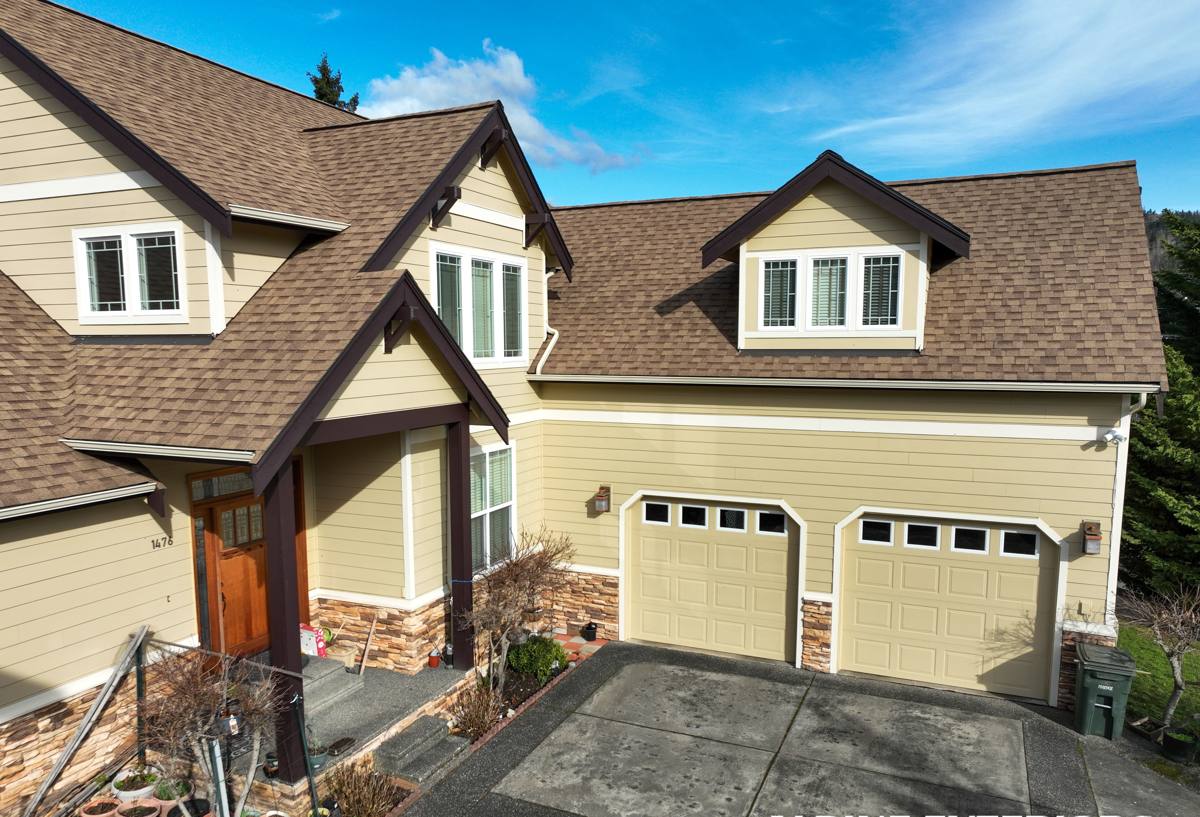
What Bellingham's Climate Actually Does to a Deck
Salt Air and Metal Fatigue
Bellingham isn't a beachfront town, but it's close enough to saltwater that airborne salt content is a real factor in how fast fasteners, flashing, and hardware corrode. Standard zinc-coated screws and nails that might last two decades in a dry inland climate can start rusting, staining the wood around them, and losing holding strength years earlier here. Corroded fasteners are one of the most common root causes we find when a deck feels "loose" even though the framing underneath is otherwise sound.
Driving Rain and Trapped Moisture
Wind-driven rain doesn't just fall on a deck, it gets pushed sideways into ledger boards, under railings, and into any gap where two pieces of material meet. Over time that moisture finds its way into end grain, fastener holes, and the joint where the deck attaches to the house — the ledger connection — which is consistently the single most important, and most commonly compromised, connection on any deck in this climate.
Moss, Algae, and a Long Growing Season
Whatcom County's moss season is long because the conditions moss needs — shade, moisture, and mild temperatures — are present for most of the year. On a deck, moss and algae don't just look bad. They hold water against the wood surface, keep boards from drying out between rain events, and make the walking surface slick and genuinely dangerous, especially on stairs. A deck that looks "just dirty" from a distance is often holding a layer of organic growth that's actively feeding rot underneath.
Signs a Barkley-Area Deck Needs Repair
Most deck repairs we get called for started small and got put off, not because the homeowner didn't notice, but because it's hard to know which issues are cosmetic and which ones are structural. Here's what we tell homeowners to actually check:
- Soft, spongy, or springy spots when you walk across the deck, especially near the house or stairs
- Boards that have visibly cupped, split lengthwise, or pulled away from their fasteners
- Rust streaks bleeding out from screw or nail heads
- Any gap, movement, or visible separation where the deck meets the house (the ledger board)
- Railings or posts that wiggle when pushed, not just cosmetically loose caps or balusters
- Persistent moss, algae, or black staining that comes back within weeks of cleaning
- Stair stringers or the bottom few inches of support posts that look darker, swollen, or crumbly
- Standing water that doesn't drain off the deck surface within an hour or two of rain stopping
Any one of these on its own might be minor. Several at once, or anything involving the ledger board or main support posts, means it's worth having someone look at the structure, not just the surface.
What a Correct Deck Repair Actually Involves
A repair that only replaces the boards you can see is a cosmetic fix, not a structural one. We approach deck repair from the framing out, because that's where the actual failures start and where the actual safety risk lives.
Structure First
Before anything cosmetic, we check the ledger board connection, the posts and footings, the joists, and the hardware holding it all together. This is the part of a deck that carries the load, and it's also the part that's hardest to inspect once new decking is laid back down over it. If the framing is compromised, replacing the surface boards without addressing it just hides the problem for another season.
Fasteners and Hardware
Given the salt air and moisture in this region, we don't reuse corroded hardware just to save a step. Where a repair opens up a connection, we replace fasteners with hardware rated for the exposure, and we make sure joist hangers, post bases, and structural connectors are actually doing their job, not just present.
Drainage and Airflow
A repair that doesn't address why moisture got trapped in the first place tends to fail again. That can mean adjusting flashing at the ledger, clearing blocked gaps between boards, or making sure the space under the deck isn't holding standing water against the framing.
Surface and Finish
Once the structure is sound, we address the decking boards themselves — sistering or replacing damaged sections, resetting fasteners, and, where it makes sense, cleaning and treating the surface so moss and algae have a harder time re-establishing.
Repair or Replace? How We Help You Decide
Not every deck with problems needs to come out entirely, and not every deck is worth saving. We look at the framing condition, the age of the structure, and how widespread the damage is before recommending either path.
| Factor | Repair Usually Makes Sense | Replacement Is Often Better |
|---|---|---|
| Ledger board | Solid, properly flashed, minor fastener issues | Rotted, pulling away, or improperly attached originally |
| Framing (joists/posts) | Sound with a few isolated soft spots | Widespread soft or crumbling wood in multiple areas |
| Decking boards | Scattered damaged boards among otherwise good ones | Most boards are cupped, split, or rotted |
| Age of structure | Newer deck with isolated, addressable issues | Original decking is decades old and near end of service life |
| Cost pattern | Repair cost is a fraction of full replacement | Repeated repairs are approaching the cost of rebuilding |
Broadly speaking, straightforward repairs on an otherwise sound deck tend to run a few hundred to a few thousand dollars depending on scope, while anything involving significant framing or a full rebuild moves into a different budget entirely. We'll give you a real number after we've actually looked at the deck, not a guess over the phone.
How We Handle a Barkley Deck Repair, Start to Finish
- Inspection. We check the deck from the ground up — footings, posts, ledger, joists, then the visible surface — and tell you honestly what we find.
- Written scope. You get a clear description of what needs to be fixed, what it involves, and a real price before any work starts.
- Structural repair. Framing, ledger, and hardware issues get addressed first, using fasteners and connectors suited to this region's moisture and salt exposure.
- Surface repair. Damaged decking is replaced or sistered in to match, and the whole surface is checked for consistent fastening.
- Cleanup and finish. We clear debris, and where appropriate, treat or seal the deck to give it a better chance against the next moss season.
Materials: Honest Trade-Offs for This Climate
What a deck is built from matters as much as how it's repaired. We'll walk you through the real trade-offs rather than pushing whatever is easiest for us to install.
| Material | Where It Holds Up Well | What to Watch For Here |
|---|---|---|
| Pressure-treated lumber | Cost-effective, easy to repair in sections, widely available | Needs periodic sealing/staining, more prone to moss uptake if neglected |
| Cedar | Natural rot resistance, common regional look | Softer surface, still needs finish maintenance in wet climates |
| Composite decking | Low maintenance, resists rot in the board itself | Framing underneath still needs wood-standard moisture protection; can still support surface moss/algae if not cleaned |
Whichever material a repair uses, the underlying framing decisions — flashing, fastener choice, drainage — matter more to long-term performance than the decking product on top of it.
Why a Crew That Already Works the Barkley Area Matters
Deck repair isn't a one-size-fits-all trade. A crew that regularly works homes in this part of Bellingham has already seen how the local combination of salt air, driving rain, and a long moss season plays out on decks of similar age and construction, and knows which failure points to check first instead of guessing. That familiarity saves time during the inspection and helps us catch problems before they turn into bigger, more expensive repairs.
It also matters for the practical side of the job: knowing typical lot layouts and drainage patterns in this area, understanding what Bellingham's permitting process requires for structural deck work, and being a crew you can actually reach again if a question comes up after the job is done.
Get a Straightforward Deck Assessment
If your deck has soft spots, rust stains, persistent moss, or just doesn't feel as solid as it used to, it's worth having it looked at before another wet Bellingham winter works on it further. We offer free, no-pressure estimates for deck repair in the Barkley area — use the form below to get started.