 Bellingham Siding
 Barkley's Roofs Take a Different Kind of Beating
Barkley sits far enough into Bellingham that homeowners sometimes assume they're sheltered from the worst of what Whatcom County's weather throws at a roof. In practice, the combination is still there: wind carries salt air inland off Bellingham Bay and the broader Puget Sound, long stretches of driving rain soak into every seam and fastener line, and the tree canopy that makes Barkley's older, established blocks so pleasant to live on also means a moss season that can run most of the year in shaded areas. None of these three things is dramatic on its own. Together, over a decade or two, they're what actually wears out a shingle roof.
We've worked on enough roofs in this part of Whatcom County to know the pattern repeats itself: north-facing slopes and sections tucked under mature trees age faster than sunnier, more exposed roof planes on the same house. A correct install and a realistic maintenance rhythm are what keep that aging even and predictable instead of surprising you with a leak.
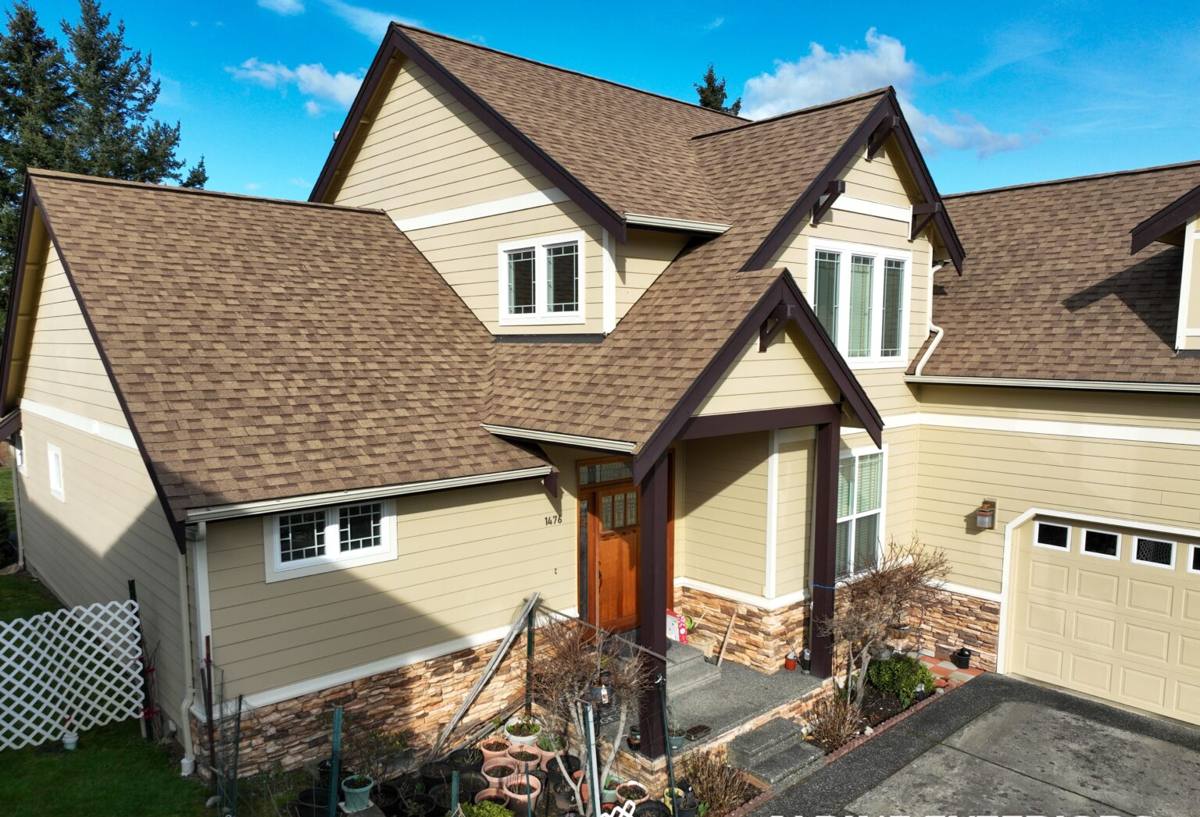
What Salt Air, Rain, and Moss Actually Do to a Shingle Roof
Each of these stressors works differently, and understanding the mechanism helps explain why certain parts of a roof fail before others.
- Salt-laden air settles fine residue on roofing surfaces. It doesn't corrode asphalt shingles the way it does metal fasteners and flashing, but it does hold moisture at the surface a little longer than clean air would, which feeds algae growth and slows drying between rain events.
- Driving rain — rain pushed sideways by wind rather than falling straight down — finds its way under shingle tabs, around poorly lapped flashing, and into any gap that a calmer climate would never test. Roofs here need laps, seals, and flashing details that assume the rain won't always fall straight down.
- Moss is the slow one. Spores land in shaded, damp areas — usually the north slope, valleys, and anywhere overhanging branches keep a section of roof from ever fully drying out. Moss doesn't just sit on top of shingles; its rhizoids work down into the granule layer and under tab edges, lifting them just enough to let water in behind the shingle rather than over it.
Individually, a roof can tolerate any one of these for a while. Combined, they shorten the realistic service life of a shingle roof that wasn't installed or maintained with this specific climate in mind.
Signs a Barkley Roof Needs a Closer Look
Most roof failures announce themselves quietly for months before anyone notices a leak inside the house. Worth checking for, especially heading into the wetter months:
- Heavy granule buildup in gutters or at downspout outlets (a sign shingles are wearing past their protective layer)
- Moss clumps or dark green streaking, particularly on north-facing or shaded slopes
- Shingle tabs that are curling upward, cupping, or look "shingled backwards" after wind
- Black or gray streaking that isn't moss — usually algae staining, mostly cosmetic but worth monitoring
- Soft or spongy spots when walking the roof deck (a sign moisture has reached the sheathing)
- Daylight, staining, or a musty smell in the attic near the roofline
- Missing or torn shingles after a windstorm, even just a few
Any one of these on its own isn't necessarily an emergency. Several at once, or any sign of moisture actually reaching the attic, is worth a professional look before the next wet season.
Repair or Replace? What We Actually Weigh
We don't default to "replace" just because a roof shows some wear — a lot of moss and staining issues are legitimately repairable. The honest answer depends on a handful of factors we walk through with the homeowner during the estimate.
| Factor | Repair Often Makes Sense | Replacement Usually Makes More Sense |
|---|---|---|
| Age of roof | Under roughly 12-15 years | Approaching or past the shingle's rated service life |
| Moss/algae extent | Isolated to one slope or valley | Widespread across most of the roof |
| Granule loss | Light, scattered | Heavy, with bald patches visible |
| Decking condition | Solid, no soft spots | Soft, spongy, or visibly sagging in sections |
| Existing layers | Single layer of shingles | Already two layers (common code limit reached) |
| Leak history | None, or one recent isolated leak | Recurring leaks in different spots |
We'll give you a straight answer either way, including when a repair is genuinely the right call — a roof that only needs a valley re-flashed or a section of storm-damaged shingles replaced doesn't need a full tear-off to be sound.
What a Correct Asphalt Shingle Roofing Job Involves
Tear-Off and Deck Inspection
A full replacement starts with removing existing layers down to the deck — not layering new shingles over old ones, which traps moisture and voids most manufacturer warranties. Once the deck is exposed, we check every sheet of sheathing for soft spots, delamination, or rot, most commonly found near valleys, chimneys, and eaves where water has had the most opportunity to sit.
Underlayment and Ice-and-Water Barrier
Given how much driving rain this area sees, underlayment choice matters more here than in a drier climate. We use synthetic underlayment across the field and self-adhering ice-and-water barrier at eaves, valleys, and roof penetrations — the spots most likely to see wind-driven rain forced up and under the shingle line.
Ventilation
Balanced intake and exhaust ventilation keeps the attic space at roughly the same temperature and humidity as the outside air. Without it, moisture from daily living gets trapped under the roof deck, which encourages the same rot and mold issues that a good roof is supposed to prevent — this matters as much in a moist coastal climate as in a hot one.
Flashing Details
Flashing around chimneys, skylights, sidewalls, and valleys is where the majority of roof leaks actually originate, not in the field of the shingles themselves. We install new flashing rather than reusing old pieces, with proper step flashing at walls and counterflashing that sheds water rather than channeling it toward a seam.
Shingle Installation and Fastening
Correct nail placement, count, and pattern matter for wind resistance — an under-nailed roof will fail in a windstorm well before its shingles wear out on their own. We follow manufacturer nailing specifications exactly, since that's also what keeps a warranty valid if it's ever needed.
Choosing the Right Shingle for This Climate
Not every asphalt shingle performs the same way under heavy moss pressure and salt-laden air, and we talk homeowners through the real trade-offs rather than just the price difference.
Algae-Resistant (AR) Shingles
Most quality shingle lines now include copper or zinc granules blended in specifically to resist the algae staining common in the Pacific Northwest. It's not a moss cure by itself, but it meaningfully slows the staining that shows up first on shaded, damp-prone slopes.
Architectural vs. Three-Tab
Architectural (dimensional) shingles are heavier, carry a higher wind rating, and tend to shed moss growth a bit better than flatter three-tab shingles because of their layered profile — that's a real advantage in a climate with a long moss season, though it comes at a higher material cost. Three-tab shingles remain a legitimate, lower-cost option for homeowners prioritizing budget over the added durability.
Wind Rating
Given the exposure some Barkley lots see from open weather systems moving in off the water, we typically recommend a shingle rated for higher sustained winds than the manufacturer's baseline product, especially on roofs with longer, more exposed slopes.
How We Work on a Barkley Roof
The process is the same whether it's a full replacement or a targeted repair — we don't skip steps to move faster.
- An on-site inspection and a written, itemized estimate — no pressure, no same-day-signature tactics
- A clear explanation of what we found, what it means, and what your realistic options are, including if a repair is enough
- Scheduling that accounts for the wetter months here rather than fighting them
- Protection for landscaping, siding, and gutters during tear-off
- Daily cleanup and a magnetic sweep for stray nails before we leave each day
- A final walkthrough so you know exactly what was done and what to watch for going forward
Keeping Moss From Coming Back After the Roof Is Done
A new roof still needs a little seasonal attention in this climate — that's just the reality of a lot of tree cover and steady rain, not a sign anything was done wrong. A few habits go a long way:
- Clear gutters at least twice a year so water isn't backing up under the eave line
- Have moss physically brushed or treated rather than pressure washed — high-pressure washing strips granules and shortens shingle life, which is why it's not something we recommend on asphalt roofs
- Trim back overhanging branches where practical to let a shaded slope get more sun and airflow
- Have the roof looked at after any major windstorm, even if nothing looks obviously wrong from the ground
- Address small moss patches early — it's far easier to treat a small area than to deal with lifted shingles later
If you're seeing moss, staining, granule loss, or you're just not sure how much life is left in your current roof, we're happy to take a look and give you a straight, no-pressure assessment. The estimate is free, and there's no obligation attached to it — fill out the form below and we'll get in touch to schedule a time that works for you.