 Bellingham Siding
 Asphalt Shingle Roofing for Silver Beach Homes
Silver Beach sits in one of the wetter, more tree-shaded pockets of Bellingham, and that combination is hard on roofs. Asphalt shingles are still the most practical, cost-effective choice for most homes in this part of Whatcom County — but "asphalt shingles" covers a wide range of quality, installation methods, and long-term performance. A shingle roof installed correctly for our climate can last decades. One installed by a crew that treats Bellingham the same as a dry inland market will show problems within a few years: curling edges, moss colonies, and leaks around valleys and penetrations.
This page is about doing the job right for Silver Beach specifically — not a generic overview of asphalt roofing. We'll walk through what the local climate actually does to a roof, what a correct installation involves, how shingle types compare, and what to expect from our process.
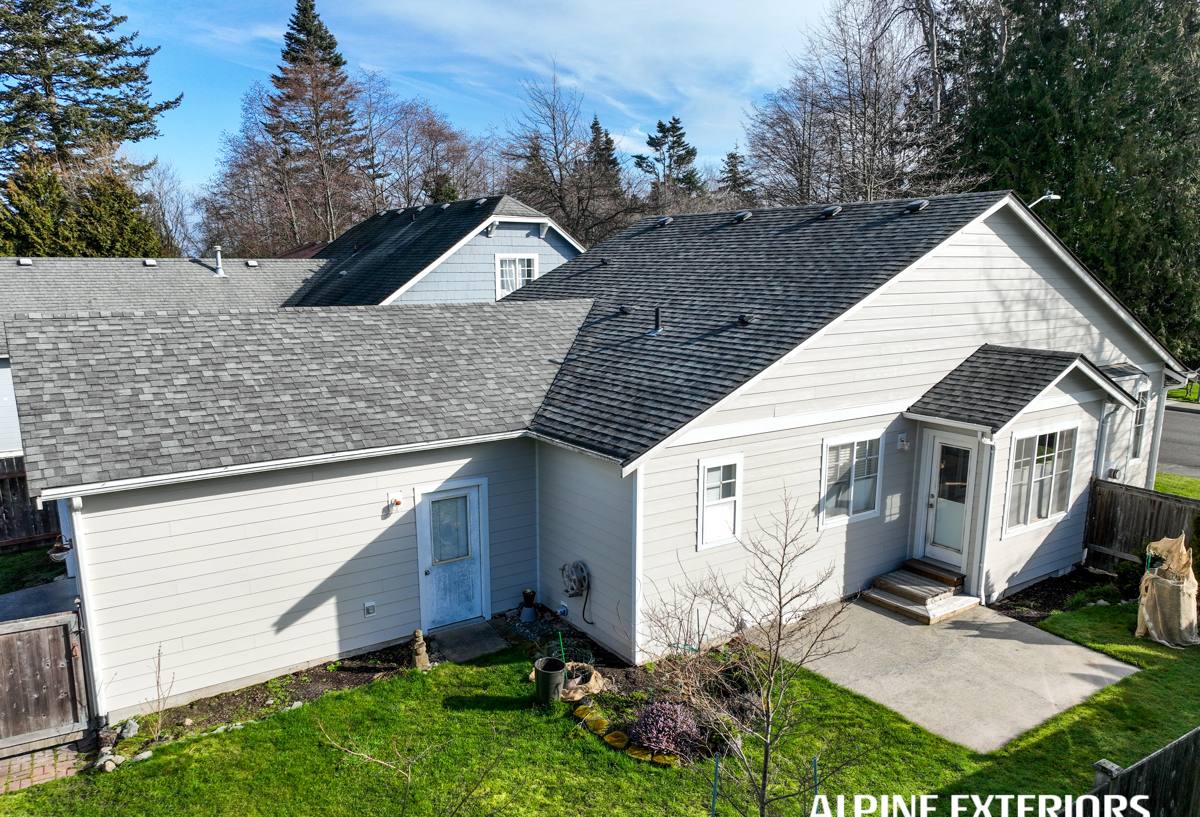
What the Local Climate Does to a Shingle Roof
Bellingham's marine climate means Silver Beach roofs deal with a longer wet season than most of the country, punctuated by driving wind-driven rain off the Sound and salt-laden air that accelerates corrosion on exposed metal flashing and fasteners. None of that is unique to one street or subdivision — it's a Whatcom County reality that shapes how a roof should be built here.
Moss and Moisture
Tree cover, shade, and near-constant humidity for much of the year create ideal conditions for moss and algae growth on asphalt shingles. Moss isn't just cosmetic — its root structure holds moisture against the shingle surface and works into the granule layer, and over time it can lift shingle edges and let water track underneath. A roof with poor ventilation or a lot of shade will grow moss faster than one that gets sun and airflow, regardless of shingle brand.
Wind-Driven Rain
Rain that comes in at an angle, rather than straight down, tests every seam, valley, and flashing detail on a roof. Underlayment quality and how flashing is integrated at valleys, walls, and roof penetrations matter more here than in drier climates, where a marginal detail might never get tested by real weather.
Salt Air and Metal Components
Proximity to Bellingham Bay means metal roofing components — flashing, drip edge, nail heads, vent stacks — are exposed to salt air that speeds up corrosion compared to inland areas. Using the right grade of metal and fasteners, and making sure they're properly coated or galvanized, is a detail that pays off over the life of the roof.
What a Correct Asphalt Shingle Roof Replacement Involves
A shingle roof is a system, not just a layer of shingles nailed to plywood. Skipping or shortcutting any part of the system is where most premature failures start, especially in a climate like ours.
- Tear-off and deck inspection: Old roofing removed down to the deck, with any soft, rotted, or delaminated sheathing replaced — not covered over.
- Ice and water shield at vulnerable areas: Self-adhering waterproof membrane at eaves, valleys, and around penetrations, where wind-driven rain and ice damming are most likely to cause problems.
- Synthetic underlayment across the field: A water-resistant barrier under the shingles that adds a second line of defense if wind or wear ever compromises the shingle layer itself.
- Proper flashing at every transition: Valleys, chimneys, skylights, sidewalls, and vent penetrations flashed with corrosion-resistant metal, not just sealed with caulk or roofing cement.
- Balanced attic ventilation: Intake at the eaves and exhaust at the ridge, sized correctly for the attic space, so moisture doesn't get trapped under the roof deck.
- Correct shingle nailing pattern: Nailed per manufacturer specification, in the nailing zone, with the right number and placement of fasteners — this is one of the most common shortcuts on rushed jobs and it directly affects wind resistance and warranty validity.
- Ridge cap and starter strip: Purpose-made starter and ridge products installed correctly, not just cut-down field shingles.
Every one of these steps matters everywhere, but in a wet, wind-exposed climate like Bellingham's, the margin for error is smaller. A shortcut that might go unnoticed for years in a dry climate shows up here in one or two wet seasons.
Shingle Types and How They Perform in This Climate
Not all asphalt shingles are built the same, and the right choice depends on your roof's exposure, slope, and how much shade and moss pressure the property deals with.
| Shingle Type | Typical Lifespan | Performance Notes for Silver Beach |
|---|---|---|
| 3-tab (standard) | 15–20 years | Lower upfront cost, but thinner profile means less wind resistance and faster wear under constant moisture exposure. |
| Architectural / laminate | 25–30+ years | Heavier, multi-layer construction handles wind-driven rain and moss pressure better; the most common choice for full replacements here. |
| Algae-resistant (AR) laminate | 25–30+ years | Copper- or zinc-infused granules slow algae and moss growth on shaded, moisture-prone roof sections. |
| Impact-resistant (Class 4) | 25–30+ years | Thicker mat resists granule loss and cracking; a reasonable upgrade for exposed roofs, though wind and moisture resistance is the bigger factor locally, not hail. |
For most Silver Beach homes, a mid-to-upper-tier architectural laminate shingle with algae-resistant granules is the practical sweet spot — it costs more than 3-tab up front but holds up meaningfully longer against the moss and moisture this area sees every year.
Managing Moss, Algae, and Debris Long-Term
Even the best shingle and the best installation will eventually pick up some moss or algae growth in a climate this wet and shaded — the goal is slowing it down and catching it early, not pretending it won't happen.
At Installation
We factor in ventilation design and, where it makes sense for the budget, algae-resistant shingles on shaded slopes. We also make sure valleys and gutters are set up to shed debris rather than trap it, since trapped leaves and needles hold moisture against the roof edge.
Ongoing Maintenance
Keeping gutters clear, trimming back overhanging branches where practical, and having moss treated or gently removed before it builds up thick growth all extend a roof's service life. Pressure washing shingles is not something we recommend — it strips granules and shortens shingle life; soft treatments and gentle removal methods protect the roof surface.
Our Process for Silver Beach Roof Replacements
Homeowners want to know what's actually going to happen to their house, in what order, and for roughly how long. Here's the outline we follow:
- On-site inspection and estimate: We look at the existing roof, deck condition where visible, attic ventilation, and any problem areas — valleys, chimneys, low-slope sections — before quoting anything.
- Written proposal: Scope of work, shingle and underlayment selection, and a clear price, so there's no ambiguity about what's included.
- Scheduling around the weather: Given how much rain this region gets, we plan tear-off and dry-in carefully so the deck isn't left exposed longer than necessary.
- Tear-off, deck repair, and dry-in: Old roofing removed, deck inspected and repaired as needed, and the roof made watertight with underlayment the same day where possible.
- Shingle installation and flashing detail: Field shingles, ridge, and all flashing installed per manufacturer specification.
- Cleanup and walk-through: Job site cleaned, magnetic sweep for nails, and a walk-through so you know what was done and what to expect going forward.
Cost Factors for Asphalt Shingle Roof Replacement
Every roof is different, so we won't put a number on your project without seeing it — but these are the factors that most commonly move the price up or down.
| Factor | Why It Matters |
|---|---|
| Roof size and number of squares | More material and labor directly scale the cost. |
| Roof pitch and accessibility | Steep or hard-to-access roofs take longer and require more safety setup. |
| Number of valleys, penetrations, and transitions | Each one needs custom flashing work, which adds labor time. |
| Deck condition | Rotted or soft sheathing found during tear-off requires replacement before shingles go on. |
| Shingle tier selected | 3-tab, standard laminate, and algae-resistant or impact-resistant products all carry different material costs. |
| Ventilation upgrades | Adding or correcting intake and exhaust ventilation is sometimes needed and adds to scope. |
Signs Your Silver Beach Roof May Need Replacing
- Shingles that are curling, cupping, or losing granules faster on shaded or north-facing slopes
- Moss growth thick enough that you can see raised or lifted shingle edges beneath it
- Daylight visible through the roof deck from inside the attic
- Water stains on ceilings or in the attic after heavy or wind-driven rain
- Flashing around chimneys, skylights, or vents that's rusted, cracked, or pulling away
- A roof approaching or past the 20–25 year mark, especially if it's original 3-tab shingle
- Granules collecting in gutters in noticeable amounts
If you're seeing one or two of these, a repair may still be reasonable. Several at once, especially combined with the roof's age, usually points toward full replacement being the more cost-effective path.
Why a Crew That Already Works Silver Beach Matters
Roofing crews who work regularly in this specific part of Bellingham understand the practical realities that don't show up in a general product spec sheet — how much moss pressure a shaded lot actually sees, how local permitting and inspection work, and how to sequence a tear-off around a wet forecast instead of getting caught with an open roof deck. That local familiarity translates into fewer surprises during the job and a roof that's built for the conditions it will actually face, not a generic install.
We also stand behind our work with straightforward workmanship coverage and clear communication about manufacturer warranty terms on the materials we install, so you know exactly what's covered and for how long.
Get a Free, No-Pressure Estimate
If your Silver Beach roof is showing its age, growing moss faster than it used to, or you're just planning ahead, we're happy to take a look and give you a straight assessment — no pressure, no obligation. Use the form below to request a free estimate.