 Bellingham Siding
 Asphalt Shingle Roofing Built for Sunnyland's Weather
Sunnyland sits close enough to Bellingham Bay and Lake Whatcom's moist air corridor that roofs here take a different kind of beating than roofs twenty miles inland. Salt-tinged air off the water, long stretches of driving rain through fall and winter, and a moss season that can run eight months out of the year all work against a roof that isn't installed with this specific climate in mind. A correctly installed asphalt shingle roof can handle all of it for decades. A roof installed with shortcuts — thin underlayment, poor ventilation, nailing done fast instead of right — starts showing problems in Sunnyland years before it would somewhere drier.
This page is about one job in one neighborhood: asphalt shingle roofing on Sunnyland homes. Not a general roofing overview, not a sales pitch for a product line — just what actually matters when you're putting a new roof on a house in this specific pocket of Bellingham, Whatcom County.
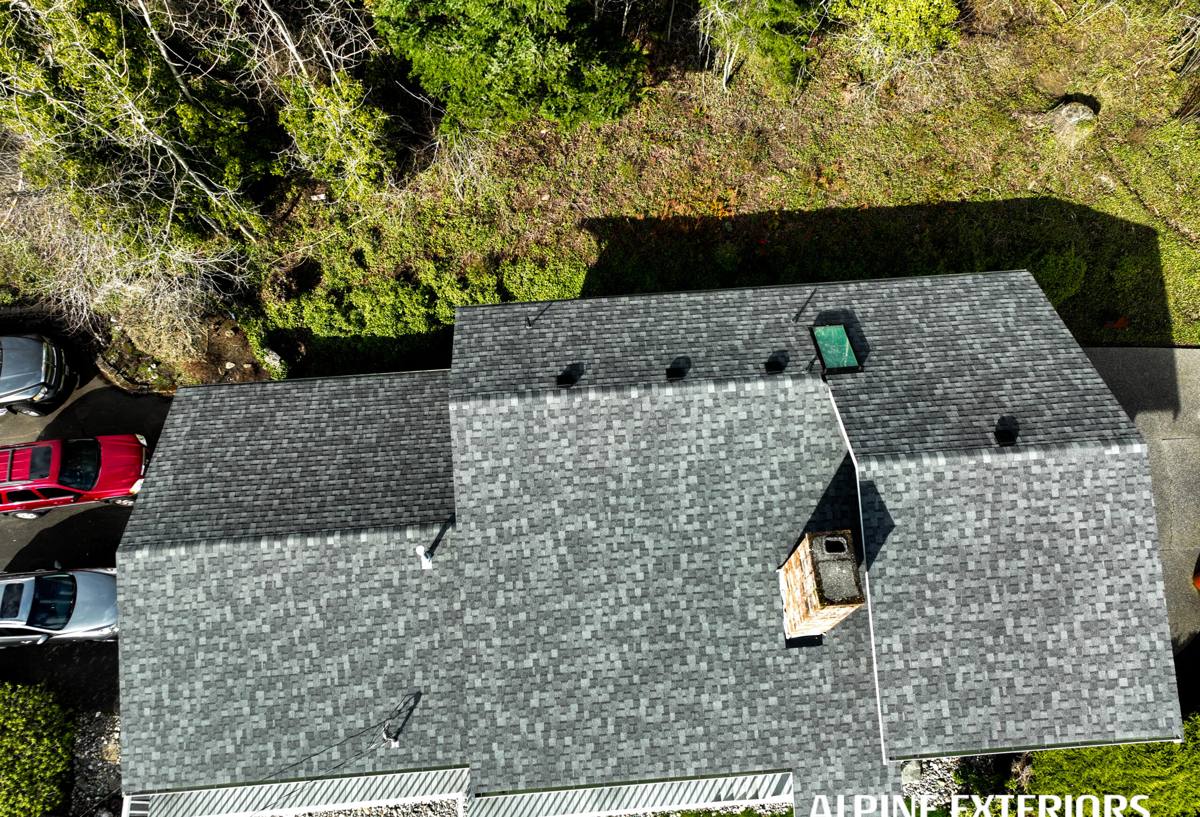
What Whatcom County Weather Does to a Roof
Three things drive almost every roofing problem we see in Sunnyland and the surrounding Bellingham area:
Salt Air and Metal Fasteners
Proximity to the bay means airborne salt settles on roofing surfaces and metal components over time. Roofing nails, flashing, and vent components that aren't rated for coastal exposure corrode faster here than the same materials would inland. It's a slow process, but it's cumulative — a roof installed with standard-grade fasteners in a coastal-adjacent neighborhood like Sunnyland will show fastener corrosion well before a comparable roof in, say, Sumas or Deming.
Driving Rain and Wind-Driven Water
Bellingham doesn't just get rain, it gets rain pushed sideways by wind coming off the water. That matters because wind-driven rain doesn't behave like a straight downpour — it finds its way under shingle tabs, around flashing edges, and into any gap that a fair-weather installation would have gotten away with. Underlayment quality and how tightly the shingle courses are laid both matter more here than in calmer inland climates.
Moss and Sustained Shade Moisture
Sunnyland has a good number of mature trees, and tree cover combined with our long wet season creates ideal conditions for moss and algae growth on north-facing and shaded roof slopes. Moss isn't just cosmetic. As it grows, it lifts shingle edges, holds moisture against the roof deck, and accelerates granule loss. Once moss gets established under a shingle tab, that section of roof is aging faster than the rest of it — even if the shingles themselves are only a few years old.
What a Correct Asphalt Shingle Job Actually Involves
Asphalt shingles look like a simple product, and the shingle itself usually isn't the weak point. The weak points are almost always in what's underneath and around the shingles. A correct installation for a Sunnyland home includes:
- Deck inspection and repair — any soft, delaminated, or water-stained sheathing gets replaced before a single shingle goes down, not covered up.
- Ice-and-water shield at vulnerable points — eaves, valleys, and around penetrations, where wind-driven rain is most likely to get pushed backward under shingles.
- Synthetic underlayment across the full deck — a continuous moisture barrier that holds up better than felt through a wet Whatcom County winter.
- Proper nailing pattern and placement — correct nail count, placement in the nailing strip (not high or low), and no over-driven or under-driven nails, which is one of the most common causes of premature shingle failure and wind loss.
- Balanced attic ventilation — intake at the eaves and exhaust at the ridge, sized to the attic volume, so moisture doesn't get trapped against the underside of the deck.
- Flashing at every transition — chimneys, skylights, sidewalls, and valleys, using corrosion-resistant materials appropriate for a coastal-influenced climate.
- Starter strip and ridge cap installed to spec — small details that determine whether the edges and ridge hold up in wind.
Skip any one of these and the roof may look fine for a season or two. The failures show up later, usually as a leak that seems to come from nowhere because the actual entry point is somewhere else on the roof entirely.
Ventilation Deserves Extra Attention Here
We put ventilation on this list on purpose, because it's the step most often shortchanged on lower-bid roofing jobs, and it's especially important in a climate as consistently damp as Bellingham's. An attic that can't breathe traps humid air against the roof deck. Over a few winters, that trapped moisture leads to sheathing rot, mold, and premature shingle aging from underneath — problems that have nothing to do with the shingle brand and everything to do with what's happening below it.
Choosing Shingle Products for This Climate
Not every asphalt shingle line is built the same, and for a Sunnyland roof we weigh a few things above pure appearance:
| Factor | Why It Matters Locally |
|---|---|
| Algae-resistant granules | Directly counters the moss/algae pressure from shade and sustained moisture in Sunnyland's tree-covered lots |
| Wind rating | Coastal-adjacent gusts call for a shingle rated for higher sustained wind speeds, with matching installation specs |
| Warranty structure | Non-prorated and transferable warranties matter more on a coastal climate roof, where material stress is higher over time |
| Manufacturer certification tier | Higher tiers typically require system installation (matched underlayment, ventilation, accessories), which reinforces correct installation practice |
We don't push one shingle line as universally "the best." We do steer homeowners away from budget-tier shingles with minimal algae resistance on shaded Sunnyland lots, because the maintenance burden and shortened lifespan aren't worth the small upfront savings. That's a judgment based on installation experience in this specific neighborhood, not a knock on any manufacturer.
Signs a Sunnyland Roof Needs Attention
Because moss and moisture damage develop slowly, most homeowners don't notice a problem until it's already progressed. Watch for:
- Moss visible on north-facing or shaded slopes, especially near the ridge or in valleys
- Granules collecting in gutters or at downspout outlets
- Shingle tabs that look curled, cupped, or lifted at the edges
- Dark streaking across the roof surface (algae, not just dirt)
- Soft spots or sagging when walked, or visible sagging from the ground
- Daylight visible through the attic roof deck, or damp insulation below it
- Rusted or visibly corroded flashing and fasteners around chimneys and vents
Any one of these on its own might not mean a full replacement is due. Together, or left unaddressed for a few seasons, they usually do.
Our Process for Sunnyland Roofing Jobs
1. On-Site Inspection
We walk the roof and the attic, not just one or the other. Ground-level photos don't tell you the condition of the deck, and attic conditions often explain problems that show up on the roof surface.
2. Honest Scope and Estimate
We tell you what actually needs to happen — full replacement, partial repair, or a maintenance path — and give a written estimate that reflects the real condition of your roof, not a generic per-square number.
3. Material Selection Suited to Your Lot
A heavily shaded Sunnyland lot near mature trees gets a different recommendation than an open, sun-exposed lot a few blocks away. We factor in your specific tree cover, slope orientation, and exposure to weather off the bay.
4. Tear-Off and Deck Assessment
We remove the old roofing down to the deck and inspect sheathing condition directly — this is the point where hidden moisture damage gets found and addressed, not covered.
5. Installation to Manufacturer Spec
Underlayment, flashing, nailing pattern, and ventilation are installed to the shingle manufacturer's system requirements, which is what keeps warranty coverage valid and performance consistent.
6. Final Walkthrough
We review the completed roof with you, cleanup is thorough (magnetic sweep for nails included), and you get documentation of what was installed for your records and any warranty registration.
Why a Crew That Already Works Sunnyland Matters
Roofing crews that work across Whatcom County regularly develop a feel for how a specific neighborhood's conditions affect installation decisions — where the tree cover is heaviest, which slope orientations collect the most moss, how the wind off the bay tends to hit certain lots. That local pattern recognition doesn't replace code-compliant installation, but it does inform smarter material choices and ventilation planning before problems start. A crew installing its first roof in Sunnyland is starting from a blank slate on those local specifics. A crew that's already done several roofs in the neighborhood isn't guessing.
There's also a practical service-life benefit: a local crew is easier to reach for warranty questions, storm-related inspections, or a maintenance check a few years down the line, without the roof falling into an out-of-town contractor's gap.
Maintenance That Extends Roof Life in This Climate
A new roof isn't a "install and forget" purchase in a climate like Bellingham's. A few habits go a long way:
- Keep gutters clear so water isn't backing up under the lowest shingle course
- Trim back tree limbs that overhang the roof to reduce shade and debris buildup
- Have moss treated (not pressure-washed, which damages granules) at the first sign of growth
- Schedule a roof check after major windstorms, particularly for lifted or missing shingles
- Have an attic ventilation check every few years, since blocked vents are easy to miss from the ground
Get a Free Estimate for Your Sunnyland Roof
If you're seeing moss, granule loss, curling shingles, or you just know your roof is getting up there in age, we're glad to come take a look. We'll give you a straightforward, no-pressure assessment of what your Sunnyland home actually needs — use the form below to get started.