 Bellingham Siding
 Window Replacement in South Hill
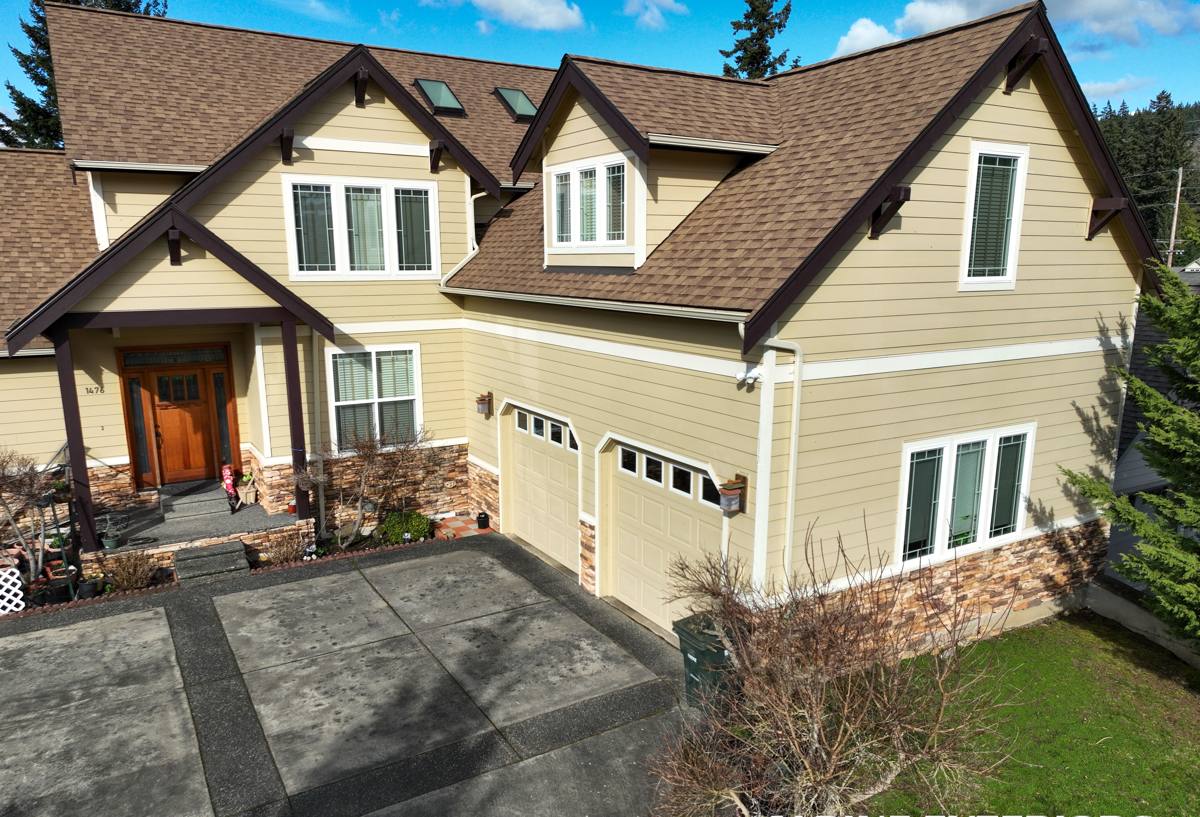
South Hill sits up on the slope overlooking Bellingham Bay, which is exactly why so many of its homes were built with big windows in the first place — the views are worth showing off. But that same elevation and bay exposure means these homes take a different kind of weather beating than houses tucked into more sheltered parts of Whatcom County. Salt-laden air off the bay, wind-driven rain that hits window faces at an angle instead of straight down, and a moss season that can stretch from fall through spring all work on window frames, sills, and seals year after year. If your windows are original to the house or getting up into their second or third decade, it's worth understanding what's actually happening to them before you decide what to do next.
Why South Hill's Climate Is Hard on Windows
Salt Air and Metal Components
Proximity to the bay means a steady, low-grade dose of salt in the air, especially on windier days. Salt accelerates corrosion on aluminum frames, steel reinforcement inside vinyl frames, and the hardware — hinges, cranks, locks — that makes a window actually function. A window that looks fine from the yard can have hardware that's seized up or corroding from the inside, which is often the first real sign that a window's service life is winding down.
Driving Rain and Wind Exposure
South Hill's elevation and orientation mean rain doesn't always fall straight down here — it gets driven sideways by wind coming off the water. That matters because most windows are only as good as their weakest seal, and wind-driven rain finds gaps that vertical rain never would. Older windows, or windows installed without proper flashing and sealant detail, are especially vulnerable to water intrusion around the frame perimeter, not just through the glass unit itself.
Moss, Shade, and Prolonged Moisture
Bellingham's moss season is long, and homes on shaded or tree-lined South Hill lots often stay damp longer after a storm than homes in open, sunnier spots. Moss and algae growth on nearby siding, trim, and sills holds moisture against the window opening and can mask early rot before it's visible. Wood-frame windows and wood sills are particularly at risk here — moisture that lingers for days instead of hours is what turns a small maintenance issue into a structural one.
Signs a South Hill Home Needs Window Replacement
- Visible fogging or moisture between panes of double-pane glass — the seal has failed
- Drafts you can feel near the frame even with the window fully latched
- Wood that's soft, spongy, or discolored at the sill or bottom corners of the frame
- Windows that are difficult to open, close, or lock — often a sign of frame warping or corroded hardware
- Visible staining or bubbling on interior drywall or trim below or beside the window
- Noticeably higher heating bills without another clear explanation
- Condensation forming on the inside of the glass regularly, even in normal weather
What a Correct Window Replacement Involves
Window replacement in a climate like this isn't just swapping an old unit for a new one of the same size. The details around the opening matter as much as the window itself, and skipping them is how a brand-new window ends up with the same water problems as the one it replaced.
Assessing the Rough Opening
Before any new window goes in, the opening needs to be checked for hidden rot, soft framing, or prior water damage. In an area with South Hill's rain exposure, it's common to find some degree of moisture damage around older sills that isn't obvious from outside. Any compromised wood needs to be addressed before the new window is installed — putting a new window into a damaged opening just delays the same problem.
Flashing and Weatherproofing
Proper flashing — the material that directs water away from the window opening and down the wall rather than into it — is one of the most important and most often shortcut parts of a window installation. Given how much wind-driven rain this part of Bellingham sees, we treat flashing detail as non-negotiable, not an optional upgrade.
Sealing and Insulation
Gaps around a new window frame need to be properly insulated and sealed, both for energy efficiency and to prevent air and moisture infiltration. This is also the point where corrosion-prone hardware and frame materials matter — choosing components that hold up to salt air exposure rather than ones that look fine on day one but corrode within a few winters.
Interior and Exterior Trim
Finishing trim work, inside and out, protects the edges of the new installation and gives the window a clean, finished look that matches the rest of the home. On older South Hill houses, this is also a chance to catch and address any trim or siding damage immediately adjacent to the window while the area is already open.
Frame Material Considerations for This Climate
There's no single "best" window material for every home — it depends on budget, the home's style, and how much upkeep an owner wants to take on. Here's how the common options hold up specifically against South Hill's salt air, wind-driven rain, and long damp season.
| Frame Material | Moisture & Salt Air Behavior | Maintenance | Typical Fit |
|---|---|---|---|
| Vinyl | Doesn't corrode from salt air; performs well against moisture when properly installed | Low — no painting or sealing needed | Good all-around choice for most South Hill homes |
| Fiberglass | Very stable in wet, salty conditions; resists warping | Low | Strong option for exposed, higher-wind locations |
| Wood (clad or unclad) | Attractive but vulnerable to prolonged moisture and rot if not well-maintained | Higher — periodic painting/sealing needed | Best for owners who want a traditional look and are committed to upkeep |
| Aluminum | Prone to corrosion in salt air over time; conducts cold, contributing to condensation | Moderate | Generally not our first recommendation this close to the bay |
We're not saying any of these materials is unusable — homes across Bellingham have every one of them performing fine. But when a South Hill homeowner asks us for a straightforward recommendation, the salt air exposure and the maintenance commitment they're willing to make are the two questions that drive the answer.
Glass and Energy Performance
Double-pane glass with a low-E coating and an argon or similar gas fill is the standard baseline for this climate — it manages both the Pacific Northwest's mild-but-persistent heating season and the condensation risk that comes with a lot of damp, cool days. For homes with especially exposed window faces on the bay side, upgraded glass packages can help with both energy performance and comfort near the glass, but the right spec depends on the specific window's orientation and exposure, which is something we look at during the estimate rather than guessing at up front.
Our Process for South Hill Window Replacement
- On-site assessment — we look at each window's frame, sill, and surrounding trim for hidden moisture or rot, not just the glass
- Honest scope discussion — we tell you which windows need replacing now, which can wait, and why
- Material and glass selection — matched to your budget, the home's style, and this specific location's exposure
- Opening repair — any compromised framing or sill material is addressed before the new window goes in
- Installation with proper flashing and sealing — the step that determines whether the window actually keeps water out for the next few decades
- Trim and finish work — interior and exterior, done to match the rest of the home
- Final walkthrough — every window checked for smooth operation, tight seals, and clean finish work before we consider the job done
Why a Locally Experienced Crew Matters Here
Window replacement done right depends on understanding the specific conditions the window will face after installation — and South Hill's combination of bay-adjacent salt air, wind-driven rain angle, and shaded, moss-prone lots isn't the same as what a crew sees on a typical inland job. A contractor who already works this neighborhood knows which details — flashing, material choice, sill repair — actually matter here versus in a drier or more sheltered part of Whatcom County. That's the difference between a window that looks good for a season and one that performs for the long haul in exactly the conditions your home faces.
If you're noticing drafts, fogged glass, sticking frames, or just want a second opinion on whether your current windows are holding up the way they should, we're happy to take a look. Reach out for a free, no-pressure estimate using the form below.