 Bellingham Siding
 Roof Damage on South Hill Isn't Always Obvious
South Hill sits up above the rest of Bellingham, and that elevation is part of what makes it a desirable place to live and part of what makes its roofs work harder than most. Being higher up and more exposed means wind off Bellingham Bay and the Salish Sea hits these roofs with less to slow it down first. Add in Whatcom County's long stretch of driving rain and a moss season that barely takes a break, and you've got a roof environment that punishes small problems until they become expensive ones. We do storm damage roof repair across Bellingham, and South Hill is one of the neighborhoods where we see storm damage show up in ways that surprise homeowners, because it doesn't always look dramatic from the ground.
A storm doesn't need to be severe to leave real damage behind. A hard windstorm that lifts a few shingle tabs, a heavy limb that comes down across a slope, or weeks of driving rain finding a weak spot in old flashing can all do lasting harm without ever announcing themselves with a visible hole in the roof. That's the pattern we're called out for most often on South Hill: a homeowner notices a stain on a ceiling or ceiling months after the storm that actually caused it.
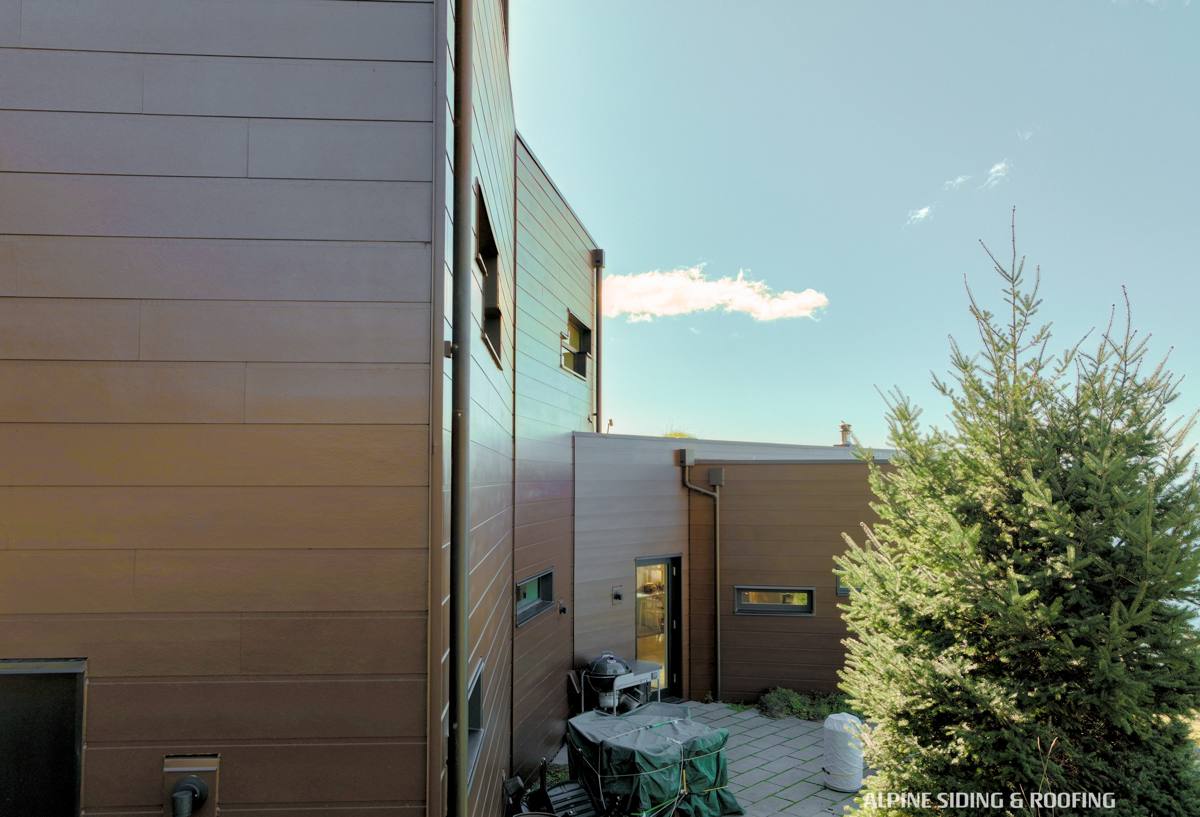
What Storm Damage Actually Looks Like Up Here
Wind Damage
Elevated, more exposed lots take wind loading differently than sheltered ones lower in the city. Shingles can be lifted, creased, or torn loose at the tab without fully blowing off, which leaves them looking mostly intact from the ground while the seal underneath is broken. Once that seal is broken, wind-driven rain gets underneath on the next storm, even if the shingle never actually comes off the roof.
Wind-Driven Rain Intrusion
Rain that's pushed sideways by wind behaves differently than rain that falls straight down. It works its way up under shingle laps, into vent flashing, and around chimney and skylight penetrations from angles that a roof handles fine in ordinary weather but not in a real blow. This is one of the most common ways a roof leaks after a storm without any single piece of roofing material actually failing outright.
Impact and Debris Damage
Falling limbs, wind-blown debris, and occasional hail can crack, puncture, or knock granules loose from shingles. Granule loss is easy to miss because it doesn't leak right away, but it exposes the asphalt layer underneath to UV and moisture and shortens the life of that section of roof from that point forward.
Moss and Long-Term Moisture Damage
South Hill's mix of mature tree cover and shaded, north-facing roof planes gives moss a long growing season. Moss holds moisture directly against roofing material, works its way under shingle edges, and lifts them slightly over time, which is exactly the kind of small gap a storm needs to turn into an active leak. A roof that already has moss buildup going into a storm season is more vulnerable to real damage from that storm than a clean one.
Why Storm Damage Often Hides Longer Than Homeowners Expect
Water doesn't necessarily drip down in a straight line from where it enters. It can travel along the underside of roof sheathing or along a rafter before it finally shows up as a stain on drywall, sometimes several feet from the actual entry point. That's why a small, honest leak after a storm can look like it appeared out of nowhere weeks later, and why interior staining alone is a poor guide to where the actual roof damage is. It's also why we always inspect the roof itself after a storm rather than just chasing the ceiling stain, because fixing drywall without fixing the roof just buys the leak a few more months before it comes back.
Our Process for South Hill Storm Damage Repairs
- Inspection first. We get on the roof and look at the actual storm-exposed areas: ridge lines, valleys, flashing, and any slope that took direct wind or debris impact, not just the spot under the interior stain.
- Emergency mitigation if needed. If a section is actively letting water in, we can tarp or otherwise stop active intrusion before doing the full repair, so the damage doesn't spread while a permanent fix is scheduled.
- Documentation. We take clear photos of the damage and its likely cause, which matters if you're filing an insurance claim and need to show what happened and when.
- Honest repair scope. We tell you plainly whether the damage is isolated and repairable, or whether it points to a bigger issue with the roof's age or condition that a patch won't really solve.
- Repair or replacement, matched correctly. Repairs are tied into the existing roof system correctly, with materials and flashing details that match what's there so the repaired section performs the same as the rest of the roof, not as a weak point of its own.
Repair vs. Full Replacement: How We Decide
Not every storm-damaged roof needs to come off. A lot of what we see on South Hill is isolated: a section of lifted shingles, a damaged flashing detail, a limb strike in one spot. Those are legitimate repairs. But storm damage on an older roof, or a roof that already had moss and moisture issues before the storm hit, is a different situation, because the storm may have just exposed a problem that was already there.
| Situation | Usually Points To | Why |
|---|---|---|
| Isolated wind-lifted shingles, roof otherwise sound | Targeted repair | The seal can be redone and the section reattached without disturbing a roof that's still performing well |
| Limb strike or impact damage in one area | Section repair | Localized damage on an otherwise healthy roof rarely justifies a full tear-off |
| Storm damage plus heavy moss and years of moisture staining | Broader repair or replacement | Moss-related moisture often means the underlayment and decking near the damage were already compromised before the storm |
| Roof nearing the end of its expected service life | Full replacement discussion | Repeated storm repairs on an aging roof usually cost more over time than replacing it once |
| Repeated leaks in the same general area after prior repairs | Full replacement discussion | Recurring failures in one zone often mean the surrounding material has also degraded, not just the original damaged spot |
We'll walk you through which category your roof actually falls into rather than defaulting to the more expensive option.
Storm Damage and Homeowners Insurance
Many storm damage roof repairs are covered under a standard homeowners policy, but coverage depends on your specific policy, your deductible, and how the damage is documented. We're not your insurance adjuster and won't promise a claim outcome, but we can give you a clear, photographed assessment of what happened and what repair it requires, which is exactly the kind of documentation adjusters ask for. If you're unsure whether a repair is worth filing a claim over, we'll give you an honest read on the scope and cost so you can make that call with real information.
Signs Your South Hill Roof May Have Storm Damage
- Shingles that look curled, lifted, or slightly out of line after a windy night
- Granules collecting in gutters or at the base of downspouts
- A ceiling stain that appears days or weeks after a storm, not during it
- Visible gaps or bent metal at chimney, vent, or skylight flashing
- Moss that's thicker or more established along shaded roof edges than it was last season
- Daylight visible through the roof deck from inside an attic space
- A noticeable draft or musty smell in an upstairs room after wet weather
Why a Crew That Already Works South Hill Matters
South Hill's elevation, tree cover, and older housing stock aren't identical to lower, more sheltered parts of Bellingham, and a roof crew that works this neighborhood regularly knows which roof planes take the worst of the wind, which flashing details tend to fail first in this exposure, and how aggressively moss needs to be managed here compared to a more sheltered lot across town. That local pattern recognition is the difference between a repair that's actually built for South Hill's conditions and one that's built for a generic Pacific Northwest roof. We also handle siding, windows, and decks, so if storm damage on your roof has a related issue elsewhere on the house, like a soffit or fascia that took wind damage at the same time, we can look at the whole exterior in one visit instead of sending you to find a second contractor.
If a recent storm left you with a leak, missing shingles, or just a nagging feeling that your South Hill roof took more of a hit than it looks like from the driveway, we're glad to take a look. Reach out using the form below to schedule a free, no-pressure estimate.