 Bellingham Siding
 Why Board & Batten Fits South Hill's Character and Climate
South Hill is one of Bellingham's more distinctive neighborhoods — a mix of older homes with real architectural character and newer builds tucked into a hillside setting with tree cover and varying exposure to wind and rain depending on which side of the slope a house sits on. Board and batten siding shows up a lot in this kind of neighborhood because the vertical lines suit both traditional and more contemporary homes, and the strong shadow lines it creates hold up visually even under Bellingham's flat, overcast light for much of the year.
But board and batten is also one of the less forgiving siding profiles to install correctly. The vertical seams, the batten strips, and the way water is meant to travel down the wall instead of across it all depend on details that are easy to rush and hard to inspect once the siding is up. In a climate with as much sustained rain, shade-driven moss growth, and salt-laden air off Bellingham Bay as Whatcom County gets, those details are not cosmetic — they determine whether the siding is still doing its job in fifteen years.
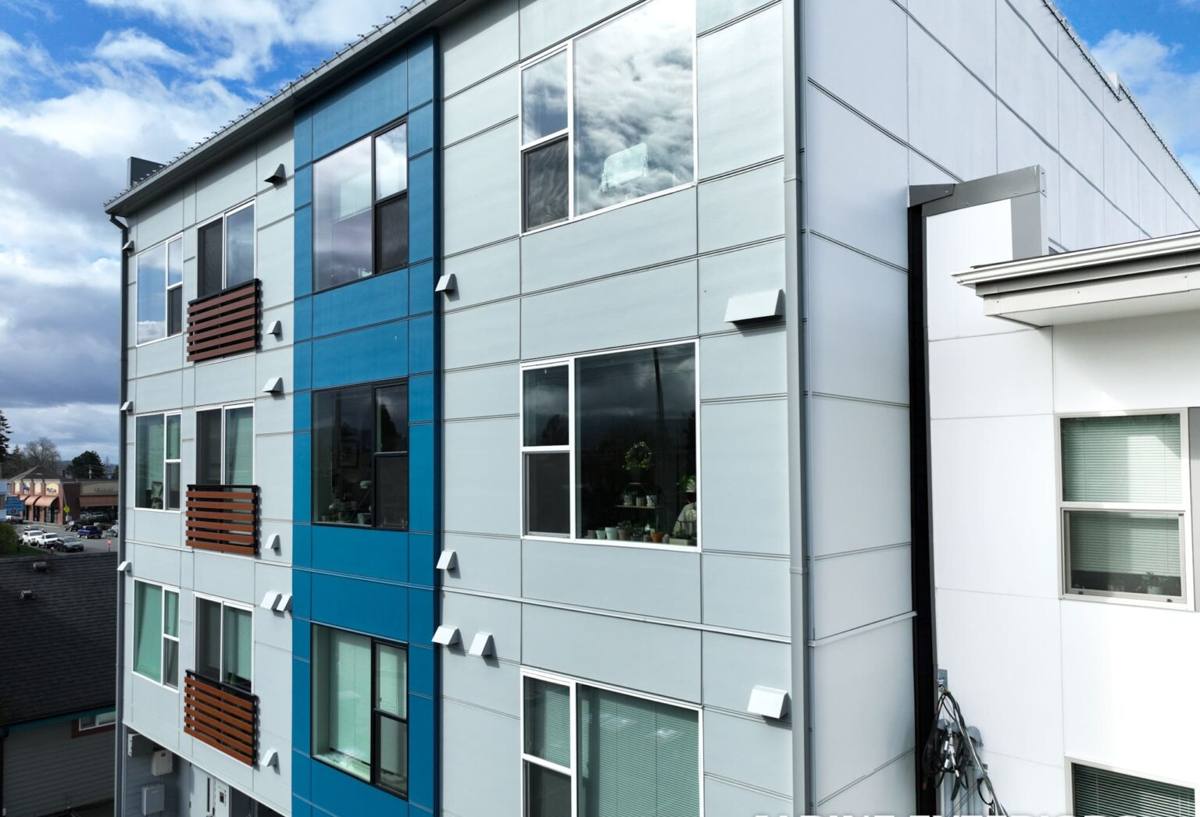
What "Board & Batten" Actually Means in a Hardie System
We only install James Hardie fiber cement, so on our jobs board and batten is built one of two ways: wide HardiePanel vertical siding sheets with HardieTrim battens fastened over the seams, or individual vertical HardiePlank-style boards with battens between them. Either way, the battens aren't just decorative — they're covering and protecting the seams where two pieces of siding meet, which is the single most vulnerable spot on a vertical wall.
HardiePanel and Vertical Siding
HardiePanel comes in large sheets, which means fewer vertical seams overall compared to using narrow individual boards. Fewer seams means fewer places for water to find its way behind the siding, which matters in a place that sees as much sustained rainfall as this one does.
Battens, Trim, and the ColorPlus Finish
The battens and trim get factory-finished with James Hardie's ColorPlus coating, the same baked-on finish used on the field panels, so the color and sheen match across the whole wall instead of the trim weathering differently than the panels — which is a common giveaway of a lower-grade board and batten job.
What South Hill's Weather Demands From Vertical Siding
Driving Rain and Wind-Driven Moisture
Vertical siding sheds water differently than horizontal lap siding. Done right, gravity pulls water straight down the face of the boards and off the wall. Done wrong — with tight or unsealed batten joints, insufficient overlap, or fasteners placed where they shouldn't be — driving rain can get pushed sideways and upward under wind pressure, right where a board and batten wall is weakest.
Moss, Shade, and North- and East-Facing Walls
South Hill's tree cover and hillside orientation mean plenty of homes have walls that stay shaded and damp for long stretches of the year. Those are the walls where moss and algae take hold first, and where a siding material that absorbs moisture will hold onto it far longer than one that doesn't. Fiber cement doesn't feed mold and mildew growth the way wood-based products can, but it's also not immune to grime buildup if it's installed too close to grade, landscaping, or roof runoff.
Salt Air and Coastal Exposure
Bellingham's proximity to the bay means salt-laden air is a real factor for fasteners, flashing, and any exposed metal on a home's exterior — not just for homes with a water view. Corrosion-resistant fasteners and properly lapped flashing matter more here than they would further inland, and it's an easy detail to skip if a crew isn't used to building for this specific environment.
What a Correct Board & Batten Installation Involves
A board and batten job that's going to last through South Hill's wet seasons needs every one of these done correctly — not most of them:
- A weather-resistive barrier installed and lapped correctly behind the siding, with all penetrations properly flashed
- A drainage gap (rain screen) between the siding and the wall so any moisture that gets past the surface can drain and dry out instead of sitting against the sheathing
- Correct fastener type, length, and placement for the substrate and exposure, following James Hardie's published fastening schedule
- Battens sized and spaced to fully cover panel seams with the manufacturer's specified gap and sealant approach
- Corrosion-resistant flashing at every horizontal transition — window and door heads, roof-to-wall junctions, and the base of the wall
- Proper clearance between the bottom of the siding and grade, decks, patios, and roof lines to keep splash-back and standing moisture away from the material
- Factory-primed cut edges sealed in the field wherever a board or panel has been trimmed to fit
Skip any one of these and the siding can still look right for a while. The failures that show up from a rushed board and batten install — trapped moisture, staining at the battens, fastener corrosion — tend to surface years later, after the crew that installed it is long gone.
Board & Batten vs. Other Siding Profiles
| Profile | Water Shedding | Seam Exposure | Best Suited To |
|---|---|---|---|
| Board & Batten (vertical) | Strong — gravity-driven drainage down the face | Vertical seams covered by battens | Farmhouse, craftsman, and modern facades; accent walls and gables |
| Horizontal Lap Siding | Strong — each course overlaps the one below | Horizontal seams shielded by overlap | Traditional and transitional home styles; most common Whatcom County profile |
| Shingle / Shake Panel | Moderate — more surface texture holds moisture briefly | Many small overlapping pieces | Cottage and coastal-style architecture |
None of these profiles is objectively "better" — the right choice is mostly about matching the home's architecture. What changes is how much the installation details matter. Board and batten has less built-in overlap forgiveness than lap siding, which is exactly why we're strict about rain screens and batten sealing on every vertical job.
Our Process for South Hill Board & Batten Projects
We start with a walk-around assessment of the home, paying particular attention to which walls get the most shade and wind-driven rain given the lot's slope and tree cover — that assessment shapes decisions on drainage gap sizing and flashing detail before any material goes up. From there we remove the old siding down to the sheathing, address any moisture damage we find underneath before it gets covered up again, and install the weather-resistive barrier and drainage plane as the foundation of the whole system. The HardiePanel or vertical boards go up next, followed by the battens and trim, all in ColorPlus factory finish so there's no field-painting required. We finish with a full cleanup and a walkthrough so you can see the completed wall lines and flashing details before we consider the job done.
Cost Factors for Board & Batten Siding
| Factor | Why It Affects Cost |
|---|---|
| Wall height and roofline complexity | Steep gables and multi-story walls take longer to flash and fasten correctly |
| Tear-off vs. new substrate | Removing old siding and repairing sheathing underneath adds labor before installation even starts |
| Batten spacing and trim detail | Tighter batten spacing and wider trim boards mean more material and more precise cutting |
| Number and complexity of penetrations | Windows, vents, and roof-to-wall transitions each require individual flashing work |
| Access and site conditions | Hillside lots, retaining walls, and limited staging space can add setup time |
We give a written, itemized estimate after the in-person assessment rather than a rough number over the phone — board and batten pricing varies too much house to house to be useful as a ballpark.
Maintaining Board & Batten Siding in This Climate
Fiber cement is low-maintenance compared to wood-based sidings, but "low-maintenance" doesn't mean "no maintenance" in a climate with this much rain and shade. A yearly rinse-down of shaded and north-facing walls helps keep moss and algae from building up, especially on homes tucked under tree cover. It's also worth a quick visual check after major wind storms for any lifted battens, damaged flashing, or debris caught behind the siding near the base of the wall — catching a small issue early is a lot cheaper than catching it after it's had a wet winter to work on the wall behind it.
Why a Crew That Already Works South Hill Matters
Board and batten installation isn't complicated in theory, but getting the drainage, flashing, and batten details right takes a crew that treats every wall's shade, wind, and rain exposure as its own set of conditions rather than following one generic install pattern. A crew that already works in South Hill has seen how the neighborhood's hillside orientation, tree cover, and proximity to the bay actually play out on real walls — which sides need the most attention, which details get skipped by less careful installers, and what it takes to build a board and batten wall that's still performing well after years of Whatcom County winters.
If you're considering board and batten siding for your South Hill home, we're happy to walk the property with you, talk through what your specific walls need, and put together a straightforward, no-pressure estimate. Use the form below to get started.