 Bellingham Siding
 Windows Built for the Silver Beach Climate
Silver Beach homeowners deal with a version of Bellingham's weather that's harder on window systems than a lot of people realize. This part of Whatcom County sees long stretches of driving rain, persistent marine humidity, and a moss and mildew season that can run eight months out of the year in shaded, north-facing exposures. Add in salt-tinged coastal air moving in off the Sound and you've got a climate that quietly works against weak seals, bare wood sills, and cheap flashing long before it ever shows up as a visible problem.
That combination doesn't necessarily mean your windows fail fast — it means they fail quietly, from the inside out. Moisture gets behind trim, condensation sits in a frame corner that never fully dries, and a homeowner doesn't know anything is wrong until there's a soft spot in the sill or a musty smell in the room. Window installation done right in this neighborhood isn't just about the glass — it's about how the whole assembly handles water for the next 20-plus years.
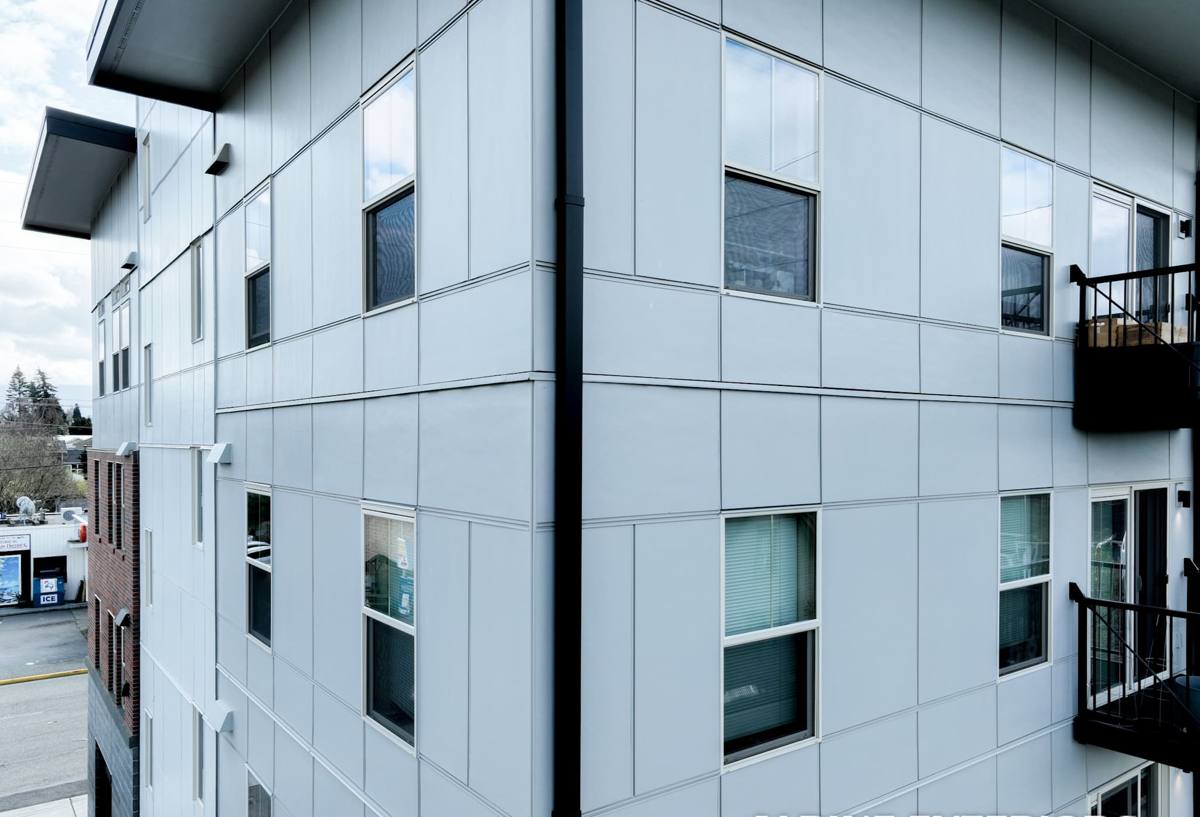
What Silver Beach Homes Actually Need
We see a real mix of housing stock in this part of Bellingham — older single-story homes from the mid-20th century, a good number of 1970s-90s remodels, and newer infill construction. Each era brings different window problems to the table.
Older Homes
Original single-pane or early double-pane aluminum windows are common in older Silver Beach houses. These were never built with today's energy codes or moisture barriers in mind. Rot at the sill and jack studs is the most frequent issue we find once trim comes off — usually from decades of condensation and rain intrusion around a frame that was never properly flashed to begin with.
1980s-2000s Remodels
Homes from this era often have vinyl replacement windows installed without a full re-flash of the opening — a common shortcut at the time. They look fine from the street but can be hiding water damage in the wall cavity that's been building for years.
Newer Construction
Newer builds generally have better window systems, but even quality vinyl and fiberglass units need correct installation to perform. A good window installed poorly will underperform a mediocre window installed correctly — that's true everywhere, but it matters more here because of how much moisture this climate throws at a building envelope over a typical year.
What a Correct Window Installation Involves
There's a lot more to this job than pulling an old window and setting a new one in the hole. In a wet coastal climate, the details that don't show are the ones that determine whether the job lasts.
- Full removal of the old unit and inspection of the rough opening for rot, soft framing, or prior water damage
- Repair or replacement of any compromised framing before a new window ever goes in
- Correct flashing sequence — sill pan, jamb flashing, and head flashing installed in the right order so water sheds outward, not into the wall
- Proper use of weather-resistant barrier integration, lapped so it works with the house wrap rather than against it
- Low-expansion foam and backer rod at the perimeter for both air sealing and structural fit — not just caulk over a gap
- Correct shimming and leveling so the sash operates smoothly and the seals compress evenly for years, not just on install day
- Exterior trim and caulking with a product rated for our wet season, not a generic all-purpose sealant
- Interior finish work that matches the surrounding trim and leaves no gaps for drafts or moisture
Skip any one of these steps and the window might look perfect for a year or two. The failures that come from cut corners in Bellingham's climate usually show up in year three to five — right about when a lot of warranties have already lapsed on the installation labor, if the crew even offered one.
Choosing the Right Window for This Neighborhood
We install a range of window materials and don't push one brand as the only answer — the right choice depends on the home, the exposure, and the homeowner's budget. Here's how the common options actually compare for a coastal Whatcom County property.
| Frame Material | Moisture Performance | Maintenance | Typical Lifespan |
|---|---|---|---|
| Vinyl | Good — won't rot, handles humidity well | Low — occasional cleaning | 20-30 years |
| Fiberglass | Excellent — very stable in wet/dry cycling | Low | 30-40+ years |
| Wood-clad | Good if maintained, vulnerable if seals fail | Higher — exterior clad, but interior wood needs care | 20-30 years with upkeep |
| Aluminum (older stock) | Poor — prone to condensation and thermal transfer | Moderate | Often due for replacement |
For most Silver Beach homes we're working on, vinyl or fiberglass hits the right balance of moisture resistance and cost. Wood-clad windows can look great on the right home, but we're honest with homeowners about the added maintenance commitment that comes with them in a climate this wet — it's a real tradeoff, not a flaw in the product.
Our Process, Start to Finish
1. On-Site Assessment
We look at every window opening individually — not just the glass, but the framing, siding condition, and any signs of past water intrusion. This is where we catch rot or flashing problems before they become a surprise mid-project.
2. Straight-Talk Estimate
You get a clear breakdown of what's needed, what it costs, and why — including if we find framing repairs that need to happen before installation. No pressure, no inflated scope.
3. Careful Removal and Prep
Old units come out cleanly, openings get inspected and repaired as needed, and we protect the surrounding siding and landscaping while we work.
4. Installation to Spec
Every window goes in with the full flashing and sealing sequence described above — not a shortcut version. This is the step that determines whether you're back to square one in five years or set for the next few decades.
5. Final Walkthrough
We check operation, seals, and finish work with you before we consider the job done, and we clean up fully — no leftover trim scraps or debris.
Why a Crew That Already Works This Area Matters
A window contractor who works Bellingham and Whatcom County regularly has already seen how this specific climate treats window systems over time. That's different from general construction experience. We know what rough openings tend to look like when we pull trim on a 40-year-old Silver Beach home, we know which flashing details actually hold up through a wet Pacific Northwest winter, and we're not guessing at product performance in salt-influenced marine air — we've watched it play out on real jobs in this county.
That local track record also means we're not disappearing after the invoice clears. If a question comes up six months or two years down the road, you're calling a crew that's still working in your neighborhood, not chasing down an out-of-town installer who moved on to the next region.
Cost Factors for Silver Beach Window Projects
Every home is different, so we don't quote broad numbers without seeing the job — but these are the main factors that move the price up or down:
| Factor | Why It Matters |
|---|---|
| Number and size of window openings | Larger and more numerous openings mean more material and labor |
| Framing condition | Rot or water damage found during removal adds repair scope |
| Frame material chosen | Vinyl, fiberglass, and wood-clad carry different price points |
| Access and site conditions | Multi-story or hard-to-access windows take more labor time |
| Existing trim and siding match | Custom trim work to match older home profiles adds time |
We'd rather walk your home and give you real numbers than throw out a range that doesn't mean much until we've seen the actual openings.
Signs It's Time to Replace, Not Repair
Not every window needs full replacement — sometimes reglazing, re-caulking, or hardware repair solves the problem. But in this climate, certain signs point clearly toward replacement:
- Fogging or condensation between the panes (a failed seal that can't be repaired)
- Soft or spongy wood at the sill or jamb when pressed
- Visible gaps letting in drafts or daylight around the frame
- Difficulty opening, closing, or locking the window
- Persistent moss or dark staining on the exterior trim around the opening
- Noticeably higher heating bills with no other explanation
If you're seeing one or two of these, it's worth a look before deciding on full replacement versus a targeted repair — we'll tell you honestly which one makes sense for your situation.
If you're weighing window replacement for a Silver Beach home, we're happy to take a look and give you a straightforward, no-pressure estimate — just fill out the form below and we'll get in touch.