 Bellingham Siding
 Why Ferndale Puts Siding to the Test
Ferndale sits close enough to the water and to the Nooksack lowlands that its homes take on a specific mix of punishment most siding products were never designed for. You've got salt-laden air drifting in off Bellingham Bay and the Strait, wind-driven rain that doesn't just fall but gets pushed sideways into wall assemblies, and a wet season that stretches long enough to grow a healthy crop of moss and algae on anything that stays damp for more than a day or two at a time. None of these factors are dramatic on their own. Together, over ten or fifteen years, they're exactly what breaks down siding that was installed without accounting for them.
Homes in Ferndale and the surrounding Whatcom County countryside also deal with a wider temperature swing than you'd guess from a Pacific Northwest reputation for mild weather — summer sun that bakes south and west-facing walls, followed by damp, cool winters that keep moisture in contact with exterior surfaces for weeks. Siding that expands, contracts, or absorbs water differently than the wall behind it will eventually show that stress as cupping, cracking, or soft spots, usually right where you can't see it until it's already a repair job instead of a maintenance item.
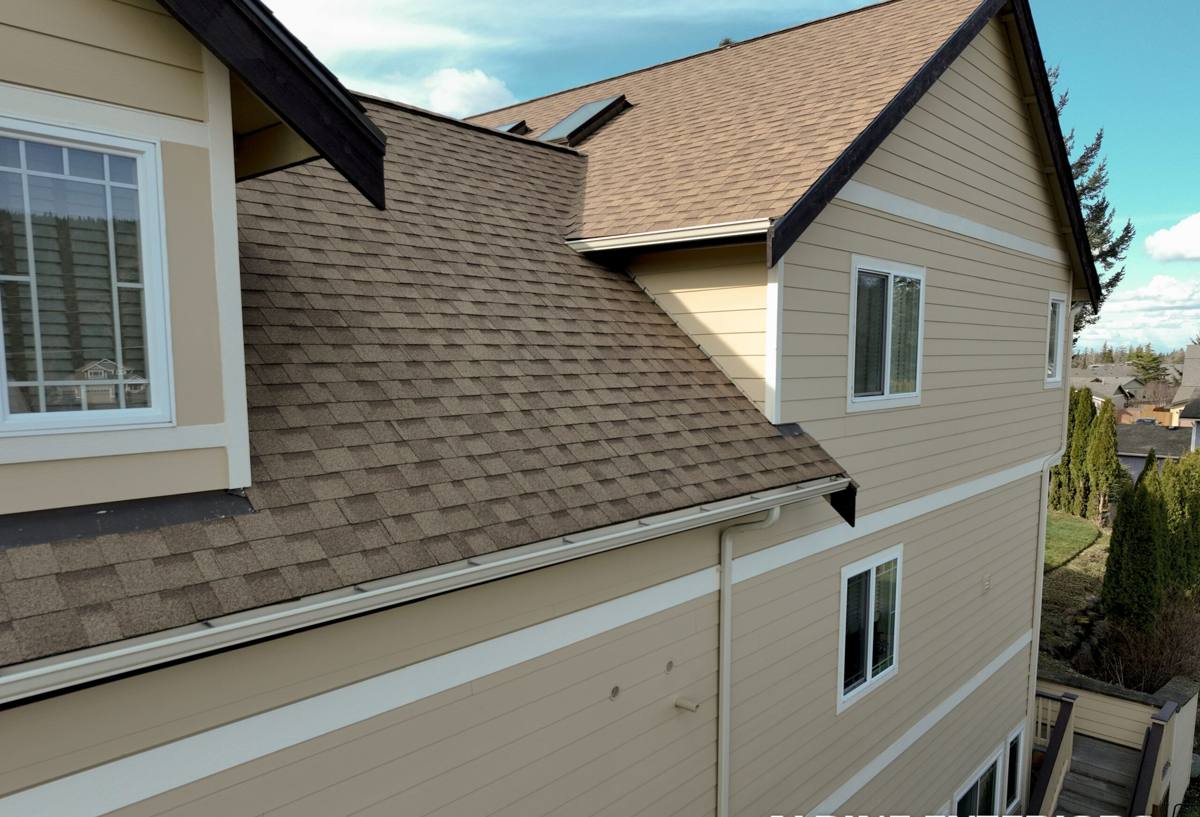
Signs a Ferndale Home Needs Siding Replacement, Not Another Patch
Homeowners often call us after a few years of small fixes — caulking a gap, repainting a section, replacing a board or two — because the underlying siding has reached the point where patching just buys a little more time. Watch for:
- Soft or spongy spots when you press on the siding, especially near the bottom courses and around windows
- Persistent moss or green-black staining that comes back within a season of cleaning
- Paint that's failing faster than it should, bubbling, or peeling in sheets rather than wearing evenly
- Visible cupping, warping, or gaps opening up at seams and butt joints
- Rising energy bills that point to a wall assembly no longer doing its job as a barrier
- Wood siding with rot at corners, under windows, or near ground contact
Any one of these can sometimes be addressed locally. Two or three together, especially on a home that's fifteen-plus years old, usually means the siding system as a whole has reached the end of its useful life and full replacement is the more honest recommendation — patch jobs on a failing system just move the next repair down the road at a higher cost.
Why We Install James Hardie Fiber Cement — and Nothing Else
We get asked fairly often why we don't offer vinyl, LP SmartSide, or a cheaper fiber cement alternative alongside Hardie. The honest answer is that we standardized on one product line because it's the one we're comfortable putting our name behind in this climate. James Hardie fiber cement is non-combustible, doesn't absorb moisture the way engineered wood products can, and holds a factory-applied ColorPlus finish that's built to handle UV and moisture exposure without the repainting cycle that wood and some composite products require. Hardie's HZ5 product line is specifically engineered for climates like ours — freeze-thaw cycling combined with sustained moisture — which matters more in Whatcom County than it does further inland.
That doesn't mean every other product is a bad product. Vinyl is inexpensive and low-maintenance in the right application. Engineered wood has real strengths when it's detailed and maintained correctly. What we've found over years of doing exterior work in this specific climate is that fiber cement gives homeowners the best combination of moisture resistance, fire safety, and long-term appearance retention without asking them to babysit it. That's the trade-off we're willing to stand behind, and it's why we don't split our focus across multiple siding systems.
What "Climate-Engineered" Actually Means
Hardie's HZ zone system isn't marketing language — it changes the actual formulation and engineering of the board depending on whether a region deals more with moisture or with freeze-thaw stress. Whatcom County, including Ferndale, falls into a zone where both matter: near-constant damp exposure for much of the year plus real winter cold snaps. Installing the correctly rated product, with the correct fasteners and flashing details, is part of why a proper Hardie installation performs so differently from a rushed one.
What a Correct Siding Replacement Actually Involves
The siding itself is only part of the system. A siding replacement that's going to hold up to Ferndale's rain and salt air has to get the layers behind the boards right, or the new siding will fail for the same reasons the old siding did.
Tear-Off and Substrate Inspection
We remove the old siding down to the sheathing and inspect for rot, soft spots, or prior water damage. This is the point where problems that were invisible from outside — often the actual reason siding was failing — get found and addressed before anything new goes up. Skipping this step and installing new siding over a compromised substrate is one of the most common ways a siding job fails early.
Weather-Resistive Barrier and Flashing
A correctly installed weather-resistive barrier, properly lapped and taped, along with flashing at every window, door, and horizontal transition, is what actually keeps driving rain out of the wall assembly. Siding sheds the bulk of the water; the barrier and flashing behind it handle what gets past the siding, which in a wind-driven rain event is more than most homeowners expect.
Fastening and Gapping to Manufacturer Spec
James Hardie publishes specific fastening patterns, gap tolerances, and clearance requirements for good reason — get them wrong and you compromise the product's warranty and its actual performance. Proper clearance from grade, from roof lines, and from decks matters for drainage and for keeping moss and algae from getting an early foothold.
Caulking, Trim, and Finish Details
The finish details — corner trim, caulking at penetrations, paint touch-up on cut edges — are what separate a job that looks good on install day from one that still looks good in year eight. Cut edges of Hardie board need to be sealed; skipped here, they become the first point of moisture intrusion.
Our Process for a Ferndale Siding Replacement
| Step | What Happens |
|---|---|
| Assessment | On-site walk of the home, checking current siding condition, trouble spots, and any moisture damage already present |
| Estimate | Written scope and pricing based on square footage, trim complexity, and substrate condition found during assessment |
| Prep | Protecting landscaping, walkways, and adjacent surfaces before tear-off begins |
| Tear-off & substrate check | Old siding removed, sheathing inspected and repaired as needed |
| Barrier & flashing | Weather-resistive barrier and flashing installed at all penetrations and transitions |
| Hardie installation | HZ5-rated boards installed to manufacturer fastening and gapping specs |
| Trim & finish | Corner trim, caulking, and cut-edge sealing completed |
| Final walkthrough | Homeowner walkthrough to review the completed work before we consider the job done |
Cost Factors for Ferndale Siding Replacement
Every home is different, and we don't quote a job without seeing it, but the factors that move the price up or down are consistent from house to house:
| Factor | How It Affects Cost |
|---|---|
| Home size and wall square footage | Larger surface area means more material and labor hours |
| Number of stories | Multi-story homes need more scaffolding or lift access, adding labor time |
| Substrate condition | Rot or water damage found during tear-off adds repair scope before new siding can go on |
| Trim and architectural detail | Homes with more corners, dormers, or trim work take more time to detail correctly |
| Siding profile chosen | Lap, shingle, and panel profiles vary in material and install cost |
| Color and finish selection | ColorPlus factory-finished boards versus field-painted options affect both cost and long-term maintenance |
Why It Matters to Hire a Crew That Already Works Ferndale
Siding installation isn't uniform across regions, and a crew that mostly works drier inland climates can miss details that matter here. A contractor who regularly works Ferndale and the rest of Whatcom County already knows how much clearance to leave near grade given our rainfall patterns, how aggressively moss establishes itself on north-facing walls that don't get much sun, and how salt air exposure closer to the water changes what fasteners and finishes hold up over time. That familiarity shows up less in the sales pitch and more in the small decisions made on the job — where extra flashing goes, how tight the caulking schedule needs to be, which details get extra attention on a wall that faces prevailing weather.
It also matters for something less obvious: permitting and code familiarity in Whatcom County and the City of Ferndale specifically. A crew that's pulled permits here before knows what inspectors are looking for and doesn't lose time on a job because of a process misstep.
Choosing a Siding Contractor in Ferndale: A Practical Checklist
- Ask what siding products they install and why — a contractor who installs everything often isn't specializing in doing any one system correctly
- Confirm they're licensed and insured for exterior work in Washington State
- Ask specifically about their flashing and weather barrier details, not just the visible siding brand
- Get a written scope that includes substrate repair contingencies, not just a flat siding price
- Ask how they handle cut-edge sealing and trim detailing — these are the details that separate a lasting job from a five-year problem
- Check whether they've done work elsewhere in Whatcom County, not just in drier or more sheltered areas
Maintaining Your New Siding in Ferndale's Climate
James Hardie fiber cement with a ColorPlus finish is genuinely low-maintenance compared to wood or engineered wood alternatives, but "low-maintenance" doesn't mean "no maintenance" in a climate that grows moss as readily as ours does. A yearly rinse-down, especially on north-facing and shaded walls, keeps organic growth from getting a foothold. Keeping gutters clear and checking that splash-back from grade or hardscaping isn't hitting the bottom courses directly will extend the life of any siding system, Hardie included. Caulking at trim and penetrations should be checked periodically, since caulk fails well before the siding itself does and is a cheap, easy thing to stay ahead of.
Ready to Talk About Your Ferndale Home
If your siding is showing its age or you're just weighing options before a Ferndale winter puts it to the test again, we're happy to take a look and give you a straight answer about what your home actually needs. Reach out for a free, no-pressure estimate — no obligation, just an honest assessment of your siding and what it would take to get it right.