 Bellingham Siding
 Deck Repair for Sehome Homes
Sehome sits close enough to Bellingham Bay that its homes take the same beating every older neighborhood near the water does: salt-laden air, driving rain off the Sound, and a moss season that seems to start earlier every year. Decks here don't fail because homeowners neglect them. They fail because wood, fasteners, and coatings are being asked to survive a climate that never really dries out between October and June. Our crews work on decks throughout Bellingham and Whatcom County, and Sehome's mix of established single-family homes and older multi-unit properties gives us a good, consistent picture of how decks age in this specific part of town.
This page is about deck repair specifically — not full replacement, not general handyman work. If your deck has a real structural problem or has crossed the line into "replace it" territory, we'll tell you that plainly during the estimate. But most decks we're called out to in Sehome don't need to be torn out. They need the right repair, done correctly, so the rest of the structure gets its full service life.
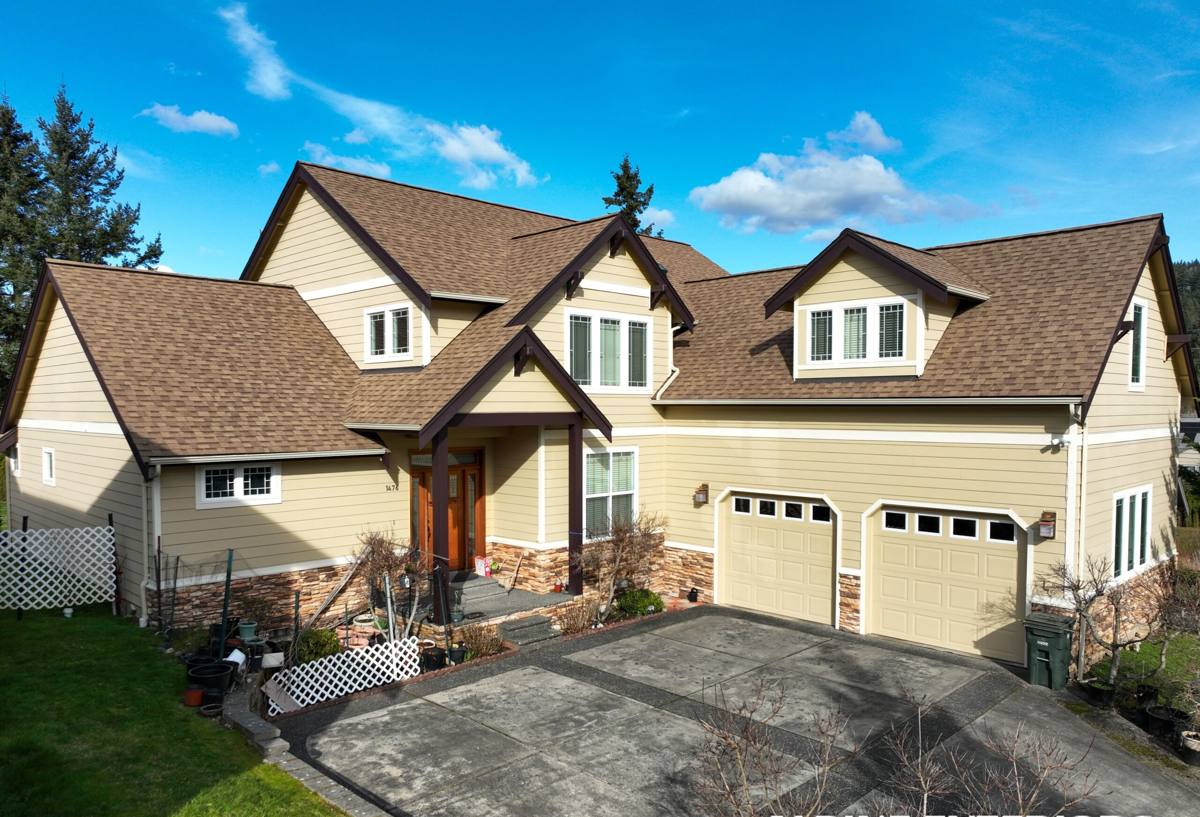
Why Decks in Sehome Wear Differently
Salt Air and Metal Fasteners
Proximity to the bay means airborne salt settles on exposed wood and metal year-round, not just during storms. The fasteners holding your deck together — nails, screws, joist hangers, ledger bolts — are usually the first thing to show it. Once corrosion starts on a fastener, it loses holding strength long before it looks obviously bad from a few feet away. A deck can look structurally fine and still have hardware that's quietly failing underneath the boards.
Driving Rain and Water Path
Wind-driven rain off the water doesn't fall straight down — it gets pushed sideways into ledger connections, stair stringers, and any spot where the deck meets the house. Those transition points are where we find the most water damage, because they're the hardest places for water to shed cleanly and the easiest places for a small gap or missing flashing to let water in behind the siding or framing.
Moss, Algae, and a Long Wet Season
Whatcom County's moss season runs long. On a shaded deck, especially one under trees or on the north side of a house, moss and algae hold moisture against the wood surface for months at a stretch. That constant dampness is what drives rot, not any single rainstorm. It also makes decking dangerously slick, which is a safety issue independent of the structural one.
What a Correct Deck Repair Actually Involves
A lot of "deck repair" done cheaply is really just cosmetic — pressure washing, a coat of stain, replacing the boards that look worst. That can make a deck look better for a season without addressing why it failed in the first place. Our approach starts underneath, not on top.
- Inspect the ledger board connection to the house — the single most safety-critical point on any attached deck
- Check joists and beams for soft spots, especially where boards overlap or where water has been pooling
- Test fasteners and joist hangers for corrosion, not just visible rust
- Look at post bases and footings for movement, rot at ground contact, or standing water
- Assess stair stringers, which take constant flexing and are a common hidden failure point
- Check railing posts for looseness — a code and safety issue, not just cosmetic
- Identify moss and algae growth patterns to understand where moisture is actually collecting
Only after that inspection do we talk about which boards, hardware, or sections actually need to come out. Sometimes it's a handful of joists and a proper ledger flashing detail. Sometimes it's most of the decking but the substructure is sound. The repair should match what's actually wrong, not just what's visible from the top.
Repair vs. Replacement: How We Make the Call
| Condition Found | Typical Path | Why |
|---|---|---|
| Surface graying, moss, minor board cupping | Clean, treat, spot-replace boards | Cosmetic and surface-level; structure is sound |
| Isolated soft spots at ledger or a few joists | Targeted structural repair | Localized rot doesn't mean the whole frame is compromised |
| Corroded fasteners across multiple connections | Hardware replacement + inspection of adjacent wood | Corrosion is usually widespread once it starts, not isolated |
| Rot at multiple posts, beams, or the ledger itself | Partial to full rebuild | Repeated structural repairs cost more over time than rebuilding once |
| Deck was undersized or under-fastened when built | Rebuild to current code | Repair can't fix a design or spacing problem, only a decay problem |
We'd rather lose a repair job to an honest recommendation than sell a homeowner a patch job on a deck that needs real structural work. If your deck genuinely needs replacing, we'll say so and explain exactly why — not because a product failed, but because wood and fasteners have a service life and yours has been reached.
Ledger Boards and Flashing: The Detail Most Repairs Miss
The ledger board — where the deck attaches to the house — is the single most common source of hidden water damage we find on Sehome decks. If it was flashed correctly when the deck was built, water sheds away from the house wall. If it wasn't, or if the flashing has failed over the years, water tracks behind the siding and into the rim joist, often for years before anyone notices a soft spot or discoloration.
Any legitimate deck repair that touches the ledger area should include checking this flashing, not just re-securing the bolts. Reattaching a ledger without correcting bad flashing just resets the clock on the same failure.
Fastener and Hardware Corrosion
Because of the salt air common to homes near Bellingham Bay, we treat hardware condition as its own inspection item, not an afterthought. Galvanized coatings on joist hangers and structural screws break down faster in this environment than they would further inland. When we find corrosion on one connection, we check the rest of the deck's hardware rather than assuming it's isolated — salt exposure tends to affect a whole structure at a similar rate, since it's an environmental factor, not a manufacturing defect.
Moss and Algae: Treating the Cause, Not Just the Symptom
Pressure washing moss off a deck surface without addressing why it grew there just buys a few months before it's back. We look at the actual moisture source — overhanging branches, poor sun exposure, a low spot where water pools, or gaps between boards that trap organic debris — and address that alongside the cleaning. On some decks, simple things like trimming back vegetation or adjusting board spacing during repair make a bigger long-term difference than any cleaner or coating.
Our Repair Process
- On-site inspection: We walk the full deck, check underneath, test the ledger, and identify every problem area — not just what's visible from the surface.
- Honest scope and estimate: You get a clear breakdown of what needs repair, what's optional, and what we'd flag as a bigger issue, with a straightforward price range.
- Repair, not patchwork: We fix the actual problem — structure, fasteners, flashing — before touching cosmetic surfaces.
- Match materials appropriately: Replacement boards and hardware are chosen to hold up in this climate, not just to match what's there for the lowest cost.
- Clean, code-correct finish: Railings, stairs, and connections are left solid and safe, not just visually repaired.
Why Local Experience in Sehome Matters
A crew that only occasionally works this part of Bellingham can miss the patterns that are obvious to someone who's been in a dozen Sehome basements and under a dozen Sehome decks. We know that a ledger connection facing the prevailing weather off the bay needs closer scrutiny than one on a sheltered side. We know which parts of the neighborhood hold moss longest into the summer. That local pattern recognition means a faster, more accurate diagnosis and fewer surprises once we open things up.
We're not going anywhere after the job either. If a repair needs a follow-up check next wet season, we're a local Whatcom County crew, not a company that worked through the area once and moved on.
Signs Your Sehome Deck Needs a Repair Call
- Boards that feel spongy or flex more than they used to
- Visible gaps, rust streaks, or cracking around fastener heads
- A ledger board area that looks discolored or stays damp longer than the rest of the deck
- Railings or posts that wiggle when pushed
- Persistent moss or algae that comes back within weeks of cleaning
- Stairs that feel less solid underfoot than they used to
None of these mean your deck has to be replaced. They mean it's time for an honest look before a small problem becomes a structural one. If you're seeing any of this on a deck in Sehome or elsewhere in Bellingham, we're happy to come take a look and give you a straight answer — no pressure, no upsell, just a clear estimate for what your deck actually needs.