 Bellingham Siding
 Storm Damage Roof Repair for Puget Homes
If you live in the Puget area outside Bellingham, you already know your roof works harder than a roof inland. Wind off the water, driving rain that comes in sideways instead of straight down, and long stretches of damp shade that never fully dry out all add up over a Whatcom County winter. When a storm rolls through and knocks something loose — a lifted shingle, a cracked ridge cap, a strip of flashing peeled back at the chimney — the damage doesn't always announce itself. It shows up weeks later as a stain on a ceiling or a soft spot underfoot in the attic.
This page is about one job done right in one area: storm damage roof repair for homes in Puget. Not a general roofing pitch, not a replacement sales page — a straight explanation of what storm damage actually looks like here, what a correct repair involves, and why local experience matters more than it might seem.
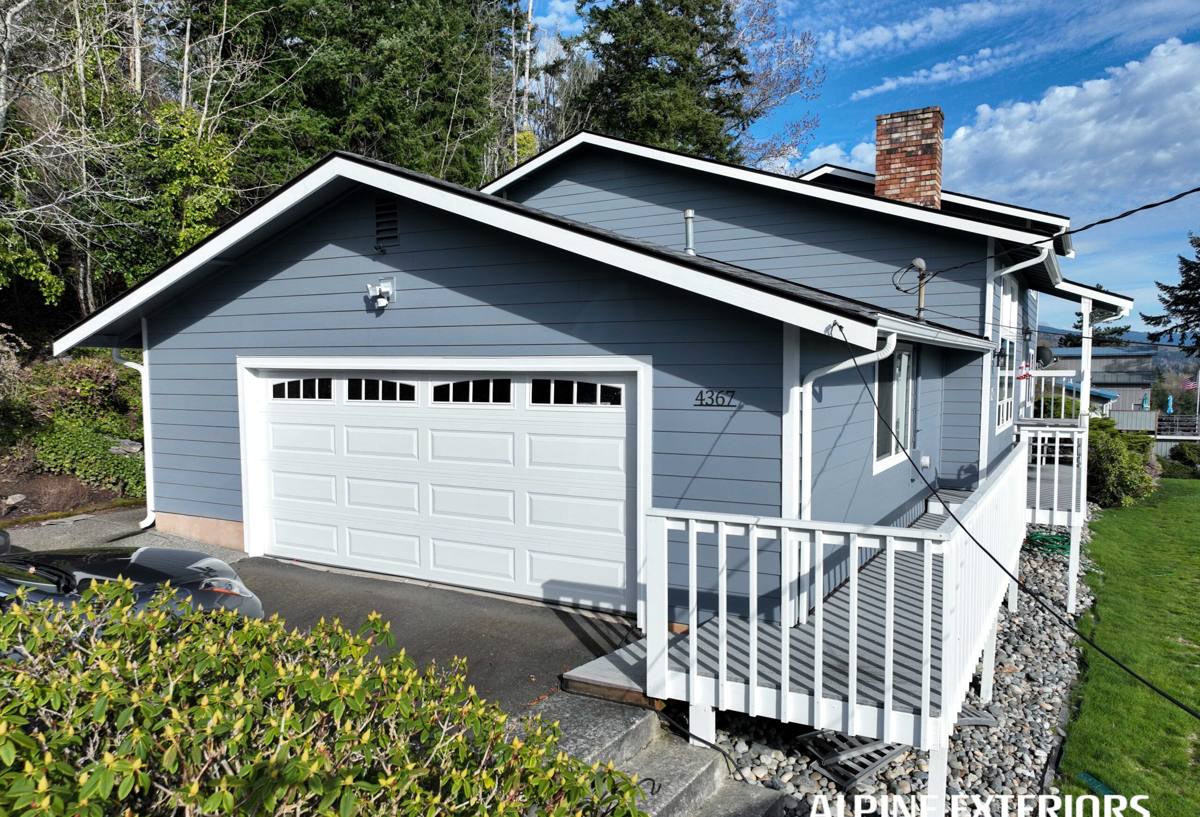
What Puget Roofs Are Actually Up Against
Three things define roofing conditions in this part of Whatcom County, and they compound each other:
Salt Air
Proximity to the water means airborne salt settles on exposed metal — flashing, fasteners, gutter hangers, vent caps — and accelerates corrosion compared to what you'd see further inland. A fastener that would last decades in a dry climate can start weeping rust streaks much sooner here if it isn't rated for the exposure.
Driving Rain
Wind-driven rain doesn't just fall on a roof, it pushes sideways and finds its way under shingle edges, around chimney flashing, and into any gap that a calmer rain would never reach. A repair that looks fine in dry weather can still leak the next time wind and rain hit from the wrong angle if the underlying flashing and underlayment weren't restored properly.
Moss Season
Shaded, damp roof sections in this region can stay wet for months at a time, which is exactly what moss needs to take hold. Moss doesn't just look bad — it lifts shingle edges, holds moisture against the roof deck, and creates a foothold for the kind of slow rot that turns a simple repair into a bigger project if it sits too long.
Signs Your Roof Took Storm Damage
Some storm damage is obvious. A lot of it isn't, especially from the ground. After any significant wind or rain event, it's worth checking for:
- Shingles that look curled, lifted, or missing entirely
- Granules collecting in gutters or at downspout outlets
- Bent, cracked, or missing flashing around chimneys, vents, and skylights
- Water stains on interior ceilings or upper walls that weren't there before
- Soft or spongy spots when walking the attic floor near the roofline
- Exposed or backed-out nail heads along shingle courses
- New moss growth or dark streaking that spread quickly after a wet stretch
- Debris — branches, needles, gravel from shingle granules — piled against one side of the roof
Any one of these on its own might be minor. Several at once, especially after a named storm or a stretch of high wind off the water, is worth a professional look before the next rain.
What a Correct Storm Damage Repair Involves
Inspection Before Anything Else
A repair that starts without a real inspection is a guess. We walk the roof, not just the ground-level sightlines, and check flashing, valleys, penetrations, and the deck itself where damage is suspected — not just the spot that's obviously missing shingles. Storm damage often has a visible entry point and a less visible spread underneath it.
Temporary Protection When Needed
If a section is actively exposed — open decking, a torn-back area, anything letting water in right now — that gets covered before it gets fixed properly. Waiting on a full repair schedule while rain keeps getting in turns a patch job into a deck replacement.
Matching the Repair to the Damage
Not every storm-damaged roof needs full replacement, and not every damaged section can be safely left as a small patch. The right call depends on the age of the existing roofing, how much of the roof is affected, and whether the damage is isolated or a sign that the whole roof is nearing the end of its service life. We'll tell you honestly which situation you're in.
Restoring the Underlying System, Not Just the Surface
Shingles are the visible layer, but flashing, underlayment, and proper fastening are what actually keep water out. A repair that replaces the visible shingles but skips the flashing or underlayment underneath is a repair that fails again in the next storm. We rebuild the whole assembly at the repair point, not just the top layer.
Our Process, Start to Finish
1. Assessment and Documentation
We inspect the roof and document what we find — useful on its own, and useful if you end up filing an insurance claim for storm damage. We'll tell you plainly whether what happened looks like storm damage or wear-related failure, since insurers treat those differently.
2. A Straight Explanation of Options
You'll get a clear picture of what's damaged, what it takes to fix it correctly, and a realistic cost range — not a worst-case upsell or a lowball that grows once work starts.
3. The Repair Itself
We remove and replace the damaged materials, rebuild flashing and underlayment where needed, and match materials to the existing roof as closely as possible so the repair doesn't stand out or create a new weak point at the transition.
4. Cleanup and Follow-Up
Job site cleared of debris and old material, and a final check that the repair is sound before we consider it done. If the damage turns out to be more extensive once we're into it, we stop and talk to you before proceeding rather than assuming.
Repair vs. Full Replacement: How to Think About Cost
Homeowners in Puget often ask whether a storm-damaged roof should be patched or replaced outright. There's no single answer, but the factors below are what actually drive the decision.
| Factor | Favors Repair | Favors Full Replacement |
|---|---|---|
| Roof age | Roof is under 10-15 years old | Roof is near or past its expected lifespan |
| Damage scope | Isolated to one section or slope | Spread across multiple areas or the whole roof |
| Underlying deck condition | Deck is sound, no rot found | Rot or soft decking found during inspection |
| Moss/moisture history | Minimal moss, roof drains and dries well | Chronic moss or moisture in shaded sections |
| Typical cost range | A few hundred to a few thousand dollars | Several thousand dollars and up, depending on size and materials |
These are general guideposts, not a quote — actual pricing depends on roof size, pitch, material, and access, and we'll give you a specific number after inspecting your roof in person.
Materials That Actually Hold Up in This Climate
Given the salt air and moss pressure common in Puget, material choice matters more here than it would in a drier, inland part of the state.
- Flashing and fasteners: we favor corrosion-resistant metals and fastener coatings suited to coastal exposure over standard-grade hardware that can start corroding within a few seasons.
- Underlayment: a quality synthetic or self-adhered underlayment at valleys, eaves, and penetrations gives real backup protection against wind-driven rain, not just the shingle layer alone.
- Shingle or roofing selection: algae- and moss-resistant shingle products exist for a reason in this climate, and we'll walk you through the trade-offs rather than just installing whatever's on the truck.
- Ventilation: proper attic ventilation helps a roof dry out between rain events, which matters directly to how fast moss and moisture damage take hold in shaded sections.
Why Local Experience Actually Matters Here
A roofer who mostly works dry, inland roofs and occasionally gets called out to Puget after a storm is starting from scratch on every job — figuring out which flashing details actually hold up to salt air, how much moss pressure a given roof section really has, and how the wind typically hits a given orientation. A crew that already works this area has already seen how these roofs fail and what actually prevents it from happening again.
That local pattern recognition is the difference between a repair that's cosmetically fine today and one that's still holding in three years, through another wet Whatcom County winter and another moss season.
After the Repair: Keeping It That Way
A good repair doesn't undo itself if it's left alone, but a few habits extend its life meaningfully in this climate:
- Clear gutters and downspouts before the fall rains start, so water has somewhere to go
- Have moss treated or removed before it spreads, rather than after it's established
- Trim back branches that keep a roof section shaded and slow to dry
- Walk the attic after major storms and check for new staining, even if nothing looks wrong from outside
- Get a roof looked at every couple of years, not just after something obviously goes wrong
If your roof took a hit in the last storm, or you're just not sure whether what you're seeing is normal wear or storm damage worth addressing, we're happy to take a look. The estimate is free, there's no pressure, and you'll get a straight answer either way — you can request one using the form below.