 Bellingham Siding
 Why Puget Homes Wear Out Siding Faster Than You'd Expect
Homes in the Puget area of Bellingham sit in one of the more demanding exterior environments in Whatcom County. The combination of salt-laden air drifting in off the water, driving rain that comes in sideways during winter storms, and a long stretch of the year when north and shaded walls simply never fully dry out puts more stress on siding here than in drier inland areas. Salt air accelerates corrosion on exposed fasteners and trim hardware. Wind-driven rain finds any weakness in a wall assembly — a gap at a butt joint, a poorly flashed window, a missing kick-out flashing — and pushes water where it doesn't belong. And the region's long moss season means shaded and low-airflow wall sections stay damp for months at a time, which is exactly the condition organic-based siding materials struggle with most.
None of this means siding fails quickly in Puget. It means siding that isn't matched to this climate, or wasn't installed correctly for it, tends to show problems years earlier than it should — while a correctly chosen and correctly installed system can go the distance.
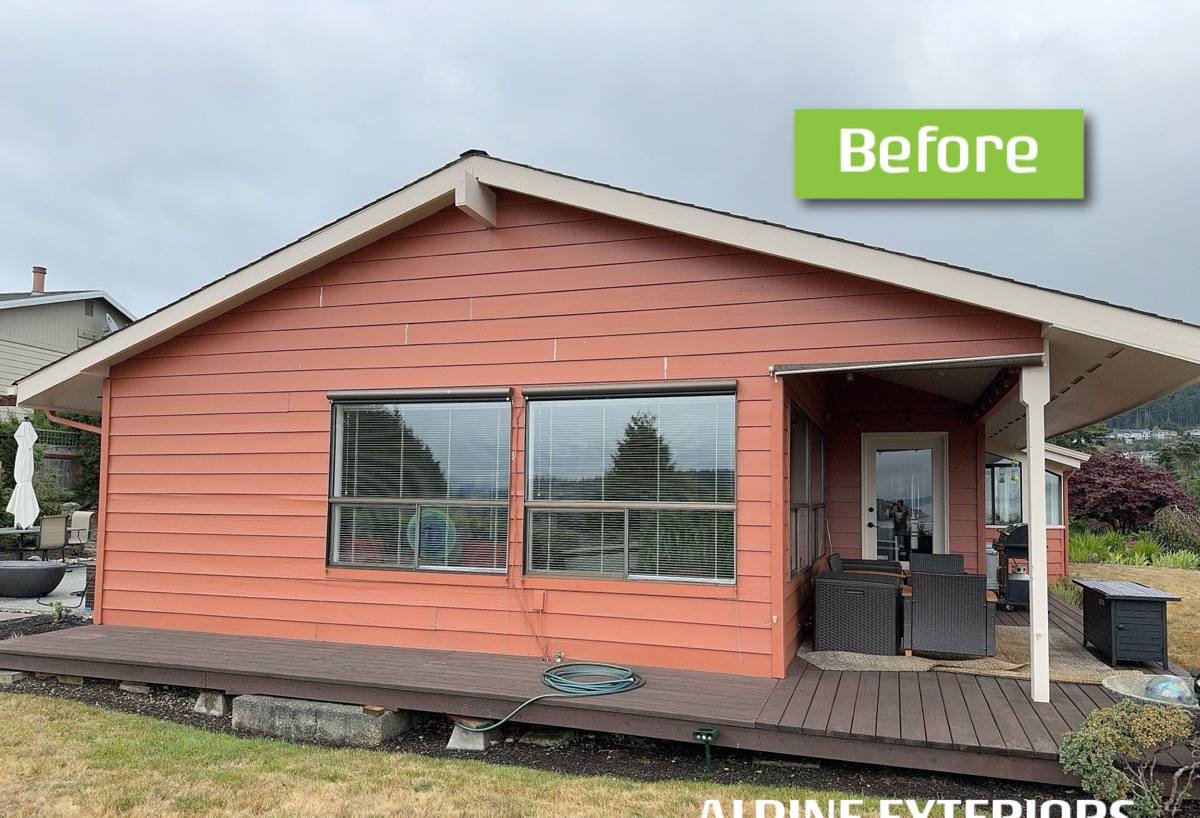
Signs Your Puget Home's Siding Has Reached the End of Its Life
Repair makes sense for isolated damage. Replacement makes sense when the siding as a system is no longer doing its job. Walk your exterior, especially the north and west-facing walls, and look for these signs:
- Soft or spongy spots when you press on the siding, especially near the bottom courses and around window and door trim
- Paint or finish that keeps peeling or blistering no matter how often it's repainted
- Moss or dark streaking that returns within a season or two of cleaning, particularly on shaded elevations
- Visible cracking, warping, or buckling panels
- Gaps opening up at seams, corners, or trim joints
- Rising heating bills that don't match any other change to the home
- Musty smells, peeling interior paint, or discoloration on interior walls that back up to exterior siding
Any one of these on its own might be a repair. Several together, or any sign of soft sheathing underneath, usually means the assembly needs to come off and be replaced properly rather than patched again.
What a Correct Siding Replacement Actually Involves
Full Tear-Off, Not Cover-Over
Installing new siding directly over old siding hides problems instead of solving them. A correct replacement removes the old material down to the sheathing so it can actually be inspected and, where needed, repaired.
Checking What's Underneath
Once the old siding is off, the sheathing gets inspected for rot, soft spots, and water staining, and the water-resistive barrier gets evaluated or replaced. In a climate that sees as much driving rain as this one, this step matters more than the siding material itself — new siding over compromised sheathing just fails again from the inside out.
Flashing and Drainage Details
Every window, door, and horizontal trim transition needs proper flashing so water is directed out and down, never trapped behind the siding. A drainage gap or rainscreen approach where appropriate helps damp wall assemblies dry out between storms instead of staying wet through the moss season.
Installing to Manufacturer Spec
Fastener type, fastener placement, panel gaps, and caulking locations are all specified by the manufacturer for a reason — get them wrong and you shorten the life of even the best siding material on the market.
Why We Install Only James Hardie Fiber Cement
Built for This Kind of Climate
James Hardie engineers its HardieZone products by climate region, and the HZ5 formulation used in the Pacific Northwest is built specifically to resist the moisture cycling that comes with our wet winters and mild, damp shoulder seasons. That matters directly in an area dealing with driving rain and a long moss season.
Non-Combustible Material
Fiber cement is non-combustible, which is a meaningful, permanent difference from wood-based or vinyl products regardless of climate.
ColorPlus Factory Finish
The factory-applied ColorPlus finish is baked on under controlled conditions and backed by its own finish warranty, which holds up better against the fading and peeling that field-applied paint struggles with in a marine environment.
A Warranty Structure Built for Longevity
Hardie's transferable warranty reflects a product designed to be installed once and last, not maintained every few years — which is the standard we hold every job to.
Why We Don't Install Vinyl, LP SmartSide, or Other Common Alternatives
We get asked why we don't offer other siding options, and it's a fair question. Each of these products has a legitimate place in the market — we just don't think they're the right fit for what this climate does to a house over time.
Vinyl
Vinyl is affordable and low-maintenance in the sense that it doesn't need repainting, but it's a thin material that expands and contracts with temperature swings, can crack in a hard cold snap, and relies on lapped seams rather than a sealed surface — seams that driving rain can work into over time.
LP SmartSide and Other Engineered Wood
Engineered wood products perform well when the paint film and caulking are maintained on a strict schedule, because the substrate is wood-based and vulnerable to moisture once that finish is compromised. In a climate with months of damp shade, that maintenance schedule becomes less forgiving than most homeowners want to keep up with.
Cedar and Primed Spruce
Natural wood siding can look excellent, but it demands the most upkeep of any option here — repainting, sealing, and active moss and mildew management — which is a heavier long-term burden in a climate this wet.
We standardized on fiber cement because it holds up to this specific climate with the least amount of ongoing homeowner maintenance, not because the alternatives are poorly made.
Our Process, Start to Finish
- Free on-site evaluation — we walk the exterior, check problem areas, and give you an honest read on repair versus replacement.
- Sheathing and moisture check — where old siding comes off, we assess the wall assembly before anything new goes up.
- Tear-off and prep — full removal, sheathing repairs as needed, and correct water-resistive barrier and flashing installation.
- Installation to spec — James Hardie panels or lap siding installed per manufacturer fastening and clearance requirements.
- Final walkthrough — we go over the finished job with you before calling it done.
What Siding Replacement Costs Depend On
Every home is different, but the same handful of factors drive most of the cost variation we see on Puget-area jobs:
| Cost Factor | Why It Matters |
|---|---|
| Home size and wall complexity | More square footage, corners, and roof lines mean more material and labor |
| Condition of existing sheathing | Rot or water damage found during tear-off requires repair before new siding goes on |
| Siding profile and accessories | Lap siding, panel systems, and trim details vary in material and install time |
| Home height and access | Multi-story sections and difficult access require more equipment and time |
| Extent of trim and flashing work | Older homes often need more flashing correction at windows and transitions |
We give real numbers after an on-site look, not a phone estimate — too much of the cost depends on what's actually happening behind the old siding.
Why Hiring a Crew That Already Works in Puget Matters
A crew that works this specific area regularly knows what tends to be hiding behind siding on homes of a given age here, which walls typically take the worst of the driving rain, and which exposures need extra attention for moss and moisture. That familiarity shows up in fewer surprises mid-project and a finished job that's actually built for the conditions your specific house faces, not a generic installation. It also means faster response if a storm causes damage and you need someone who already knows the area, not someone learning the local climate on your dime.
Keeping Your New Siding Looking Right Through the Wet Seasons
Fiber cement is low-maintenance, not zero-maintenance. A few habits go a long way in this climate:
- Rinse the exterior once or twice a year, focusing on shaded, moss-prone walls
- Keep shrubs and trees trimmed back so air can circulate and walls can dry between storms
- Keep gutters clear so overflow doesn't run down the siding face
- Check caulking at trim and penetrations periodically and have any gaps resealed promptly
Staying ahead of these small things is what lets correctly installed fiber cement siding go the distance in a climate that isn't easy on a home's exterior.
If your Puget-area home is showing signs it's time for new siding, or you just want an honest read on where things stand, we're happy to take a look. The estimate is free, there's no pressure, and you'll get a straight answer about what your home actually needs.