 Bellingham Siding
 New Roof Installation Built for the Puget Neighborhood
Puget is one of Bellingham's older residential pockets, with a mix of homes ranging from mid-century builds to newer infill construction, plenty of mature tree cover, and a close relationship to the marine air rolling in off Bellingham Bay. That combination is tough on a roof. Between the salt-laden air, the driving rain that comes sideways off Puget Sound during winter storms, and a moss season that can run eight months or longer under shaded tree canopy, roofs in this part of Whatcom County wear differently than roofs inland. A new roof installation here isn't just about swapping old shingles for new ones — it's about building a system that's matched to what this specific neighborhood throws at it year after year.
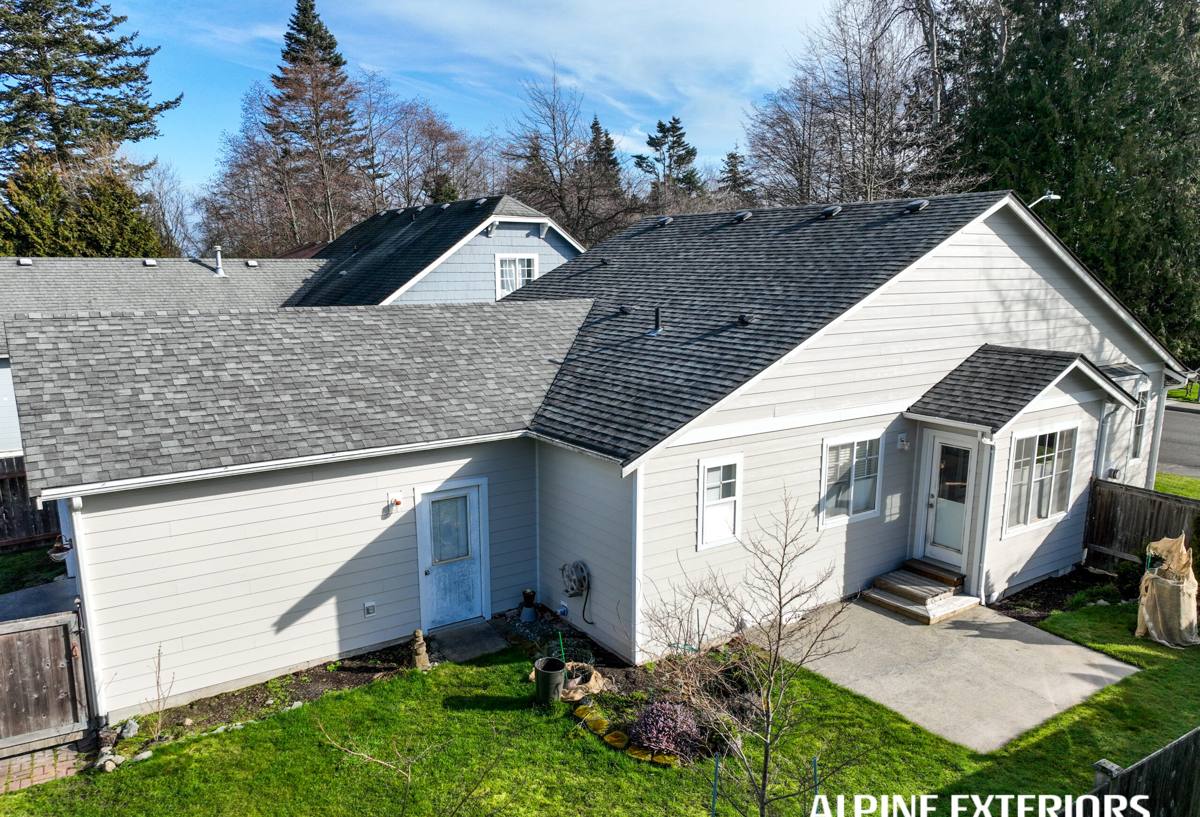
Why Puget's Climate Is Hard on Roofs
Three factors show up again and again when we inspect roofs in this neighborhood, and they all matter when planning a replacement.
Salt Air and Corrosion
Homes closer to the water deal with airborne salt that accelerates corrosion on exposed metal — flashing, fasteners, vent caps, and gutter hardware all take the hit faster than they would twenty or thirty miles inland. Standard galvanized fasteners and thin-gauge flashing can start showing rust streaks and pinholing years before they should. That's a materials decision, not a workmanship shortcut — the right roof for Puget spec's corrosion-resistant metal from the start.
Driving, Wind-Driven Rain
Bellingham gets a lot of rain, but it's the wind-driven variety off the Sound that causes the real damage. Rain that comes in at an angle finds its way under shingles, around poorly lapped flashing, and through nail holes that weren't sealed correctly. A roof that would hold up fine in a calmer climate can leak here if the underlayment, flashing details, and shingle exposure aren't built for sideways rain.
Extended Moss Season
With tree cover common throughout Puget, roofs stay shaded and damp for long stretches of the year. Moss and algae take hold in those conditions, and once established they hold moisture against the roofing material, lift shingle edges, and slowly work their way into seams. A roof installed without moss-resistant strategy will need moss treatment or premature replacement years earlier than one built with this climate in mind.
Signs a Puget Home Needs a New Roof, Not a Repair
Not every roof problem calls for full replacement, but there are clear signals that patching is no longer the right answer:
- Granule loss heavy enough that you can see bare asphalt on multiple shingles, not just one or two spots
- Moss or algae covering large sections rather than isolated patches
- Shingles that are cupping, curling, or cracking across the roof, not just on one slope
- Soft or spongy decking felt underfoot during inspection, indicating water has reached the sheathing
- Repeated leaks in different locations after previous repairs
- A roof that's 20+ years old (asphalt) or showing widespread wear consistent with its expected lifespan
- Visible daylight through the attic decking or consistent moisture staining on interior ceilings
If your roof shows two or more of these, a proper inspection is worth doing before winter storm season rather than after a leak forces the issue.
What a Correct Installation Actually Involves
A new roof is only as good as what's underneath the visible layer. Here's what we consider non-negotiable on any full replacement in this neighborhood.
Full Tear-Off and Deck Inspection
We don't install over existing layers. A full tear-off lets us inspect the decking for soft spots, rot, or delamination caused by long-term moisture — issues that are common on older Puget homes where a roof may have been re-covered once already. Any compromised sheathing gets replaced before anything new goes down; skipping this step just seals existing damage under a new roof.
Underlayment Matched to the Climate
Given the amount of wind-driven rain this area sees, we use synthetic or self-adhering underlayment at eave lines, valleys, and other vulnerable areas rather than relying on minimum-code felt alone. This is the layer that protects the deck if wind ever drives water past the shingles themselves.
Flashing Done Right
Flashing failure is the single most common cause of roof leaks we find on older homes here — around chimneys, skylights, dormers, and where roof planes meet walls. Correct step flashing, counter-flashing, and valley metal, installed in the right sequence with the underlayment, matters more to long-term leak prevention than the shingle brand on top of it.
Ventilation That Fights Moss and Ice Buildup
Balanced intake and exhaust ventilation keeps the roof deck cooler and drier, which slows moss growth from the underside and reduces the freeze-thaw stress that damages shingles during Whatcom County's occasional cold snaps. A roof with poor attic ventilation will grow moss faster no matter what shingle you put on it.
Corrosion-Resistant Fasteners and Metal
Given the salt air factor, we use fasteners and flashing rated for coastal exposure rather than the cheapest code-minimum hardware. It costs a little more up front and saves a service call five years down the road.
Material Comparison for This Neighborhood
Most Puget homeowners choose between architectural asphalt shingles and metal roofing, with a smaller number considering synthetic composite products. Here's how they stack up for this specific climate:
| Material | Moss/Algae Resistance | Wind-Driven Rain Performance | Salt Air Durability | Typical Lifespan |
|---|---|---|---|---|
| Architectural asphalt shingle | Good with algae-resistant granules; needs periodic cleaning | Strong when properly flashed and underlaid | Good; fasteners/flashing are the weak point, not the shingle | 25-30 years |
| Standing seam metal | Excellent; sheds moisture, little for moss to grab | Excellent; fewer seams for water to find | Requires marine-grade coating/fasteners near the water | 40-60 years |
| Synthetic composite (shake/slate look) | Good; varies by product | Strong when installed to spec | Good; check manufacturer coastal warranty terms | 40-50 years |
There's no single "right" answer — it depends on budget, roof pitch, how much tree cover shades the roof, and how long you plan to stay in the home. We'll walk through the honest trade-offs for your specific roof rather than pushing one product line.
Our Installation Process
- On-site inspection — we assess the current roof, attic ventilation, decking condition, and any problem areas before quoting anything
- Written estimate — clear scope, material options, and pricing, no vague allowances
- Permitting — we handle the City of Bellingham or Whatcom County permit requirements as applicable so you don't have to
- Tear-off and disposal — old roofing removed and hauled off, deck inspected and repaired as needed
- Underlayment and flashing installation — built for wind-driven rain, with extra attention at valleys, penetrations, and roof-to-wall transitions
- Roofing material installation — installed to manufacturer spec, which is what keeps the warranty valid
- Ventilation check — intake and exhaust balanced for the attic size and roof design
- Final walkthrough — we review the finished roof with you, including maintenance expectations for moss and gutter care in this climate
Permits, Warranty, and Local Code
Roof replacements in Bellingham and unincorporated Whatcom County generally require a building permit, and inspections confirm the work meets current code for underlayment, flashing, and ventilation. We pull permits as part of the job rather than leaving that step to you, and we stand behind our workmanship in writing, separate from the manufacturer's material warranty. Ask any contractor bidding your roof whether they're pulling permits and what their workmanship warranty actually covers — it's a fair question and a good filter.
What to Check Before Hiring Anyone for a Puget Re-Roof
- Do they carry current Washington L&I contractor registration and liability insurance?
- Will they do a full tear-off and deck inspection, or install over existing layers?
- Do they spec corrosion-resistant flashing and fasteners for coastal exposure, or code-minimum hardware?
- Do they address attic ventilation as part of the job, or only the visible shingle layer?
- Can they explain, in plain terms, how their flashing and underlayment choices handle wind-driven rain?
- Do they pull permits and schedule inspections themselves?
- Is the workmanship warranty in writing, and for how long?
Why a Crew That Knows Puget Specifically Matters
A roofing crew that mostly works drier, inland areas can still do competent work, but they're not necessarily thinking about salt-air corrosion on fasteners or the eight-month moss window that a shaded Puget roof lives with. We work homes throughout Bellingham and Whatcom County regularly, which means we've seen how roofs in this specific neighborhood age — where flashing tends to fail first, which slopes hold moss longest, and what underlayment actually holds up against Sound-driven rain. That local pattern recognition is part of what you're paying for, not just the labor to install shingles.
If your roof is showing its age or you're planning ahead rather than reacting to a leak, we're happy to take a look and give you a straightforward assessment. Fill out the form below for a free, no-pressure estimate on your new roof installation.