 Bellingham Siding
 Why Metal Roofing Makes Sense for Birchwood
Birchwood sits close enough to Bellingham Bay and the surrounding waterways that homes here deal with a specific mix of weather stress: salt-laden air moving in off the water, long stretches of driving rain through fall and winter, and shaded, damp yards that grow moss on almost anything that holds still long enough. A roof in this neighborhood isn't just shedding water — it's fighting corrosion, biological growth, and near-constant moisture exposure for most of the year. Metal roofing, installed correctly, handles that combination better than most other roof coverings, which is why we see steadily more interest in it from Birchwood homeowners replacing aging composition shingle roofs.
This page is specifically about metal roofing for this neighborhood — what the local climate demands from the material and the installation, what a correct job looks like, and how our process works when we're on your roof. It isn't a general metal roofing overview; it's the version that matters if your house is in Birchwood.
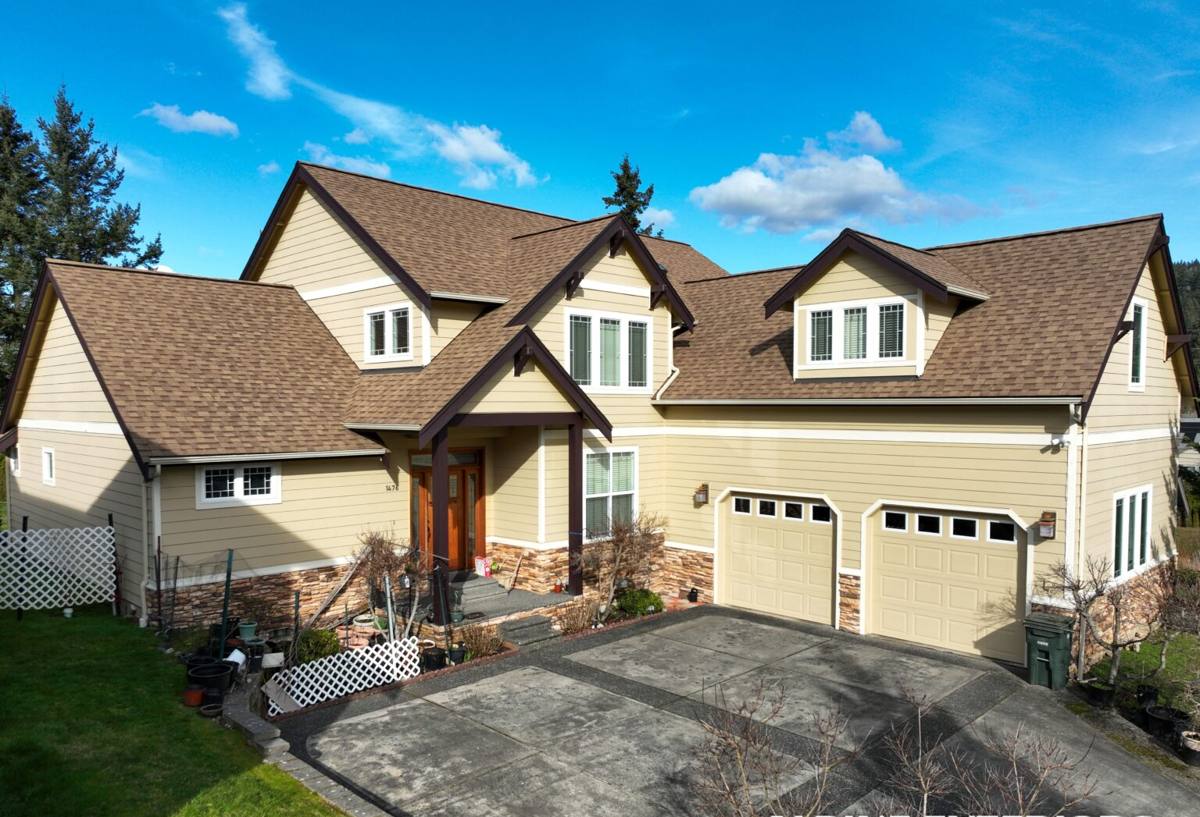
What Salt Air, Rain, and Moss Actually Do to a Roof
Whatcom County's marine climate is mild compared to a lot of the country, but "mild" doesn't mean easy on a roof. Three things wear roofs down here faster than homeowners usually expect:
- Salt air corrosion: Airborne salt from the bay accelerates rust on unprotected or poorly coated metal fasteners, flashing, and panel edges — especially anywhere cut edges expose bare steel.
- Sustained rain exposure: Bellingham gets rain in long, soaking spells rather than short bursts. That means water sits against roofing material and works into any gap for hours or days at a time, not minutes.
- Moss and organic growth: Shade, moisture, and mild temperatures are ideal moss conditions. Moss holds water against a roof surface, and on organic materials it works root-like structures into the surface over time.
None of these forces are exotic. What matters is whether the roofing material and the installation are actually built to resist them, or whether they're just tolerating them until something fails.
Why This Pushes Homeowners Toward Metal
Composition shingles are organic-based products — they absorb moisture, and moss can gain a foothold in the granule surface. Once moss is established, it's a maintenance cycle: clean it, watch it come back, clean it again, and eventually deal with granule loss and shortened shingle life. A correctly coated steel or aluminum panel doesn't give moss the same foothold, and it doesn't absorb water the way an organic shingle mat does. That's the core reason metal roofing performs well against this specific climate profile, not because it's simply "more durable" in the abstract.
Metal Roofing Options: What We Actually Recommend
"Metal roofing" covers a range of products, and they are not interchangeable in this climate. Here's how the common options compare for a Birchwood home:
| Type | Fastener Style | Salt Air / Moisture Performance | Typical Fit |
|---|---|---|---|
| Standing seam steel or aluminum | Concealed clips, no exposed fasteners | Best — no exposed screw heads to corrode or leak over time | Most Birchwood homes, especially anything close to the water |
| Exposed-fastener metal panel | Screws through the panel face with rubber washers | Good if washers and fasteners are quality and re-torqued/maintained; washers do age | Budget-conscious projects, outbuildings, garages |
| Stone-coated steel (shake/tile profile) | Concealed or semi-concealed depending on system | Good; coating helps resist growth on the surface | Homeowners wanting a traditional shake or tile look with metal's durability |
For most Birchwood homes, we lean toward standing seam because it has no long-term exposed fastener points for salt air to attack, and its raised seams shed sustained rain cleanly instead of relying on a washer seal that can degrade over the years. That said, exposed-fastener panels are a reasonable, more affordable option for detached garages, shops, and other lower-stakes structures where a slightly shorter maintenance-free window is an acceptable trade-off.
What a Correct Metal Roof Installation Actually Involves
The material is only part of the equation. A metal roof that's supposed to last 40-plus years in this climate depends just as much on what's underneath and around it. This is where a lot of roof problems actually originate, even on a "metal roof."
Underlayment and Deck Prep
We don't install metal panels directly over questionable decking. Any soft, rotted, or delaminated sheathing gets identified and replaced before a single panel goes down — installing over a compromised deck just hides a structural problem under a durable surface. Over the deck, we use a synthetic or self-adhering underlayment rated for the panel system, with extra attention to ice and water protection at eaves, valleys, and any low-slope transitions where standing water is most likely during long rain events.
Flashing and Penetrations
Flashing detail work is where most roof leaks — metal or otherwise — actually happen. Every chimney, vent pipe, skylight curb, and wall transition needs flashing that's sized, lapped, and sealed correctly for the specific panel profile. In a marine climate, we pay close attention to using corrosion-compatible metals and fasteners throughout, since mixing incompatible metals (a common shortcut) sets up galvanic corrosion that can eat through material years before it should fail.
Fasteners and Sealants
Whether the system is concealed-fastener or exposed-fastener, the hardware matters. We use fasteners rated for the panel material and the coastal environment, and where exposed fasteners are unavoidable, we use quality washered screws and check torque so the washer seals properly without cracking the panel or being under-driven.
Ventilation
A well-ventilated attic keeps moisture from condensing against the underside of the roof deck — a problem that shows up as rot and mold long before it shows up as a visible roof leak. We evaluate intake and exhaust ventilation as part of any metal roofing project, because a beautiful roof over a poorly ventilated attic just moves the moisture problem indoors.
Our Process, Start to Finish
- On-site assessment: We walk the roof (or use a lift/drone where access is limited), check the deck condition where visible, look at existing ventilation, and note flashing points and moss/growth patterns specific to your property.
- Written estimate: You get a clear scope — panel type, underlayment, flashing plan, ventilation changes if needed, and a real price, not a vague range.
- Tear-off and deck inspection: Old roofing comes off, decking gets inspected board by board, and any repairs are called out and priced before we move forward, not discovered as a surprise mid-project.
- Underlayment and flashing installation: This is the part of the job that determines whether the roof performs in a long rain event, so it doesn't get rushed.
- Panel installation: Panels go on with attention to consistent alignment, correct fastening, and proper seam or lap engagement depending on the system.
- Final walkthrough: We review the finished roof with you, including care and maintenance basics specific to metal roofing in this climate.
Maintaining a Metal Roof in This Climate
Metal roofing is low-maintenance compared to shingles, but "low-maintenance" isn't "no-maintenance," especially with the moss pressure and salt air Birchwood homes deal with. A simple annual routine goes a long way:
- Clear leaves and debris from valleys and gutters before the fall rains start in earnest
- Look for moss or algae staining, particularly on shaded north-facing slopes, and treat early rather than letting it establish
- Check exposed fasteners (if your system has them) for signs of a lifted washer or surface rust
- Confirm gutters and downspouts are directing water away from the foundation, not just off the roof edge
- After any significant windstorm, do a visual check for lifted panels, dented flashing, or debris impact
What Drives the Cost
Metal roofing costs more up front than composition shingles, and the final number depends on several factors that are worth understanding before you get quotes:
| Factor | Why It Matters |
|---|---|
| Panel system chosen | Standing seam typically costs more than exposed-fastener panel systems due to material and labor complexity |
| Roof complexity | Valleys, dormers, and multiple roof planes increase flashing work and labor time |
| Deck condition | Rotted or soft sheathing found during tear-off adds material and labor to the project |
| Ventilation upgrades | Adding or correcting intake/exhaust ventilation is sometimes needed and adds to scope |
| Access | Steep pitches or limited access may require additional safety equipment or lift rental |
We won't quote a price without seeing the roof, but we're glad to walk you through where your project is likely to land in the broader range and why, once we've had a look.
Why a Crew That Already Works Birchwood Matters
Roofing crews that mostly work inland or in drier parts of the state don't always build the same instincts around salt air corrosion, sustained-rain flashing detail, and moss-prone shade patterns that show up again and again in this part of Whatcom County. A crew that regularly works Bellingham neighborhoods like Birchwood has already seen how these conditions play out on real roofs over real winters — which valley details tend to hold water, which fastener choices age poorly near the water, and which attics need ventilation attention because of how these homes were originally built. That local pattern recognition doesn't replace good installation practice, but it sharpens it.
If you're considering a metal roof for your Birchwood home, we're happy to take a look and give you a straightforward, no-pressure estimate — just fill out the form below to get started.