 Bellingham Siding
 Storm Damage in Happy Valley: What Whatcom County Weather Does to Roofs
Happy Valley sits close enough to the water and open enough to weather that its roofs take a different kind of beating than homes further inland. Winter storms coming off the Pacific bring sustained wind, sideways rain, and the kind of pressure changes that lift shingles and work flashing loose without ever putting a visible hole in your roof. By the time a leak shows up on the ceiling, the damage that caused it may have started weeks or months earlier.
Bellingham's position in Whatcom County means storm damage here rarely looks like the dramatic, torn-off-in-one-night damage you see in hurricane coverage. It's usually slower and quieter: a few shingles creased or lifted in a windstorm, a flashing seam that opened up just enough to let driving rain in, or granule loss from repeated battering that thins a roof's protection over several seasons. That pattern matters because it changes what a correct repair looks like, and it's a big part of why we focus on this specific problem for this specific neighborhood rather than treating every storm call the same way.
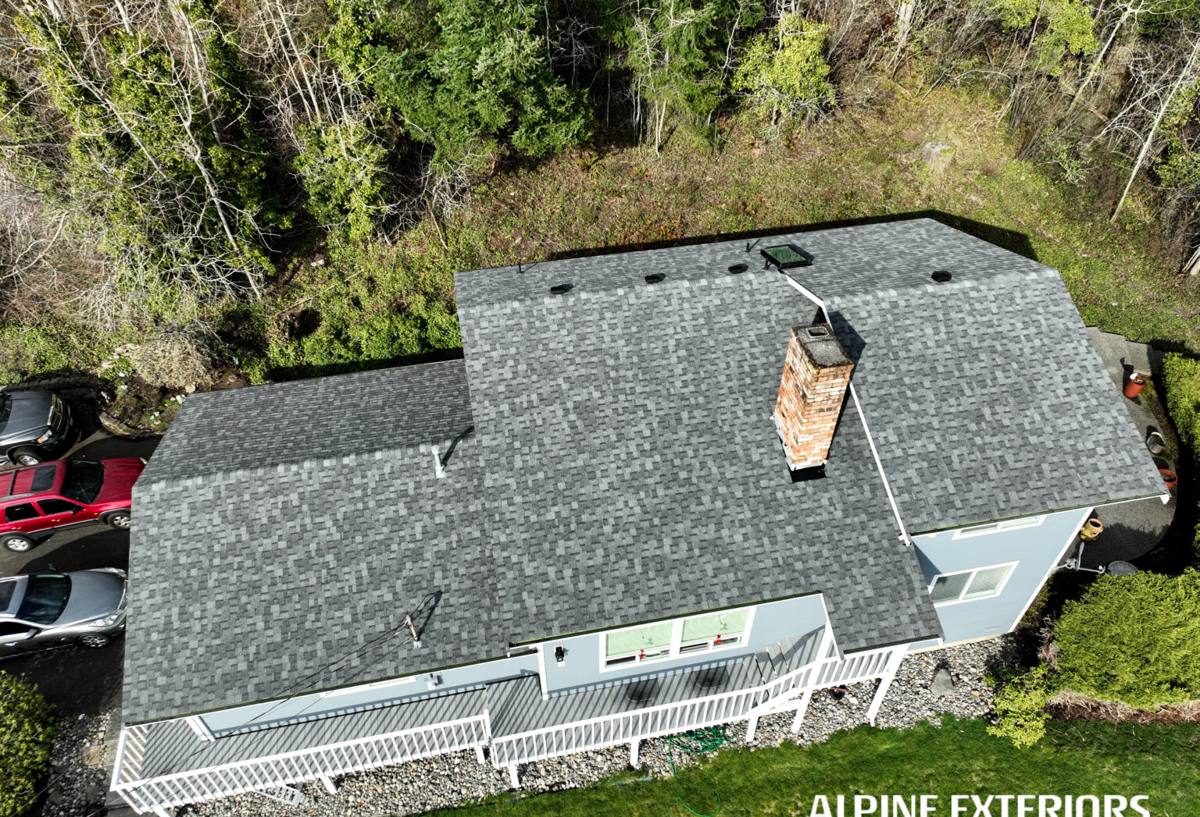
Common Signs of Storm Damage on a Happy Valley Roof
What You Can Often See From the Ground
Some storm damage is visible without ever getting on a ladder, especially right after a wind event. Look for shingles that appear curled, cracked, or missing altogether, dark streaking or bald patches where granules have washed off, and debris — branches, needles, moss clumps — collected in valleys or along the eaves. Gutters that are suddenly overflowing or pulling away from the fascia are also worth a second look after a storm, since wind can rack them loose at the same time it damages the roof itself.
What Hides Until It's a Leak
The damage that actually costs homeowners money is usually the kind you can't see from the driveway. Wind-driven rain can push moisture up and under shingles at ridges, valleys, and around penetrations like vents and chimneys — areas where the roof depends on flashing and underlayment rather than the shingles alone. Attic moisture, musty smells, or new water stains on interior ceilings are often the first real evidence that a storm did more damage than it looked like from outside.
- Shingles that are cracked, curled, creased, or missing
- Granules collecting in gutters or at downspout outlets
- Soft or spongy spots when walking the roof (decking issues)
- Flashing that's bent, lifted, or separated from the roof plane
- Water stains, discoloration, or sagging on interior ceilings
- Daylight visible through the roof deck from inside the attic
- Moss buildup that's thickened noticeably since the last storm season
What a Correct Storm Damage Repair Actually Involves
A storm damage repair that's done right is not just swapping out the shingles that are obviously broken. It starts with understanding why the damage happened — wind uplift, wind-driven rain, impact from debris, or moisture that's been working under the surface for a while — because that determines whether the fix needs to go deeper than the surface layer.
On a well-done repair, we're checking the decking underneath any removed shingles for soft spots or rot, not just laying new shingles over questionable wood. We're inspecting and, where needed, replacing the underlayment and flashing in the affected area, not just the shingles sitting on top of it. And we're matching materials as closely as possible so a repaired section doesn't stand out or perform differently than the roof around it. Skipping any of these steps is how a "quick fix" turns into a repeat call the next time a storm rolls through.
Salt Air and Driving Rain: Two Forces Working Against the Same Roof
Homes in and around Bellingham deal with a combination that inland roofs don't have to think about as much: salt-laden air moving in off the water, paired with wind-driven rain that hits roofs at an angle rather than falling straight down. Neither one is dramatic on its own, but together they accelerate wear in specific, predictable places.
Salt air speeds up corrosion on exposed metal — nails, flashing, and fasteners — which is why we pay attention to the condition of metal components during any storm repair, not just the shingles. Driving rain, meanwhile, doesn't behave like normal rainfall. It can push water sideways and upward under shingle edges and around flashing seams that would shed a vertical downpour just fine. That's why proper lap and flashing technique at valleys, ridges, and penetrations matters more here than it might in a drier, calmer climate — those are the spots wind-driven rain finds first.
Moss: Bellingham's Slow-Motion Roof Damage
Whatcom County's moss season runs long, and it's less an occasional nuisance than a steady, year-round pressure on roofing. Moss holds moisture against the shingle surface long after a storm has passed, which keeps the roof damp and speeds up granule loss. As moss mats thicken, they can physically lift shingle edges, creating small gaps that wind-driven rain is happy to use during the next storm. It's a compounding problem: moss makes storm damage worse, and storm damage creates more places for moss to take hold.
Part of an honest storm damage repair in this area includes addressing moss buildup in and around the repaired section, not just patching the damage and leaving the underlying moisture problem in place to cause the next one.
Repair or Replace? How We Evaluate Storm-Damaged Roofs
Not every storm-damaged roof needs a full replacement, and not every roof that "just needs a patch" is actually a good candidate for one. We look at a handful of practical factors before recommending either path, and we'll walk you through our reasoning rather than just handing you a number.
| Factor | Leans Toward Repair | Leans Toward Replacement |
|---|---|---|
| Roof age | Under roughly 12-15 years, still within expected service life | Nearing or past the manufacturer's expected lifespan |
| Extent of damage | Isolated to one section or slope | Spread across multiple slopes or repeated storm events |
| Decking condition | Solid, no soft spots found on inspection | Rot or soft decking found under more than a small area |
| Repair history | First or second repair on this roof | Several previous patch jobs already on record |
| Granule loss | Localized to the storm-affected area | Widespread thinning across the whole roof |
Roof condition is rarely all-or-nothing, so it's common for a roof to fall in between these columns. In those cases we'll give you the honest tradeoffs — including what a repair buys you in time versus what a replacement resets — rather than pushing toward the bigger job by default.
Our Storm Damage Repair Process
Storm calls move faster than a typical project, but that doesn't mean steps get skipped. Here's how we handle a storm damage repair from the first call to the finished job:
- Emergency stabilization — if there's active leaking or exposed decking, we prioritize tarping or temporary sealing to stop water intrusion before anything else.
- Full inspection — we get on the roof (weather permitting) to check not just the obvious damage but the decking, flashing, and underlayment around it.
- Documentation — we photograph the damage clearly, which matters both for your own records and for any insurance claim you may file.
- Written estimate — you get a clear scope of what needs repair versus what's still sound, in plain language, before any work starts.
- Repair work — matched materials, proper flashing and underlayment technique, and attention to moss or debris in the repaired area.
- Final walkthrough — we review the completed repair with you and flag anything else worth watching, so there are no surprises later.
Working With Insurance on a Storm Damage Claim
Many storm repairs in this area end up involving a homeowner's insurance claim, and the single biggest factor in how smoothly that goes is documentation. Clear photos of the damage, a written scope of work, and an honest description of what was storm-caused versus what was pre-existing wear all make the claims process faster and less contentious.
We provide the documentation from our side of the inspection, but we don't inflate scope to chase a bigger claim payout — our job is to give you an accurate picture of what the storm actually did to your roof, so you're working from real information whether you're filing a claim or paying out of pocket.
Why Hiring a Crew That Already Works in Happy Valley Matters
Storm damage repair is one of those jobs where local familiarity actually changes the outcome. A crew that's already worked roofs in Happy Valley and the surrounding Bellingham area knows what wind-driven rain does to flashing at this elevation and exposure, how fast moss reestablishes itself in this climate, and which repair details hold up through a full Whatcom County wet season rather than just looking fine on a dry afternoon.
There's also a timing advantage. Storm damage windows are narrow — the sooner a vulnerable spot gets a proper repair, the less chance the next system moving through turns a small problem into a bigger one. A crew that's already familiar with the area's storm patterns and roof types can move from inspection to repair faster than one starting from scratch.
Get a Straightforward, No-Pressure Estimate
If a recent storm has you wondering whether your roof took damage, it's worth getting a real inspection rather than guessing from the ground. We'll take a look, tell you honestly what we find, and give you a clear estimate for what it would take to fix it right — no pressure, no inflated scope. Use the form below to request your free estimate.