 Bellingham Siding
 Roofing Built for Happy Valley's Weather, Not Just Any Roof
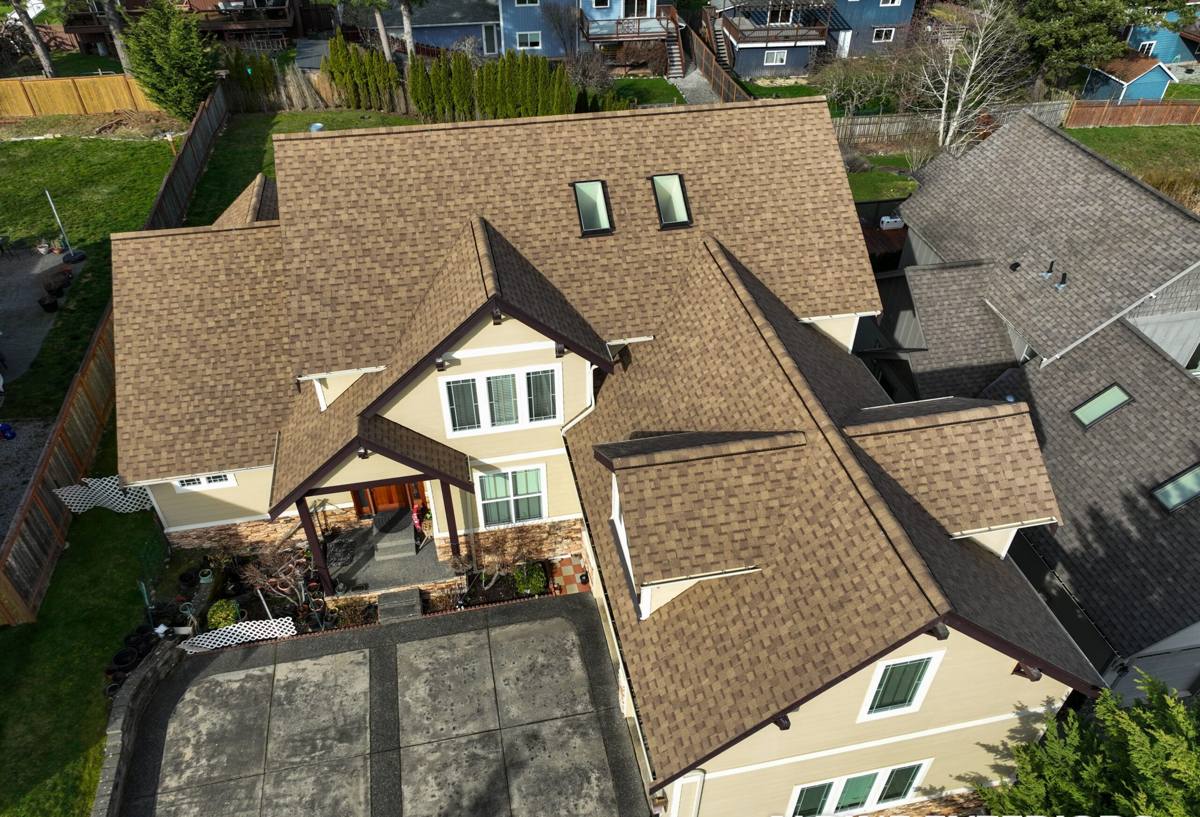
Happy Valley sits close enough to Bellingham Bay and the surrounding hills that its homes take a specific kind of weathering: salt-tinged air moving in off the water, long stretches of driving rain through fall and winter, and shaded, tree-lined lots that stay damp long after the rest of Whatcom County has dried out. A roof that would hold up fine in a drier inland climate can struggle here if it wasn't chosen and installed with these conditions in mind. When we install a new roof in Happy Valley, we're not just replacing what's on the house — we're building a system that's meant to handle this specific mix of moisture, salt exposure, and moss pressure for decades.
That distinction matters more than most homeowners realize until they've lived through a Whatcom County winter or two. A roof installed by a crew unfamiliar with the local climate might look fine on install day and still develop moss colonies, soft decking, or premature granule loss within a few years. A roof installed with this area's conditions built into every decision — underlayment choice, ventilation, flashing details, material selection — is a different proposition entirely.
What Happy Valley's Climate Actually Does to a Roof
Salt Air and Corrosion
Homes near Bellingham Bay deal with airborne salt that accelerates corrosion on exposed metal — nails, flashing, vents, and fasteners. Standard galvanized fasteners can start showing rust streaks and weakening well before their expected lifespan in a salt-air environment. This is one of the most overlooked failure points in cheaper roof installs: the shingles look fine, but the fasteners holding them down are the weak link.
Driving Rain and Wind-Driven Water
Bellingham's rain doesn't always fall straight down. Wind off the Sound and through the valleys can drive rain sideways and up under shingle edges, valleys, and any place where flashing isn't doing its job. A roof here needs to be detailed for wind-driven rain, not just vertical rainfall — that means extra attention at every transition point: valleys, chimneys, skylights, and roof-to-wall junctions.
Moss Season
Shaded lots, tree cover, and near-constant moisture from fall through spring create ideal conditions for moss and algae growth. Moss isn't just a cosmetic issue — as it grows, it holds moisture against the roof surface, lifts shingle edges, and can work its way under the roofing material over time, leading to rot in the decking below. In Happy Valley specifically, homes with mature tree cover tend to see moss pressure earlier and more aggressively than homes in more open, sun-exposed parts of the county.
What a Correctly Installed Roof Looks Like Here
A new roof installation isn't just laying down shingles. Done right, it's a layered system where every component supports the others against this area's specific stressors.
- Ice-and-water shield at eaves, valleys, and penetrations — the areas most likely to see standing water or wind-driven rain intrusion
- Synthetic underlayment across the full deck for a secondary moisture barrier that outperforms old-style felt in wet climates
- Corrosion-resistant fasteners and flashing — stainless or coated hardware where salt exposure is a factor, not standard galvanized
- Balanced ventilation — intake at the eaves and exhaust at the ridge, sized to the attic, so trapped moisture doesn't condense and rot the deck from underneath
- Algae-resistant shingle granules on shaded or moss-prone roof planes, where standard granules give in to growth faster
- Properly stepped and counter-flashed chimneys, walls, and skylights — the majority of roof leaks we find on older Happy Valley homes trace back to flashing that was never installed correctly in the first place
Skipping any one of these doesn't necessarily cause an immediate problem. It's the accumulation over a few wet seasons that turns a shortcut into a leak, a mold issue, or a full deck replacement.
Deck Inspection and Repair
Before any new roofing goes down, the decking underneath needs to be inspected. In this climate, we regularly find soft or delaminated plywood around old flashing failures or areas where moss held moisture against the roof for years. Replacing damaged decking as part of the install — rather than roofing over it — is a non-negotiable part of doing this correctly. Roofing over compromised decking is one of the most common corners cut in cheap installs, and it guarantees problems down the road.
Choosing Materials for a Wet, Shaded, Salt-Exposed Neighborhood
There's no single "best" roofing material for every home — it depends on the house, the roof's exposure to shade and salt air, and the homeowner's budget and priorities. Here's how the common options stack up specifically for Happy Valley conditions:
| Material | Moss/Moisture Resistance | Salt Air Durability | Typical Lifespan Here |
|---|---|---|---|
| Architectural asphalt shingle (algae-resistant) | Good, especially with AR granules on shaded planes | Good with corrosion-resistant fasteners | 25–30 years |
| Standard 3-tab asphalt shingle | Fair — more prone to early moss growth | Fair | 15–20 years |
| Metal (standing seam) | Excellent — moss struggles to hold on smooth metal | Very good with proper coatings and fasteners | 40–50+ years |
| Cedar shake | Poor without diligent maintenance — high moisture retention | Fair | 20–25 years, shorter with neglect |
We steer most Happy Valley homeowners away from untreated cedar shake unless they're committed to regular maintenance, simply because the moisture retention in a shaded, damp lot works against the material's natural lifespan. That's not a knock on cedar as a product — it's a maintenance-burden conversation we have honestly, upfront, before you commit to it.
Our Installation Process
1. On-Site Assessment
We start with a full roof and attic inspection — checking the current roofing material's condition, decking integrity, ventilation setup, flashing details, and any signs of moisture damage or moss intrusion. This is also where we look at how much shade and tree cover your specific roof planes get, since that affects both material choice and detailing.
2. Tear-Off and Deck Evaluation
Old roofing comes off down to the deck so we can see exactly what's underneath. Any soft, delaminated, or rotted decking is identified and replaced before anything new goes down.
3. Underlayment and Flashing
Ice-and-water shield goes in at the vulnerable spots, synthetic underlayment covers the rest of the deck, and all flashing — valleys, chimneys, skylights, walls — is installed or replaced to shed wind-driven rain rather than just vertical rainfall.
4. Ventilation Check and Correction
We verify intake and exhaust ventilation is balanced for the attic space. Poor ventilation is one of the quieter causes of premature roof failure in this climate, since trapped moisture condenses on the underside of the deck regardless of how good the roofing above it is.
5. Roofing Installation
Material goes down per manufacturer specification, with corrosion-resistant fasteners throughout and extra attention at every penetration and edge.
6. Final Walkthrough
We walk the completed roof and the site with you, cover the manufacturer's warranty paperwork, and make sure you know what routine maintenance — if any — your specific roof will need.
Cost Factors for a Happy Valley Roof Replacement
Every roof is priced based on the specifics of the house, so we won't quote a number without seeing your roof — but these are the main factors that move the price up or down:
| Factor | Why It Matters |
|---|---|
| Roof size and pitch | More material and steeper, harder-to-work pitches increase labor |
| Number of layers to remove | Multiple existing layers add tear-off time and disposal cost |
| Deck repair needs | Rot or soft spots found during tear-off add material and labor |
| Material choice | Standard shingle, architectural shingle, and metal carry different upfront costs |
| Flashing and penetration count | Chimneys, skylights, and multiple valleys add detailing time |
| Ventilation upgrades | Adding or correcting intake/exhaust vents adds a modest amount to the project |
Signs You May Need a New Roof
- Granules collecting in gutters or at the base of downspouts
- Shingles that are curling, cracking, or missing
- Moss or algae that keeps returning even after cleaning
- Daylight visible through the attic roof boards
- Soft spots when walking the roof, or sagging visible from the ground
- Water stains on interior ceilings or in the attic
- A roof that's approaching or past the expected lifespan of its material
Why It Matters to Hire a Crew That Already Works in Happy Valley
A roofing crew that regularly works Happy Valley and the surrounding Bellingham area already knows which flashing details fail first on shaded lots, which fastener types hold up against salt air, and which roof planes on a typical local home need algae-resistant material versus which don't. That local pattern recognition isn't something you get from a general contractor working from a generic checklist — it comes from having repaired the failures that generic installs leave behind.
It also matters for accountability. A crew based in and around Bellingham is easy to reach if a question comes up after the install, and has a reputation in the community worth protecting. We stand behind our installations because we're not going anywhere — we're your neighbors, working on the same streets, dealing with the same weather.
Maintenance After Your New Roof Goes In
A new roof reduces maintenance needs significantly, but it doesn't eliminate them in this climate. We recommend an annual check of gutters and downspouts (especially under tree cover), a visual inspection after major windstorms, and prompt attention to any moss regrowth before it has a chance to establish. Catching small issues early is far less costly than dealing with the moisture damage that comes from ignoring them through a wet Whatcom County winter.
If your Happy Valley home needs a new roof or you're not sure whether repair or replacement makes more sense, we're glad to take a look. Fill out the form below for a free, no-pressure estimate — we'll walk your roof, answer your questions honestly, and give you a clear picture of what your home actually needs.