 Bellingham Siding
 Why Birch Bay's Climate Is Hard on Windows
Birch Bay sits right on the water, and that location cuts both ways. The views are part of why people live there, but the same salt-laden air, wind-driven rain, and long gray stretch of moss season that make the Whatcom County coast beautiful also put steady stress on a home's windows. Salt air accelerates corrosion on hardware and fasteners. Driving rain off the bay finds any weak point in flashing or sealant and works it wider over time. And the extended damp season — often running from fall well into spring — means wood trim, sills, and frames stay wet longer than they do even a few miles inland.
None of this means windows in Birch Bay need to be exotic or overbuilt. It means the details that get skipped on an easier job — flashing sequence, sealant choice, frame material, hardware quality — matter more here, and skipping them shows up faster than it would in a drier, more sheltered part of the county.
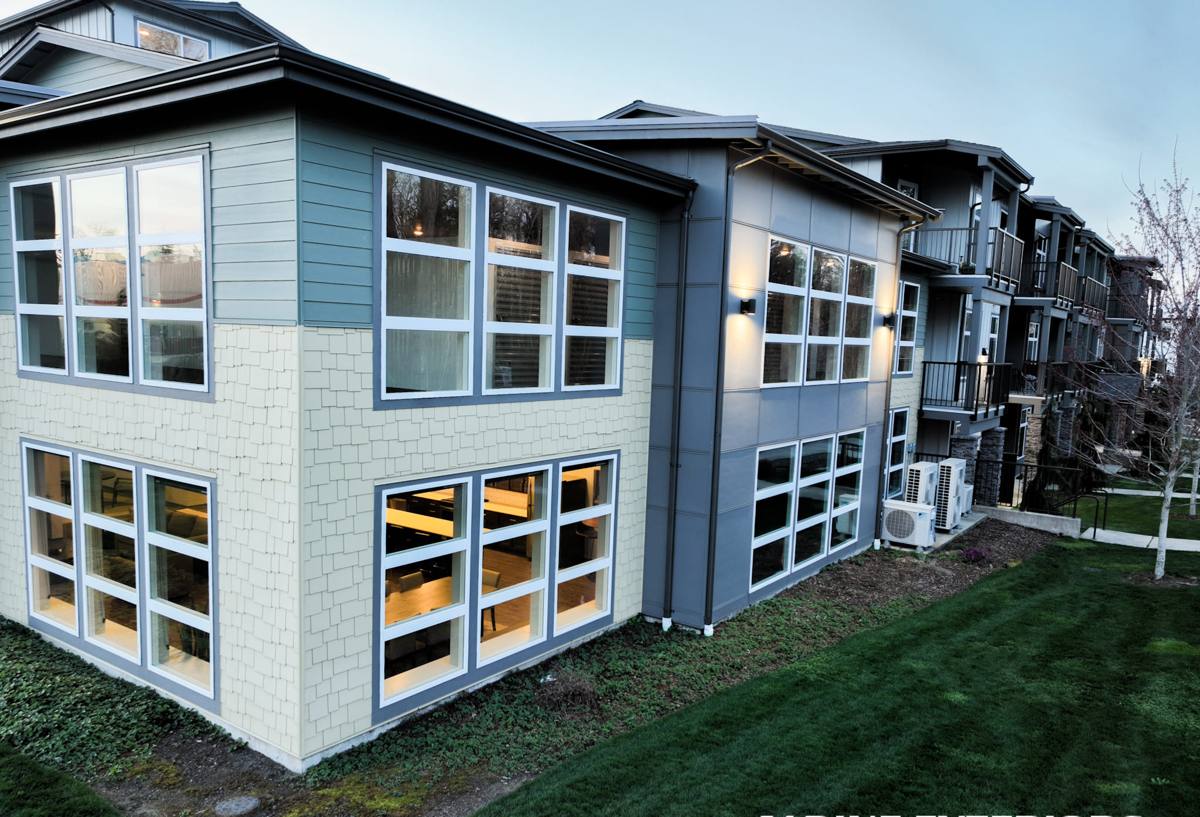
What "Energy Efficient" Actually Means for This Location
Energy-efficient windows get marketed around glass coatings and gas fills, and those matter, but for a coastal home the bigger factor is often air infiltration — how much unconditioned air is sneaking in around the sash and frame, not just through the glass.
Air Infiltration and U-Factor Matter as Much as the Glass
A window with excellent glass but a poor seal or a frame that's already started to warp will still leak air and drive up heating costs. In a marine climate with regular wind-driven rain, air infiltration and water infiltration tend to go hand in hand — a gap that lets air through is usually a gap that will eventually let water through too. Look for windows with a low U-factor (a rough target in this climate is the 0.25–0.30 range) and confirm the air infiltration rating, not just the glass package.
Solar Heat Gain Is a Secondary Concern Here
In sunnier, hotter parts of the country, solar heat gain coefficient (SHGC) gets a lot of attention because it controls how much heat builds up indoors. Bellingham-area homes, including those in Birch Bay, don't fight much overheating — the bigger job for a window here is keeping heat in during our cool, wet months and keeping wind-driven moisture out. That doesn't mean SHGC is irrelevant, just that it shouldn't be the deciding factor over air sealing and moisture performance.
Frame Materials: What Actually Holds Up Near the Water
Every frame material has trade-offs, and the right call depends on the specific home, its exposure to wind and salt spray, and the homeowner's maintenance appetite. We walk through these honestly rather than pushing one product for every house.
| Frame Material | Salt Air / Moisture Behavior | Maintenance | Trade-offs |
|---|---|---|---|
| Vinyl | Does not corrode or rot; performs well in coastal exposure | Low — occasional cleaning | Limited color/finish options; can expand/contract with temperature swings |
| Fiberglass | Very stable dimensionally; strong resistance to moisture-driven warping | Low | Higher upfront cost than vinyl |
| Wood (clad exterior) | Exterior cladding protects the wood, but any breach in the cladding lets moisture reach the wood core | Higher — cladding seams and any exposed wood need regular inspection | Best interior appearance for some homeowners; least forgiving of installation shortcuts in a wet climate |
| Aluminum | Prone to corrosion and pitting in salt air unless heavily treated; conducts cold | Moderate to high | We generally steer Birch Bay homeowners away from bare aluminum frames given the exposure |
For most Birch Bay homes we recommend vinyl or fiberglass specifically because they don't give salt air and standing moisture anything to work with. Wood-clad windows can still be the right choice for a homeowner who wants that look and is committed to the extra upkeep — we'll tell you honestly which category your home and budget point toward.
Installation Details That Matter More in a Marine Environment
A quality window installed poorly will underperform a mid-grade window installed correctly — this is true everywhere, but the gap shows up faster in a climate with this much wind-driven rain.
Flashing and Water Management
Every window opening needs a flashing sequence that sheds water down and out, layered so that any moisture that gets past the exterior trim has a path away from the wall assembly rather than into it. This is the step most likely to get rushed on a fast job, and it's the one that causes hidden rot behind the wall years later — usually discovered only when trim or siding is opened up for another reason.
Sealant Choice and Placement
Not every exterior sealant is rated for the constant damp-dry cycling a bay-facing wall goes through. We use sealants suited to sustained moisture exposure and apply them at the specific points — head, jambs, sill — where wind-driven rain actually tests a window, not just a bead around the visible trim.
Sill and Sub-Sill Detailing
The sill is where water sits longest after a storm. A sloped sill pan and correct shimming keep water moving off the sill instead of pooling against the bottom of the frame, which is where deterioration typically starts first.
Signs Your Current Windows Are Already Losing the Fight
Birch Bay homeowners often live with early warning signs for a while before calling anyone, partly because the symptoms can look minor at first. Worth checking for:
- Visible condensation or fogging between the glass panes (a sign the seal has failed and the insulating gas has escaped)
- A noticeable draft near the frame on windy days, even with the window latched
- Soft or discolored trim or sill wood, especially on bay-facing walls
- Difficulty opening, closing, or locking a window that used to operate smoothly
- Visible moss or persistent green staining on exterior trim around the window opening
- A noticeable jump in heating costs without a clear explanation
- Peeling paint or bubbling on interior sills or the wall just below a window
Any one of these on its own isn't necessarily an emergency, but a window showing two or more of these signs is usually past the point where caulking or weatherstripping alone will fix it.
How We Approach a Birch Bay Window Replacement
Assessment and Product Selection
We start by looking at the specific exposure of your home — how directly it faces the bay, how much wind and driving rain that particular wall takes, and the condition of the existing framing once a window is out. That assessment, not a one-size-fits-all package, is what determines the frame material and glass package we recommend.
Removal, Installation, and Cleanup
Old windows come out carefully so we can inspect the rough opening for any hidden moisture damage before a new window goes in — patching that now is far cheaper than discovering it later. New flashing, sill detailing, and sealant go in to spec, the window is shimmed level and square, and interior and exterior trim is finished to match the home. We clean up debris and old materials as part of the job, not as an afterthought.
What Drives the Cost of a Window Project
| Factor | Why It Matters |
|---|---|
| Frame material | Vinyl is typically the most budget-friendly; fiberglass and wood-clad cost more upfront |
| Number and size of openings | More windows, or larger picture/specialty shapes, add labor and material cost |
| Condition of the existing opening | Hidden rot or framing damage found during removal adds repair scope |
| Full-frame vs. insert replacement | Full-frame replacement (removing down to the studs) costs more but is often the right call when the existing frame or flashing is compromised |
| Access and site conditions | Second-story or hard-to-reach openings take more time and equipment |
We give a written estimate that breaks these factors out so you can see what you're actually paying for, rather than a single bundled number.
Maintenance for a Salt-Air, Moss-Season Climate
Good windows installed correctly still benefit from a little seasonal attention in this environment:
- Rinse exterior frames periodically to clear salt residue, especially on bay-facing walls
- Check weep holes (small drainage openings at the bottom of the frame) to make sure they're clear of debris, moss, or paint
- Inspect exterior caulking once a year, ideally before the wet season starts, and touch up anywhere it's cracked or pulled away
- Keep gutters and downspouts clear so roof runoff isn't sheeting down over window openings
- Trim back vegetation that holds moisture against exterior trim
Why Local Experience in Birch Bay Matters
A crew that mostly works drier, more sheltered inland jobs can still do competent work, but they're often applying general best practices rather than practices calibrated to a specific bay-facing exposure. We work throughout the Bellingham and Whatcom County area, including Birch Bay, and that repetition matters: we've seen which walls in this community take the worst of the weather, which sealants and details actually hold up over years of salt air and driving rain, and where past shortcuts on other homes have caused problems down the line. That's knowledge you can't get from a spec sheet, and it shows up in how a job is detailed, not just what products go into it.
If you're weighing whether your current windows need attention or you're ready to plan a replacement, we're happy to take a look and give you a straightforward, no-pressure estimate — just fill out the form below to get started.