 Bellingham Siding
 Why Ferndale Decks Wear Out Faster Than Homeowners Expect
A deck in Ferndale doesn't fail the way a deck fails in a dry climate. It's rarely one dramatic event — it's months of damp air, driving rain that never quite lets a deck dry out between storms, and a moss season that can stretch from fall through spring. Add the salt-laden air that moves in off the Strait of Georgia and Bellingham Bay, and you've got a slow, steady attack on fasteners, ledger boards, and any wood surface that isn't properly protected. Homeowners are often surprised that a deck built with decent lumber only ten or twelve years ago is already showing soft spots, rust streaks, or a spongy feel underfoot. In this climate, that's normal wear — not a sign the original builder did anything unusual wrong. It's a sign the deck wasn't built with this specific weather pattern in mind.
Deck replacement here isn't just about swapping old boards for new ones. It's about correcting the details that let moisture in the first place, so the next deck actually holds up through another decade or two of Whatcom County winters.
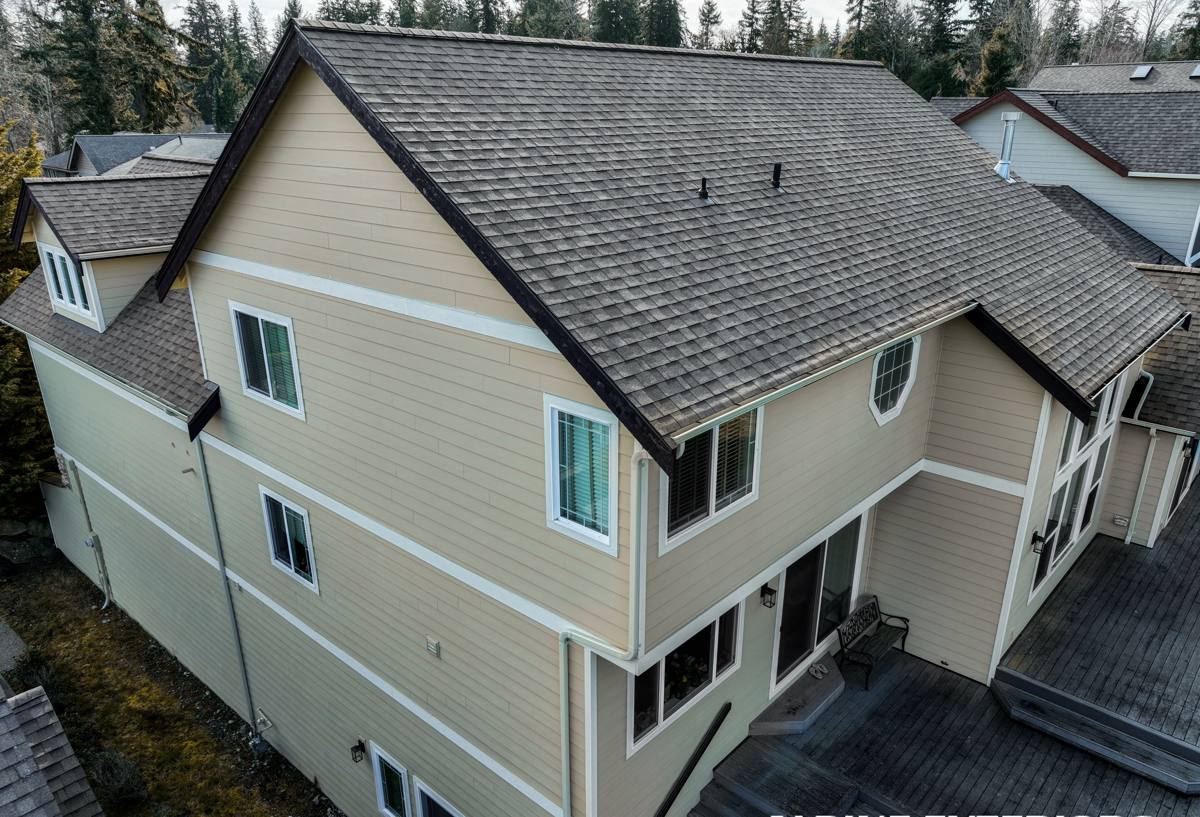
Signs Your Deck Needs Replacing, Not Just Repairing
Not every tired-looking deck needs a full replacement. But there's a point where patching individual boards stops making sense — either because the structure underneath is compromised, or because repair costs start rivaling the cost of doing it right. Here's what tells us a deck is past the repair stage:
- Soft, spongy, or spring-back decking in multiple areas, not just one or two boards
- Visible rot or dark staining at the ledger board — where the deck attaches to the house
- Rusted, corroded, or backed-out fasteners, especially near the perimeter and stair stringers
- Posts or footings that have shifted, settled, or show cracking at the base
- Persistent moss or algae growth that returns within weeks of cleaning, no matter how often you scrub it
- Railings that flex or wobble under normal pressure — a safety issue, not just cosmetic
- A deck more than 15–20 years old built with standard lumber and no drainage detailing underneath
If you're only seeing one or two of these, a repair may buy you a few more years. If you're seeing several at once, especially anything involving the ledger board or footings, replacement is almost always the more honest recommendation.
What a Correct Deck Replacement Actually Involves
The Ledger Board Connection
The single most common failure point on decks in this region is the ledger board — the piece that bolts the deck to the house. If it isn't flashed correctly, water runs down the siding, behind the ledger, and sits there. In a dry climate that might not matter much. In Whatcom County, where rain is frequent and humidity stays high for long stretches, an unflashed or poorly flashed ledger can rot from the inside before any exterior sign shows up. A correct replacement means removing the old ledger entirely, inspecting the rim joist and sheathing behind it for hidden damage, and installing proper flashing that sheds water away from the house rather than trapping it against the wall.
Joist and Beam Protection
Framing lumber that sits exposed to repeated wetting and drying cycles is where most structural deck failures start — usually well before the surface decking shows any problem. We protect joist tops and beam surfaces so water can't pool and soak in at the connection points, which is exactly where standing moisture does the most damage over time.
Footings and Post Bases
Ferndale's soil holds moisture longer than well-drained sandy sites, which means post bases sitting directly on grade or in undersized footings are more prone to movement and rot over time. Footings need to be sized and set to local frost depth and soil conditions, with post bases that keep wood off standing water rather than sitting in it.
Drainage Underneath the Deck
Especially on lower decks or those close to grade, water that collects underneath and has nowhere to go keeps the framing damp long after a storm passes. Grading, gravel, or a simple under-deck drainage approach — matched to the site — extends the life of everything above it.
Decking Material Options for a Marine Climate
There's no single "best" decking material — there's a best material for how you use the deck, your maintenance appetite, and your budget. Here's how the common options compare specifically for Ferndale's damp, moss-prone conditions:
| Material | Moisture Performance | Maintenance | Typical Lifespan |
|---|---|---|---|
| Pressure-treated wood | Good if sealed regularly; absorbs moisture if neglected | Annual cleaning and re-sealing recommended | 10–15 years with upkeep |
| Cedar | Naturally rot-resistant but still needs sealing in this climate | Sealing every 1–2 years, moss removal | 15–20 years with upkeep |
| Composite decking | Excellent — doesn't absorb water or rot | Occasional washing; some composites still grow moss/mildew on the surface | 25–30+ years |
| PVC / capped polymer | Best moisture resistance of the group | Low — periodic washing only | 25–30+ years |
Composite and PVC decking have become the more common choice for Ferndale homeowners specifically because they remove the constant sealing and staining maintenance that this climate demands from wood. That said, wood still has a place — it's less expensive up front, repairable board-by-board, and some homeowners simply prefer the look and are willing to keep up with the maintenance. Our job is to walk through those trade-offs honestly rather than push whatever's easiest for us to install.
One note on composite products: even moisture-resistant decking can still grow a thin layer of moss or algae on the surface in a shaded, damp yard. That's a surface-cleaning issue, not a structural one — but it's worth knowing going in so it doesn't come as a surprise the first wet fall after installation.
Railings, Stairs, and Local Code Requirements
Deck railings and stair details are governed by building code, and Whatcom County and the City of Ferndale enforce standard requirements around railing height, baluster spacing, and stair rise/run — these exist for safety, not as red tape. A deck replacement is the right time to correct any older railing that doesn't meet current spacing requirements, especially in households with small children or pets. Permitting requirements can vary depending on deck height, size, and location relative to the house, so we handle the permit and inspection process as part of the job rather than leaving it to the homeowner to sort out separately.
Our Deck Replacement Process
- On-site evaluation. We inspect the existing deck's framing, ledger connection, footings, and decking to determine what's actually driving the failure — not just what's visible on the surface.
- Honest scope and options. We walk through material choices and what each realistically costs to install and maintain over time, based on how you actually use the space.
- Permitting. Where required, we handle the permit application and coordinate inspections so the finished deck is fully compliant, not just built to look right.
- Demolition and structural inspection. Full tear-out lets us see what's happening at the ledger, rim joist, and framing — problems that are impossible to fully diagnose from the surface.
- Rebuild. New footings or post bases as needed, correctly flashed ledger connection, protected joists and beams, and framing sized to current code and the actual loads the deck will see.
- Decking, railings, and finish work. Installed per manufacturer specifications — fastening patterns and gapping matter more in a wet climate than they do in a dry one, since incorrect gapping traps moisture instead of shedding it.
- Final walkthrough and inspection. We confirm everything with you before considering the job finished, and pass any required final building inspection.
Moss, Mildew, and What Long-Term Maintenance Actually Looks Like
Even a well-built deck in Ferndale needs some seasonal attention — the difference is how much, and how forgiving the deck is if you fall behind. A few realistic habits go a long way:
- Sweep debris and standing leaves off the deck surface regularly through fall, when moss growth accelerates fastest
- Keep gutters and downspouts near the deck clear so runoff isn't dumping extra water onto the deck surface or framing below
- Rinse or lightly scrub composite and PVC decking a couple of times a year to keep surface moss from taking hold
- Re-seal wood decking on the schedule the product calls for — skipping a cycle in this climate shows up faster than in drier regions
- Check the ledger flashing and any visible fasteners once a year for early signs of corrosion or gaps
None of this is complicated, but it's the difference between a deck that reaches the top end of its expected lifespan and one that needs premature repair because small issues went unnoticed for a season or two.
Why Hiring a Crew That Already Works in Ferndale Matters
A deck built the same way it would be built in a dry inland climate will not hold up the same way here. Ledger flashing details, footing depth for local soil conditions, and fastener selection that resists salt-air corrosion aren't optional upgrades — they're the difference between a deck that lasts 25 years and one that needs structural work again in ten. A crew that regularly works Ferndale and the surrounding Whatcom County communities has already seen how local decks fail, which means the next one gets built to actually stand up to this specific climate rather than a generic national standard. We're also familiar with the local permitting process, which keeps the project moving instead of stalling on paperwork.
Get a Straight Answer Before You Commit
If your deck is showing its age — soft spots, rust stains, persistent moss, or a railing that doesn't feel as solid as it used to — it's worth having someone look at it before deciding between repair and replacement. We'll give you a clear, no-pressure assessment of what's actually going on and what a proper fix looks like. Fill out the form below for a free estimate on your Ferndale deck replacement.