 Bellingham Siding
 New-Construction Windows in Cordata: What the Term Actually Means
"New-construction" windows are not a style or a brand — they're a type of installation. These windows use a nailing flange around the perimeter of the frame that gets integrated directly into the wall's weather-resistive barrier (WRB) before siding goes on. That's different from a "replacement" or "pocket" window, which gets inserted into an existing frame from the outside with the old exterior trim and cladding left mostly intact. If you're building new in Cordata, adding a room, or replacing windows down to the studs during a siding tear-off, you're in new-construction territory, and the install sequence matters as much as the window itself.
We work new-construction window packages regularly for homes and additions in and around Cordata, coordinating with framers, siding crews, and sometimes builders directly. The advantage of doing it this way is that when it's done right, the window becomes part of a continuous drainage plane rather than a hole patched into one.
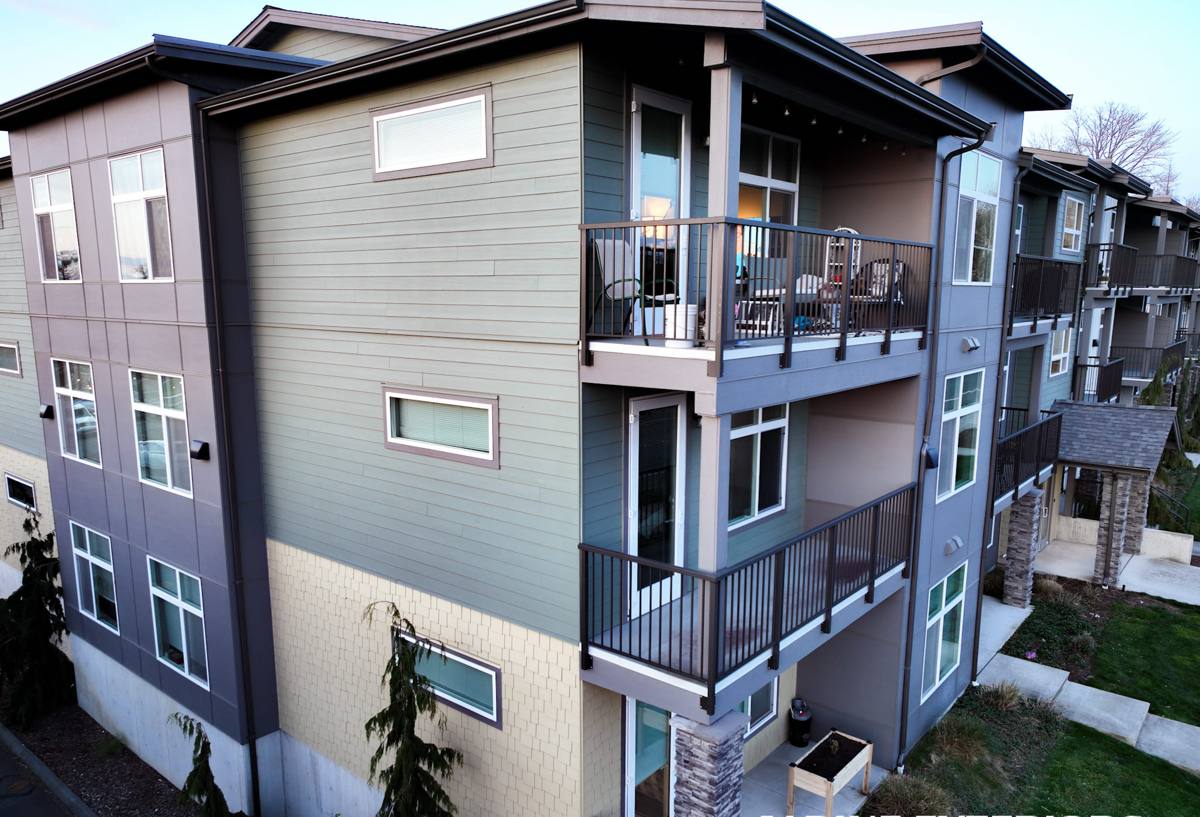
What Bellingham and Whatcom County Weather Demands From the Install
Cordata sits close enough to the water and the lowland weather patterns that come off the Salish Sea that window installs here have to account for more than just rain volume. A few things we plan around on every job:
- Salt-influenced air: proximity to marine air accelerates corrosion on unprotected fasteners and lower-grade hardware, so we pay attention to fastener and flashing compatibility, not just the window frame material.
- Driving, wind-blown rain: Bellingham storms don't always fall straight down. Wind-driven rain finds gaps at the head and jambs before it finds them at the sill, which changes how we prioritize flashing detail order.
- Long moss and mildew season: Whatcom County's mild, damp stretch from fall through spring means anything that traps moisture against wood trim or sheathing has months to do damage before it dries out. Sill pans and proper slope-to-drain details aren't optional here.
- Temperature swings between summer sun and winter damp: frame materials and sealants need to handle expansion and contraction without losing their seal.
None of this means a new-construction window needs to be exotic — it means the installation details need to be right for this specific climate, every time, not just on the jobs where someone happens to double-check.
The Flashing and Sequencing Details That Actually Make or Break the Job
Sill Pan First, Always
Before the window ever goes into the rough opening, the sill needs a sloped, back-dammed pan flashing so any water that gets past the window — and eventually, some will — drains back outside the wall instead of pooling on the sill framing. This is one of the most commonly skipped steps on production builds, and it's the one most likely to cause hidden rot years later.
Shingle-Style Layering
Flashing tape and WRB layers need to overlap like shingles: sill pan first, then the window flange taped at the jambs, then the head flashing last, lapped over the top of the WRB above it. Water has to be able to run down and out at every layer without ever being directed behind the one below it.
Integration With the WRB and Siding
The window flange has to tie into the housewrap or WRB as a continuous system, not just get taped around the edges. Where the siding type changes the drainage plane approach — furring strips for a rainscreen gap, for example — the window flashing has to be sequenced to match, not installed as if it were going behind a direct-applied product.
Choosing the Right Window for Cordata New Construction
Frame material and glazing package both affect how a window handles the Bellingham climate over the long run. There's no single "best" choice — it depends on the home's design, budget, and exposure.
| Frame Material | Moisture Behavior | Maintenance | Typical Fit |
|---|---|---|---|
| Vinyl | Won't rot; seams and welds are the main watch point | Low | Budget-conscious builds, wide availability |
| Fiberglass | Dimensionally stable in wet/dry cycling, resists warping | Low to moderate | Homes wanting durability without wood upkeep |
| Wood-clad | Exterior clad protects wood, but any breach at joints needs prompt attention | Higher — sealant and clad joints need periodic checks | Traditional or higher-end architectural styles |
| Aluminum | Durable but thermally conductive; condensation risk without thermal breaks | Low | Modern designs, larger glass areas |
For glazing, double-pane with argon fill and a low-E coating is the practical standard for this climate — it balances heat retention against our mild-but-damp winters without the added cost of triple-pane, which is usually only worth it for homes prioritizing maximum efficiency or facing unusual noise or exposure conditions.
Our New-Construction Window Install Process
- Rough opening check: confirm the opening is square, plumb, and sized correctly before the window arrives on site — catching framing issues now avoids forcing a window into an out-of-square opening later.
- Sill pan flashing: installed and back-dammed before the window goes in.
- Dry-fit and set: window set into the opening, checked for level and square, and temporarily braced.
- Flange integration: nailing flange fastened per manufacturer spec, then taped at the jambs and head in proper shingle-lap order with the WRB.
- Shimming and fastening: shimmed at the manufacturer's specified points to prevent frame distortion, which can cause operational issues or seal failure later.
- Interior air seal: low-expansion foam or appropriate sealant at the interior gap, avoiding high-expansion foam that can bow the frame.
- Final check: operation, seal continuity, and flashing lap sequence verified before siding closes the wall up.
Mistakes We See on New Builds — and What They Cost Later
Most window failures we're called out to fix in Whatcom County aren't the window's fault — they're installation shortcuts that didn't show up until a season or two of weather exposed them:
- Skipping or improperly sloping the sill pan, leading to hidden rot at the sill framing.
- Taping the flange in the wrong order relative to the WRB, so water gets funneled behind the housewrap instead of over it.
- Over-shimming or racking the frame during install, which strains the seal and can cause premature hardware wear.
- Using high-expansion foam at the interior gap, which can bow vinyl or fiberglass frames enough to affect operation.
- Rushing sequencing to keep pace with a build schedule, leaving flashing laps incomplete before siding closes the wall.
Every one of these is avoidable with the right sequence and a crew that isn't treating window installation as a five-minute task between framing and siding.
Cost Factors for a New-Construction Window Package
| Factor | Why It Moves the Number |
|---|---|
| Frame material | Vinyl is typically the most budget-friendly; fiberglass and wood-clad cost more upfront |
| Glazing package | Argon fill, low-E coatings, and triple-pane options each add cost |
| Window size and configuration | Large fixed panes, corner units, and custom shapes cost more than standard operable sizes |
| Number of openings | Bulk ordering for a full new build can improve per-unit pricing versus a handful of one-off units |
| Flashing and WRB complexity | Rainscreen systems and complex wall assemblies add install labor |
| Access and site conditions | Second-story or hard-to-access openings add time and equipment cost |
We walk through these factors during the estimate so you know what's driving the number, rather than getting a lump-sum quote with no breakdown.
Why Hiring a Crew That Already Works Cordata Matters
New-construction window installation is detail work, and the details that matter most are the ones tied to local weather and local building patterns — how Whatcom County's rain behaves, what wall assemblies and siding types are common on Cordata builds, and what inspectors here expect to see at rough-in. A crew that's worked this area regularly isn't guessing at flashing sequence or scrambling to look up manufacturer specs mid-install. We've built the sill pan, flange, and WRB sequence into a repeatable process specifically because we've seen what happens in Bellingham's climate when it's skipped.
Before You Sign a Window Contract: What to Ask
- Will the sill be flashed with a sloped, back-dammed pan before the window is set?
- What's the flashing lap order relative to the WRB or housewrap?
- Is the crew installing to the manufacturer's written instructions (required for most warranties)?
- What glazing package is included, and is it appropriate for our climate and the window's exposure?
- How is the interior air seal handled, and what sealant or foam type is used?
- Who coordinates timing with the siding crew so the wall isn't closed up before flashing is verified?
If you're planning new-construction windows for a build or addition in Cordata, we're glad to walk the plans or the site with you and put together a straightforward, no-pressure estimate — just fill out the form below to get started.