 Bellingham Siding
 Custom Windows Built for Cordata's Climate
Cordata sits far enough inland to escape the worst of the waterfront salt spray, but it still gets the same wet, gray marine air that defines Whatcom County for eight or nine months of the year. Homes here deal with driving rain off the water, long stretches of low sun angle that keep siding and trim damp, and a moss season that can run from October through May. Windows take the brunt of this weather more than almost any other part of the exterior — every seam, sill, and joint around a window opening is a potential path for water to get behind the cladding. When we replace windows in Cordata, the goal isn't just a new look. It's closing off the ways water and moisture have been finding their way into the wall assembly, sometimes for years without anyone noticing.
Why This Neighborhood Is Different From a Generic Job
Cordata's mix of housing stock includes a good number of homes built in the 1990s and 2000s, many with original vinyl windows that are now well past their expected service life, plus a smaller number of older homes with wood-frame windows that have been painted over multiple times. Each of these starting points calls for a different plan. A 25-year-old vinyl window with failed seals behaves very differently during removal than a wood window with rot at the sill, and the flashing detail needed to tie the new window into the existing siding depends on what's already there. We don't treat every job the same because the houses aren't the same.
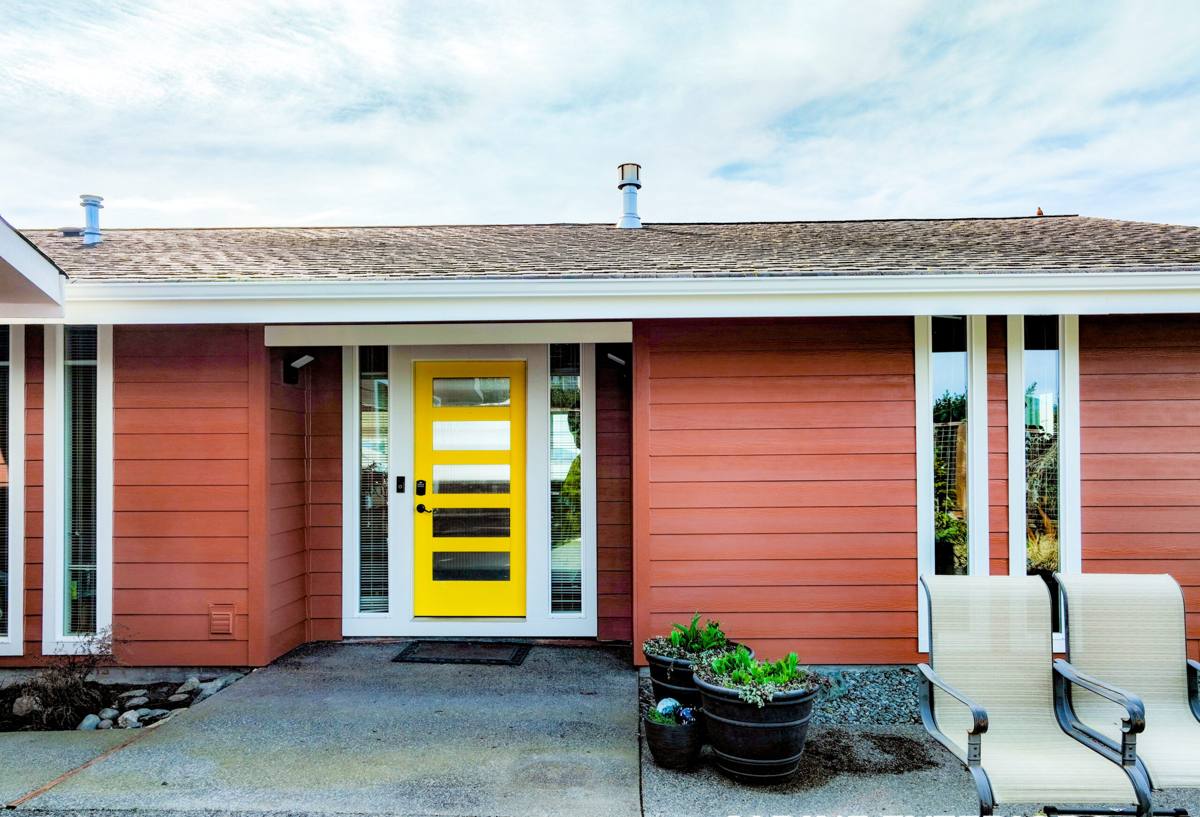
What Bellingham's Climate Does to Windows Over Time
Understanding the failure pattern helps explain why the replacement itself matters more than the window brand you pick.
- Driving rain: Wind-driven rain off the Salish Sea pushes water sideways into any gap around a window frame, not just straight down. Flashing and sealant have to account for horizontal pressure, not just gravity drainage.
- Condensation and interior humidity: Long damp winters mean interior humidity stays elevated, which shows up as condensation on older single-pane or failed double-pane windows — a sign the seal has broken and the insulating gas has escaped.
- Moss and organic growth: Moss doesn't just grow on roofs. It takes hold in window sills, tracks, and any horizontal surface that stays wet, and it holds moisture against wood and vinyl far longer than open air would.
- UV and freeze-thaw cycling: Even with our mild winters, repeated freeze-thaw at the glass edge and sealant joints breaks down old caulking and gaskets faster than a dry climate would.
- Wood rot at sills and jambs: Once water gets behind old flashing, it travels down and pools at the sill. This is the single most common hidden damage we find when we pull an old window out.
What a Correct Window Replacement Actually Involves
A window replacement is really a flashing and water-management job with a window in the middle of it. Skipping steps here is how homeowners end up with the same rot problem five years later, just hidden behind new trim.
The Core Steps
- Remove the old window and inspect the rough opening. This is where we find out whether there's hidden rot, soft sheathing, or old flashing that failed years ago without visible signs inside.
- Repair or rebuild the opening as needed. Any soft or rotted framing gets cut out and replaced before anything new goes in. Installing a new window over damaged framing just delays the problem.
- Install house wrap and flashing tape correctly shingled. Water-resistive barrier and flashing have to overlap in the right order — top piece over the one below it — so water sheds outward and down, never inward.
- Set the window level, plumb, and square. An out-of-square window stresses the frame, makes operation difficult, and creates uneven gaps that are hard to seal properly.
- Seal and insulate the perimeter. Low-expansion foam or backer rod and sealant fill the gap between the frame and rough opening without bowing the frame inward.
- Finish exterior trim and integrate with existing siding. This is the step that determines whether the new window looks like it belongs or looks like an afterthought.
Choosing the Right Window for a Cordata Home
We install vinyl, fiberglass, and composite window lines, and we're upfront about the trade-offs of each rather than pushing whatever has the best margin. Wood-clad windows can look excellent, but in our climate they demand more upkeep at the cladding seams and paint lines than most homeowners want to sign up for, so we frame that as an honest maintenance conversation, not a knock on the product.
| Frame Material | Moisture Behavior Here | Maintenance | Typical Fit |
|---|---|---|---|
| Vinyl | Won't rot; seams and welds are the main watch points | Low — occasional cleaning | Most Cordata homes, budget-conscious replacements |
| Fiberglass | Very stable, minimal expansion/contraction in wet-dry cycles | Low | Homes wanting a longer-term, higher-performance upgrade |
| Composite | Resists moisture well, holds paint better than solid wood | Low to moderate | Homeowners wanting a wood-look profile without wood upkeep |
| Wood / wood-clad | Handsome but needs disciplined upkeep in a wet marine climate | Higher — periodic painting/sealing | Historic or design-driven projects where the look is the priority |
Glass and Performance Options
Double-pane, low-E glass is the standard baseline for this region now, and it makes a real difference in comfort during our damp, cool months by cutting down on cold-glass drafts and condensation. Argon-filled units and warm-edge spacers are worth the modest upcharge on most jobs. Triple-pane is available but is usually not necessary for the mild winter temperatures Whatcom County sees — it adds cost and weight without a proportional benefit here, and we'll say so if a homeowner asks about it.
Our Process, Start to Finish
Every window job we run in Cordata follows the same sequence, whether it's two windows or a whole house.
- On-site assessment. We look at every window being replaced, check for soft framing or existing rot from outside and where accessible, and measure for accurate ordering.
- Straightforward written estimate. Scope, materials, and price laid out clearly before any work starts — no surprise change orders for things we could have caught up front.
- Scheduled installation. We work efficiently to minimize the time any opening sits uncovered, which matters in a region where a dry afternoon isn't guaranteed.
- Opening-by-opening quality check. Each window gets checked for level, operation, and a properly sealed perimeter before we move to the next.
- Cleanup and walkthrough. We walk the finished work with the homeowner and answer questions about care and warranty coverage.
Why Hiring a Crew That Already Works in Cordata Matters
A window installer who works across Whatcom County regularly knows what this climate does to a rough opening before they ever pull a window out. That's not something you learn from a manufacturer's install manual — it comes from having found rot at enough sills, in enough Bellingham-area homes, to know where to look first. A crew unfamiliar with marine-climate installation can follow every instruction in the manufacturer's guide and still end up with a window that leaks in three years, because the manual doesn't account for wind-driven rain patterns or how long a wall assembly here stays damp after a storm. Local experience also means we're realistic about scheduling around our wet season and won't leave an opening exposed longer than necessary.
Signs It's Time to Replace Rather Than Repair
- Visible fogging or moisture between panes — the seal has failed and can't be restored
- Soft or spongy wood at the sill or jamb when pressed
- Windows that are difficult to open, close, or lock, especially after settling or humidity changes
- Persistent condensation on the interior glass even with normal ventilation
- Visible gaps, drafts, or daylight around the frame
- Peeling paint or stained drywall/trim near the window, which often points to water intrusion rather than just cosmetic wear
What This Typically Costs
Pricing depends on window size, frame material, glass package, and how much framing repair is needed once we open the wall — a job with hidden rot costs more than one with a clean opening, and there's no way to know for certain which one you have until the old window comes out. As a broad range, most single-window replacements in this area run from the low thousands to several thousand dollars depending on size and material, with whole-house projects scaling from there. We'll never quote a full-house price without seeing the actual openings first.
If your windows in Cordata are showing their age or you've noticed drafts, fogging, or soft spots at the sills, we're happy to take a look and put together a straightforward, no-pressure estimate. Use the form below to get started.