 Bellingham Siding
 Siding Replacement in Blaine: Built for the Coast, Not Just the Coastline View
Blaine sits about as close to saltwater and Canadian weather systems as a Whatcom County home can get. That combination — marine air off the Salish Sea, wind-driven rain rolling in off the water, and long stretches of gray, damp months — is hard on exterior materials in ways that inland siding jobs simply don't have to plan for. When we replace siding on a Blaine home, we're not doing a generic install. We're doing a coastal install, and the difference shows up in the product choice, the water management details, and the fasteners we use.
This page is specifically about siding replacement for homes in and around Blaine. We'll cover what the local climate actually does to siding over time, what a correct replacement job involves, how our process works from first visit to final walkthrough, and why it matters that the crew showing up already knows this stretch of coastline.
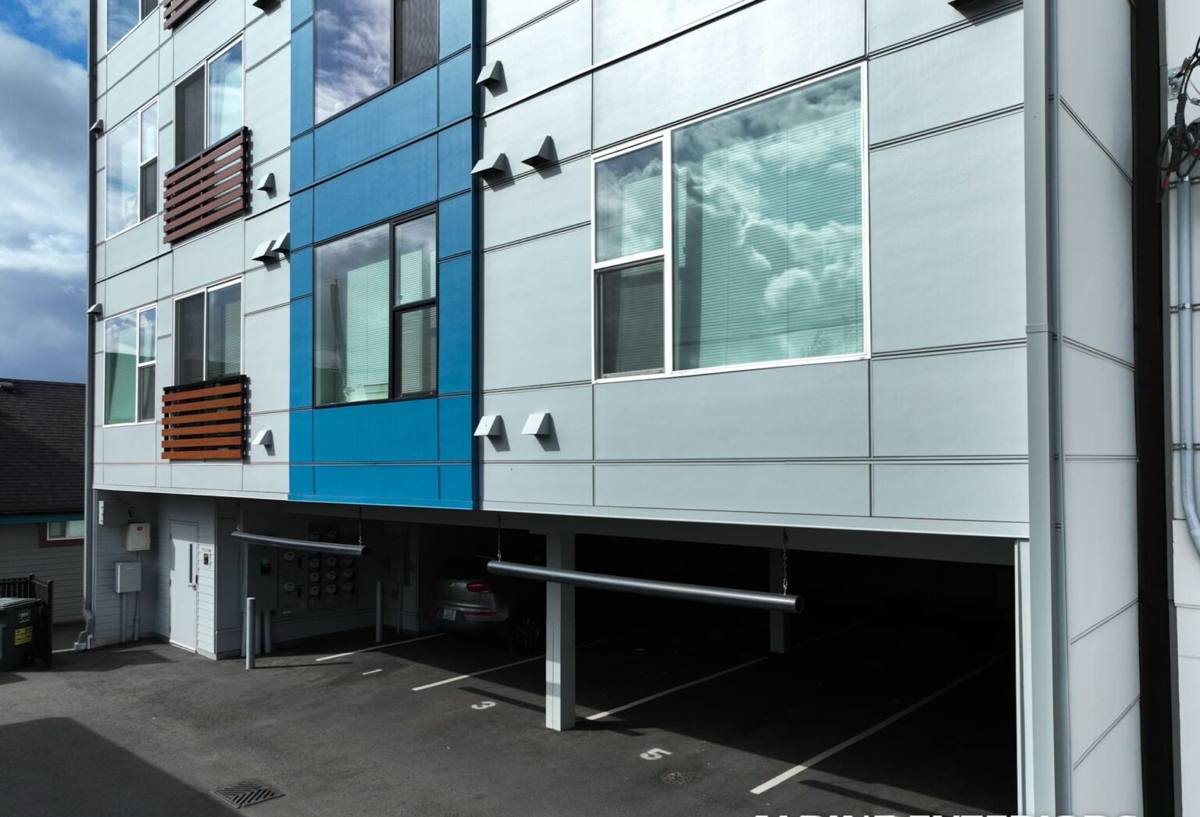
What Blaine's Climate Does to Siding Over Time
Salt Air and Corrosion
Homes within a few miles of Semiahmoo Bay and the surrounding shoreline take on a fine, near-constant dose of salt-laden air. Salt is corrosive to exposed metal fasteners, uncoated trim edges, and any siding material that relies on paint film alone to keep moisture out. Over years, that corrosion shows up as rust streaking, fastener pop, and premature paint failure — problems that inland Whatcom County homes see far less often.
Driving Rain and Wind-Driven Moisture
Blaine's exposure to weather systems moving in off the water means rain doesn't always fall straight down. Wind-driven rain gets pushed sideways into wall assemblies, testing every seam, lap, and penetration in the siding system. A siding job that looks fine on a calm day can fail during a January storm if the water management behind the cladding — house wrap, flashing, weep paths — wasn't done correctly.
Moss, Algae, and the Long Damp Season
Whatcom County's wet season runs long, and Blaine's proximity to water only extends it. North-facing walls, shaded elevations, and anything under tree cover stay damp for weeks at a time, which is exactly the environment moss and algae need to take hold. Siding materials that absorb moisture readily — or that have wood content that swells and holds water — are more prone to visible growth, softening, and eventual rot at the edges.
Why This Matters for Material Choice
We install James Hardie fiber cement siding exclusively, and Blaine is a good example of why. Fiber cement is non-combustible and doesn't have the wood fiber content that gives moisture and moss something to hold onto. Hardie's factory-applied ColorPlus finish is baked on under controlled conditions, which holds up better against salt air and UV exposure than field-applied paint. We don't install vinyl, LP SmartSide, primed spruce, cedar, or other fiber cement brands like Cemplank or Allura — not because those products can't perform anywhere, but because we've standardized on one system we can install to spec, back with a real warranty, and stand behind on exactly this kind of exposed coastal site.
Vinyl siding, for instance, can warp and become brittle with age and temperature swings, and its seams rely heavily on correct installation to shed wind-driven rain. Wood-based products need consistent repainting and are the most vulnerable to the moss and rot cycle described above. Hardie's HZ5 product line is engineered specifically for climates like ours — freeze-thaw cycles, sustained moisture, and coastal exposure — which is a meaningful difference from siding lines designed for drier regions.
What a Correct Siding Replacement Involves
Replacing siding isn't just removing old boards and nailing up new ones. On a coastal property like a Blaine home, the sequence matters as much as the material:
- Full tear-off and inspection. Old siding comes off so the sheathing underneath can be checked for rot, soft spots, or existing water damage — problems that are common on older homes exposed to decades of coastal moisture.
- Sheathing repair. Any compromised sheathing gets replaced before anything else happens. Installing new siding over damaged sheathing just hides a problem that will resurface.
- Weather-resistive barrier. A new house wrap or equivalent barrier goes on, lapped correctly from bottom to top so water is directed outward and down, never into a seam.
- Flashing at every penetration. Windows, doors, hose bibs, vents, and any other wall penetration get properly flashed. This is one of the most common places poorly-installed siding fails, and it's the detail that matters most in wind-driven rain conditions.
- Correct fastening. Hardie siding has specific nailing patterns and fastener requirements. Using the wrong fastener spacing, type, or embedment depth voids warranty protection and shortens the real-world life of the install — corrosion-resistant fasteners matter even more this close to saltwater.
- Proper clearances. Siding needs the right gap above grade, decks, patios, and roof lines so water can't wick upward into the material. This is a detail that's easy to skip and hard to notice until years later.
- Caulking and trim details. Factory-finished trim and correctly caulked joints keep the whole system watertight without relying on paint to do all the work.
How Our Process Works
1. On-Site Assessment
We start with a walk-around of the home, looking at current siding condition, sheathing exposure at trouble spots (corners, window heads, low clearance areas), and the specific exposure your property has to wind and rain based on its orientation and surroundings.
2. Straightforward Estimate
You get a clear scope of work and pricing — what's being removed, what's being repaired, what Hardie product and color is being installed, and the timeline. No pressure, no upsell games.
3. Tear-Off and Repair
Old siding comes off, sheathing gets inspected and repaired as needed, and we handle any surprises we find honestly rather than papering over them.
4. Installation to Manufacturer Spec
Hardie siding goes on following the manufacturer's installation guidelines exactly — fastening, clearances, flashing, and joint treatment — because that's what keeps the product warranty valid and the wall assembly actually performing the way it's designed to.
5. Final Walkthrough
We walk the finished job with you, point out what was done, and make sure you're comfortable with the result before we consider the job complete.
Comparing Siding Options for a Blaine Home
| Factor | James Hardie Fiber Cement | Vinyl | Wood / Primed Spruce / Cedar |
|---|---|---|---|
| Salt air resistance | Strong — factory finish, non-organic material | Moderate — can become brittle over time | Weak — needs frequent repainting and sealing |
| Moss/algae resistance | Good — low water absorption | Good on surface, but seams can trap moisture | Poor — wood content feeds growth |
| Wind-driven rain performance | Strong when flashed and lapped correctly | Dependent on seam integrity | Dependent on paint film and caulking upkeep |
| Fire resistance | Non-combustible | Combustible | Combustible |
| Long-term maintenance | Low — factory finish holds color | Low, but limited repair/color options | High — repainting cycle every few years |
Cost Factors for a Blaine Siding Replacement
Every home is different, but the same set of factors drives cost on most Blaine projects:
- Total square footage of exterior wall area being replaced
- Condition of the sheathing underneath the existing siding (hidden damage adds repair time)
- Number of stories and roof lines, which affects access and staging
- Complexity of trim, windows, and architectural detail
- Product selection within the Hardie lineup (lap siding, panel systems, shingle-style profiles)
- Color — factory ColorPlus finishes versus field-painted options
We'll walk through these specifics during your on-site estimate rather than quoting a number sight unseen — coastal properties in particular vary a lot depending on prior water exposure.
Why a Bellingham-Based Crew That Works Blaine Matters
Blaine has its own microclimate within Whatcom County — closer to open water, more directly exposed to marine weather, and with its own patterns of moss growth and wind exposure that differ from siding jobs we do further inland toward Bellingham or Lynden. A crew that regularly works this specific stretch of coastline already knows which elevations tend to take the worst weather, where moss shows up first, and how to sequence a tear-off around Pacific storm systems instead of getting caught mid-project by one.
That local familiarity isn't a marketing point — it changes real decisions on site, like which side of the house to prioritize for weather protection during a multi-day tear-off, or where to add extra flashing attention based on what we've seen fail on similar homes nearby.
Signs Your Blaine Home May Need Siding Replacement
- Visible moss or algae staining that returns quickly after cleaning
- Soft or spongy spots when pressed, especially near the bottom edges or corners
- Paint that's bubbling, peeling, or failing faster than expected
- Visible fastener corrosion or rust streaking below nail heads
- Gaps, warping, or separation at seams and corners
- Rising energy bills that may point to compromised wall insulation behind failing siding
If your home shows one or two of these signs, it doesn't always mean full replacement is necessary — but on a coastal property, it's worth having someone look at what's happening behind the siding, not just on the surface.
Get a Free, No-Pressure Estimate
If you're weighing a siding replacement for a Blaine home, we're happy to come take a look, walk you through what we find, and give you a straightforward estimate — no obligation, no pressure. Use the form below to get started.