 Bellingham Siding
 Why Blaine's Coastal Position Changes the Siding Equation
Blaine sits about as close to the water and the border as a Whatcom County home can get, and that location shapes everything about how siding ages here. Salt-laden air off the water works its way into fasteners, trim, and any exposed edge of a wall assembly. Add wind-driven rain that hits siding sideways instead of straight down, and a long, damp moss season that keeps north-facing walls and shaded siding wet for weeks at a time, and you have a climate that punishes shortcuts. Siding that would hold up fine in a drier inland town can fail early in Blaine if it wasn't chosen and installed with this specific environment in mind.
This isn't a generic siding page. It's about what fiber cement siding needs to do, and needs to have done to it, on a home in Blaine specifically.
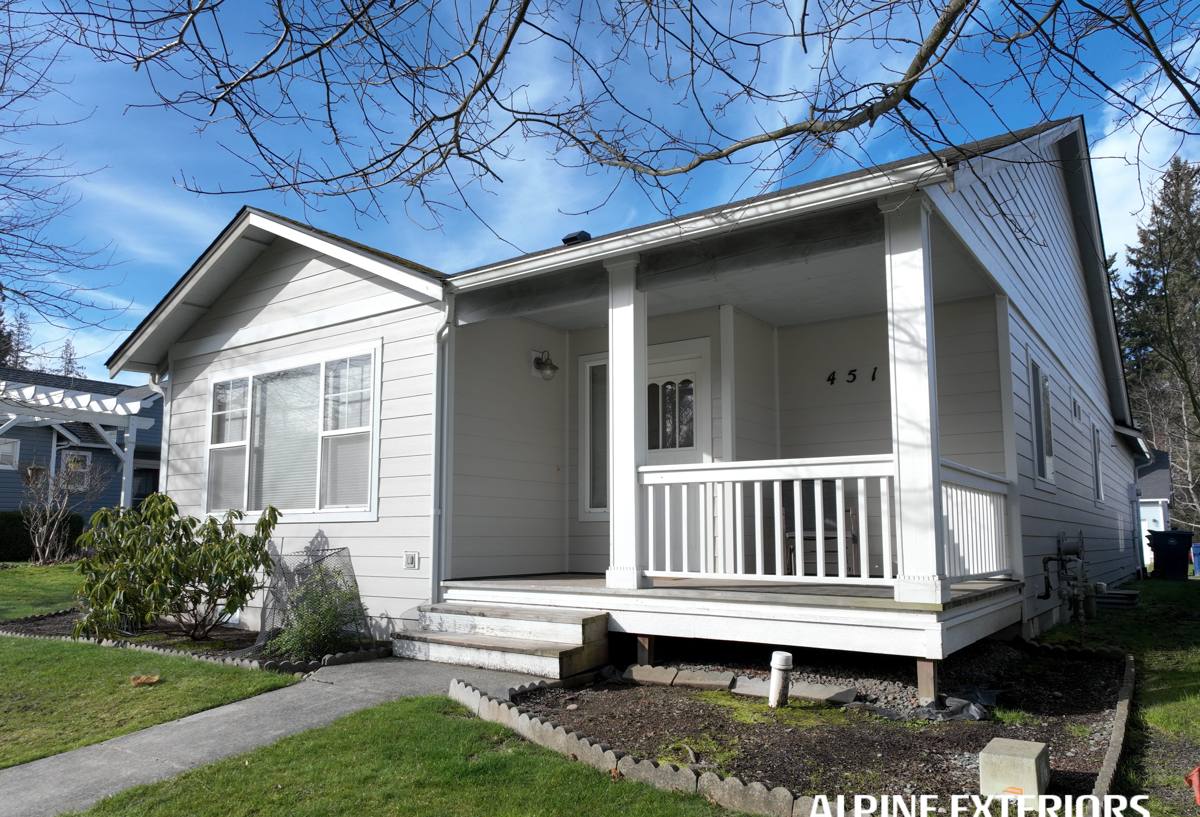
What Blaine's Climate Actually Does to a Wall System
Salt Air and Metal Fasteners
Salt in the air accelerates corrosion on anything metal that isn't rated for it — nail heads, flashing, trim screws. Over years, corroded fasteners can loosen, streak, or fail, which is one reason fastener choice and flashing detail matter more here than in a landlocked neighborhood.
Driving Rain and Water Intrusion
Wind off the water doesn't just fall on siding, it pushes into it. Butt joints, corners, and penetrations (hose bibs, vents, light fixtures) are where water finds a way in if they weren't sealed and flashed correctly the first time. Once moisture gets behind the siding, it's the sheathing and framing that pay the price, not just the surface material.
Moss, Algae, and Prolonged Dampness
Whatcom County's wet season runs long, and shaded or north-facing walls in Blaine can stay damp for extended stretches. That's an ideal environment for moss and algae to take hold on any surface that holds moisture at the surface, which is exactly the failure mode that trips up less moisture-resistant siding products.
Why Fiber Cement Fits This Environment
Fiber cement siding is cement, sand, and cellulose fiber formed under pressure. It doesn't rot, it isn't a food source for insects, and it doesn't swell and contract with moisture the way wood-based products do. For a home a short distance from saltwater with a long wet season, that combination matters more than curb appeal alone. We install James Hardie fiber cement exclusively — not because it's the only fiber cement product on the market, but because Hardie's climate-engineered HZ product lines, factory-applied ColorPlus finish, and long, transferable warranty are built for exactly the conditions Blaine deals with every year.
ColorPlus finish matters here specifically: it's baked on at the factory rather than field-applied, which gives it better adhesion and fade resistance than a job-site paint job exposed to salt air before it's even fully cured. That's a real advantage in a coastal microclimate, not a marketing detail.
How Fiber Cement Compares to Other Options Homeowners Consider
Every siding material has trade-offs. Here's an honest look at how the common options perform in a coastal, moss-prone climate like Blaine's:
| Material | Moisture & Salt Air Resistance | Moss/Algae Resistance | Maintenance Needed | Relative Cost |
|---|---|---|---|---|
| Vinyl | Doesn't rot, but can warp, crack, or fade under sun and temperature swings | Can trap moisture behind panels if not vented properly | Low, but hard to repair invisibly | Lower |
| Cedar / Primed Wood | Absorbs moisture; needs consistent sealing to resist salt air and rain | Prone to moss and algae growth without regular treatment | High — recoating and inspection every few years | Higher (material and upkeep) |
| LP SmartSide (engineered wood) | Treated to resist moisture, but still wood-based and edge-sensitive | Moderate; edges and cut ends need diligent sealing | Moderate — caulk and touch-up over time | Mid-range |
| Fiber Cement (James Hardie) | Non-combustible, dimensionally stable, doesn't absorb moisture like wood | Factory finish resists surface buildup better than raw or field-painted surfaces | Low — periodic cleaning, no recoating cycle | Mid to higher upfront |
We don't install vinyl, LP SmartSide, primed wood, or cedar on the homes we work on, and this table is why: in a climate that punishes moisture-sensitive materials and demands consistent long-term performance, fiber cement's stability and finish durability are worth the upfront difference.
What a Correct Fiber Cement Installation Involves
Fiber cement performs exactly as well as its installation. The material itself is durable, but a poor install can undercut every advantage it offers. On a Blaine home, that means paying close attention to:
- Proper water-resistive barrier and rain screen detailing behind the siding, not just a house wrap stapled on and covered
- Correct fastener spacing, type, and placement per Hardie's installation instructions — this affects both wind resistance and warranty coverage
- Flashing at every horizontal joint, window head, and penetration, sloped to shed water outward rather than trap it
- Proper clearance between siding and grade, decks, and roof lines so moisture and debris don't wick or collect against the bottom edge
- Factory-cut and factory-primed edges wherever possible, with field cuts sealed per manufacturer spec
- Caulking only where Hardie's guidelines call for it — over-caulking can trap moisture instead of shedding it
Skipping any one of these doesn't usually show up in year one. It shows up in year five or ten, as staining, soft spots, or premature finish failure — right when it's expensive and disruptive to fix.
Our Process for Blaine Homes
Assessment
We start by looking at the whole wall system, not just the visible siding — checking for existing moisture damage, evaluating current flashing and trim condition, and noting which elevations take the most weather exposure given the home's orientation and surroundings.
Product and Line Selection
We help you choose the right Hardie product line and profile for the home's style and exposure, and walk through ColorPlus color options that hold up under coastal sun and salt air.
Tear-Off and Prep
Old siding comes off down to the sheathing so we can inspect and address anything hidden underneath before new material goes on — this is where water intrusion problems, if any exist, actually get caught and fixed.
Weather Barrier and Installation
We install the water-resistive barrier, flashing, and rain screen detailing to spec, then install the Hardie siding following manufacturer fastening and clearance requirements throughout.
Final Detailing and Walkthrough
Trim, caulking, and touch-up happen last, followed by a walkthrough so you understand what was done and what warranty coverage applies.
Why It Matters That Your Crew Already Works in Blaine
Installation instructions are the same everywhere, but judgment calls on the ground aren't. A crew that regularly works Blaine and the surrounding Whatcom County coastline already has a feel for which elevations of a given home layout take the worst weather, how much rain screen ventilation a shaded, moss-prone wall actually needs, and how salt air affects fastener and trim choices over time. That local pattern recognition doesn't replace following the manufacturer's spec — it's what makes sure the spec gets applied correctly to the parts of the job that require judgment, like flashing transitions and detailing around penetrations.
Signs Your Current Siding May Already Be Struggling
If you're not sure whether it's time to look at replacement, a few warning signs are worth a closer inspection:
- Persistent moss or algae staining that comes back shortly after cleaning
- Soft spots, bubbling, or visible warping, especially on north-facing or shaded walls
- Peeling or chalking paint that keeps returning despite repainting
- Rust streaks running from fastener heads or trim
- Gaps opening up at butt joints, corners, or trim where caulking has failed
- A musty smell or visible staining on interior walls that share an exterior wall with problem siding
Catching these early usually means a smaller, less expensive fix. Waiting usually means sheathing and framing repairs on top of the siding work itself.
Maintenance Once Your New Siding Is Installed
Fiber cement is low-maintenance, not no-maintenance. In Blaine's climate, that means an annual rinse to keep salt residue and organic buildup from settling in, a periodic look at caulking and trim for any gaps, and prompt attention if you notice staining that doesn't come off with a normal wash — that's usually a sign of a moisture issue worth checking rather than a cosmetic one to ignore.
If you're weighing your options for a Blaine home, we're happy to walk the property with you, point out what we see, and give you a straightforward, no-pressure estimate — use the form below to get started.