 Bellingham Siding
 Why Siding Replacement in Birchwood Is a Different Job Than Siding Replacement Anywhere Else
Every siding job in Whatcom County has to deal with rain. Birchwood has to deal with rain plus something most inland neighborhoods don't: a steady dose of salt-tinged marine air rolling in off Bellingham Bay, mixed with the shade and moisture that keep moss and mildew going nearly year-round. That combination is hard on siding in ways that aren't always obvious from the curb. A wall can look fine from twenty feet away and still be losing the fight underneath, one rainy month at a time.
We treat a Birchwood siding replacement as a full building-envelope job, not a cosmetic swap. That means paying as much attention to what goes behind the siding — the water-resistive barrier, the flashing, the drainage gap — as to the material itself. Get the layers behind the boards wrong and even the best siding on the market will fail early. Get them right and you buy the house decades of protection.
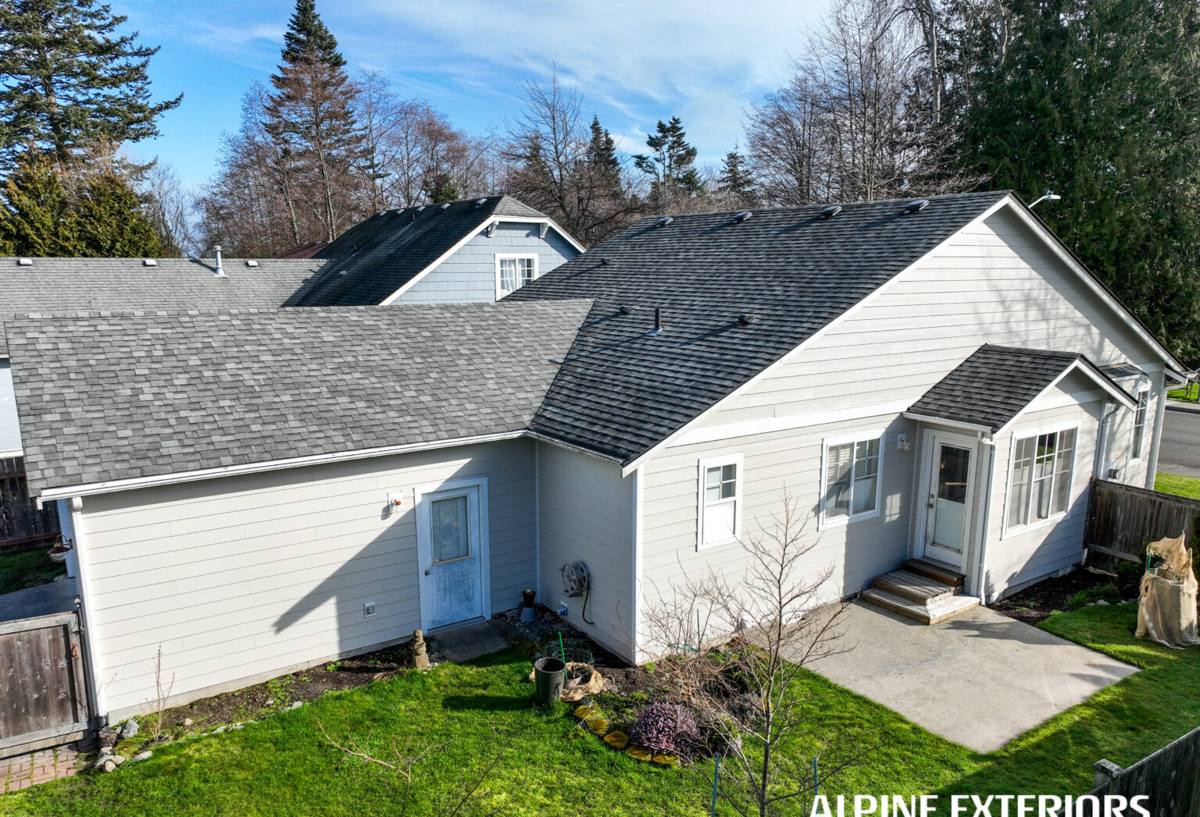
What Salt Air, Driving Rain, and Moss Season Actually Do to Siding
Salt Air and Corrosion
Homes closer to Bellingham Bay pick up airborne salt that settles on exterior surfaces and accelerates corrosion on fasteners, trim flashing, and any exposed metal. Over years, that corrosion can compromise the very hardware holding siding in place — a slow failure that's invisible until a board comes loose or a fastener head rusts through.
Wind-Driven Rain
Whatcom County storms don't just drop rain straight down — wind pushes it sideways, forcing water into laps, seams, and butt joints that a calm-weather installation might get away with ignoring. Siding that isn't lapped, caulked, and flashed correctly for wind-driven rain will let water track behind the panels long before any rot is visible on the surface.
Moss, Mildew, and Prolonged Dampness
Shaded north- and west-facing walls in Birchwood can stay damp for days after a storm passes. That extended moisture window is exactly what moss and mildew need to take hold. On wood-based sidings, sustained dampness also means sustained risk of swelling, cupping, and eventual rot — even when the surface coating still looks intact.
Signs a Birchwood Home Needs Siding Replacement, Not Another Repair
- Soft or spongy spots when you press on the siding, especially near the bottom courses and around window trim
- Paint that keeps failing within a year or two of repainting, even with quality paint
- Visible gaps, warping, or boards pulling away from the wall
- Persistent moss or black streaking that returns within weeks of cleaning
- Rising energy bills alongside noticeably drafty rooms
- Bubbling, cracking, or delamination on the siding face itself
- Interior signs — musty smells, peeling paint, or discoloration on walls that back up to exterior siding
A few of these on their own might mean a repair will hold you over. Several together, especially on a home that's twenty-plus years old, usually means the siding system has reached the end of its useful life and a full replacement is the more honest recommendation.
Why We Install Only James Hardie Fiber Cement
We standardized on James Hardie siding for every home we work on, including in Birchwood, because it's built for exactly the conditions this neighborhood deals with. It's non-combustible, dimensionally stable in wet-dry cycling, and doesn't feed moss and mildew the way wood-based products can. James Hardie's HZ5 and HZ10 product lines are engineered specifically for climate zones like ours — freeze-thaw cycling, sustained moisture, and coastal exposure — and the factory-applied ColorPlus finish resists fading and chipping far better than field-applied paint, which matters when you're fighting salt air and UV together.
We don't install vinyl, LP SmartSide, primed wood, or cedar. That's a deliberate professional standard, not a knock on every homeowner who has one of those products already on their home. Vinyl can warp and gap in temperature swings and offers limited real protection against wind-driven rain intrusion at the seams. Wood-based and engineered wood sidings depend heavily on an intact factory or field coating to keep moisture out — once that coating is compromised, the substrate underneath is vulnerable in a way fiber cement simply isn't. We'd rather put one product on every roof we work under and back it fully than install several products with different long-term risk profiles.
Material Comparison for Whatcom County Conditions
| Material | Moisture Resistance | Moss/Mildew Resistance | Coastal Durability | Typical Finish Life |
|---|---|---|---|---|
| James Hardie Fiber Cement | High — non-combustible, dimensionally stable | High — doesn't feed organic growth | Strong — engineered HZ lines | 15+ years on ColorPlus finish |
| Vinyl Siding | Moderate — seams vulnerable to wind-driven rain | Moderate | Moderate — can warp with heat/cold cycling | Color fades over time, not repaintable easily |
| LP SmartSide / Engineered Wood | Moderate — depends on intact coating | Moderate — wood-based substrate | Moderate — edge sealing critical | Repaint typically needed within 7-10 years |
| Cedar / Primed Spruce | Lower — natural wood, absorbs moisture | Lower — organic material | Lower without diligent maintenance | Repaint/reseal every 3-5 years |
What a Correct Siding Replacement Involves
The siding boards are the visible 20% of the job. The other 80% is what's underneath, and it's where most siding failures actually start.
Tear-Off and Sheathing Inspection
We remove the old siding down to the sheathing and inspect for rot, soft spots, or hidden water damage before anything new goes on. Covering up compromised sheathing with new siding just hides a problem that will resurface later — often as a much bigger repair.
Water-Resistive Barrier and Flashing
A properly lapped weather-resistive barrier, correctly integrated window and door flashing, and attention to every penetration — vents, hose bibs, light fixtures — are what actually keep wind-driven rain out of the wall assembly. This is the layer that matters most in a neighborhood dealing with sideways rain off the bay.
Rainscreen Drainage Gap
Especially on shaded or damp-prone walls, a drainage gap between the barrier and the siding lets any moisture that does get past the surface drain and dry out instead of sitting against the wall. That airflow is one of the biggest factors in resisting the sustained dampness that drives moss growth.
Fastening and Clearances
James Hardie siding has specific fastening patterns and minimum ground and roofline clearances that are part of keeping the manufacturer's warranty intact. Skipping these details is one of the most common ways a correctly manufactured product ends up with a shortened real-world lifespan.
Trim, Caulking, and Finish Details
Correct trim work and caulking at joints and transitions — not over-caulking to mask a bad fit — is what keeps water from tracking behind the siding at the details that get overlooked on a rushed job.
Our Process, Start to Finish
- Free on-site assessment. We walk the exterior, check for the signs listed above, and look at sheathing condition where accessible.
- Written estimate. A clear scope and price, no pressure to sign on the spot.
- Material selection. We help you choose the right James Hardie plank profile, texture, and ColorPlus color for the home.
- Tear-off and inspection. Old siding comes off, sheathing gets checked and repaired as needed before anything new goes up.
- Barrier, flashing, and drainage gap installation. The unseen work that determines how the job performs in year ten, not just year one.
- Siding installation to manufacturer spec. Correct fastening, clearances, and joint treatment throughout.
- Final walkthrough. We go over the finished work with you before calling the job complete.
What Drives the Cost of a Birchwood Siding Replacement
| Factor | Why It Matters |
|---|---|
| Home size and wall complexity | More corners, gables, and dormers mean more cutting, flashing, and labor |
| Sheathing condition | Rot or water damage found during tear-off adds repair scope before new siding can go on |
| Siding profile and texture | Lap width, texture, and trim style affect material cost and install time |
| Accessibility | Multi-story sections, tight setbacks, or steep grades affect equipment and labor time |
| Trim and detail work | Window and door surrounds, corner treatments, and fascia detailing add scope |
We give a written estimate after seeing the home, not a phone-quoted number, because these factors vary enough house to house that a generic price range isn't a responsible way to quote a real job.
Why Hiring a Crew That Already Works in Birchwood Matters
Siding installation isn't one-size-fits-all across Whatcom County. A crew that regularly works Bellingham's neighborhoods, including Birchwood, has already seen how salt air affects fastener choice, how shaded lots hold moisture longer, and where wind-driven rain tends to find weak points on this type of housing stock. That local pattern recognition shows up in decisions during the job — where to add extra flashing attention, which walls need the most careful drainage detailing — that a crew unfamiliar with the area might not think to prioritize.
It also matters for accountability. A local company is still around next year and the year after if a question comes up, and is easy to reach if you ever need to talk through a warranty question or a maintenance question down the road.
Caring for Your New Siding After Installation
- Rinse the siding gently once or twice a year to keep salt residue and organic buildup from accumulating, especially on shaded or bay-facing walls
- Keep gutters clear so water isn't overflowing down the siding face during heavy rain
- Trim back vegetation and tree cover that keeps a wall section shaded and damp longer than the rest of the house
- Have caulking and trim joints checked periodically, since these are the first place a small gap can let water in
- Address any impact damage promptly rather than letting a small chip sit exposed through a wet season
James Hardie's ColorPlus finish is designed to need far less upkeep than a painted wood or engineered wood surface, but "low maintenance" doesn't mean "no maintenance" — a little attention twice a year keeps the whole system performing the way it's designed to for the long run.
If your Birchwood home is showing any of the signs above, or you're just planning ahead for a siding replacement, we're glad to come take a look. The estimate is free, there's no pressure, and you'll walk away with a clear, honest picture of what your home actually needs.