 Bellingham Siding
 Siding Installation Built for Birchwood's Climate
Birchwood homes sit inside one of the more demanding exterior environments in Whatcom County, even if that isn't obvious on a calm, dry afternoon. Salt-tinged marine air drifts in steadily and works on exposed fasteners, trim, and unprotected surfaces long before any damage is visible from the curb. Rain here doesn't fall straight down the way it does in a lot of the country — it gets driven sideways by wind, forced up under laps and into seams that a fair-weather installation wouldn't need to account for. And on shaded lots or north-facing walls, a long moss season settles in every fall and doesn't fully let go until well into spring. None of this means siding is a losing battle in Birchwood. It means the installation has to be done by people who are actually building for these specific conditions, not applying a generic approach borrowed from a drier, calmer climate.
This page is about one thing specifically: what a correct siding installation looks like for a Birchwood home, why the material and the details matter as much as each other, and how we run the job from first walk-through to final cleanup.
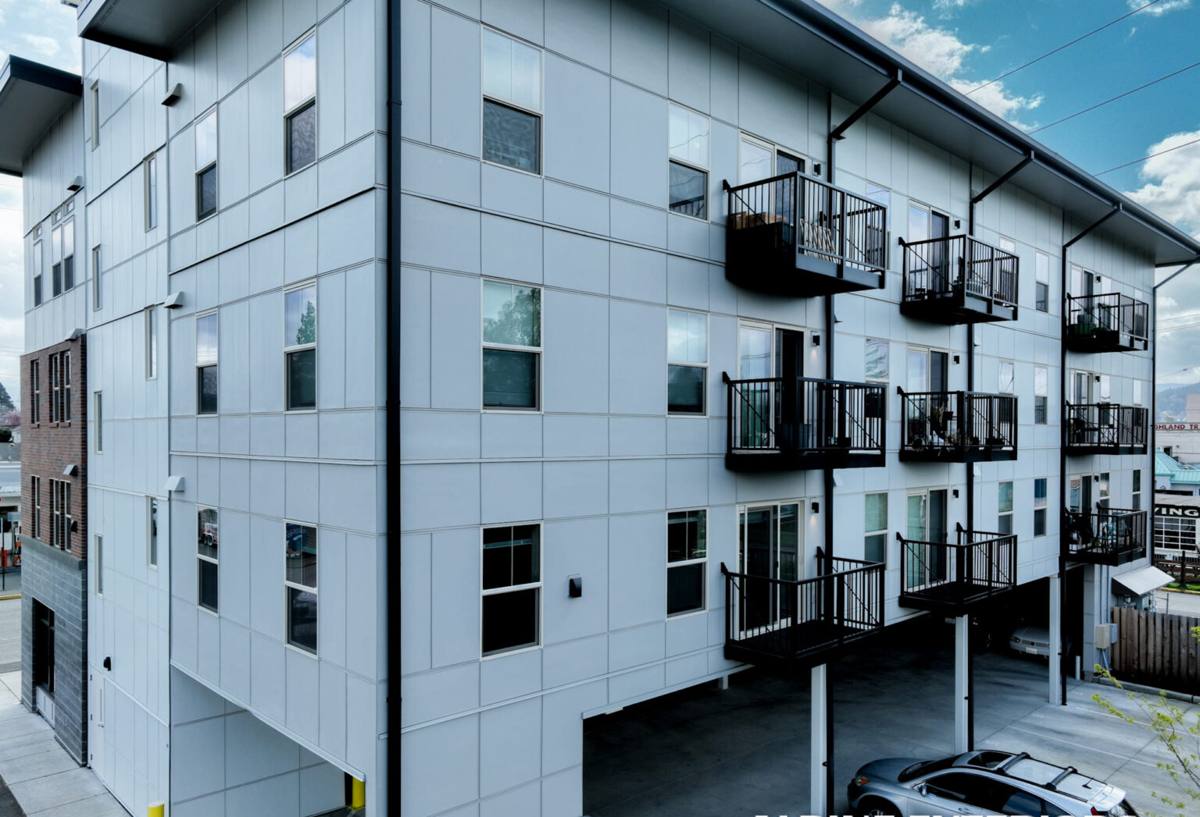
Why James Hardie Fiber Cement Is the System We Install
We install James Hardie fiber cement siding exclusively. We don't install vinyl, LP SmartSide, Cemplank, Allura, primed spruce, or cedar. That's a professional standard, not a limitation, and it comes directly from what we've watched happen to different siding materials over years of working exteriors in this exact climate.
The materials that tend to struggle in a salt-air, high-rain, long-moss environment share a common weakness: they either absorb moisture directly, rely on a coating or finish to keep water out indefinitely, or expand and contract enough with humidity and temperature swings that seams and joints gradually work loose. James Hardie fiber cement doesn't share that weakness. It's non-combustible, it doesn't swell or feed rot the way wood-based siding can, and its ColorPlus factory finish is baked on under controlled conditions and warrantied against the fading and chalking that constant dampness and UV exposure cause over time. Hardie also builds region-specific HZ formulations rather than one universal board, which is relevant in a climate that sees this much sustained moisture. Combined with a strong transferable warranty, it's the system we're willing to put our name behind on a Birchwood home.
Cheaper materials aren't dishonest products, and they have legitimate uses in the right climate and budget. But in this specific environment, the maintenance burden and moisture risk on those alternatives tends to land back on the homeowner within a decade or so — repainting, caulking, or panel replacement that a correctly installed fiber cement system simply doesn't demand as often.
What a Correct Siding Installation Actually Involves
Siding performs the way it's engineered to only when the installation underneath it is done right. The board itself is one part of a larger system, and skipping or rushing any layer of that system undercuts the material's real-world performance no matter how good the product is.
Tear-Off and Substrate Inspection
Removing the old siding down to the sheathing is the only way to find hidden moisture damage, soft spots, or rot that's been developing quietly underneath — problems that are often invisible until the old siding comes off. Any damaged sheathing or framing gets addressed before anything new goes on, rather than sealed over and left to keep deteriorating behind a fresh surface.
Weather-Resistive Barrier
A properly lapped and sealed house wrap underneath the siding is the building's real secondary defense against water. In a climate where wind-driven rain routinely gets pushed into laps and seams, gaps or shortcuts in this layer are exactly what allow moisture to reach the sheathing over time, long before any problem shows up on the visible surface.
Fastening and Clearance
James Hardie has specific fastener type and spacing requirements, and following them is what keeps boards secure under wind load and prevents the kind of movement that eventually cracks caulk joints and opens seams. Clearance above grade, roofing, and hardscape matters just as much — siding installed too close to the ground or a walkway stays wet longer and starts to show problems well ahead of schedule.
Flashing at Windows, Doors, and Penetrations
Most siding failures we see don't start in the open field of the wall — they start at a window, a door, or a penetration where flashing wasn't lapped correctly with the weather-resistive barrier underneath. Every opening needs to be flashed so water is directed out and away from the wall assembly, not caulked over as an afterthought once the siding is already up.
Trim, Caulking, and Finish Details
Corner boards, trim, and caulk joints are often the first thing people notice, but they're also functional, not just cosmetic. Correctly sized gaps, the right caulk in the right joints, and trim that's flashed rather than simply butted against the siding all matter more here than they would in a calmer, drier climate, because wind-driven rain finds every detail that wasn't done correctly the first time.
Comparing Siding Materials for a Birchwood Home
| Material | Moisture Behavior Here | Typical Long-Term Maintenance |
|---|---|---|
| James Hardie fiber cement | Non-combustible, doesn't absorb moisture or feed rot the way wood-based products can | Low — factory finish holds up well against sustained damp and salt exposure |
| Vinyl | Doesn't rot, but can warp or crack under temperature swings and sustained wind-driven rain | Low upfront, but full panel replacement rather than repair when it fails |
| LP SmartSide / engineered wood | Wood-based core is more moisture-sensitive at cut edges and seams than fiber cement | Moderate — edge sealing and coating upkeep matter more in sustained damp conditions |
| Primed spruce or cedar | Natural wood absorbs moisture readily and is a preferred surface for moss establishment | Highest — regular repainting, caulking, and moss treatment needed to hold up |
This isn't a claim that every alternative material is a bad product — it's why our own standard, for the climate we install in every day, is fiber cement done correctly rather than a material that trades a lower sticker price for a heavier maintenance load down the road.
Cost Factors Worth Understanding
Two siding bids for the same Birchwood home can land thousands of dollars apart, and the gap is almost always real scope, not one contractor simply padding a number. Knowing what actually drives cost makes it much easier to compare estimates that look nothing alike on paper.
| Factor | What It Affects |
|---|---|
| Full tear-off vs. install over existing siding | Whether hidden sheathing damage gets found and repaired before new siding goes up |
| Weather-resistive barrier quality and installation | How well the wall resists wind-driven rain reaching the sheathing over time |
| Board profile and finish selection | Upfront material cost and how the finished home reads from the street |
| Flashing scope at windows, doors, and penetrations | How thoroughly the wall's most leak-prone points are actually protected |
| Trim and accessory package | Corner detailing, caulking approach, and long-term finish maintenance |
| Home size, elevation changes, and access | Labor time, staging needs, and safety requirements on site |
A written estimate that breaks these items out individually tells you far more than a single lump-sum number. It's worth asking any contractor to walk you through what's actually included, line by line, before comparing two prices side by side.
How Our Installation Process Works
- In-person walk-through: We look at the existing siding, trim, and substrate condition ourselves rather than estimating from photos, and document what we actually find.
- Written estimate: You get a clear, itemized bid covering tear-off, weather-resistive barrier, flashing, board selection, trim, and cleanup — not one vague line item.
- Scheduling around weather: We build reasonable flexibility into the timeline, since wet-season delays are a normal part of exterior work in this region, not an excuse we reach for after the fact.
- Tear-off and substrate repair: Old siding comes off completely, and any sheathing or framing damage we find gets addressed before anything new goes up.
- Barrier, flashing, and siding installation: Each layer goes on to manufacturer specification, with extra attention at every window, door, and penetration.
- Final walk-through and cleanup: We review the finished exterior with you in person and do a full site cleanup before we consider the job done.
Why Hiring a Crew That Already Works in Birchwood Matters
A crew that regularly installs siding in and around Birchwood has already seen how salt-tinged air corrodes underspecified fasteners, how wind-driven rain finds its way through a poorly lapped weather barrier, and which walls hold moss longest through the wet months based on shade and orientation. That's practical, earned knowledge that shows up in dozens of small on-site decisions over the course of a job — decisions a crew unfamiliar with this specific part of the county might not think to make at all.
It also matters after the job is finished. A workmanship warranty is only as good as the company standing behind it years later, and a contractor with an established, ongoing presence in the area is one you can actually reach if a question comes up down the road, not a name that's moved on to a different region.
A Practical Checklist Before You Choose a Siding Installer
- Do they perform a full tear-off with substrate inspection, not an install over existing siding?
- Does the estimate specify weather-resistive barrier type and fastening approach, not just "new siding"?
- Is flashing work at every window, door, and penetration explicitly written into the bid?
- Do they carry current WA contractor licensing, liability insurance, and workers' compensation?
- Can they point to recent, real installation work in or near Birchwood?
- Does the bid clearly separate the manufacturer's material warranty from the contractor's own workmanship warranty?
Signs Your Birchwood Home May Need New Siding
Siding problems in this climate rarely show up all at once. There are usually warning signs first, often well before any damage reaches the inside of the house, and catching them early is frequently the difference between a repair and a full replacement.
- Visible moss or green staining on shaded or north-facing walls
- Paint or finish that keeps failing no matter how often it's redone
- Soft spots or slight give when pressing near a window or door trim
- Siding that's cupping, warping, or separating at seams
- Rust streaks below fasteners or hardware
- Caulk joints that are cracked, gapped, or missing at corners and trim
- A noticeable rise in heating costs, which can point to moisture-compromised insulation behind the wall
Any one of these on its own doesn't necessarily mean a full replacement is needed. But they're worth having a professional actually look at rather than assuming they'll resolve on their own, since moisture-related siding damage in this climate tends to compound rather than stay static.
If your Birchwood home needs new siding, or you'd just like an honest second opinion on what's happening behind an aging wall, we're glad to take a look. Use the form below to request a free, no-pressure estimate.