 Bellingham Siding
 Roof Replacement in Birchwood: Built for This Climate, Not a Generic One
Birchwood homes deal with the same core weather pattern that shapes exterior work across Bellingham and Whatcom County: salt-laden air, driving rain that comes in at an angle more often than it falls straight down, and a moss season that can stretch across most of the year. None of that means every roof in the neighborhood is in trouble. It does mean a roof here ages differently than one in a drier, calmer climate, and a replacement done to a generic national standard tends to underperform once it's actually exposed to a full Whatcom County winter.
This page covers what a correct roof replacement looks like for a Birchwood home specifically — what the climate demands, how the work should be sequenced, and what to expect from a crew that already understands the conditions rather than one learning them on your roof.
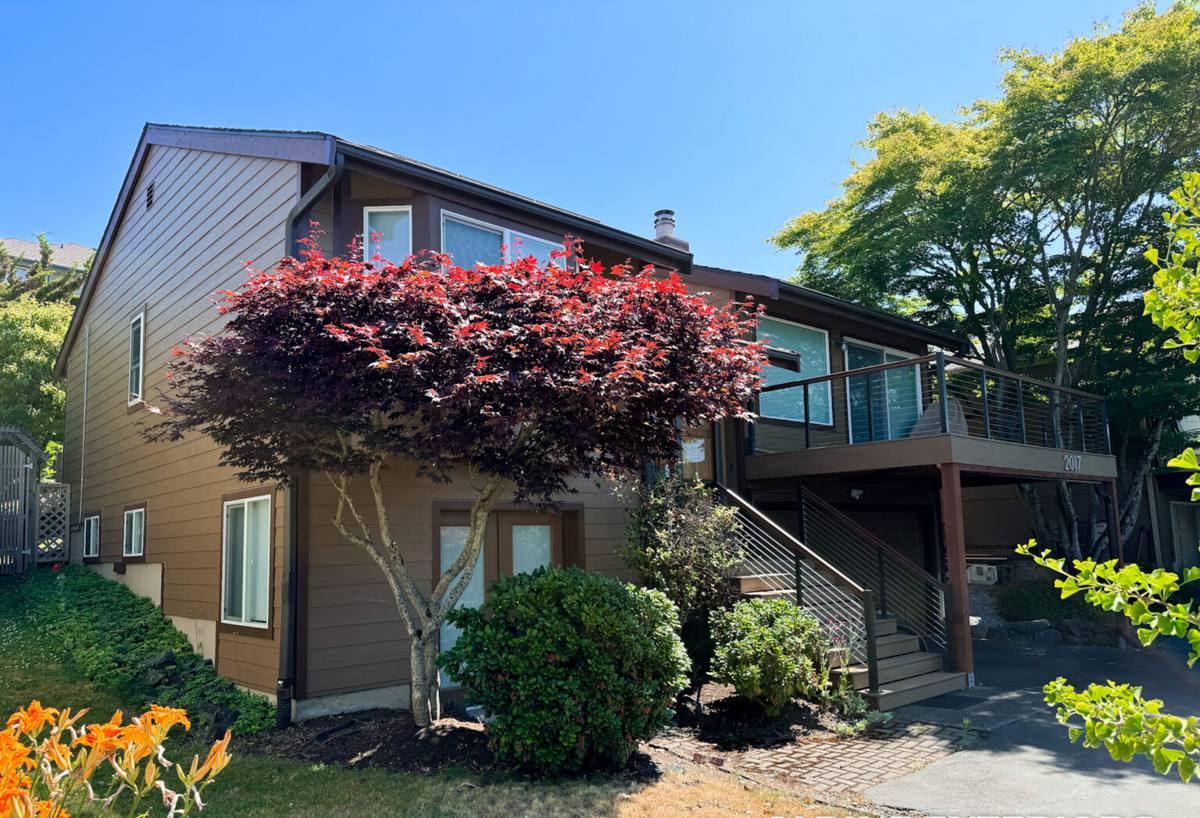
What Salt Air, Driving Rain, and Moss Do to a Roof Here
Salt air doesn't just make things feel damp near the water — it accelerates corrosion on exposed fasteners, flashing, and any hardware left unprotected. A fastener or flashing detail that would last decades further inland can start losing integrity years sooner in a coastal-influenced climate like this one, which is part of why fastener selection and flashing material matter more here than in a lot of other markets.
Driving rain is the second factor, and it's arguably the bigger one. Wind-pushed rain doesn't run straight down a roof plane the way rain does in a calm, vertical shower — it gets forced sideways and upward at laps, valleys, and penetration points that a fair-weather installation wouldn't need to account for as carefully. Underlayment coverage, flashing laps, and fastening patterns that would be adequate in a drier region start to matter a great deal more when wind is actively driving water into every seam that wasn't detailed correctly.
Moss rounds out the picture, and it's the one most homeowners notice first because it's visible from the street. Shaded slopes, north-facing exposures, and anything under tree cover stay damp for extended stretches through fall, winter, and much of spring — exactly the conditions moss needs to establish and spread. Moss isn't just a cosmetic problem: its rhizoids work into the granule layer and lift shingle edges as the colony grows, and it holds moisture directly against the roofing surface for months at a time. On a roof that's already aging, sustained moss coverage can shave years off the remaining service life.
Signs a Birchwood Roof Is Ready for Replacement
Repair makes sense for isolated, recent damage. Replacement becomes the right call once the roof is showing several of these signs together, or the roof is at or past its expected service life for the material.
- Shingles curling at the edges or cupping in the middle across multiple slopes
- Bald spots where granules have worn away, exposing the asphalt mat underneath
- Granules collecting heavily in gutters or at the base of downspouts
- Cracked, split, or missing shingles beyond a single isolated area
- Heavy moss or dark algae streaking across large sections, not just one shaded corner
- Flashing around chimneys, vents, or skylights that's rusted, lifted, or repeatedly caulked over
- Sagging along the roofline or in valleys instead of a straight, even plane
- Daylight, water stains, or soft sheathing visible from inside the attic
- A history of repeat leak repairs in the same area of the roof
Any single item on this list, taken alone, might just mean a targeted repair is enough. Several of them together — especially on a roof already near the end of its expected lifespan — usually mean the roof is telling you the next leak is a matter of when, not if.
How Long Roofing Materials Actually Last in This Climate
Manufacturer lifespan ratings assume ideal installation in a moderate climate. Sustained coastal moisture, salt air, and moss pressure tend to shorten the practical end of those ranges for a Birchwood roof, particularly on shaded or north-facing slopes that don't get much drying time between storms.
| Roofing Material | Typical National Lifespan | Realistic Lifespan Locally |
|---|---|---|
| 3-tab asphalt shingles | 15-20 years | 12-18 years |
| Architectural (laminate) asphalt shingles | 25-30 years | 20-25 years |
| Wood shake | 25-30 years | 15-20 years with regular upkeep |
| Standing seam metal | 40-60 years | 35-50 years with correct fastener and flashing detailing |
| Composite/synthetic shingle | 30-50 years | 25-40 years |
These are general ranges, not guarantees. Ventilation, installation quality, sun exposure, and how consistently moss and debris get cleared off all shift a roof's actual lifespan up or down from these numbers — sometimes significantly.
What a Correct Roof Replacement Involves
Pulling off old shingles and nailing down new ones is the easy part to picture. What actually determines whether a Birchwood roof performs for its full expected life happens in the layers underneath, and in details most homeowners never see once the job is finished.
Tear-Off and Deck Inspection
A full tear-off exposes the roof deck, which is the only reliable way to find soft, delaminated, or rotted sheathing hiding under old shingles. Any deck repair needs to happen before new material goes down — covering over a compromised deck just hides the problem for a few more years instead of solving it.
Underlayment
In a climate with this much wind-driven rain, underlayment is a real second line of defense, not a formality. Synthetic underlayment with proper lap coverage, plus self-adhered ice-and-water membrane at eaves, valleys, and penetrations, gives the roof a backup barrier for the moments when wind pushes water past the primary roofing material.
Flashing
Flashing at chimneys, skylights, vents, walls, and valleys is where most roof leaks actually originate — not in the field of the shingles themselves. Correct flashing means new metal, proper laps, and step flashing integrated with the siding rather than caulk used as a substitute for a properly formed detail.
Ventilation
Many older Birchwood homes were built with less attic ventilation than current standards call for. Balanced intake and exhaust venting keeps moist air from condensing against the underside of the deck, which protects both the new roof and the framing below it. A replacement is the natural time to correct ventilation that was never adequate to begin with.
Fastening and Material Selection
Corrosion-resistant fasteners matter more here than in drier inland markets, given the salt air and sustained moisture. Nailing patterns, shingle exposure, and starter course installation all need to follow manufacturer specifications exactly — shortcuts at this stage are what cause premature wind or wear failures well before the material's rated lifespan.
Moss Prevention: What Actually Helps and What Doesn't
Moss is close to unavoidable long-term on a shaded Birchwood roof, but its impact on lifespan is very manageable with the right ongoing habits.
- Have moss physically and gently removed rather than left to spread — never pressure-washed, which strips granules and shortens shingle life
- Keep gutters and valleys clear of needle and leaf debris year-round, since trapped organic matter is what moss actually feeds on
- Trim back tree cover where practical to improve sun exposure and airflow across shaded slopes
- Ask about moss-resistant granule technology when selecting a new asphalt shingle product
- Address moss at the first sign of regrowth rather than waiting for a full recolonization
None of these steps eliminate moss permanently in this climate — spores are constantly present in the moist, shaded conditions common to Whatcom County. But consistent light maintenance does far more to protect a roof's lifespan than an occasional deep cleaning followed by years of neglect.
Repair or Replace: A Straight Answer
There's no single dollar figure or age that cleanly separates repair from replacement. It comes down to a handful of honest questions about the specific roof.
| Factor | Leans Toward Repair | Leans Toward Replacement |
|---|---|---|
| Age of roof | Well under expected lifespan for the material | At or past expected lifespan |
| Extent of damage | Isolated to one valley, boot, or section | Spread across multiple slopes |
| Deck condition | Sheathing solid, dry, and intact | Sheathing soft, delaminated, or rotted |
| Repair history | First or second repair on this roof | Recurring leaks or repeated patch work |
| Material availability | Existing shingle still available for matching | Discontinued profile or color |
| Long-term plans | Selling soon, tight budget | Staying long-term, want it handled once |
A roof that's eight years old with one damaged valley from storm debris is almost always a repair. A roof that's over twenty years old, carrying moss across multiple slopes, and on its third leak repair is a roof that's telling you plainly it's done.
How the Process Works, Start to Finish
- Inspection and honest assessment: We walk the roof and attic, document actual condition, and give a straight read on whether repair or replacement is the right call — not the more profitable one.
- Written estimate: A clear scope and price based on your roof's actual size, pitch, and condition, not a generic per-square guess.
- Material selection: We walk through the realistic tradeoffs between asphalt, metal, and composite options for your specific exposure and budget.
- Tear-off and deck repair: Full removal of old material, with any compromised decking replaced before anything new goes down.
- Underlayment and flashing: The layers that actually keep wind-driven rain out, installed to manufacturer spec rather than shortcut.
- Ventilation check: Intake and exhaust venting evaluated and corrected as part of the same job, not billed as a surprise add-on later.
- Final installation and cleanup: New roofing installed to spec, site cleaned of debris and nails, and a walkthrough so you know exactly what was done.
Why a Crew That Already Works Birchwood Matters
Roofing draws its share of storm-chasing crews that show up after a bad wind event and disappear once the season's business dries up. A roof replacement is a long-term investment, and it deserves a contractor who's still reachable in five or ten years if a warranty question or a flashing detail needs a second look. We work throughout Bellingham and Whatcom County, and the flashing, ventilation, and material decisions we make on a Birchwood roof reflect years of watching how roofs in this specific climate actually age — not a set of assumptions borrowed from a drier region.
We're also straightforward about what a roof does and doesn't need. We won't recommend a full replacement when a targeted repair will genuinely hold, and we won't quietly skip ventilation or flashing upgrades to shave a number off an estimate. That kind of honesty is what a local crew with a long-term reputation in this community has to protect.
If your Birchwood home's roof is showing its age or you just want an honest, no-pressure opinion on where it stands, we're glad to take a look. Reach out using the form below to schedule a free estimate.