 Bellingham Siding
 Fiber Cement Siding Built for Birchwood's Coastal Climate
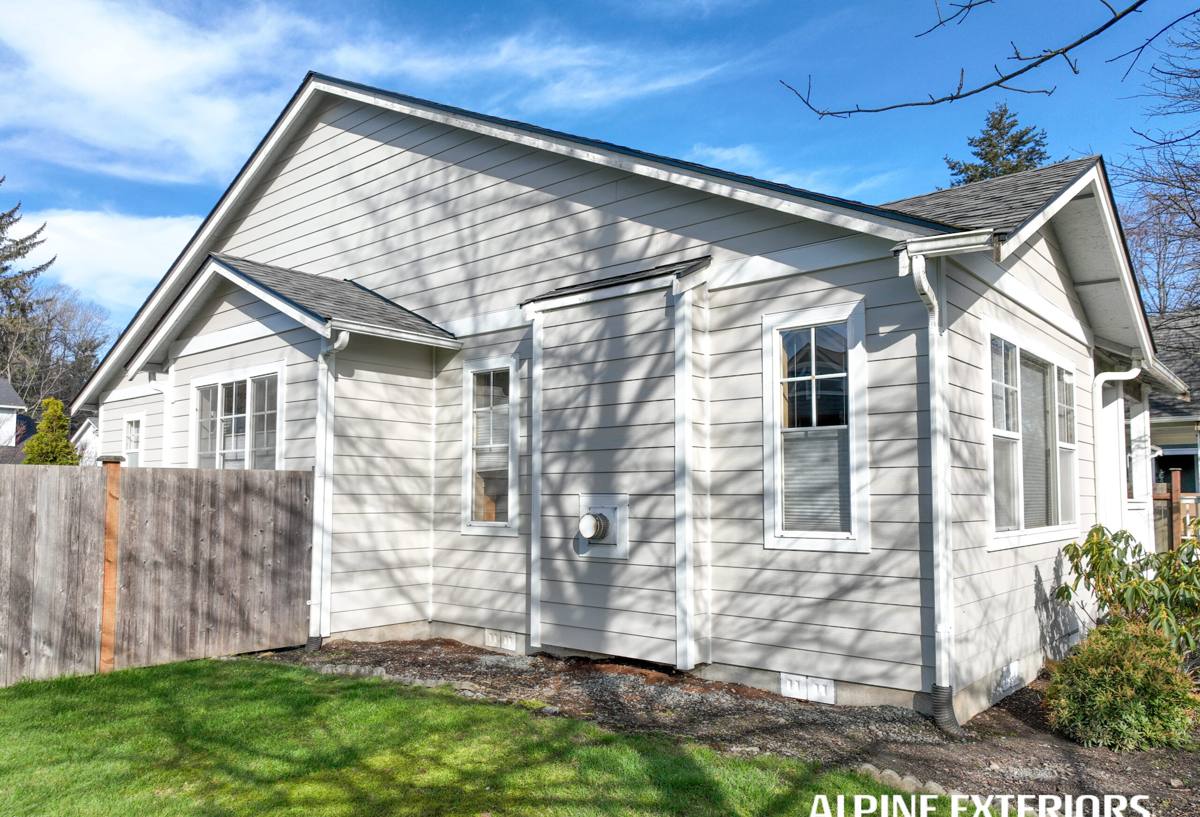
Birchwood is a residential neighborhood in Bellingham, and like the rest of Whatcom County it sits close enough to the water that salt air is a fact of life for anyone who owns a home here. Add in the Pacific Northwest's driving rain and a moss season that can stretch for most of the year, and you have a climate that is genuinely hard on exterior building materials. Siding here doesn't just need to look good — it needs to shed water, resist moisture intrusion, and hold its finish through months of grey, damp weather without curling, cracking, or feeding mold. That's the standard we hold every Birchwood project to, and it's why we install James Hardie fiber cement siding exclusively.
What Birchwood's Weather Actually Does to Siding
Salt Air and Coastal Moisture
Even a few miles inland from Bellingham Bay, homes pick up airborne salt that accelerates corrosion of fasteners, staples, and any metal trim that isn't rated for coastal exposure. Salt-laden moisture also gets into seams and laps in siding that isn't dimensionally stable, where it can sit and slowly break down the material from the inside.
Driving Rain and Wind-Driven Water
Bellingham doesn't get the volume of rain some other Western Washington cities do, but what falls is frequently wind-driven, and wind-driven rain behaves differently than a straight-down shower. It gets pushed sideways into laps, around window and door trim, and behind poorly flashed penetrations. A siding system with weak water management will let that moisture in eventually — the only question is how long it takes and how much damage happens before anyone notices.
The Long Moss and Mildew Season
Whatcom County's combination of shade, moisture, and mild temperatures gives moss and mildew a long growing season on north-facing walls, under eaves, and anywhere air doesn't circulate well. Siding materials that absorb moisture give moss something to root into and mildew something to feed on. Siding that resists moisture absorption in the first place is a much easier surface to keep clean.
Why We Install Only James Hardie Fiber Cement
We made a deliberate decision as a company to install James Hardie fiber cement siding and nothing else — not vinyl, not LP SmartSide, not primed wood, not other fiber cement brands. That's not a marketing position, it's a standard we hold because of what we've seen hold up in this climate and what we've seen fail. Fiber cement is a mix of cement, sand, and cellulose fiber, which makes it non-combustible and dimensionally stable in a way that wood-based and vinyl products simply aren't. It doesn't expand and contract with moisture the way engineered wood does, and it doesn't soften, warp, or become brittle in cold snaps the way vinyl can.
Engineered for This Region
James Hardie makes climate-specific product formulations, and the versions specified for the Pacific Northwest are engineered around exactly the conditions Birchwood deals with: sustained moisture, humidity, and freeze-thaw cycling. That regional engineering is part of why we don't substitute in a generic fiber cement product — the formulation matters as much as the material category.
A Factory-Applied Finish
James Hardie's ColorPlus finish is baked on at the factory under controlled conditions, rather than field-painted after installation. That matters in a place like Bellingham, where a field-applied paint job has to cure in whatever weather shows up that week. A factory finish is more consistent, resists fading and chipping better, and comes backed by the manufacturer rather than depending entirely on how the paint went on that day.
A Warranty That Actually Transfers
James Hardie backs its siding with a long-term, transferable limited warranty. That transferability matters more than people think — if you sell your home, the siding warranty goes with it, which is a real selling point for the next buyer and a real protection for you in the meantime.
What a Correct Fiber Cement Installation Involves
Fiber cement is only as good as the installation behind it. A product engineered for coastal Pacific Northwest conditions can still fail early if it's hung without the water management details that make it work.
Flashing and Water Management First
Every window, door, and roof-to-wall transition needs proper flashing before a single piece of siding goes up. Housewrap needs to be lapped correctly, seams need to be sealed, and any penetration — vents, hose bibs, light fixtures — needs to be flashed and sealed on its own. This is the layer that actually keeps water out; the siding is the second line of defense, not the first.
Fastening, Gapping, and Clearances
James Hardie specifies fastener type, spacing, and placement for a reason — get it wrong and you risk cracking, blow-off in wind, or moisture tracking in at the fastener holes. Panels need the manufacturer's specified gap at butt joints and clearance from decks, roofs, and grade so water has somewhere to go instead of wicking into the bottom edge of the board.
Caulking and Paint-Line Discipline
Not every seam should be caulked, and caulking the wrong ones can trap moisture instead of shedding it. Getting this right takes actual field experience with the product, not just a general siding background.
Our Process for Birchwood Siding Projects
- Inspection and assessment — we look at your current siding, sheathing, and any trouble spots such as moss buildup, soft spots, or failed caulking to understand what's actually driving the need for replacement.
- Product and color selection — we walk through James Hardie's plank, shingle, and panel profiles and ColorPlus color options so you land on something that fits the home and the neighborhood.
- Tear-off and inspection of sheathing — once the old siding is off, we check the sheathing and housewrap underneath for hidden moisture damage before anything new goes up.
- Water management and flashing — housewrap, flashing, and sealing get done to spec before the first piece of Hardie siding is installed.
- Installation to manufacturer spec — correct fastening, gapping, and clearances, following James Hardie's published installation guidelines rather than shortcuts.
- Final walkthrough and cleanup — we review the finished job with you in person and clear the site of debris and old material before we consider the job done.
Signs Your Birchwood Home's Siding Needs Attention
- Moss or dark streaking that keeps coming back within weeks of cleaning
- Soft, spongy spots when you press on the siding, especially near the bottom edges
- Paint that's peeling, bubbling, or chalking heavily rather than just fading evenly
- Visible warping, buckling, or gaps opening up at seams and corners
- Rising energy bills that suggest air and moisture are getting past the exterior wall
- Siding that's original to a home built decades ago and has never been replaced
What Drives the Cost of a Fiber Cement Siding Project
Every Birchwood home is different, so costs vary from project to project — but the same handful of factors drive most of that variation.
| Factor | Why It Matters |
|---|---|
| Home size and wall area | More square footage means more material and labor, the single biggest driver of total cost. |
| Condition of existing sheathing | Rot or moisture damage found during tear-off has to be repaired before new siding goes on. |
| Number of stories and access | Second-story and steep-lot homes take longer and require more scaffolding or lift equipment. |
| Trim, corners, and architectural detail | More windows, dormers, and trim lines mean more cutting, fitting, and flashing work. |
| Siding profile and finish chosen | Lap siding, shingle-style, and panel systems, plus color selection, carry different material costs. |
| Tear-off and disposal | Removing and hauling away old siding adds labor and dump fees on top of new installation. |
Why Hiring a Crew That Already Works Birchwood Matters
A siding crew that already works in and around Birchwood knows what this specific stretch of Bellingham throws at a house — how close a given block sits to salt air exposure, how much shade and moss pressure a north-facing wall is likely to see, and what wind-driven rain does to homes at this elevation and orientation. That's different knowledge than a crew that mostly works drier inland climates or handles a mix of siding brands and installation standards from job to job. When we're on a Birchwood project, we're applying the same James Hardie installation standards we use everywhere, but we're applying them with a working knowledge of exactly what this neighborhood's weather does to a house over the following ten, twenty, and thirty years, not just what it looks like on install day.
We're also familiar with Bellingham's permitting expectations and the kind of home construction common to this area, which keeps a project moving instead of stalling on avoidable paperwork or code surprises.
If your Birchwood home's siding is showing its age, or you're planning ahead rather than reacting to a problem, we'll come out, take an honest look, and give you a free, no-pressure estimate — no obligation, just a clear picture of what your home needs and what it would take to do it right.