 Bellingham Siding
 Building a Custom Deck for Birchwood's Climate
Birchwood sits within Bellingham, close enough to Bellingham Bay and the surrounding waterways that salt-tinged marine air is part of daily life for homes throughout the neighborhood, not just the ones with a direct water view. That air, combined with rain that regularly arrives sideways rather than straight down, puts real demands on any structure built to sit outside year-round with no roof overhead. A deck takes that exposure directly, day after day, in a way that few other parts of a home do.
A custom deck built correctly for Birchwood isn't primarily about layout and style, even though those matter to the homeowner living with it. It's about material selection, fastening, and drainage details engineered for salt-laden air and wind-driven rain, rather than a generic deck design dropped into a coastal Whatcom County lot and hoped to hold up. This page walks through what a Birchwood deck actually needs, what a correct build involves from the framing up, and how our process runs for a custom deck project in this specific part of the county.
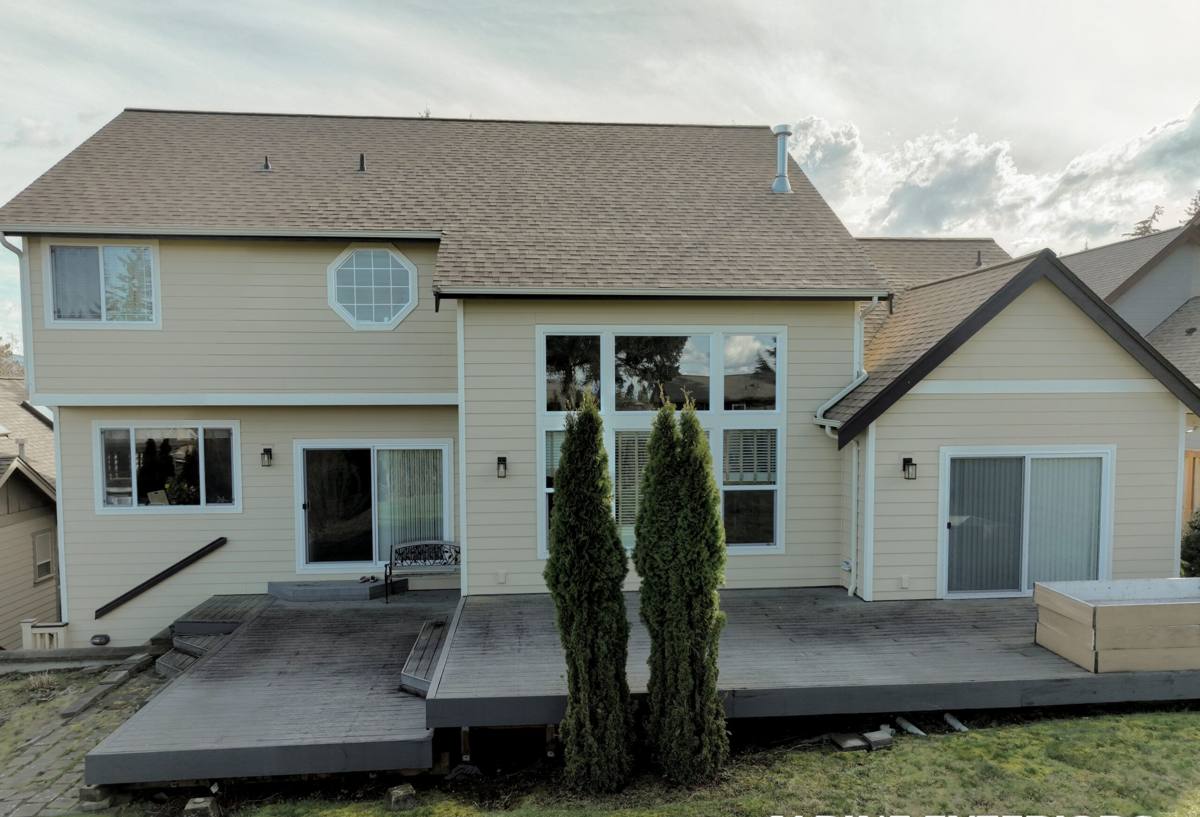
What Birchwood's Climate Does to a Deck
Salt Air and Corrosion
Homes throughout Birchwood sit close enough to the bay that salt-laden air reaches every exposed surface outdoors, including a deck's fasteners, brackets, post hardware, and railing connectors. Salt accelerates corrosion in unprotected or undersized metal, and a fastener that's begun corroding loses holding strength well before it looks visibly damaged. On a structure people walk and stand on daily, and one that has to carry snow load and foot traffic together during winter storms, that's a structural concern, not a cosmetic one.
Wind-Driven Rain
Storms in this part of Whatcom County rarely just fall straight down. Wind pushes rain sideways and drives it up under railings, into ledger connections where the deck meets the house, and between deck boards that aren't spaced correctly for drainage. A deck design that would shed water fine in calm, dry conditions can still trap moisture the moment wind is involved — and around here, wind is involved often enough that it has to be part of the design from the start, not an afterthought.
A Long Moss Season
Mild temperatures and near-constant moisture give moss and mildew a growing season that runs most of the year in Birchwood. Horizontal deck surfaces are usually among the first places it takes hold, since they hold standing water longer than a vertical wall and stay damp between rain events. Shaded decks, north-facing surfaces, and anything tucked under mature trees typically show it first, and any decking material with meaningful surface porosity gives moss something to grip onto.
Choosing the Right Decking Material for This Climate
Material choice matters more here than it would in a drier, more sheltered part of the state, because the performance gap between a well-suited product and a poorly-suited one shows up faster in this kind of sustained moisture and salt exposure. Most homeowners end up choosing between pressure-treated or cedar wood, capped composite, and cellular PVC.
Pressure-Treated Wood and Cedar
Traditional wood decking can look excellent when new and remains the lowest upfront cost option, but both pressure-treated lumber and cedar require regular sealing or staining to keep holding up against sustained moisture. Left unmaintained for even a season or two, wood is usually the first material in this climate to show moss growth, graying, and soft spots, and it's more vulnerable than the alternatives to fastener corrosion issues developing where metal meets damp wood over time.
Capped Composite
Capped composite boards have a plastic shell wrapped around a wood-fiber composite core, which resists moisture absorption, staining, and UV fade considerably better than uncapped composite or wood. In a salt-air, high-moisture environment like Birchwood's, that cap layer is doing real functional work — it's the difference between a board that needs occasional washing and one that needs ongoing sealing to keep performing.
Cellular PVC
PVC decking contains no wood fiber at all, so it doesn't absorb moisture the way even capped composite can at cut edges or around fastener holes. It typically costs more than composite and can flex more under concentrated point loads, but for a deck sitting close to persistent shade or heavy moisture exposure, some homeowners decide the added moisture resistance is worth the higher price.
| Material | Handling Salt Air & Moisture | Moss Resistance | Upkeep |
|---|---|---|---|
| Cellular PVC | Excellent — no wood fiber to absorb moisture | Strong, smooth non-porous surface | Occasional washing |
| Capped composite | Strong — cap layer resists moisture and staining | Good on most product lines | Occasional washing |
| Cedar | Moderate — needs regular sealing to hold up | Fair; requires treatment to slow growth | Annual sealing or staining |
| Pressure-treated pine | Fair — most vulnerable to sustained moisture over time | Weak without regular treatment | Regular sealing or staining |
The Structural Details That Actually Matter
The decking surface is what a homeowner sees and walks on, but the details underneath it are what determine whether a deck lasts fifteen years or forty. This is where Birchwood's climate really shapes how a deck should be built.
Footings Set Below Frost Depth
Footings that aren't set to proper depth can shift with seasonal freeze-thaw cycles and ground moisture changes, which shows up over time as a deck that feels slightly uneven or a railing post that's gone loose at the base. Getting footing depth and concrete placement right at the start avoids a problem that's expensive and disruptive to correct once the deck is finished and the yard is landscaped around it.
Ledger Attachment and Flashing
Where a deck attaches to the house is one of the most common sources of hidden rot on any deck, anywhere, and it's a detail that gets rushed on a surprising number of jobs. Proper ledger flashing keeps water from working its way behind the ledger board and into the house's rim joist and wall framing — a slow, hidden failure that can go unnoticed for years in a climate this wet, since the visible deck surface can look completely fine while the connection point behind it is quietly failing.
Joist Spacing, Blocking, and Board Gapping
Joist spacing needs to match the decking material's span rating, and blocking between joists adds rigidity that keeps the deck from feeling bouncy underfoot. Board gapping matters just as much: gaps that are too tight trap moisture and debris between boards, while properly spaced gaps let water and airflow move through the way the design intends, which directly slows moss growth on the surface.
Fastener and Hardware Grade
Structural hardware — joist hangers, post bases, ledger bolts, railing brackets — should be rated for the corrosion exposure this climate creates, not just whatever's cheapest at a standard hardware grade. This is one of the easiest places for a lower bid to cut corners invisibly, since the difference between a properly rated fastener and an undersized one isn't something a homeowner can see once the deck is built.
Railing Design and Code Compliance
Railings have to meet current Washington building code for height, baluster spacing, and load capacity, and in a windier coastal setting, the hardware securing posts to the frame needs to hold up under real lateral load over time, not just pass initial inspection. A railing that's technically to code but built with corner-cutting hardware can loosen years before the decking itself shows any wear.
Permits and Code Considerations
Most new decks and many significant deck replacements in Bellingham and Whatcom County require a building permit, particularly once the structure exceeds a certain height above grade or attaches directly to the house. Permitted work means the footings, framing, and ledger attachment get inspected before they're covered up by decking — which is exactly the point in the build where problems are cheapest and easiest to catch. Skipping permits to save time or money can create real complications later, from insurance and resale issues to needing to open up finished work if a problem surfaces down the road.
What to Confirm Before Work Begins
- Whether the project requires a permit based on height, size, and attachment to the house
- Setback requirements from property lines, which vary by lot and zoning
- Whether footing depth and placement meet current code for this soil and climate
- Whether ledger attachment method has been engineered for the specific rim joist and framing on your home
- Whether the contractor is pulling the permit themselves or expecting the homeowner to handle it
Cost Factors Worth Understanding
Two bids for what looks like the same deck can land thousands of dollars apart, and the gap is almost always real scope rather than one contractor simply padding the number. Understanding what drives the cost makes it far easier to compare estimates that look nothing alike on paper.
| Factor | What It Affects |
|---|---|
| Decking material | Wood, capped composite, and PVC carry meaningfully different material costs and long-term upkeep |
| Footing depth and count | Structural stability and long-term levelness, especially through freeze-thaw cycles |
| Ledger flashing detail | Whether the house connection point is protected from hidden rot over time |
| Fastener and hardware grade | Long-term corrosion resistance in salt-air conditions |
| Railing style and material | Appearance, code compliance, and wind-load performance |
| Deck height and access | Labor complexity, staging needs, and whether stairs or landings are required |
| Permit and engineering needs | Whether inspections and engineered details are required before construction proceeds |
A written estimate that breaks these components out individually tells you far more than a single lump-sum number. It's worth asking any contractor to walk through exactly what's included, line by line, before comparing two prices side by side.
How Our Process Works
We keep the process straightforward because a project on your home deserves clear communication at every stage, not surprises once the work is underway.
- In-person site visit: We walk the site ourselves, assess grade, drainage, sun and wind exposure, and how the space connects to the house, rather than estimating from a description alone.
- Design and material discussion: We talk through layout, decking material, and railing style based on your budget and how you actually plan to use the space.
- Written estimate: You get a clear, itemized bid covering footings, framing, ledger flashing, decking, railing, and permit needs — not a single vague line item.
- Permitting: We handle the permit process where required, so the framing and ledger work get inspected at the right stage of the build.
- Scheduling around weather: We build reasonable flexibility into the timeline, since wet-season delays are a normal part of building outdoors in this region.
- Construction: Footings, framing, ledger flashing, decking, and railings go in to code and manufacturer specification, with extra attention paid at the house connection point.
- Final walkthrough: We review the finished deck with you in person and do a full site cleanup before we consider the job done.
Maintaining a Deck in Birchwood
Even a well-built deck needs some ongoing attention in this climate to keep performing the way it should for the long haul.
- Rinse or wash the deck surface periodically to clear salt residue, pollen, and organic buildup before it works into the surface or cap layer
- Keep gaps between boards clear of leaves and debris so water and airflow can move through the way the design intends
- Check railing posts and hardware once a year for early corrosion or loosening, especially heading into the wet season
- Trim back overhanging branches or plants that hold moisture against the deck or block sun and airflow across the surface
- Reseal wood decking on a regular schedule if that's the material you chose — skipping a season is usually where moss and graying get a foothold
- Address any soft framing, loose railing posts, or standing water underneath right away — those are structural issues, not cosmetic ones, and they don't improve with time
Why It Matters That We Already Work in Birchwood
A crew that mostly builds decks in drier, more sheltered parts of the state can still put one together competently, but a Birchwood job has variables that don't come up as often elsewhere — corrosion-grade fastener requirements from sustained salt exposure, wind loads tied to this area's coastal exposure, and moss pressure that runs longer here than in more inland towns. Working this neighborhood regularly means we're not guessing at those requirements on your project. We've seen which decking lines actually hold up against this specific combination of salt air, driving rain, and moss, and which fastener grades and framing details are worth the extra time rather than an unnecessary upsell.
That familiarity also shows up in smaller judgment calls — how to orient a deck for the wind a particular lot actually sees, where drainage tends to collect on a given type of yard, and being straightforward with homeowners about what a deck here realistically needs to last versus what's just an added line item.
Whether you're replacing a tired deck, building new, or want an honest read on what a custom deck would take on your Birchwood property, we're happy to walk the site with you and lay out the options plainly. Reach out below for a free, no-pressure estimate.