 Bellingham Siding
 Roofing in Birchwood Isn't the Same Job as Roofing Inland
Birchwood sits close enough to Bellingham Bay and the surrounding wetlands that its roofs live in a different environment than homes twenty minutes east. The combination of salt-tinged air, long stretches of driving rain off the water, and a moss season that can run eight months out of the year puts specific, repeated stress on asphalt shingles. A roofing job that would hold up fine in a drier part of Whatcom County can fail early here if it wasn't built with these conditions in mind.
We work on asphalt shingle roofs throughout Birchwood and the surrounding Bellingham neighborhoods regularly enough to know which failure points show up again and again, and which installation details actually matter versus which ones are just upsells. This page covers what your roof is up against, what a correct asphalt shingle job looks like here, and how we approach the work.
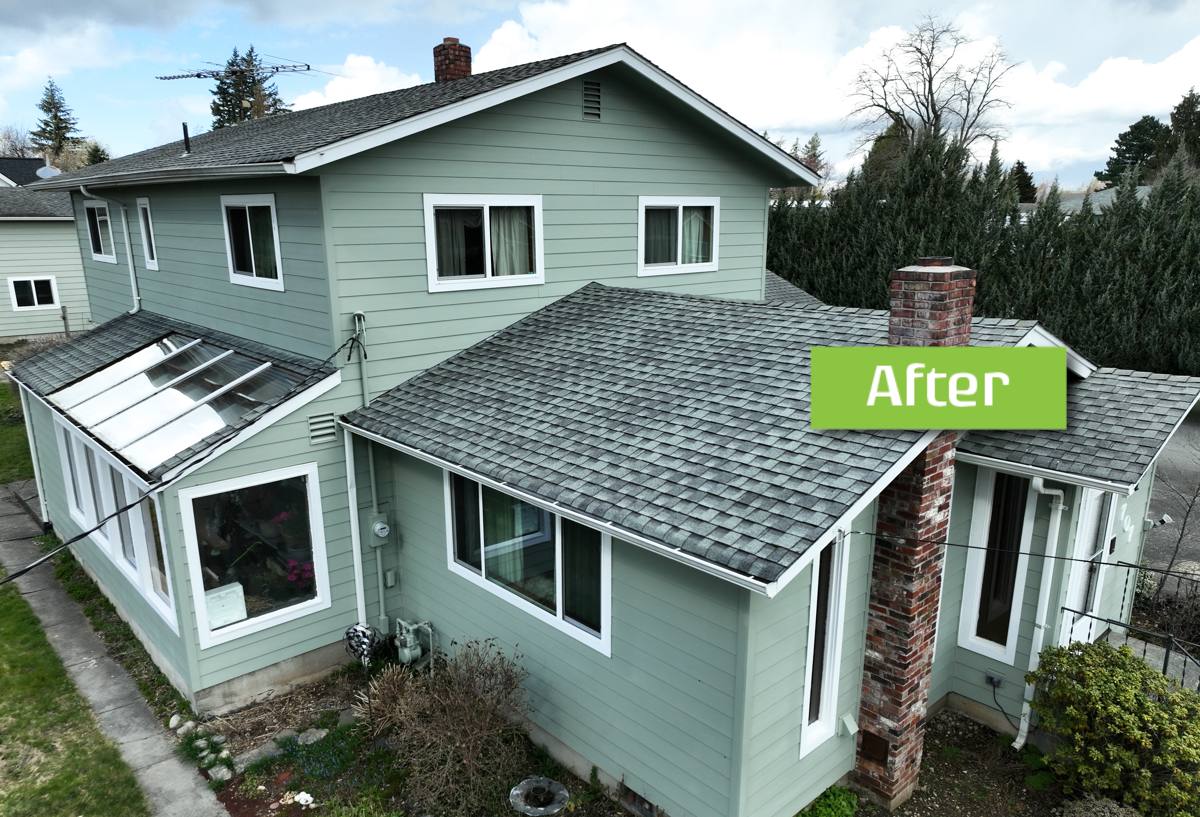
What Birchwood's Climate Does to an Asphalt Shingle Roof
Salt Air and Metal Components
Homes closer to the water deal with airborne salt that accelerates corrosion on any exposed metal — nails, flashing, vent boots, gutter fasteners. On a roof, the metal details matter as much as the shingles themselves. Corroded flashing at a valley or chimney is one of the most common sources of a leak we find on Birchwood roofs, and it's rarely the shingles' fault.
Driving Rain and Wind-Driven Water
Storms coming off the bay don't always fall straight down. Wind-driven rain gets pushed sideways and upward under shingle edges, at rakes, and around anything that penetrates the roof plane — vents, skylights, chimneys. A roof that only relies on gravity to shed water, without proper underlayment and flashing at these transition points, will eventually let water in, even if every shingle is intact.
Moss and Sustained Moisture
Bellingham's long wet season and heavy tree cover in and around Birchwood create ideal moss conditions on north-facing slopes and shaded roof sections. Moss isn't just cosmetic — it holds moisture against the shingle surface, works its way under shingle tabs as it grows, and lifts them over time. Left unaddressed for a few seasons, moss growth shortens the usable life of an otherwise sound roof.
Signs a Birchwood Roof Needs Attention
Most asphalt shingle failures give warning signs well before an active leak shows up inside the house. Worth checking for, or asking us to check for, at least once a year:
- Moss or dark algae streaking, especially on shaded or north-facing slopes
- Granules collecting in gutters or at downspout outlets
- Shingle tabs that look curled, cupped, or lifted at the edges
- Rust staining around vent boots, chimney flashing, or nail heads
- Soft or discolored spots on interior ceilings near exterior walls
- Visible daylight or gaps at ridge caps or valleys from the attic
- Gutters overflowing during storms, which points to backed-up debris or moss mats
Catching these early is almost always cheaper than waiting. A moss problem caught in year two is a cleaning and treatment visit. The same problem ignored until year five can mean replacing a section of decking underneath.
What a Correct Asphalt Shingle Installation Involves Here
Given the conditions above, we don't treat every asphalt shingle job as a standard, one-size install. The details below are the ones we won't skip, regardless of budget pressure, because skipping them is exactly what causes the early failures we get called to repair.
Underlayment and Ice/Water Barrier
A synthetic underlayment across the full roof deck is the baseline, but eaves, valleys, and any low-slope transitions get a self-adhering water and ice barrier membrane. This is the layer that protects the deck when wind-driven rain pushes water back under the shingle course — a real risk given how this area's storms behave.
Flashing Over Reused Metal
We replace flashing at valleys, chimneys, sidewalls, and vent penetrations rather than reusing corroded metal under new shingles. Given the accelerated corrosion from salt air, reused flashing is one of the more common causes of a "new roof" leaking within a few years.
Ventilation
Proper intake and exhaust ventilation keeps the underside of the roof deck dry and regulates temperature, which matters for shingle lifespan and helps prevent condensation-driven rot in an area with this much ambient moisture. A roof can look perfect from the ground and still be failing from underneath if ventilation was an afterthought.
Nailing Pattern and Fastener Choice
Manufacturer nailing patterns exist for wind resistance, and we follow them exactly — correct nail count, placement, and depth. We use corrosion-resistant fasteners throughout, which matters more here than in drier inland areas.
Shingle Options and What Drives Cost
Most Birchwood homeowners choose between standard 3-tab shingles and laminate (architectural) shingles. Both can perform well when installed correctly; the right choice depends on budget, roof visibility, and how long you plan to own the home.
| Factor | 3-Tab Shingles | Laminate / Architectural Shingles |
|---|---|---|
| Typical lifespan | Shorter, lighter-weight construction | Longer, heavier and more layered |
| Wind resistance | Lower rated | Higher rated — a real factor in exposed, waterfront-adjacent lots |
| Algae/moss resistance | Available with treated granules | Widely available with treated granules |
| Appearance | Flat, uniform look | Dimensional, shadow-line look |
| Upfront cost | Lower | Higher, but often lower cost per year of expected service |
We also strongly recommend algae-resistant shingles — most major manufacturers offer a version with copper-infused or similarly treated granules — given how consistently moss and algae show up on shaded Birchwood roofs. It's a modest cost difference upfront that pays for itself in reduced cleaning and treatment over the roof's life.
Repair, Partial Replacement, or Full Tear-Off?
Not every roof problem in Birchwood needs a full replacement, and we won't sell one when it isn't warranted. Our general approach:
- Repair: Isolated leaks, storm damage to a section, or aging flashing on an otherwise sound roof
- Partial replacement: One slope or section significantly older or more moss-damaged than the rest, common on additions or homes with mixed roofing history
- Full tear-off and replacement: Widespread granule loss, multiple layers of aging shingles, deck damage found during inspection, or a roof at or past its expected service life
A tear-off to bare decking is worth the extra cost when the existing decking or underlayment is compromised — layering new shingles over old ones traps moisture and hides deck problems, which is a poor trade-off in a climate this wet.
Our Process for a Birchwood Roofing Project
We keep the process straightforward and communicate clearly at each stage:
- On-site inspection: We walk the roof and attic when access allows, checking shingles, flashing, ventilation, and decking condition — not just what's visible from the ground
- Written estimate: A clear scope covering materials, tear-off (if needed), flashing replacement, and any deck repair, with no vague allowances
- Scheduling around weather: Given how much rain this area gets, we schedule with realistic weather windows and protect the home if conditions shift mid-project
- Tear-off and deck check: Old materials removed, decking inspected and repaired where needed before anything new goes down
- Installation: Underlayment, ice/water barrier at vulnerable areas, new flashing, shingles installed to manufacturer spec, ridge and ventilation completed
- Cleanup and walkthrough: Site cleaned, magnetic sweep for stray fasteners, and a walkthrough so you know what was done and what to watch for going forward
Maintenance That Actually Extends Roof Life Here
Asphalt shingle roofs in Birchwood benefit from a level of upkeep that roofs in drier climates simply don't need:
- Gutter cleaning at least twice a year, more often under heavy tree cover
- Moss removal using proper methods — soft washing or manual removal, never aggressive pressure washing, which strips granules and shortens shingle life
- Zinc or copper control strips near the ridge on moss-prone slopes, which slow regrowth between cleanings
- An annual check of flashing and vent boots for early corrosion or sealant breakdown
None of this is expensive or time-consuming, but skipping it in this climate tends to shorten a roof's service life more than homeowners expect.
Why a Crew That Already Works Birchwood Matters
Roofing crews unfamiliar with this specific stretch of coastline sometimes treat Whatcom County jobs like any other Pacific Northwest project, missing the details that matter for homes this close to the bay — the corrosion resistance, the moss-specific product choices, the wind-driven-rain detailing at eaves and valleys. We've worked enough roofs in this neighborhood to know which slopes hold moss longest, which older installation shortcuts tend to fail first, and what a durable repair or replacement actually requires here rather than in a more generic climate.
If you're seeing granule loss, moss buildup, a slow leak, or you're just planning ahead for a roof that's getting up in years, we're glad to come take a look. We offer free, no-pressure estimates and will tell you honestly whether you need a repair, a partial fix, or a full replacement — use the form below to get started.